keneci Network
News • Comedy • Science & Tech
Nancy Grace Roman Telescope: SpaceX Falcon Heavy Launches Observatory To Space
August 30, 2026
post photo preview

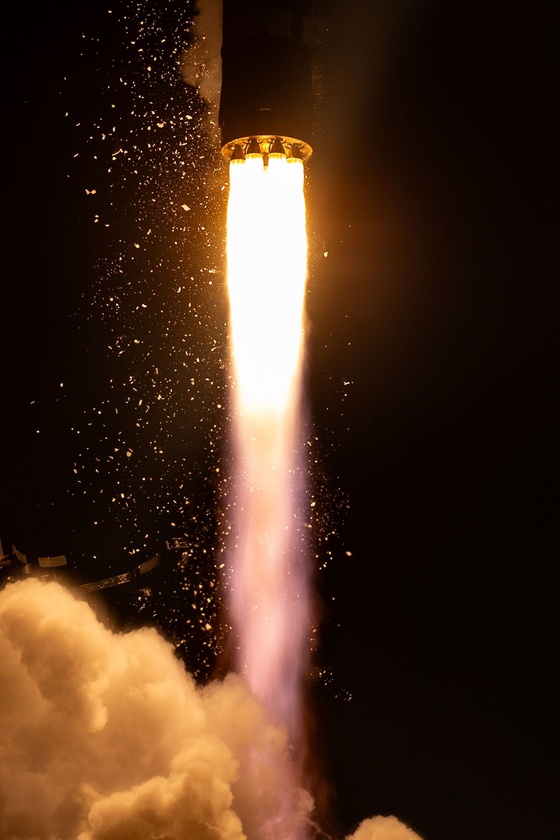
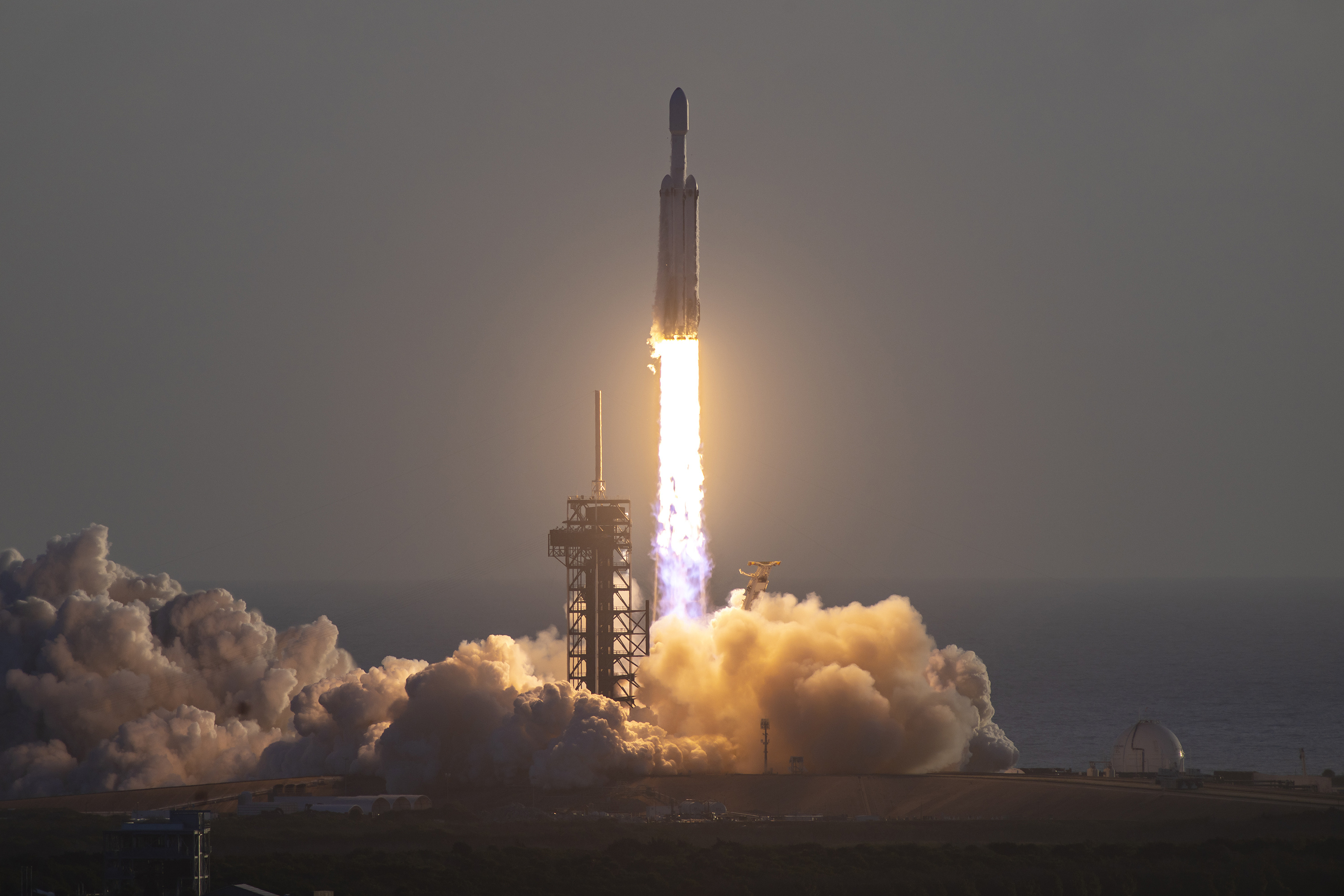
NASA’s Nancy Grace Roman Space Telescope launched aboard a SpaceX Falcon Heavy rocket at 1126 UTC on Aug. 30, from Launch Complex 39A (LC-39A) at Kennedy Space Center, to begin its journey to the **Sun-Earth Lagrange Point 2 (L2).

About 2.5 minutes into flight, the rocket's two side boosters cut off their engines for a nominal stage separation and began trajectory burns to return for a landing back at SpaceX's Landing Zones 2 and 40 (LZ-2, LZ-40) at Cape Canaveral Space Force Base, a few miles downrange from LC-39A.

The rocket's core booster continued onward to deploy Falcon Heavy's second stage equipped with Roman into space. The observatory successfully separated from the rocket's upper stage about 31 minutes after liftoff, and is en route to its operational halo orbit around Sun-Earth Lagrange Point 2 (L2), roughly 1.5 million kilometers from Earth--the same orbital neighborhood occupied by the James Webb Space Telescope--where it will orbit the sun in alignment with Earth. It will spend about a month in transit before beginning its five-year scientific mission.

One of the Falcon Heavy side boosters used in today's mission, B1072 previously supported the launch of the GOES-U and ViaSat-3 F3 missions. This is the first launch for the other side booster (B1104) and the expended core booster (B1105).

The Roman telescope, with a primary mirror spanning 2.4 meters, features a field of view 100 times larger and a survey speed 1,000 times faster than the Hubble Space Telescope, capable of measuring light from up to one billion galaxies.

Nancy Grace Roman Space Telescope--with its coronagraph and Wide Field Instrument (WFI)--will study dark energy and dark matter conduct a census of exoplanets using gravitational microlensing, and map the expansion history of the universe.

While Hubble and the James Webb Space Telescope are built to get close looks at distant phenomena in the universe, Roman will study the bigger picture of our cosmos. Its WFI will take extremely wide images of the universe, capturing ultra-high definition views across broad swaths of the sky. It's also equipped with the first active coronagraph to be used in space, which will revolutionize exoplanet studies.

"The smallest Roman images will be a billion pixels," Dominic Benford, progam scientist for the Roman Space Telescope, said during live commentary. "When we take a billion-pixel image, there isn't a screen on Earth large enough to display all the pixels."

The coronagraph works by blocking out the light of distant stars in such a way that scientists can examine minute details around those stars — meaning they can map out exoplanets orbiting in the systems. Once active, Roman's WFI will capture more than a terabyte of data daily; its largest survey will take over a year to complete and is expected to fill more than half a million 4K TVs.

"The scope is extraordinary," Roman senior scientist Julie McEnery said during live commentary. "We will do a survey of our own Milky Way galaxy and find 20 billion stars. That would make it the largest catalog of astronomical objects that's ever been produced."

Nancy Grace was NASA's first chief astronomer, the first woman in an executive leadership role at the space agency. Roman, who died in 2018, advocated for a telescope in space, leading to the Hubble Space Telescope. Roman earned the nickname "Mother of Hubble" as a result.

"It was Nancy in the old days, before the internet and before Google and email and all that stuff, who really helped to sell the Hubble Space Telescope, organize the astronomers, who eventually convinced Congress to fund it," Ed Weiler, Roman’s successor as Hubble's chief scientist, told the Voice of America in 2011.

Sunday's launch occurred nine months ahead of schedule, beating the original May 2027 target. The mission, which cost approximately $4.3 billion, was cleared for launch following a Flight Readiness Review on August 21. NASA anticipates the first images from the Roman Space Telescope will be available by early next year (2027), following a commissioning period that includes instrument calibrations.


community logo
Join the keneci Network Community
To read more articles like this, sign up and join my community today
0
What else you may like…
Videos
Posts
Articles
SpaceX Starlink Internet Satellites

With Starlink internet, data is continuously being sent between a ground dish and a Starlink satellite orbiting 550km above. Furthermore, the Starlink satellite zooms across the sky at 27,000 km/hr! MORE VIDEOS ON KENECI NETWORK RUMBLE CHANNEL: https://rumble.com/c/Keneci

00:28:08
Elon Musk, DOGE Speak On Waste And Fraud

US Department of Government Efficiency Services (USDS) led by Elon Musk speak on the "mind-boggling" fraud and waste in UInited States federal government

00:00:45
January 17, 2025
SpaceX Launches Starship 7th Test Flight

SpaceX successfully executed its second-ever “chopsticks” catch of a Super Heavy booster (or Booster 14) using the “Mechazilla” launch tower on Thursday(Jan. 16), during the seventh uncrewed test flight of the company's 123-meter Starship rocket. However, the megarocket's upper stage(or Ship 33) was lost approximately 8.5 minutes into the flight in a “rapid unscheduled disassembly(RUD)” or explosion

00:10:30
Welcome to Keneci Network!

Join the conversations!

December 09, 2025
Bitcoin White Paper By Satoshi Nakamoto

Bitcoin white paper

Bitcoin_White_Paper.pdf
September 17, 2024
Charges Against Sean 'Diddy' Combs In Grand Jury Indictment

The rapper was charged with racketeering conspiracy, sex trafficking by force, fraud or coercion, and transportation to engage in prostitution in the indictment unsealed Tuesday(Sept. 17)

Combs-Indictment-24-Cr.-542.pdf
post photo preview
O3b mPOWER: SpaceX Falcon 9 700th Mission Launches 3 Telecom Satellites For SES

SpaceX Falcon 9 rocket launched at 1849 UTC, from Space Launch Complex 40 (SLC-40), Cape Canaveral Space Force Station Suinday (Sept. 13), carrying the Boeing-built final three satellites (O3b mPOWER 11, 12, and 13), to Medium Earth Orbit (MEO) for Luxembourg-based SES' O3b mPOWER constellation.

The Falcon 9 first-stage booster B1080, completed its 29th flight and landed on the droneship A Shortfall of Gravitas in the Atlantic Ocean a little less than nine minutes after liftoff.

The rocket's upper stage, meanwhile, continued hauling the O3b mPOWER trio to MEO. The satellites were deployed as scheduled, in a staggered 14-minute window starting roughly 33.5 minutes after launch, using onboard electric propulsion to reach their operational orbits at 8,000 kilometers.

The final satellites feature re-engineered power systems and software adjustments implemented after early power module anomalies were identified in the first four satellites launched in 2022 and 2023. The O3b mPOWER satellites weigh about 1,700 kilograms apiece. SpaceX has launched all of them, on six Falcon 9 launches beginning in December 2022.

Sunday's launch added the final three spacecraft to the constellation, bringing the total to 13 satellites in MEO. The O3b mPOWER network is designed to deliver low-latency, high-throughput broadband connectivity for government, enterprise, and maritime customers. The new satellites are expected to enter full commercial service by mid-2027.

The network is "purpose-built to deliver predictable low latency, exceptional throughput and unprecedented flexibility for industries where uptime isn’t optional," according to the company. "It transforms how networks operate by pairing advanced software defined satellites with an intelligent ground and software ecosystem — ensuring guaranteed performance, even as global bandwidth demands surge," the company wrote.

Sunday's launch was SpaceX's 107th orbital mission of the year. Falcon 9 has performed 105 of those flights, with Falcon Heavy conducting the other two. This also marks the 700th mission for the Falcon rocket family.

Read full Article
post photo preview
O3b mPOWER: SpaceX Falcon 9 700th Mission Launches 3 Telecom Satellites For SES

SpaceX Falcon 9 rocket launched at 1849 UTC, from Space Launch Complex 40 (SLC-40), Cape Canaveral Space Force Station Suinday (Sept. 13), carrying the Boeing-built final three satellites (O3b mPOWER 11, 12, and 13), to Medium Earth Orbit (MEO) for Luxembourg-based SES' O3b mPOWER constellation.

The Falcon 9 first-stage booster B1080, completed its 29th flight and landed on the droneship A Shortfall of Gravitas in the Atlantic Ocean a little less than nine minutes after liftoff.

The rocket's upper stage, meanwhile, continued hauling the O3b mPOWER trio to MEO. The satellites were deployed as scheduled, in a staggered 14-minute window starting roughly 33.5 minutes after launch, using onboard electric propulsion to reach their operational orbits at 8,000 kilometers.

The final satellites feature re-engineered power systems and software adjustments implemented after early power module anomalies were identified in the first four satellites launched in 2022 and 2023. The O3b mPOWER satellites weigh about 1,700 kilograms apiece. SpaceX has launched all of them, on six Falcon 9 launches beginning in December 2022.

Sunday's launch added the final three spacecraft to the constellation, bringing the total to 13 satellites in MEO. The O3b mPOWER network is designed to deliver low-latency, high-throughput broadband connectivity for government, enterprise, and maritime customers. The new satellites are expected to enter full commercial service by mid-2027.

The network is "purpose-built to deliver predictable low latency, exceptional throughput and unprecedented flexibility for industries where uptime isn’t optional," according to the company. "It transforms how networks operate by pairing advanced software defined satellites with an intelligent ground and software ecosystem — ensuring guaranteed performance, even as global bandwidth demands surge," the company wrote.

Sunday's launch was SpaceX's 107th orbital mission of the year. Falcon 9 has performed 105 of those flights, with Falcon Heavy conducting the other two. This also marks the 700th mission for the Falcon rocket family.

Read full Article
September 12, 2026
post photo preview
Houthis Seize Control Of Parts Of Yemen From Saudi-backed Forces, Trump Declines To Intervene

The Houthi (Ansar Allah) movement launched a "lightning offensive," seizing Yemen’s entire Red Sea coast over the weekend, including the strategic port of Mocha and Perim Island (Mayun) in the Bab al-Mandab Strait. This rapid advance collapsed Saudi-backed government forces, who were driven from six districts, and resulted in the capture of US-manufactured military vehicles and the UAE-built Mocha airport runway.

The Houthis took over Saudi-supported government coalition positions across Hays, Al-Khawkhah, Mokha, and Dhubab, claiming control of over 4,500 square miles. Their takeover of the Bab al-Mandab Strait, a vital artery for global energy shipping, has forced the suspension of Saudi Arabia’s crucial oil pipeline following drone attacks.

During the retreat of coalition and Saudi-backed local militias, Houthis overran multiple garrisons, seizing substantial quantities of military gear—including U.S.-supplied armored vehicles, artillery, and anti-tank systems left behind by withdrawing forces.

The UN and local reporting indicate nearly 50,000 civilians have fled the rapid advance, emptying towns along the Red Sea coast as fighting escalates.

The Houthis have explicitly threatened Saudi-linked vessels, causing oil tankers to reroute via the Suez Canal or Cape of Good Hope, while claiming navigation remains safe for non-Saudi international ships.

During a visit to Dublin, US President Donald Trump said on Saturday, that the Houthis contacted Washington to request no US military intervention, claiming they "do not want to fight with us," adding that the U.S. intends to let regional partners handle ground dynamics while providing intelligence and non-kinetic targeting support to Riyadh.

However, Saudi Crown Prince Mohammed bin Salman reportedly called Trump twice on Thursday, to request direct US airstrikes against the Houthis.

The Trump administration declined direct military action to avoid opening a new front while fighting Iran, offering instead intelligence and targeting support to Saudi Arabia, which has launched over 50 airstrikes in response.

U.S. officials reportedly cited a directive to keep American forces focused on broader regional postures, including monitoring Iran and the Strait of Hormuz, rather than reigniting full-scale kinetic operations in Yemen.

The Houthi offensive coincides with drone and missile strikes targeting oil pipelines and logistics hubs inside southern Saudi Arabia, forcing shutdowns of key transit lines.

By holding the Bab al-Mandab Strait, the Houthis hold immense leverage over global shipping and Red Sea commerce, placing pressure on both Gulf states and international trade markets. Yemen had experienced relative quiet following a 2022 truce, but skirmishes flared up few months ago, before exploding into this full-scale offensive.

Read full Article
See More
Available on mobile and TV devices
google store google store app store app store
google store google store app tv store app tv store amazon store amazon store roku store roku store
Powered by Locals