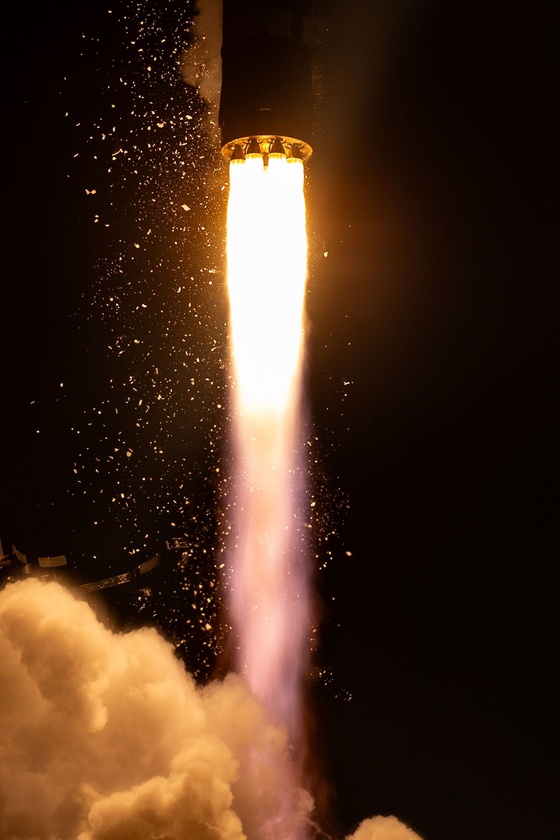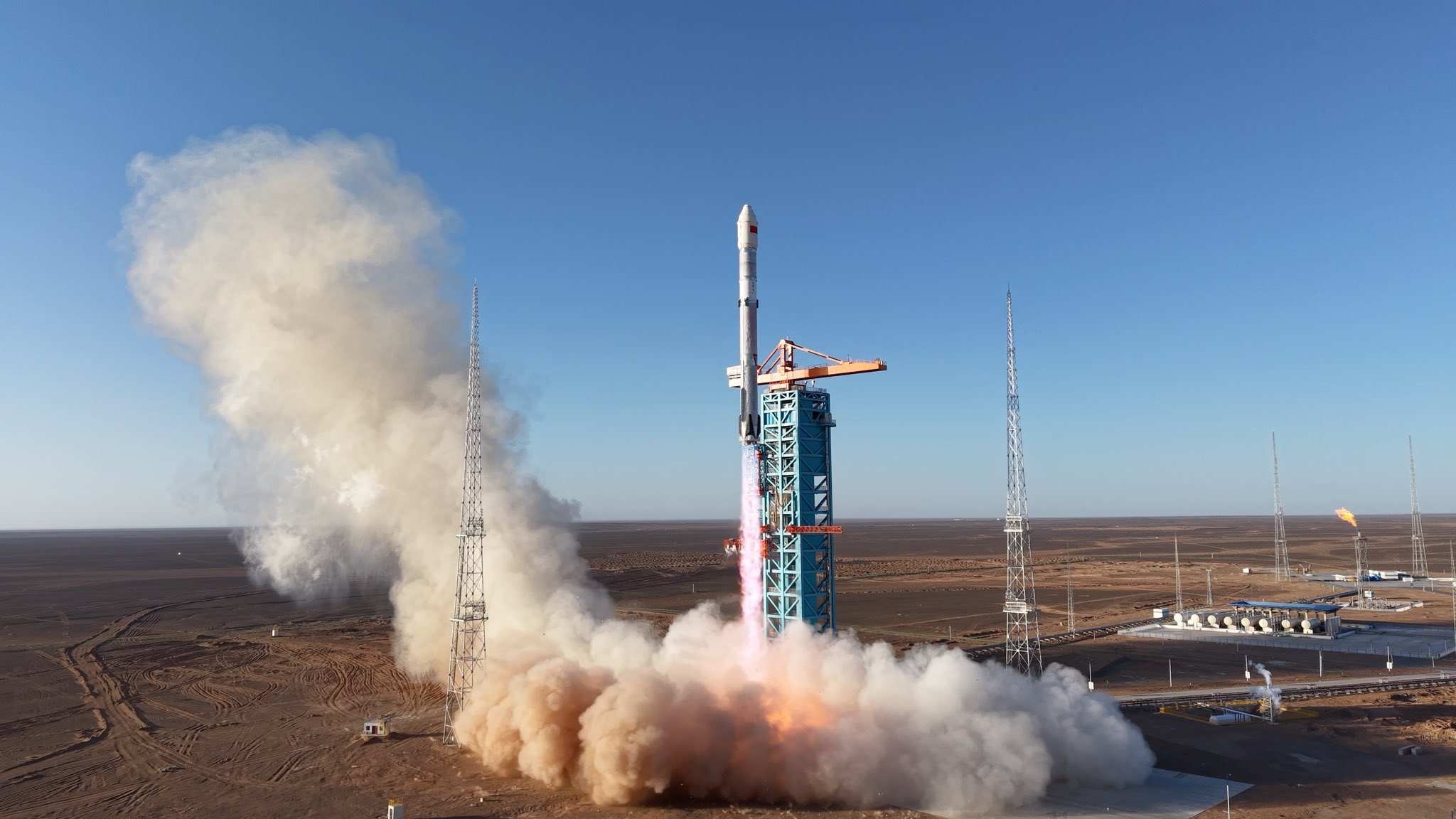
Beijing-based private aerospace company LandSpace successfully launched the Zhuque-3 Y2 reusable rocket from the Dongfeng Commercial Space Innovation Pilot Zone in Gansu Province, at 2335 UTC Tuesday (Aug. 18) achieving China’s first land-based recovery of an orbital-class rocket booster using deployable landing legs.
The mission marked a critical transition from technology verification to engineering application for China’s commercial space sector, following the Long March 10B’s sea-based net-capture recovery on July 10, 2026.
Following stage separation 137 seconds after launch, the Zhuque-3 Y2's first stage returned to a landing site in Minqin County, Gansu, 390 kilometers southeast of the launch pad, completing a soft touchdown less than 10 minutes after liftoff. The second stage successfully deployed the Honghu-03 satellite developed by Hongqing Technology, into its designated low Earth orbit(LEO).


"This mission marks China's first-ever successful recovery attempt of the first stage of an orbital-class launch vehicle using landing legs, and China's first successful booster recovery on land," LandSpace said in post on X.
"It is a pivotal flight test for Zhuque-3 as it transitions from the technological demonstration and verification phase toward the engineering application phase of reusability. This mission further verified the design correctness and reliability of the Zhuque-3 reusable launch vehicle system, validated its first-stage recovery capability and engineering maturity" the company added.
The Zhuque-3 is a two-stage, partially reusable rocket constructed from stainless steel, designed for high-capacity, low-cost launches. Its first stage is powered by nine Tianque-12A engines with adjustable thrust, enabling the complex vertical landing maneuver.
Tuesday's achievement makes LandSpace the third entity globally, after SpaceX and Blue Origin, to successfully land an orbital-class booster on legs, and the first Chinese private company to do so.
Zhuque-3 quacks and ducks eerily like SpaceX Falcon 9, which made its first landing way back in 2015. Both feature a reusable booster and an expendable upper stage, and they're about the same height 70 meters(m) for the Falcon 9 and 66 m for Zhuque-3. Also the Chineses rocket can haul about 18,300 kilograms(m) to low Earth orbit, while Falcon 9's LEO payload capacity is 22,800 kg.
The two rockets use two very different fuels — a combination of liquid oxygen (LOX) and rocket-grade kerosene for the Falcon 9, compared to LOX and liquid methane for Zhuque-3. This "methalox" mixture is also used by Starship, SpaceX's fully reusable megarocket.
Tuesdays's launch was the second try for the Zhuque-3 which first flew on Dec. 2, 2025. The upper stage reached orbit as planned. But LandSpace failed to bring the first stage booster back for a touchdown -- it reportedly suffered "an abnormal combustion" as it neared the ground, and exploded near the landing pad.
Zhuque-3 is part of a concerted Chinese push toward rocket reusability, an efficiency-boosting feature that has helped make the Falcon 9 the world's leading launcher by far. A number of other Chinese companies are working on vehicles with reusable first stages, including CAS Space, Deep Blue Aerospace, Galactic Energy, iSpace, Orienspace and Space Pioneer.