SpaceX set a new operational record by launching two Falcon 9 rockets just 38 minutes 31 seconds apart on early morning, UTC, Sunday, (Aug. 16), besting its old record—set on Aug. 31, 2024 with two Starlink missions — by 27 minutes. The Elon Musk's company already launches far more frequently than any other oufit, and operates the largest satellite constellation—about 11,000 satellites and counting.
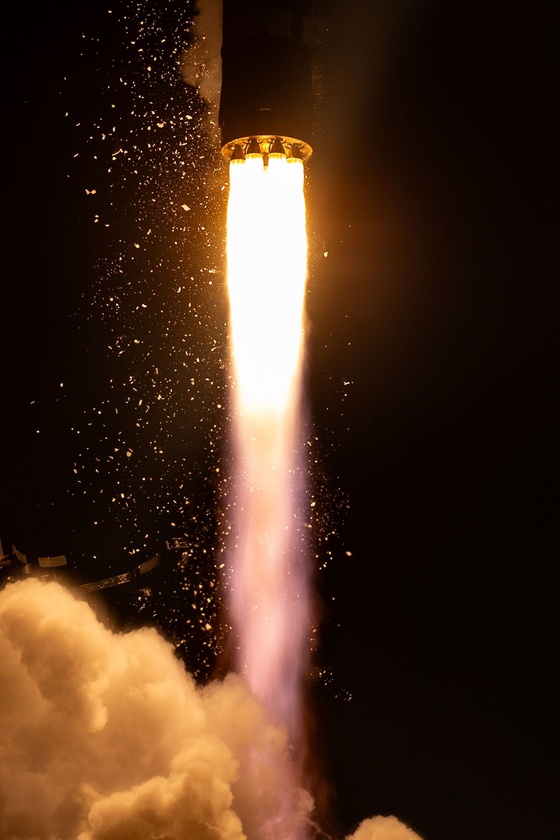
The first mission, Globalstar 2-R Launch 1, lifted off at 0112 UTC from Space Launch Complex 40 (SLC-40), at Cape Canaveral Space Force Station in Florida, carrying eight satellites for the Louisiana-based telecom company Globalstar to replenish its low Earth orbit (LEO) constellation.
The Falcon 9 first stage booster B1090, marking its 14th mission, landed as planned at Landing Zone 40 (LZ-40), Cape Canaveral, about eight minutes after liftoff. The second stage deployed all eight satellites to orbit successfully over a six-minute window beginning 56.5 minutes after launch.
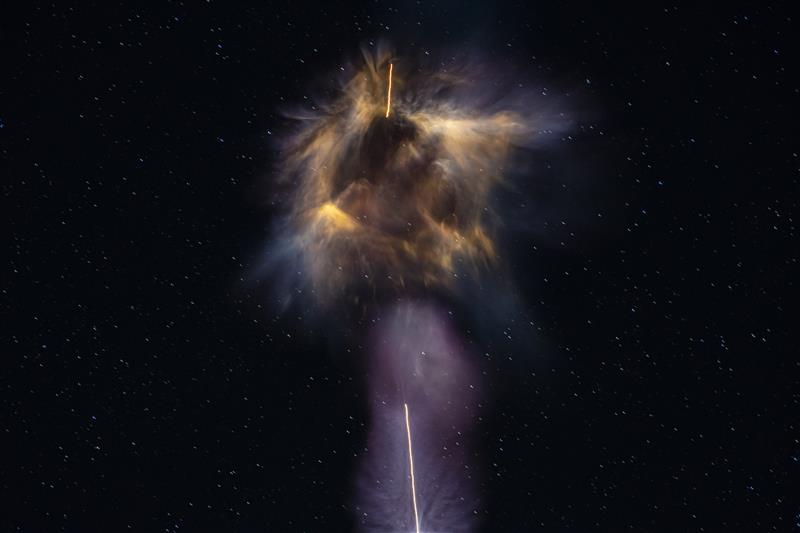
While the second stage was powering its way to LEO to deploy Globalstar 2-R Launch 1, another Falcon 9 launched at 0150 UTC from Space Launch Complex 4 East (SLC-4E) at Vandenberg Space Force Base in California, on a national security USSF-366 mission carrying a classified payload for the U.S. Space Force.
The national security flight's Falcon 9 first stage booster B1088, which completed its 18th flight, landed on the autonomous droneship "Of Course I Still Love You" in the Pacific Ocean about 8.5 minutes after liftoff.
The USSF-366 payload is believed to be a batch of classified LEO satellites using SpaceX's Starshield satellite bus for national security purposes. SpaceX's mission description doesn't reveal when and where the Falcon 9's upper stage will deploy the payloads.
Sunday's launches were part of a busy period for SpaceX, which continues to expand its launch cadence and the Starlink broadband network. The doubleheader brought the tally to 96 Falcon 9 launches in 2026— about 75% of which are Starlink missions—and marked the 650th successful Falcon booster landing in SpaceX history.