keneci Network
News • Science & Tech • Comedy
Transporter-17: SpaceX Falcon 9 Launches 1st Nuclear-powered Satellite, 81 Payloads To Orbit
July 07, 2026
post photo preview

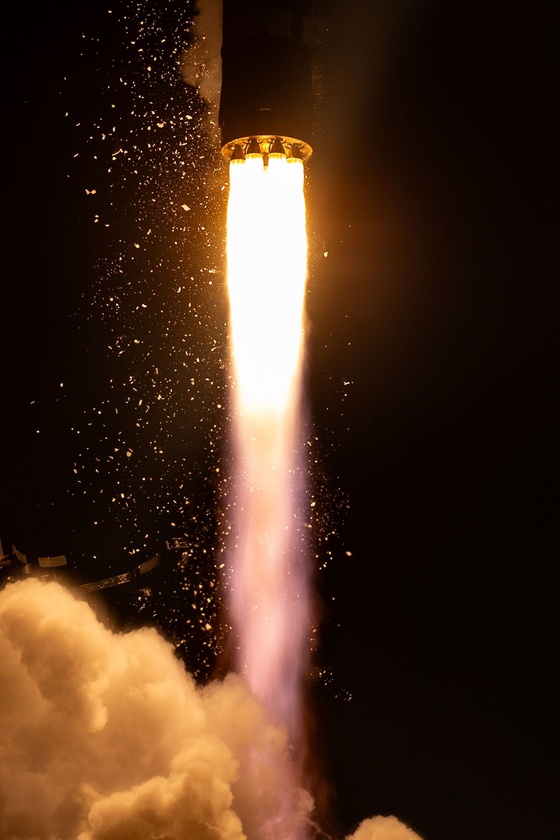
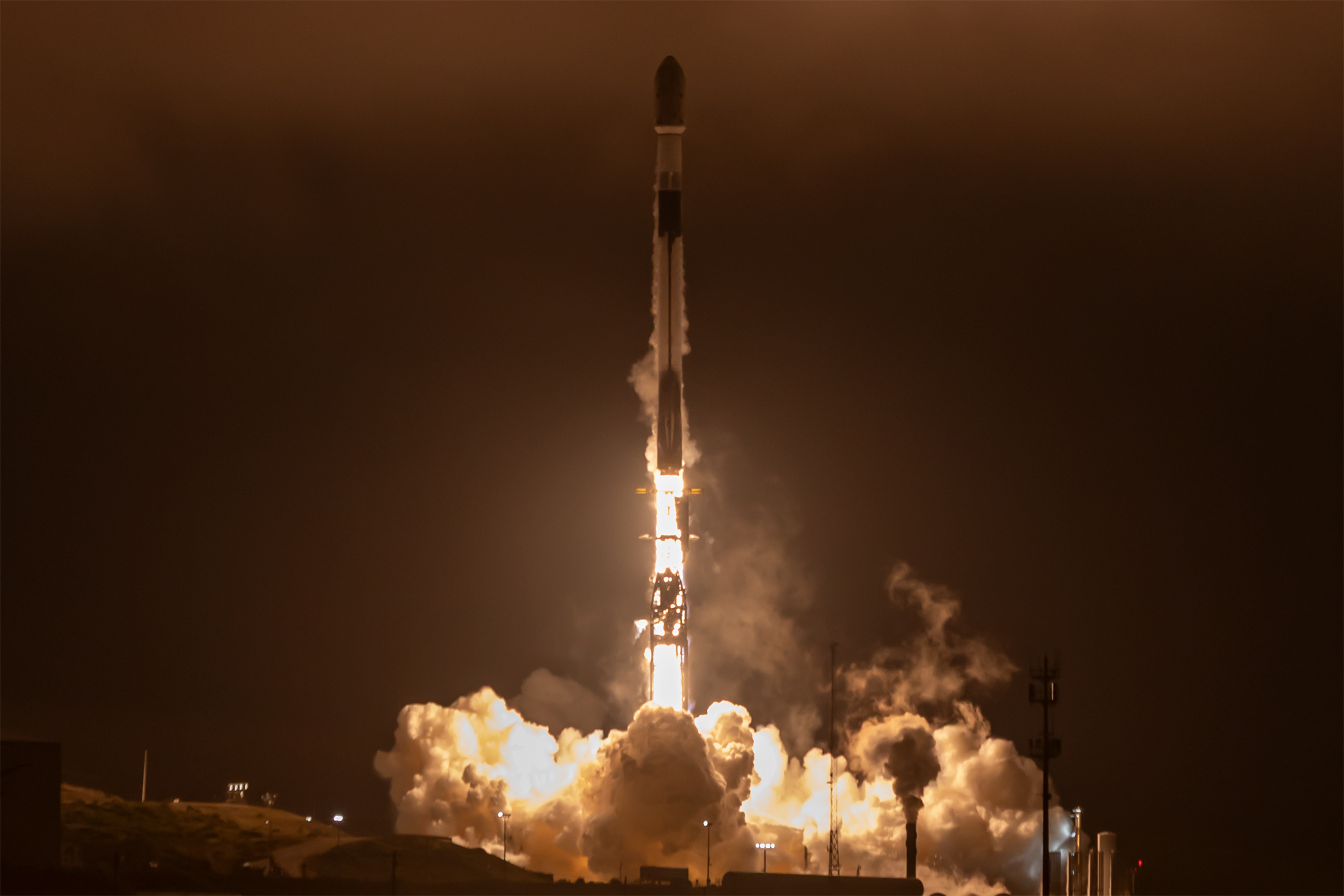
SpaceX Falcon 9 launched the Transporter-17 rideshare mission early Tuesday, (July 7) from Space Launch Complex 4 East (SLC-4E) at Vandenberg Space Force Base in California, deploying into Sun-Synchronous Orbit 81 payloads including the Betavoltaic Orbital High-Reliability (BOHR) satellite, the world's first commercially built nuclear-powered satellite which utilizes City Labs’ proprietary NanoTritium betavoltaic technology to generate electricity from radioactive decay.

As scheduled, Falcon 9’s first stage booster (B1097) landed on the “Of Course I Still Love You” droneship, stationed in the Pacific Ocean, 8.5 minutes after liftoff. B1097 previously supported 10 missions: Sentinel-6B, Twilight, NROL-172 and 7 Starlink missions. The Payloads were deployed over roughly 2.5 hours, with the heaviest payload, South Korea’s CAS500-4 (~500 kg), requiring multiple upper-stage burns for precise orbital insertion.

CubeSat BOHR, Built by City Labs, tests a betavoltaic micropower source that converts beta particles from tritium decay into electricity. Unlike nuclear reactors, it produces no fission or chain reaction, offering continuous power for decades without sunlight.

“This is a historic step for commercial nuclear power in space,” said City Labs CEO Peter Cabauy in a statement.

Similar to how spacecraft like NASA's Voyager probes' radioisotope thermoelectric generators produce power from the heat emitted from their plutonium cores, City Lab's NanoTritium device harnesses the beta particles emitted from the radioactive decay of tritium, which can be converted directly to electricity using a semiconductor.

BOHR is designed as a pathfinder mission to test the feasibility of City Labs' new technology, which is meant to provide continuous power to spacecraft without a reliance on solar energy. The cubesat is still dependent on solar power for general operations — City Labs' technology could help introduce new vehicles capable of exploring places that current spacecraft can't operate for long periods of time, like permanently shadowed regions at the moon's poles.

With its abundance of water ice there and potential for extraction as a resource, the moon's south pole has become a focus as the target region for NASA's Artemis lunar landing mission as it's suited for long-term habitation of the moon. NASA is also actively funding the development of nuclear reactor technology to support that goal.

"City Labs’ BOHR arrives as the first commercial answer to that challenge," the company said in a statement. Though the cubesat's NanoTritium power source cannot produce nearly enough energy to power something like a moon base, City Labs sees its application scaling to eventually be able to do so.

One benefit of using tritium as the basis for a power system is the low radiation levels it emits. "City Labs’ tritium-based power systems… are engineered for safe handling, transportation, and integration within standard commercial launch environments," the company stated.

BOHR, and City Labs' tritium development, was funded under a Department of Defense contract. It's also the first nuclear-powered mission to be greenlit under the Federal Aviation Administration's nuclear launch approval under Trump's National Security Presidential Memorandum-20, which was issued in 2019.

"BOHR demonstrates that safe, compact, and regulatory-approved nuclear power systems are ready for routine commercial deployment," Cabauy said.

Other notable payloads on Transporter-17 include the following.

FireSat: Three wildfire-detection satellites from Muon Space, backed by the Bezos Earth Fund, designed to detect fires at high resolution.

SAR and RF Detection: Four ICEYE synthetic aperture radar satellites and BRO-31 from Unseenlabs for maritime and all-weather observation.

Technology Demonstrators: Orbital Matter’s Replicator-2 spacecraft, which includes in-orbit 3D printers and foldable solar array tests; and SPEAR-1, a rapid technology transition demo for the Naval Research Laboratory.

International Contributions: Leonav-1 (UAE’s first PNT satellite), GRITSS (NASA/UMass Lowell sea level research), and academic payloads from Taiwan and Canada.

Transporter-17 marked SpaceX’s 79th Falcon 9 launch of 2026, pushing its cumulative rideshare payload count past 1,800. However, the program faces a supply crisis as SpaceX reportedly stopped accepting reservations for late 2028/early 2029, redirecting capacity toward Starlink, national security, and its own Starfall manufacturing program. This shift has created a gap in launch availability for smallsat operators, prompting launch competitors like Arianespace and SEOPS to develop alternative rideshare solutions.


community logo
Join the keneci Network Community
To read more articles like this, sign up and join my community today
0
What else you may like…
Videos
Posts
Articles
SpaceX Starlink Internet Satellites

With Starlink internet, data is continuously being sent between a ground dish and a Starlink satellite orbiting 550km above. Furthermore, the Starlink satellite zooms across the sky at 27,000 km/hr! MORE VIDEOS ON KENECI NETWORK RUMBLE CHANNEL: https://rumble.com/c/Keneci

00:28:08
Elon Musk, DOGE Speak On Waste And Fraud

US Department of Government Efficiency Services (USDS) led by Elon Musk speak on the "mind-boggling" fraud and waste in UInited States federal government

00:00:45
January 17, 2025
SpaceX Launches Starship 7th Test Flight

SpaceX successfully executed its second-ever “chopsticks” catch of a Super Heavy booster (or Booster 14) using the “Mechazilla” launch tower on Thursday(Jan. 16), during the seventh uncrewed test flight of the company's 123-meter Starship rocket. However, the megarocket's upper stage(or Ship 33) was lost approximately 8.5 minutes into the flight in a “rapid unscheduled disassembly(RUD)” or explosion

00:10:30
Welcome to Keneci Network!

Join the conversations!

December 09, 2025
Bitcoin White Paper By Satoshi Nakamoto

Bitcoin white paper

Bitcoin_White_Paper.pdf
September 17, 2024
Charges Against Sean 'Diddy' Combs In Grand Jury Indictment

The rapper was charged with racketeering conspiracy, sex trafficking by force, fraud or coercion, and transportation to engage in prostitution in the indictment unsealed Tuesday(Sept. 17)

Combs-Indictment-24-Cr.-542.pdf
post photo preview
X Money Launches With 6% APY, Peer-2-peer Payments, As Elon Musk's Everything App Vision Takes Shape

X officially launched X Money in the United States on Monday, transforming the social media platform into a financial hub for Premium and Premium+ subscribers.

The service offers interest-bearing deposit accounts with up to 6% annual percentage yield (APY), instant peer-to-peer payments, and a customizable metal Visa debit card featuring 3% cashback and no foreign transaction fees, with Apple Pay and Google Pay integrations. Premium+ subscribers automatically qualify for the top APY rate, while Premium tier users reach 6% upon setting up qualifying direct deposits.

X Money is powered by Cross River Bank, an FDIC-member institution that holds user deposits. While standard coverage applies to the first $250,000, eligible users can access the X Cash Sweep Program, which distributes funds across multiple partner banks to provide aggregate FDIC insurance coverage of up to $10 million.

The rollout of X Money utilizes a "peer-activation" mechanism where receiving a payment can trigger account access, aiming to leverage X's existing social graph for rapid adoption. There is currently no support for cryptocurrencies like Bitcoin or stablecoin.

Access is currently limited to verified users in 41 U.S. states and the District of Columbia, excluding New York and Massachusetts where X Payments LLC's money transmitter license applications are pending. Worldwide rollout will follow later subject to regulatory approvals.

CEO Elon Musk has long stated his goal of turning X into an everything app, a Western equivalent of China’s WeChat—a single platform combining social media, messaging, video, and consumer finance. By offering yield and embedded payment rails, X aims to keep user capital and activity inside its ecosystem rather than relying on third-party banking apps.

Monday's launch represents a return to Musk's original online banking venture. In 1999, he co-founded X.com, an early online bank that subsequently merged with Confinity to become PayPal. Reacquiring the X.com domain and launching financial services under the "X" brand completes a decades-long ambition to build a central hub for digital money movement.

Read full Article
post photo preview
Berlin Pride Event Attack Suspect Killed By Police

Abdul Ballout, a 21-year-old German citizen of Lebanese descent, was killed by police on Sunday, following a nearly 24-hour manhunt for the deadly attack at Berlin's Christopher Street Day (Pride) celebration.

Authorities classified the incident as an Islamist terrorist attack, stating Ballout drove a white van into a crowd in Berlin’s Tiergarten park around 10 p.m. on Saturday (July 25) before allegedly stabbing several people with a machete.

The attack left one woman dead and 29 others injured, including three with life-threatening conditions, prompting the immediate cancellation of the festival’s closing rally.

Police spokesman Florian Nath earlier said the suspect was known to investigators because of his alleged ties to Islamic groups in Berlin.

"The suspect is known to police. He is known to us as a member of Islamic circles here in Berlin, and our search for this person is proceeding at full speed," Nath said. "We still have no information whatsoever regarding his specific motives, the exact sequence of events, or his role in the crime itself."

Ballout had a documented history of attempting to join the Islamic State (IS) group, according to the authorities. In May 2025, he traveled to Lebanon and attempted to enter Syria to join IS militants but was arrested by Lebanese authorities and later extradited to Germany.

Although he had previously received a suspended sentence for planning attacks and disseminating IS propaganda, he was released from detention in May 2026. During the final confrontation in Berlin’s Spandau district, Ballout allegedly charged at SEK tactical police units with a weapon, leading officers to fatally shoot him.

"Everything we see here points to us dealing with an Islamic terror attack," German Interior Minister Alexander Dobrindt said. 

Dobrindt and German Chancellor Friedrich Merz condemned the act as a heinous assault on German society and freedom.

The Christopher Street Day (Pride) event, which typically draws over one million participants, was shut down immediately after the violence, and police deployed more than 2,000 officers to secure the area. While Ballout was the primary suspect identified by prosecutors, another man was also arrested on the night of the attack and charged with multiple crimes in connection with the van incident.

Read full Article
post photo preview
Astronauts Return To Earth Aboard Soyuz MS-28 After 241 Days On Space Station

Soyuz MS-28 spacecraft, carrying NASA astronaut Chris Williams and Roscosmos cosmonauts Sergey Kud-Sverchkov and Sergei Mikaev, returned to Earth at 1027 UTC, July 26, 2026, after a 241-day mission aboard the International Space Station (ISS), concluding the Expedition 74 crew rotation. The capsule undocked from the station’s Rassvet module at 0703 UTC and executed a parachute-assisted landing on the Kazakh steppe southeast of Dzhezkaz.

The crew's departure activities began on Saturday morning with a change-of-command ceremony aboard the International Space Station (ISS). Kud‑Sverchkov handed over the reins of the orbiting lab to NASA astronaut Jessica Meir, part of the transition from ISS Expedition 74 to Expedition 75 (which officially began when Soyuz MS‑28 undocked). The crew then gave their farewells and closed the hatches between the ISS and Soyuz MS-28 on Saturday night.

Following a fiery re-entry and a 10-minute descent under parachutes, the crew was recovered by Russian teams who provided medical checks and traditional matryoshka dolls bearing their likenesses. Williams was flown to Karaganda and then to NASA’s Johnson Space Center in Houston, while the cosmonauts returned to Star City near Moscow.

The crew completed 3,856 orbits covering 164 million kilometers, marking the first spaceflight for Williams and Mikaev, and the second for Kud-Sverchkov, who previously served on Expedition 64-65 (2020–2021) and now has logged 426 days and 9 minutes in space.

William, a former medical physicist and astrophysicist, conducted two spacewalks to replace a joint on the station’s robotic arm and prepare for new solar blanket installations, while also participating in research on cancer treatments and in-space manufacturing. Kud-Sverchkov and Mikaev also performed maintenance spacewalks outside the Russian segment of the station.

The departure marked the beginning of Expedition 75, commanded by Meir. The new crew, consisting of Anil Menon, Pyotr Dubrov, and Anna Kikina, arrived at the ISS on July 14 via Soyuz MS-29. Soyuz MS-28 launched to the ISS on Nov. 27, which was Thanksgiving Day.

Read full Article
See More
Available on mobile and TV devices
google store google store app store app store
google store google store app tv store app tv store amazon store amazon store roku store roku store
Powered by Locals