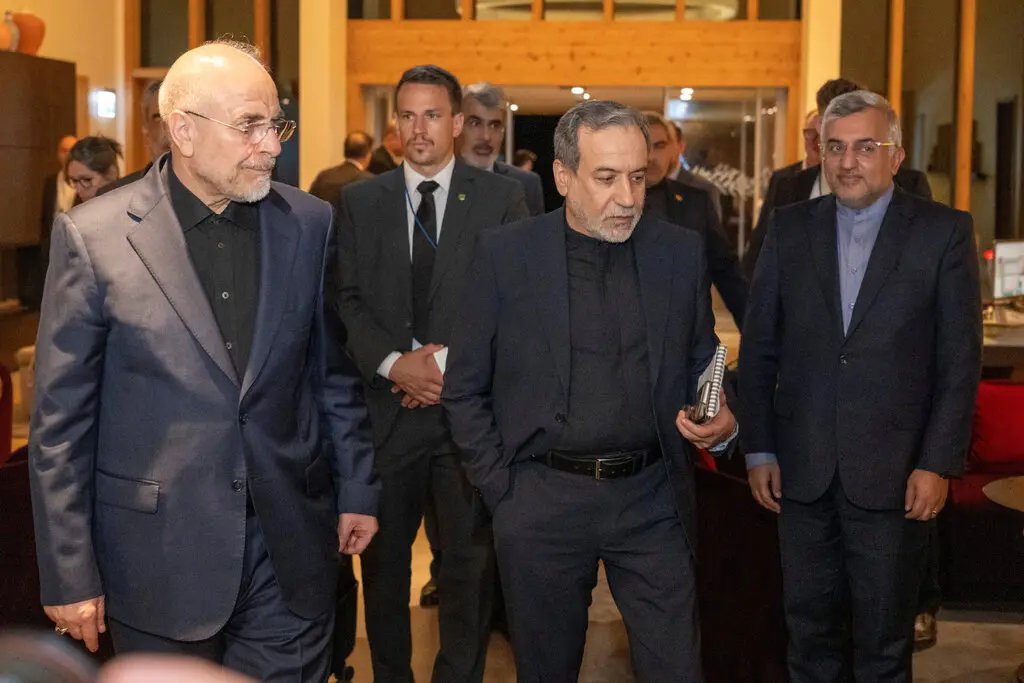
U.S. officials reportedly believed Israel was plotting to assassinate Iran's top negotiators, Foreign Minister Abbas Araghchi and Parliament Speaker Mohammad Bagher Ghalibaf, during cease-fire talks in April 2026, according to current and former American officials. Fearing such strikes would collapse the diplomatic process and reignite the war, the President Donald Trump administration indirectly warned Tehran by asking counterparts in Middle Eastern countries to relay the threat.
While both officials were considered legitimate targets during the active phase of the conflict that began on February 28, 2026, the U.S. determined that killing them after negotiations started would leave "no one else to talk to."
Specific threats and security incidents surrounded the negotiations, particularly during a high-stakes meeting in Islamabad. When Ghalibaf traveled to meet U.S. Vice President JD Vance on April 12, Pakistani fighter jets escorted his delegation.
On the return flight, Iranian intelligence detected two Israeli fighter jets entering Iranian airspace from Iraq with intent to attack. This prompted an emergency landing in Mashhad, Iran’s closest airport to the Pakistani border, forcing the delegation to complete the journey to Tehran by land. Ghalibaf's senior adviser, Mahdi Mohammadi, who accompanied him to Islamabad, confirmed this account on his social media page.
Ghalibaf had previously survived two other Israeli attempts on his life, including a strike on a secret bunker meeting of senior government officials under a mountain, earlier in the 2026 war and during the 12-day war in June 2025. In both incidents, Ghalibaf was reportedly rescued from under the rubble.
“Today Mr. Ghalibaf and Mr. Araghchi, and other members of the negotiating team, have put their lives on the line knowing the grave security risks and this is called a real sacrifice, not political maneuvering,” Mohsen Zanganeh, a lawmaker, told local media in late April after the Islamabad meeting.
Diverging war aims between the U.S. and Israel fueled the tension, as Washington sought an interim peace deal while Israel remained skeptical of ending hostilities in April, without regime change in Tehran.
Reportedly, Israel had temporarily removed Araghchi and Ghalibaf in March from its target list to facilitate talks, however, U.S. officials later learned Ghalibaf remained a target and directly asked Israel to stand down.
Prior to the April negotiations, Israel had already killed two other potential negotiation partners, national security official Ali Larijani and former foreign minister Kamal Kharazi, complicating the diplomatic landscape.
In June, the United States and Iran reached a framework agreement that sought to open the Strait of Hormuz and set the outline for follow-on talks on Tehran’s nuclear program. Ghalibaf and Araghchi flew to Qatar, in late May, for talks and traveled to Switzerland in June for a meeting with Vance and the American delegation.