keneci Network
News • Science & Tech • Comedy
US Spacewalk 95: NASA Astronauts Repair Space Station's 18-meter Canadarm2
post photo preview

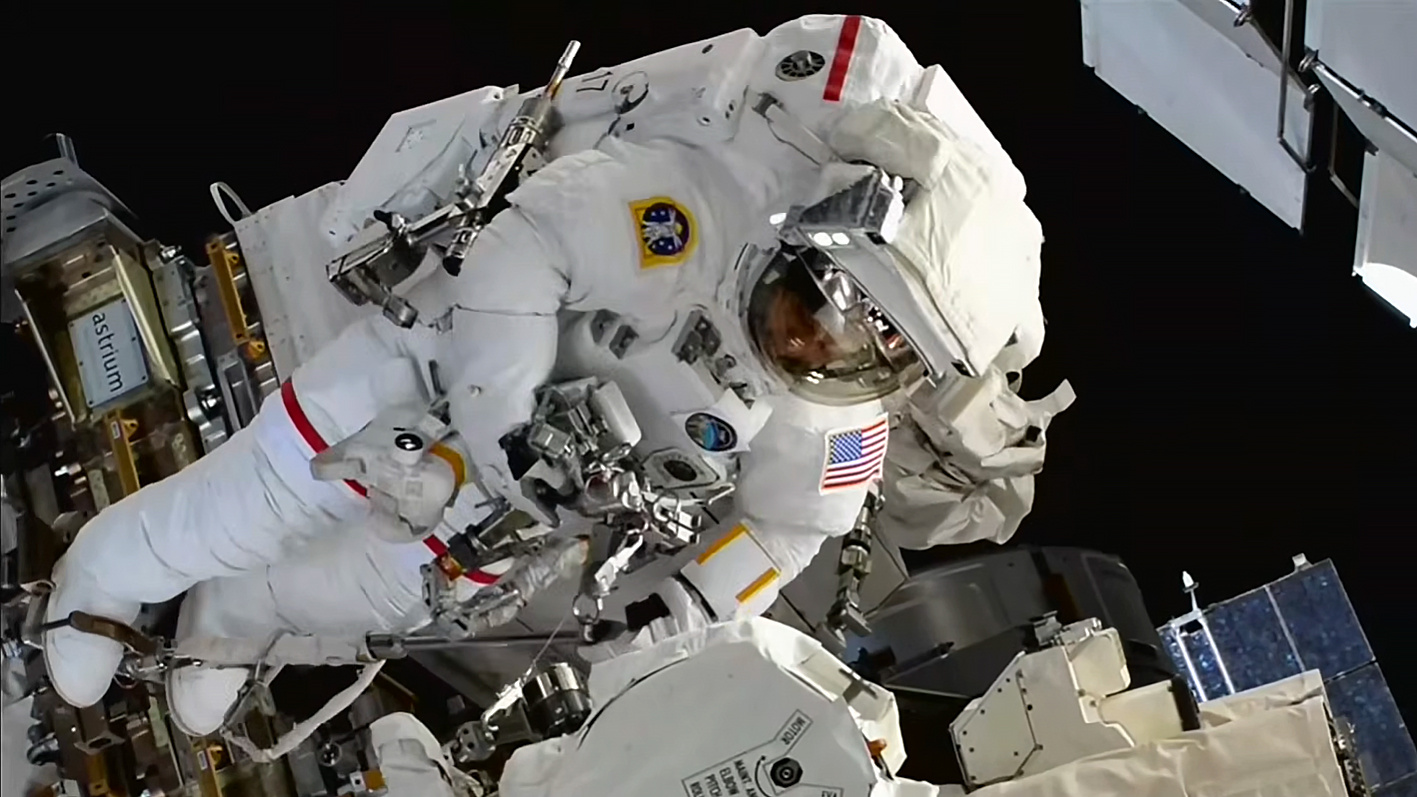
Members of the Expedition 74 crew, NASA astronauts Chris Williams and Jessica Meir on Tuesday (June 30), completed US Spacewalk 95, a seven-hour and 20-minute extravehicular activity (EVA) outside the International Space Station (ISS) to repair the Canadarm2 remote manipulator system (RMS).

The spacewalkers replaced a malfunctioning 90-kilogram wrist joint that had failed during routine operations on May 27 due to a seized motor-gearbox assembly.

Canadarm2 is ~18 meters when fully extended, about 1,800 kg (or 1,497 kg to 1,960 kg depending on specific configuration and source). It features seven motorized joints, providing a range of motion similar to a human arm but with the ability to rotate joints 270 degrees. The arm can handle payloads up to 116,000 kg and is capable of "cosmic catches," such as grappling visiting cargo spacecraft.

The repair was critical as Canadarm2, the station’s primary tool for capturing cargo vehicles like SpaceX Dragon and Cygnus, is essential for station operations through its planned decommissioning in 2030. Canadarm2, a space station workhorse, has been in regular use since it was installed on the orbiting outpost in April 2001.

Williams (EV1) and Meir (EV2), each wearing a NASA extravehicular mobility unit (EMU), floated outside the Quest airlock soon after switching the spacesuits to battery power at 1220 UTC. They made quick work of transitioning to their work station, where they retrieved a spare wrist joint by using a power tool (pistol grip unit) to unbolt it from an exterior equipment panel.

The pair were supported from inside the station, by Jack Hathaway (SpaceX Crew-12) and Sophie Adenot (ESA), who operated Canadarm2’s remaining functional joints to position the arm for the repair, guided by mission control from Jenny Gibbons (Canadian Space Agency).

Working meticulously, Williams and Meir removed the old unit and installed the new joint (no. 5), bolting it in place. The astronauts completed their work on the arm by reattaching its latching end effector, or hand, which the arm uses to grapple objects and inchworm across the exterior of the station. Mission Control confirmed that the arm had good power connections after the astronauts' work. They brought the faulty joint back into the space station to be returned to Earth for analysis and possible refurbishment.

The successful repair restored the arm’s full range of motion, clearing the path for the upcoming Soyuz MS-29 crew launch scheduled for July 14. Although designed for a 15-year lifespan, the 25-year-old arm was engineered with modular, replaceable components to allow for in-orbit maintenance. The spare joint was already stored aboard the ISS.

"For over 25 years, the Canadarm2 has been a crucial part of the International Space Station. The arm was key to our orbiting laboratory and continues to be a workhorse that we rely on. Whether it is performing maintenance or replacing equipment, moving and operating payloads, catching cargo vehicles or helping us out during spacewalks, the arm has played and will continue to play an essential role in our work on orbit," Williams said as the spacewalk ended. "It is also a testament to international cooperation. Canada, the U.S. and the world have come together to make this program a success. We are honored … that we were able to give the arm a helping hand."

Tuesday's EVA marked the fourth time in history that spacewalkers have worked to service the Canadarm2. Previously, another wrist joint was replaced and both of the arm's end effectors were swapped out for spares.

Williams and Meir returned to the Quest airlock and began its depressurization at 1940 UTC, marking an end to the spacewalk, Tuesday. "We are thrilled to have repaired the mighty Canadarm2 just in time for Canada Day tomorrow! We hope that all in Canada and everyone around the globe can celebrate this achievement," Meir said.

Today's EVA was the 280th spacewalk in ISS history and marked Williams’ second and Meir’s fifth career spacewalk. Williams has now logged 14 hours and 22 minutes, including a previous EVA with Meir. Meir has totaled 36 hours and 6 minutes, including the first all-female EVA in 2019.


community logo
Join the keneci Network Community
To read more articles like this, sign up and join my community today
0
What else you may like…
Videos
Posts
Articles
SpaceX Starlink Internet Satellites

With Starlink internet, data is continuously being sent between a ground dish and a Starlink satellite orbiting 550km above. Furthermore, the Starlink satellite zooms across the sky at 27,000 km/hr! MORE VIDEOS ON KENECI NETWORK RUMBLE CHANNEL: https://rumble.com/c/Keneci

00:28:08
Elon Musk, DOGE Speak On Waste And Fraud

US Department of Government Efficiency Services (USDS) led by Elon Musk speak on the "mind-boggling" fraud and waste in UInited States federal government

00:00:45
January 17, 2025
SpaceX Launches Starship 7th Test Flight

SpaceX successfully executed its second-ever “chopsticks” catch of a Super Heavy booster (or Booster 14) using the “Mechazilla” launch tower on Thursday(Jan. 16), during the seventh uncrewed test flight of the company's 123-meter Starship rocket. However, the megarocket's upper stage(or Ship 33) was lost approximately 8.5 minutes into the flight in a “rapid unscheduled disassembly(RUD)” or explosion

00:10:30
Welcome to Keneci Network!

Join the conversations!

December 09, 2025
Bitcoin White Paper By Satoshi Nakamoto

Bitcoin white paper

Bitcoin_White_Paper.pdf
September 17, 2024
Charges Against Sean 'Diddy' Combs In Grand Jury Indictment

The rapper was charged with racketeering conspiracy, sex trafficking by force, fraud or coercion, and transportation to engage in prostitution in the indictment unsealed Tuesday(Sept. 17)

Combs-Indictment-24-Cr.-542.pdf
post photo preview
SpaceX Launches 7000-kg Satellite For SiriusXM: SXM-11 Mission

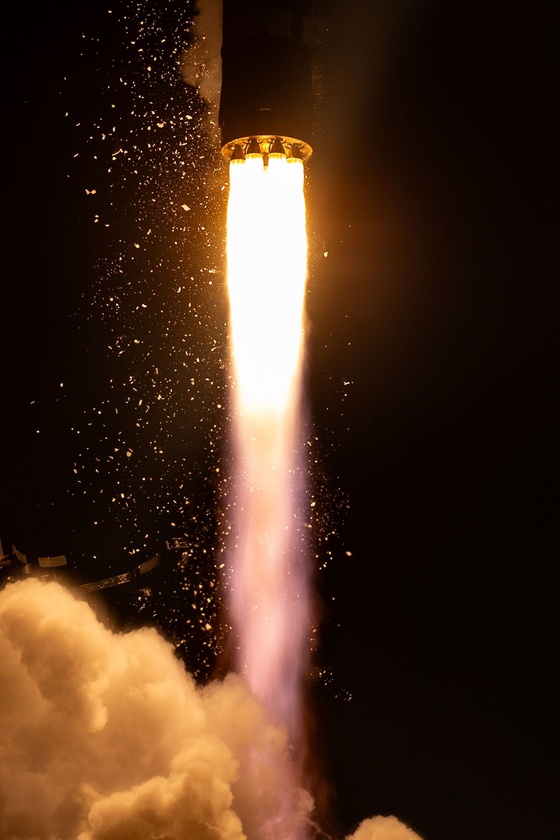
SpaceX launched 7,000 kg SXM-11 satellite for SiriusXM aboard a Falcon 9 rocket from Cape Canaveral Space Force Station at 0225 UTC on June 29, 2026. The rocket's first stage booster, B1085, completed its 17th flight and successfully landed on the drone ship "A Shortfall of Gravitas" in the Atlantic Ocean approximately 8.5 minutes after liftoff.

The Falcon 9's upper stage, meanwhile, continued carrying SXM-11 to an elliptical geosynchronous transfer orbit, where it was deployed on schedule, 34.5 minutes after liftoff. SXM-11 circularized its distant path around our planet and will join SiriusXM's satellite-radio fleet, which currently consists of seven spacecraft.

Standing 70.1 meters tall with solar panels spanning 32.3 meters, the SXM-11 spacecraft is built by Lanteris Space Systems (formerly Maxar, acquired by Intuitive Machines in January 2026), is the most powerful satellite in the SiriusXM fleet, designed to replace the aging XM-5 and Sirius FM-5 satellites launched in 2009 and 2010. The satellite is based on the IM-1300 platform, with approximately 60% of its mass dedicated to onboard fuel.

SXM-11 will enhance signal reception, expand coverage in Alaska, and support audio services across the United States, Canada, and the Caribbean.

This mission marks the fourth SiriusXM satellite launched by SpaceX, joining previous missions SXM-8, SXM-9, and SXM-10.

Falcon 9's B1085 previously flew missions including Crew-9, RRT-1, Blue Ghost Mission 1, Fram2, SXM-10, MTG-S1, EchoStar XXV, and nine Starlink missions.

Read full Article
post photo preview
US, Iran Agree To Halt Tit-for-tat Military Strikes, Hold Talks In Qatar Over Strait Of Hormuz And MOU Implementation

The United States and Iran have reportedly agreed to a temporary cessation of hostilities following an intense 72-hour cycle of tit-for-tat military strikes. Negotiators from both nations are scheduled to meet Tuesday, June 30, 2026, in Doha, Qatar, in an urgent bid to save a fragile interim peace agreement.

The emergency talks represent a shift in focus toward the Strait of Hormuz, the world's most critical maritime energy choke point, which has become the primary flashpoint pushing both sides back to the brink of war.

The recent flare-up stems from a breakdown in an interim ceasefire originally signed on June 17, 2026. The truce unraveled when a multinational maritime body overseen by the U.S. Navy announced it would expand a shipping route near Oman to bypass direct Iranian oversight. Iran fiercely opposed this, maintaining that it retains absolute governance over transit through the Persian Gulf.

An Iranian projectile struck a cargo vessel in the Strait of Hormuz, drawing U.S. strikes on Iranian targets, followed by an attack on the Panamanian-flagged tanker Kiku which was carrying crude oil for Qatar's state-run energy company,--and another round of heavy US strikes on Sirik, Bandar-e Lengeh, and Qeshm Island, and then retaliatory Iranian strikes on US bases in Kuwait and Bahrain.

President Donald Trump confirmed the strikes on social media, warning that if Iran violated the ceasefire again, "the Islamic Republic of Iran will no longer exist!" The strikes targeted coastal radar sites, air defenses, communication towers, and minelaying infrastructure.

With the regional conflict threatening to spiral out of control, Iran threatened to halt all diplomatic channels completely. However, mediated diplomacy managed to pull both sides back. According to reports, U.S. and Iranian officials agreed to halt kinetic military operations late Sunday, paving the way for the emergency summit in Doha.

The current escalation is occurring within the framework of an ongoing conflict that began earlier this year on February 28, 2026. A 14-point interim peace memorandum (frequently referred to as the Islamabad memorandum) was drafted to halt full-scale war, but it left critical ambiguities that both sides interpret differently.

The upcoming talks in Qatar will have to navigate three main systemic rifts:

  • Control of the Strait: Iran claims absolute authority over traffic navigating the Persian Gulf. The U.S. and its Gulf allies view it as an international waterway. A proposed "hotline" between the U.S. military and the IRGC to coordinate maritime traffic—agreed upon last week in Switzerland by U.S. Vice President JD Vance and Iranian representatives—failed to become operational before the fighting resumed.

  • Sanctions vs. Blockades: Under the June 17 agreement, Iran agreed to ensure safe passage for commercial ships in exchange for the U.S. lifting blockades on Iranian ports and waiving specific sanctions. Iranian officials claim the U.S. failed to grant them access to previously frozen financial funds, invalidating the terms.

  • The Regional Fronts: The broader framework requires a ceasefire across all regional fronts. Ongoing friction between Israel and Iran-backed Hezbollah in southern Lebanon continues to strain the wider U.S.-Iran peace process, as flare-ups there directly bleed into the Gulf maritime theater.

US and Israeli strikes (Operation Epic Fury / Roaring Lion) which started on Feb. 28, 2026, targeted Iranian military, nuclear-related, and government sites amid stalled nuclear talks. These included high-profile assassinations, notably Supreme Leader Ali Khamenei.

Iran retaliated with missiles, drones, and proxy actions against Israel, US bases, and Gulf states (e.g., Bahrain, Kuwait, UAE, Saudi Arabia). Iran also blocked or disrupted the Strait of Hormuz, causing major global oil disruptions.

A short ceasefire was brokered in April (via Pakistan). Tensions persisted with a US naval blockade, Iranian closure and disruption of Hormuz, and Israel-Hezbollah fighting. In mid-June, the Islamabad Memorandum (MOU) was signed to end major fighting, lift the US blockade, reopen shipping (with Iran committing to safe passage), and allow talks on deeper issues like Iran's nuclear program, sanctions, and uranium stockpile.

Read full Article
post photo preview
US-Iran Military Tit-for-tat Escalates, As Hezbollah Rejects Israel-Lebanon Framework Agreement

In latest tit-for-tat since both countries signed the memorandum of understanding (MOU), the Islamic Revolutionary Guard Corps (IRGC) in a statement early Sunday, claimed responsibility for launching coordinated missile and drone strikes against eight US military facilities in Kuwait and Bahrain, specifically targeting the Ali al-Salem Air Base and the US Fifth Fleet headquarters at Port Salman.

The IRGC stated this operation was a direct retaliation for recent US Central Command (CENTCOM) strikes on Iranian territory, accusing Washington of violating the Islamabad Memorandum of Understanding ceasefire agreement.

Public warning sirens were activated, and the government urged citizens to seek shelter. A U.S. defense official stated that two Iranian drones were detected heading toward the Navy base; one was shot down by ground-based defense systems, while the other landed harmlessly in a remote airfield area.

Kuwait’s The General Command of the Armed Forces confirmed that their air defense systems actively engaged and intercepted hostile missile and drone threats over their airspace.

The IRGC warned that any further US aggression would result in a "crushing response" and could lead to the complete closure of the Strait of Hormuz to oil and gas exports.

According to a US official, Iran has launched multiple missiles and drones toward neighboring countries, including Bahrain and Kuwait; no U.S. casualties or major damage reported at this time.

The escalation was triggered by Iranian attack on the Panama-flagged tanker M/T Kiku, which was carrying over two million barrels of crude oil near the Strait of Hormuz. The tanker, which had departed a Qatari oil field and was bound for the UAE, suffered minor damage, but no crew members were injured and no oil leaked.

CENTCOM announced that US aircraft struck 10 Iranian military targets, including surveillance radar sites and drone storage facilities near Sirik Island and Qeshm Island, stating these actions were ordered by President Donald Trump in response to the tanker strike and alleged Iranian breach of the truce.

The primary flashpoint remains control over the Strait of Hormuz. In an effort to bypass Iranian-controlled waters, a U.S.-led multinational maritime body expanded an alternative shipping lane closer to the coast of Oman. Iran views this alternative route as an infringement on its regional leverage, with Iranian officials publicly asserting that "The Strait of Hormuz is governed by Iran."

Following the strikes, President Trump issued a severe warning on Truth Social, writing that the U.S. had given Iran a chance to honor the ceasefire, but they elected not to. He said that the US might be "forced to militarily complete the job," warning that the Islamic Republic of Iran could "no longer exist" if it continued to violate the ceasefire.

The president added, "There may come a point when we are no longer able to be reasonable, and will be forced to militarily complete the job that we very successfully started."

The post-MOU peace began unraveling on Thursday, June 25, when an Iranian drone struck the Singapore-registered container ship Ever Lovely. The U.S. retaliated with strikes on Friday, which led to the IRGC hitting the M/T Kiku on Saturday, triggering the massive U.S. retaliation and subsequent Iranian bombardment of Bahrain and Kuwait on Sunday.

Oman, Qatar, Kuwait, and the UAE condemned the strikes on Bahrain, reaffirming support for the kingdom’s security and rejecting actions threatening regional stability.

Following a highly destructive four-month U.S.-Iran war earlier in 2026—which saw global oil prices skyrocket after Iran closed the Strait of Hormuz—the two nations signed a 14-point interim ceasefire agreement mediated in Islamabad. The deal established a 60-day window for technical negotiations and required Iran to guarantee free passage for commercial shipping.


Hezbollah, Allies Slam The US-brokered Lebanon-Israel Framework Agreement

Meanwhile Hezbollah leader Naim Qassem condemned the U.S.-Israel-Lebanon framework agreement signed in Washington D.C. on Friday, as a "humiliation," "surrender," and "null and void." He argued that the deal undermines Lebanese sovereignty by linking an Israeli withdrawal from southern Lebanon to the disarmament of Hezbollah, which the group views as crossing "all red lines."

Instead, Qassem asserted that the conflict should be resolved through the Iran-U.S. memorandum of understanding signed two weeks prior, which he claims guarantees Lebanon's territorial integrity.

Lebanese politicians allied with Hezbollah also voiced strong opposition. Parliamentary Speaker Nabih Berri labeled the agreement an "incitement to civil war," while MP Mohammad Raad criticized the Lebanese government's "complete submission" to the U.S. and Israel. The Hezbollah Lawyers’ Association declared the deal a violation of the Lebanese constitution, which they argue opposes Zionism, and warned that enforcing the agreement could lead to civil war as the group resists disarmament.

Despite the diplomatic signing, hostilities persisted. Israel maintained that the deal allows it to remain in an expanded security zone until Hezbollah is fully disarmed, with Defense Minister Israel Katz stating the military is prepared for an extended stay.

Meanwhile, the Israeli military conducted a drone strike on Nabatieh al-Fawqa on Saturday, targeting an individual deemed a threat, signaling ongoing tensions even as the framework aimed to end the state of war that began in 1948.

Read full Article
See More
Available on mobile and TV devices
google store google store app store app store
google store google store app tv store app tv store amazon store amazon store roku store roku store
Powered by Locals