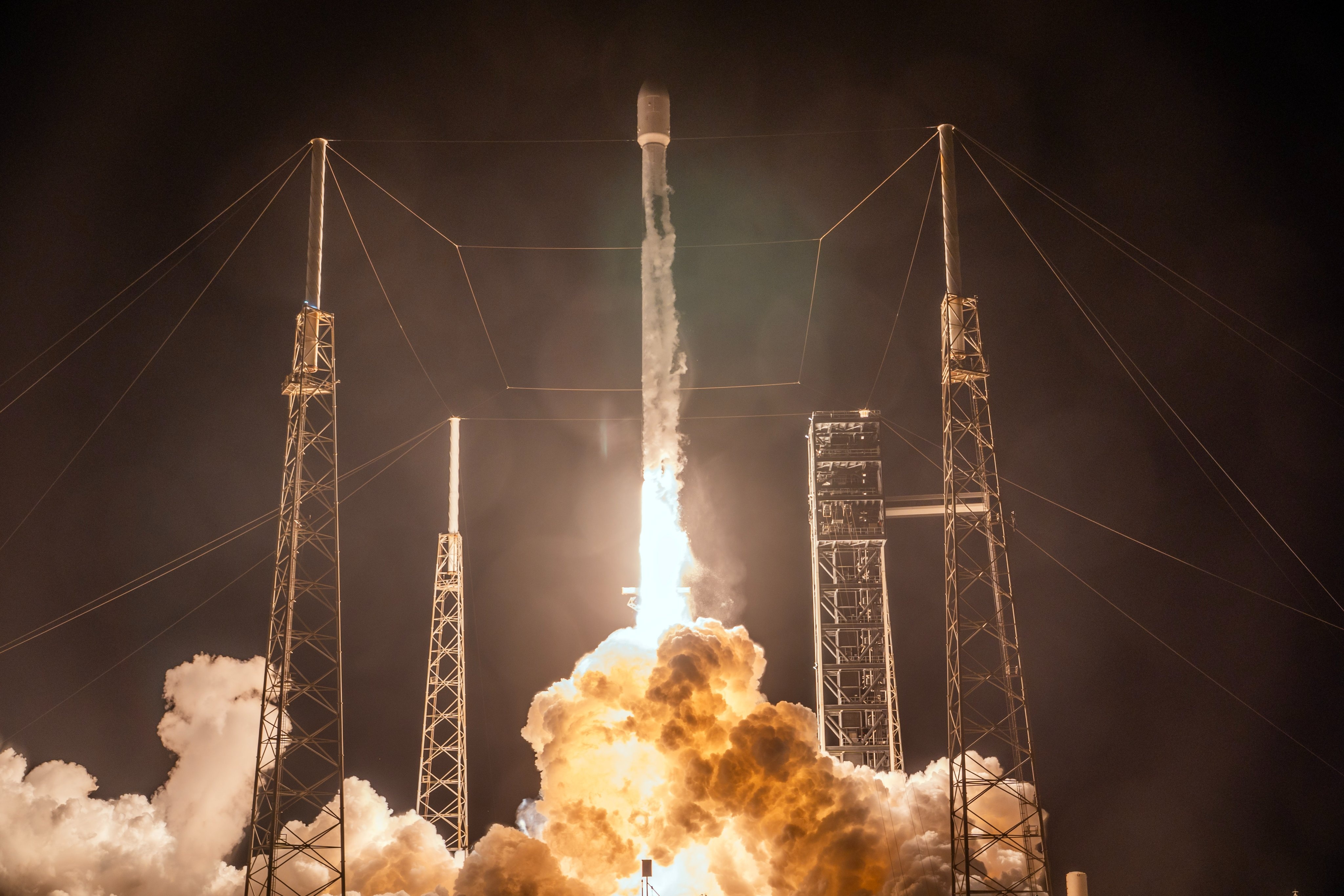
SpaceX launched 7,000 kg SXM-11 satellite for SiriusXM aboard a Falcon 9 rocket from Cape Canaveral Space Force Station at 0225 UTC on June 29, 2026. The rocket's first stage booster, B1085, completed its 17th flight and successfully landed on the drone ship "A Shortfall of Gravitas" in the Atlantic Ocean approximately 8.5 minutes after liftoff.
The Falcon 9's upper stage, meanwhile, continued carrying SXM-11 to an elliptical geosynchronous transfer orbit, where it was deployed on schedule, 34.5 minutes after liftoff. SXM-11 circularized its distant path around our planet and will join SiriusXM's satellite-radio fleet, which currently consists of seven spacecraft.
Standing 70.1 meters tall with solar panels spanning 32.3 meters, the SXM-11 spacecraft is built by Lanteris Space Systems (formerly Maxar, acquired by Intuitive Machines in January 2026), is the most powerful satellite in the SiriusXM fleet, designed to replace the aging XM-5 and Sirius FM-5 satellites launched in 2009 and 2010. The satellite is based on the IM-1300 platform, with approximately 60% of its mass dedicated to onboard fuel.
SXM-11 will enhance signal reception, expand coverage in Alaska, and support audio services across the United States, Canada, and the Caribbean.
This mission marks the fourth SiriusXM satellite launched by SpaceX, joining previous missions SXM-8, SXM-9, and SXM-10.
Falcon 9's B1085 previously flew missions including Crew-9, RRT-1, Blue Ghost Mission 1, Fram2, SXM-10, MTG-S1, EchoStar XXV, and nine Starlink missions.