keneci Network
News • Comedy • Science & Tech
Iran Issues Sweeping Demands Before It Opens Strait Of Hormuz: US Must 'Correct Its Behavior'
August 08, 2026
post photo preview

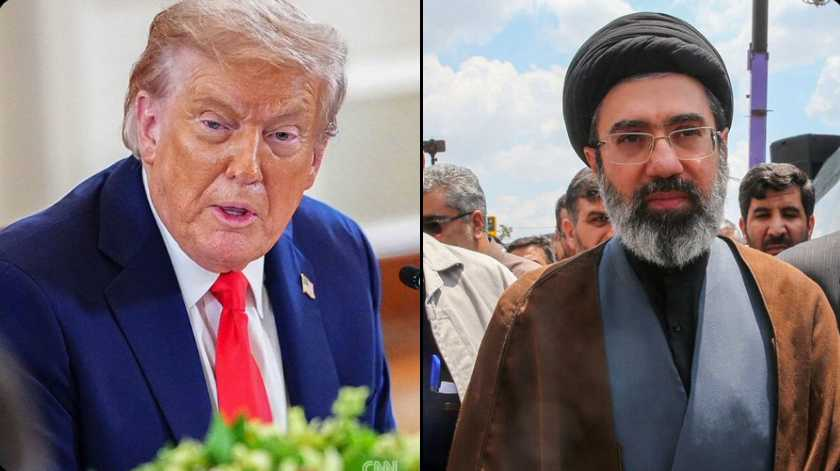
Iran’s Supreme National Security Council (SNSC), led by Secretary Mohammad Bagher Zolghadr, on Saturday, issued a sweeping list of demands declaring that the Strait of Hormuz will not reopen until the United States "corrects its behavior."

These demands, published by Iranian state media, include permanently ending threats and hostilities against Iran and its regional allies, withdrawing all U.S. military forces from the region, lifting the naval blockade and sanctions, paying full war reparations, and unconditionally releasing frozen Iranian assets.

Iran effectively closed the Strait in retaliation for attacks by the U.S. and Israel, halting critical maritime trade and causing global energy prices to spike, with U.S. gas prices averaging $4.02. A temporary ceasefire memorandum signed in June collapsed over U.S. military interference. Tehran claims that after shipping restored to roughly 60% of pre-war capacity, the U.S. sought to establish unauthorized alternative routes and challenge Iranian management of the channel.

Iranian military continue to 'violating' vessels—including a Saturday Iranian missile strike on an Emirati-flagged tanker—underscoring the volatile environment surrounding the Strait of Hormuz through which roughly 20% of the world’s petroleum and natural gas normally flows.

SNSC's stated conditions include,

  1. A permanent cessation of U.S. threats and military actions directed at Iran probably directed at President Donald Trump who regularly threatens the Iranian government in apocalyptic terms.

  2. An immediate end to strikes and offensive military operations targeting Iran's allies across Lebanon, Palestine, Yemen, and Iraq.

  3. Complete termination of the U.S. naval blockade restricting Iranian ports.

  4. Full pullout of U.S. naval and air forces deployed in the immediate vicinity of Iran.

  5. Financial compensation paid by Washington for damages inflicted during the war.

  6. Complete lifting of economic sanctions and the immediate release of frozen Iranian assets abroad.

"Until America corrects its behavior, the Strait of Hormuz will not open," Zolghadr declared, emphasizing that Tehran views control over the waterway not merely as an economic mechanism, but as a core pillar of its geographic and strategic power.

Meanwhile, Iranian Foreign Minister Abbas Araghchi said Saturday, that negotiations with Oman are in the "final stages" and close to an agreement on managing shipping traffic, specifically regarding the determination of new transit routes.

Araghchi noted that the historical Traffic Separation Scheme (TSS) in the strait is no longer acceptable to Tehran. Iranian and Omani naval delegations have drafted maps for a temporary route along Oman's coast to serve as a bridge toward a permanent framework.

However, Araghchi cautioned that this bilateral deal alone is insufficient; the full reopening of the waterway remains contingent on the U.S. meeting Tehran’s conditions, which he attributed to Washington's alleged violation of the interim ceasefire memorandum signed in June.

Oman described talks as "positive and constructive" but warned that ongoing attacks on commercial vessels, such as the recent missile strike on UAE-owned ship, could derail progress.

The Trump administration has insisted on the complete, unhindered reopening of the Strait and rejected Iran’s attempts to charge transit fees or exercise unilateral control, viewing the Iranian demands as unlikely to be agreed upon.

While U.S. officials expressed optimism over a potential 30- to 60-day maritime truce, they warned that sanctions relief and unfreezing assets remain strictly tied to a broader peace agreement and nuclear compliance.

Zolghadr’s public hardline stance Saturday, follows unconfirmed reports of internal debates within Tehran. Reformist President Masoud Pezeshkian had supported the Omani diplomatic track to resolve the crisis and end economic isolation. However, hardline factions led by Zolghadr and Islamic Revolutionary Guard Corps (IRGC) commanders insist that the strait remain closed as leverage against U.S. pressure.

U.S. Vice President JD Vance told Fox News on Saturday: "We're talking to the Iranians, of course. We're trying to maximize the amount of oil and gas that is coming out of the Strait of Hormuz. We're just trying to make sure that we get what we need out of this particular conflict.

"We've destroyed their nuclear program, we've destroyed their conventional military, we've radically reduced their asymmetric military abilities, and right now, we're trying to see if they're willing to make the kind of long-term changes that would be necessary to have a better relationship with the United States—and if not, that's fine too. We're just going to keep on applying the pressure that we can apply and getting as much oil and gas out of the Middle East so that Americans can enjoy lower gas and energy prices."


community logo
Join the keneci Network Community
To read more articles like this, sign up and join my community today
0
What else you may like…
Videos
Posts
Articles
SpaceX Starlink Internet Satellites

With Starlink internet, data is continuously being sent between a ground dish and a Starlink satellite orbiting 550km above. Furthermore, the Starlink satellite zooms across the sky at 27,000 km/hr! MORE VIDEOS ON KENECI NETWORK RUMBLE CHANNEL: https://rumble.com/c/Keneci

00:28:08
Elon Musk, DOGE Speak On Waste And Fraud

US Department of Government Efficiency Services (USDS) led by Elon Musk speak on the "mind-boggling" fraud and waste in UInited States federal government

00:00:45
January 17, 2025
SpaceX Launches Starship 7th Test Flight

SpaceX successfully executed its second-ever “chopsticks” catch of a Super Heavy booster (or Booster 14) using the “Mechazilla” launch tower on Thursday(Jan. 16), during the seventh uncrewed test flight of the company's 123-meter Starship rocket. However, the megarocket's upper stage(or Ship 33) was lost approximately 8.5 minutes into the flight in a “rapid unscheduled disassembly(RUD)” or explosion

00:10:30
Welcome to Keneci Network!

Join the conversations!

December 09, 2025
Bitcoin White Paper By Satoshi Nakamoto

Bitcoin white paper

Bitcoin_White_Paper.pdf
September 17, 2024
Charges Against Sean 'Diddy' Combs In Grand Jury Indictment

The rapper was charged with racketeering conspiracy, sex trafficking by force, fraud or coercion, and transportation to engage in prostitution in the indictment unsealed Tuesday(Sept. 17)

Combs-Indictment-24-Cr.-542.pdf
post photo preview
Elon Musk Favors SpaceX-Tesla Merger, As Company Beats Revenue Expectations: Q3 2026 Earnings Call

SpaceX reported $14.58 billion in Q3 2026 revenue, a 161% year-over-year increase that significantly beat Wall Street estimates of approximately $12.7 billion. The company achieved its first-ever profitable quarter with $4.4 billion in net income and $0.35 in adjusted EPS, driven primarily by explosive growth in its Artificial Intelligence segment, which saw revenue surge 830% to $7.6 billion.

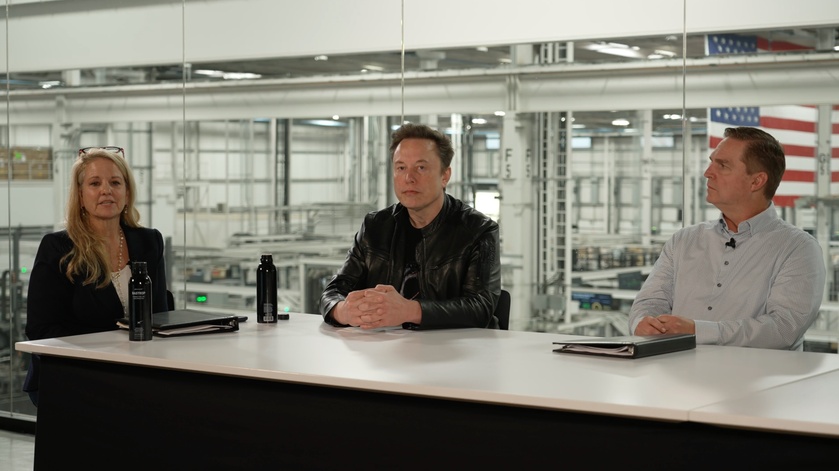
During the livestreamed Q3 2026 earnings call, CEO Elon Musk, President Gwynne Shotwell and CFO Bret Johnsen discussed Starlink mobile, Starship, AI data center buildout and possible SpaceX-Tesla merger.

Musk said that forming a merger with Tesla would be a "good idea" and confirmed that special committees of independent directors have been established at both companies to discuss the tie-up. He cautioned that the merger is not a certainty and noted the high hurdle of requiring a 50% vote of all Tesla shares.

"I do think there’s a lot of merit to combining the companies as we are pretty much in the superintelligence singularity, and there’s a lot to be gained from cooperating,” Musk said, referring to the development of software, chips and more.

“Do I think it would be a good idea? Yes,” Musk said. “But at the end of the day, the shareholders have to be supportive of this.”

Musk said that on the Tesla side, “we will need a 50% vote of all shares -- not just those who vote -- but of all shareholders, and that’s quite a high hurdle.”

The Connectivity segment reported $5.2 billion in revenue with 13.6 million consumer subscribers. Starlink Mobile surpassed 22 million monthly users, with new carrier partnerships activated in countries such as Uganda, the Democratic Republic of Congo, and Costa Rica.

Musk highlighted relentless demand from hyperscalers for SpaceX data centers, citing investments in the Colossus infrastructure and AI offerings like Grok. The AI segment's rapid growth is attributed to cloud services, the acquisition of Cursor, and increased enterprise adoption of Grok. He also said on that SpaceX aims to reach “volume production” of AI chips, now in development with partners Tesla and Intel, during the third quarter of 2028 at the Terafab factory that’s planned in Texas.

SpaceX successfully launched its first revenue-generating Starship mission, deploying 26 Starlink V3 satellites. Musk emphasized the goal of fully recovering the orbital launch vehicle and targeting a crucial orbital refueling demonstration for early 2027.

Johnsen forecasted Q1 2027 revenue between $33 billion and $37 billion, while Musk projected annual recurring revenue could reach $500 billion to $1 trillion by the end of 2027. Capital expenditures came in at $19.59 billion, slightly above estimates but lower than anticipated given the scale of AI investments.

This was SpaceX’s second-ever public earnings report following its June 2026 IPO. The company’s valuation sits at approximately $2 trillion, while Tesla is valued at roughly $1.5 trillion. The shift to profitability marks a significant transition for the spaceflight giant, with its AI and satellite communications units now outpacing its traditional launch services in revenue contribution.

Read full Article
post photo preview
Bandwagon-5: SpaceX Falcon 9 Deploys Starfall, 31 Other Payloads On Rideshare Mission

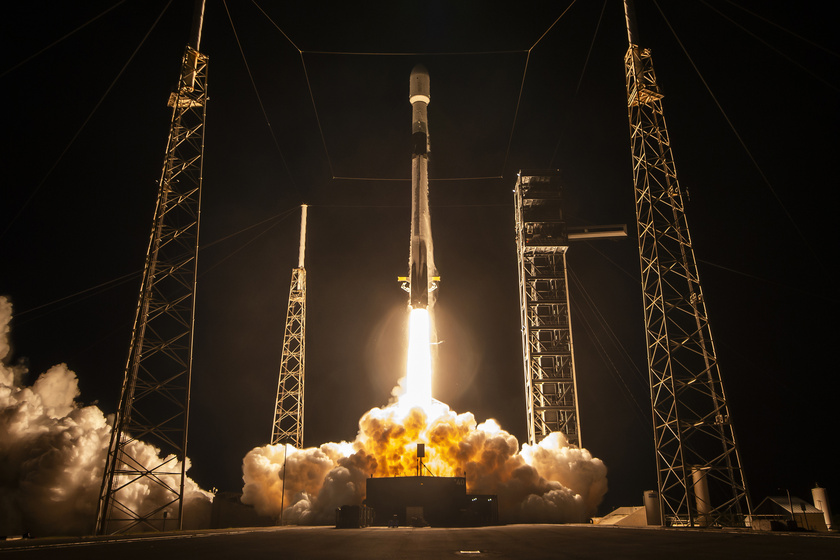
SpaceX Falcon 9 launched the Bandwagon-5 rideshare mission on Tuesday (Oct. 20), at 1104 UTC from Space Launch Complex 40 (SLC-40) at Cape Canaveral Space Force Station, Florida, carrying 32 payloads, including the company’s own Starfall reentry capsule.

The Falcon 9 first stage booster B1085 landed on the droneship A Shortfall of Gravitas** in the Atlantic Ocean about nine minutes after liftoff as planned. B1085 previously supported 18 missions including Crew-9, RRT-1, Blue Ghost M1, Fram2, SXM-10, MTG-S1, EchoStar XXV, SXM-11 and 10 Starlink missions.

About 57 minutes after liftoff, the Falcon 9 upper stage started deploying the 32 payloads, with Starfall separating from the upper stage 2 hours and 48 minutes after launch. The payloads include a mix of cubesats and microsats for commercial, government, and research customers across a mid-inclination low Earth orbit.

Standing 0.75 meters tall and 3.1 meters wide, Starfall is a 2,100-kilogram disk-shaped, uncrewed reentry vehicle designed for affordable point-to-point cargo delivery and returning microgravity-manufactured goods. It can return up to 1,000 kilograms of payload to Earth. This flight marked the capsule's second demonstration mission, following its debut on June 23, 2026.

"Starfall enables affordable, routine access to a microgravity environment, providing unique opportunities for on-orbit manufacturing, scientific research, and testing," SpaceX wrote on X.

Starfall wasn't the only reentry capsule on Bandwagon-5. Among the other 31 payloads, was W-Series 7, the latest orbital "mini-factory" built and operated by the California company Varda Space Industries. The W-Series spacecraft are designed to both host the production of valuable goods such as pharmaceuticals and bring them safely down to Earth, the company has said.

The other payloads on Bandwagon-5 are a mix of "cubesats and microsats," according to SpaceX's mission description. Among them are Pelican-12, a sharp-eyed Earth-observation satellite built by the San Francisco company Planet; and payloads from operators such as Tomorrow.io, Capella Space, Umbra Lab, HawkEye 360 (radio-frequency monitoring), Iceye, and Xona Space Systems.

Bandwagon is one of two SpaceX rideshare programs that deploy several payloads at a time for various customers. The other, known as Transporter, has been busier, flying 18 missions to date.

Read full Article
October 19, 2026
post photo preview
MMX: Japan Launches Historic Mission To Return Mars Moon Phobos' Sample

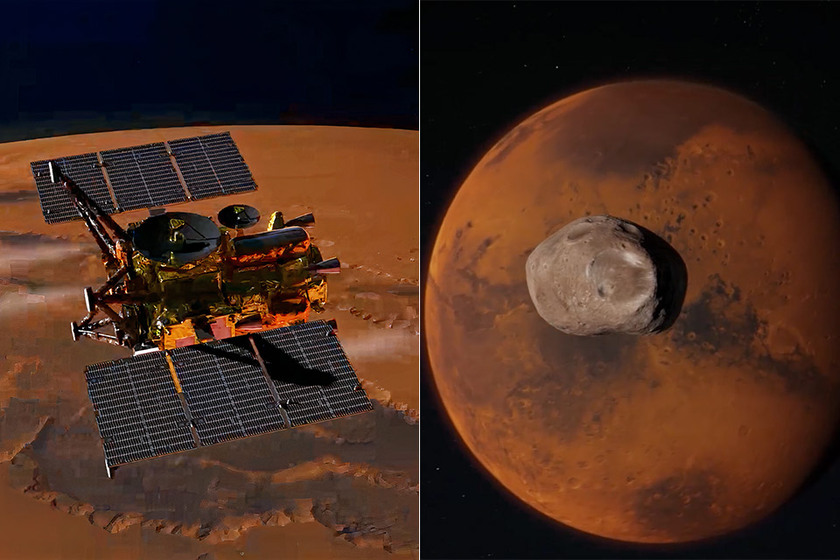
Japan Aerospace Exploration Agency, JAXA's H3-24L rocket launched the Martian Moons eXploration (MMX) mission on Monday (Oct. 19), at 1941 UTC, from Pad-2 at the Yoshinobu Launch Complex within the Tanegashima Space Center. The mission aims to become the first to return samples from Phobos, Mars’s larger moon, with a targeted Earth return in 2031.

This was the 10th liftoff of Japan's expendable, two-stage H3 rocket (flight H3 F10), which was jointly developed by JAXA and Mitsubishi Heavy Industries. After clearing its launch pad today, the 63-meter rocket flew a nominal trajectory through its ascent corridor over the Pacific Ocean, jettisoning its four solid boosters in pairs just before the flight clock reached two minutes. The launch vehicle shed its payload fairings about one minute and 20 seconds later, exposing MMX to the vacuum of space for the first time.

H3's first stage, powered by two LE-9 rocket engines, channels a mixture of liquid hydrogen and liquid oxygen to produce a combined thrust of 331,000 pounds (1,471 kN), according to Mitsubishi Heavy Industries. As the mission clock approached T+5 minutes, H3 executed its main engine cutoff procedure and separated from the second stage, which ignited its engines for a 5.5-minute burn about 10 seconds later.

All continued to go to plan after that. The H3's upper stage ignited its engine for a second time for a trans-Mars injection burn about one hour and four minutes after liftoff, a maneuver that lasted roughly six minutes and 25 seconds and took MMX to a maximum velocity of about 38,858 kilometers per hour(kph).

MMX was released from the rocket's upper stage right on schedule, about one minute after the completion of that burn and roughly 71 minutes after liftoff. The success elicited loud cheers in mission control, which viewers saw and heard on JAXA's launch webcast.

The spacecraft is now under its own power, and on course for Mars. The interplanetary transit will last about 10 months, with the spacecraft scheduled to arrive at the Red Planet in August 2027. When it does, MMX's propulsion module will execute an orbital insertion burn to place itself in a quasi-satellite orbit (QSO) around Phobos, which places MMX within the space around the moon as both circle Mars.

The primary goal of MMX is to collect at least 10 grams of Phobos regolith to determine if the Martian moons are captured asteroids or formed from debris ejected by an ancient impact on Mars. The mission will also conduct flybys of the smaller moon, Deimos, and study Mars itself to understand the early solar system's evolution. The spacecraft carries 13 scientific instruments, including MEGANE (developed with NASA) to measure elemental composition via gamma rays and neutrons, and MIRS for infrared mineral analysis.

Led by JAXA with contributions from NASA, ESA, CNES (France), and DLR (Germany), the ~4,480 kilogram spacecraft consists of propulsion, exploration, and return modules. Key components include the Idefix rover (developed by France and Germany) for surface reconnaissance and a lander equipped with both a coring sampler and a pneumatic surface sampler.

NASA has also invested about $87 million through the end of the mission, which includes funding for United States scientists and astromaterials experts on the MMX team. At least 15% of the planned 10-gram (0.35 ounces) returned Phobos sample will be reserved for NASA's study. Those materials will be transferred and maintained at the agency's Johnson Space Center in Houston for analysis and long-term preservation.

MMX is not the first Phobos sample-return project to take flight. That distinction goes to Russia's Phobos-Grunt ("Phobos-Soil") mission, which launched in November 2011 but failed to get out of Earth orbit due to a rocket glitch. The 14.5-ton spacecraft eventually crashed back to Earth over the Pacific Ocean in January 2012.

Read full Article
See More
Available on mobile and TV devices
google store google store app store app store
google store google store app tv store app tv store amazon store amazon store roku store roku store
Powered by Locals