The United States and Iran have reportedly agreed to a temporary cessation of hostilities following an intense 72-hour cycle of tit-for-tat military strikes. Negotiators from both nations are scheduled to meet Tuesday, June 30, 2026, in Doha, Qatar, in an urgent bid to save a fragile interim peace agreement.
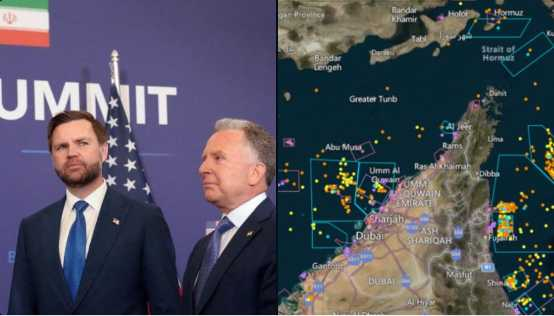
The emergency talks represent a shift in focus toward the Strait of Hormuz, the world's most critical maritime energy choke point, which has become the primary flashpoint pushing both sides back to the brink of war.
The recent flare-up stems from a breakdown in an interim ceasefire originally signed on June 17, 2026. The truce unraveled when a multinational maritime body overseen by the U.S. Navy announced it would expand a shipping route near Oman to bypass direct Iranian oversight. Iran fiercely opposed this, maintaining that it retains absolute governance over transit through the Persian Gulf.
An Iranian projectile struck a cargo vessel in the Strait of Hormuz, drawing U.S. strikes on Iranian targets, followed by an attack on the Panamanian-flagged tanker Kiku which was carrying crude oil for Qatar's state-run energy company,--and another round of heavy US strikes on Sirik, Bandar-e Lengeh, and Qeshm Island, and then retaliatory Iranian strikes on US bases in Kuwait and Bahrain.
President Donald Trump confirmed the strikes on social media, warning that if Iran violated the ceasefire again, "the Islamic Republic of Iran will no longer exist!" The strikes targeted coastal radar sites, air defenses, communication towers, and minelaying infrastructure.
With the regional conflict threatening to spiral out of control, Iran threatened to halt all diplomatic channels completely. However, mediated diplomacy managed to pull both sides back. According to reports, U.S. and Iranian officials agreed to halt kinetic military operations late Sunday, paving the way for the emergency summit in Doha.
The current escalation is occurring within the framework of an ongoing conflict that began earlier this year on February 28, 2026. A 14-point interim peace memorandum (frequently referred to as the Islamabad memorandum) was drafted to halt full-scale war, but it left critical ambiguities that both sides interpret differently.
The upcoming talks in Qatar will have to navigate three main systemic rifts:
Control of the Strait: Iran claims absolute authority over traffic navigating the Persian Gulf. The U.S. and its Gulf allies view it as an international waterway. A proposed "hotline" between the U.S. military and the IRGC to coordinate maritime traffic—agreed upon last week in Switzerland by U.S. Vice President JD Vance and Iranian representatives—failed to become operational before the fighting resumed.
Sanctions vs. Blockades: Under the June 17 agreement, Iran agreed to ensure safe passage for commercial ships in exchange for the U.S. lifting blockades on Iranian ports and waiving specific sanctions. Iranian officials claim the U.S. failed to grant them access to previously frozen financial funds, invalidating the terms.
The Regional Fronts: The broader framework requires a ceasefire across all regional fronts. Ongoing friction between Israel and Iran-backed Hezbollah in southern Lebanon continues to strain the wider U.S.-Iran peace process, as flare-ups there directly bleed into the Gulf maritime theater.
US and Israeli strikes (Operation Epic Fury / Roaring Lion) which started on Feb. 28, 2026, targeted Iranian military, nuclear-related, and government sites amid stalled nuclear talks. These included high-profile assassinations, notably Supreme Leader Ali Khamenei.
Iran retaliated with missiles, drones, and proxy actions against Israel, US bases, and Gulf states (e.g., Bahrain, Kuwait, UAE, Saudi Arabia). Iran also blocked or disrupted the Strait of Hormuz, causing major global oil disruptions.
A short ceasefire was brokered in April (via Pakistan). Tensions persisted with a US naval blockade, Iranian closure and disruption of Hormuz, and Israel-Hezbollah fighting. In mid-June, the Islamabad Memorandum (MOU) was signed to end major fighting, lift the US blockade, reopen shipping (with Iran committing to safe passage), and allow talks on deeper issues like Iran's nuclear program, sanctions, and uranium stockpile.