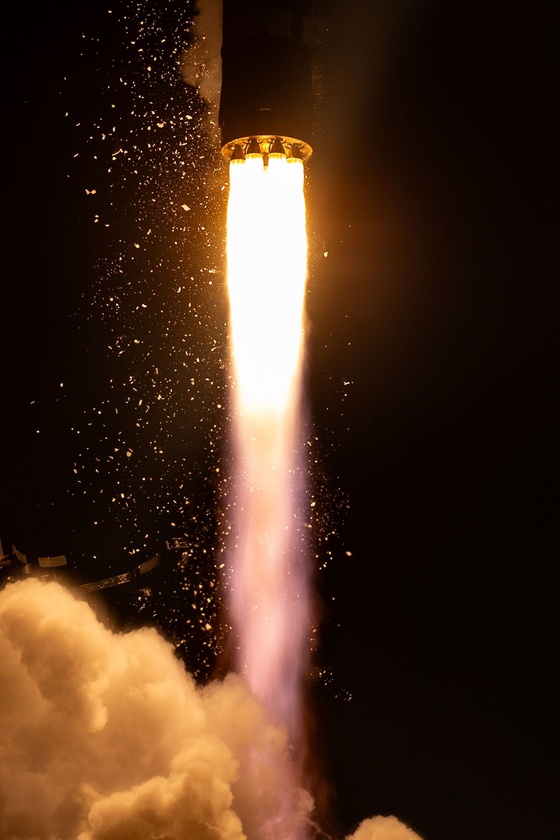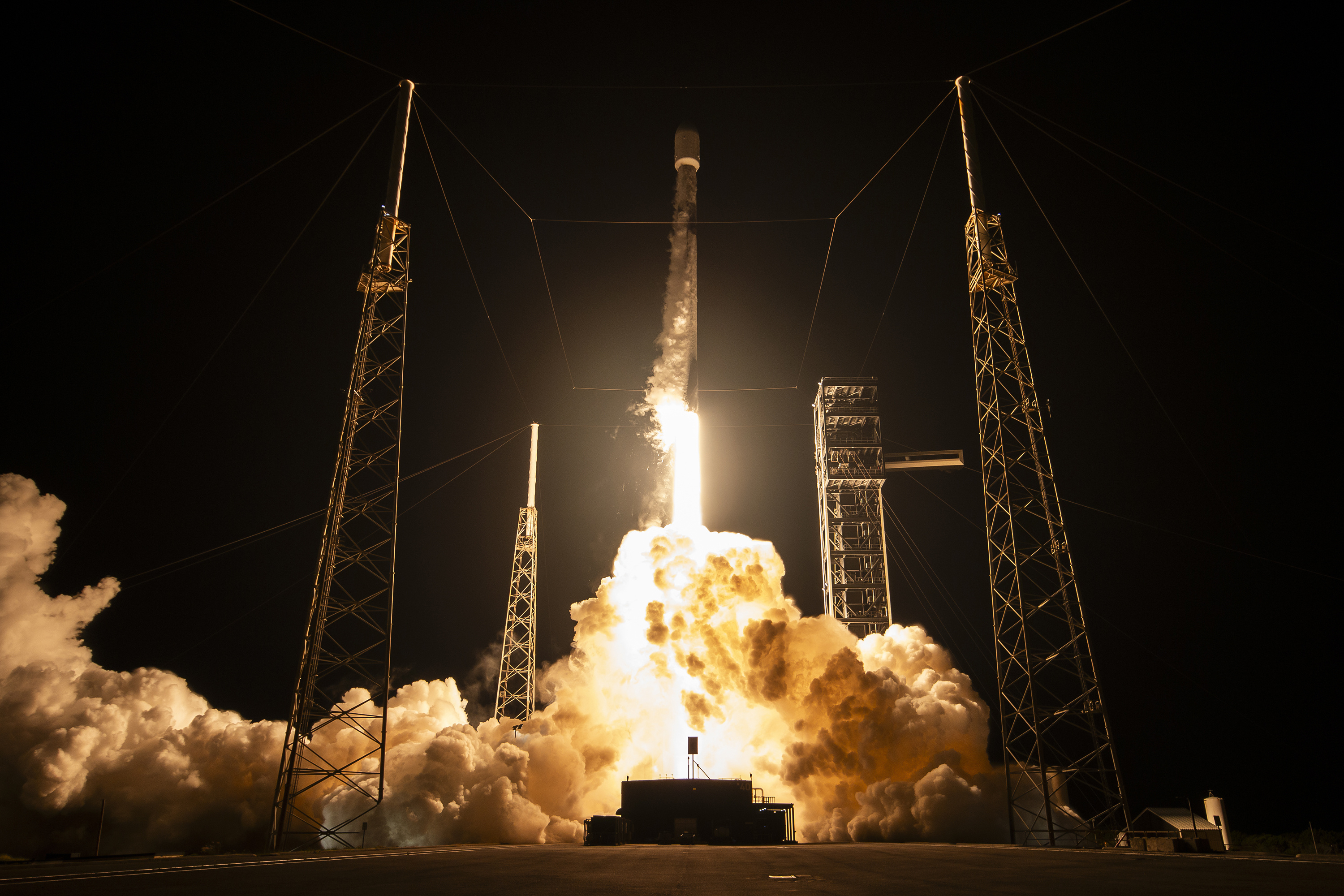
SpaceX launched three AST SpaceMobile BlueBird Block 2 satellites (BlueBird 8, 9, and 10) aboard a Falcon 9 rocket from Space Launch Complex 40 at Cape Canaveral Space Force Station on Wednesday, at 0639 UTC on BlueBird 8-10 mission; marking a critical recovery for AST SpaceMobile following the loss of its previous satellite.
The rocket's first stage booster B1077, which touched down 8.5 minutes later on the drone ship "A Shortfall of Gravitas in the Atlantic Ocean, completed its 29th flight, previously supporting missions such as Crew-5, GPS III SV06, and CRS-28. The upper stage deployed the satellites into Low Earth Orbit starting 54.5 minutes after launch, with BlueBird 10 deploying last in a sequence spaced roughly five minutes apart.
The launched spacecraft are next-generation Block 2 BlueBird satellites, each featuring a massive communications array spanning approximately 2,400 square feet (223 square meters). These are the largest commercial communications arrays ever deployed in Low Earth Orbit. The satellites are designed to provide space-based cellular broadband directly to unmodified smartphones, supporting voice, data, and video over standard cellular bands without requiring specialized hardware -- this is a competitor to SpaceX's own Starlink Mobile.
Before today, the company had launched seven spacecraft. This launch serves as a direct replacement for BlueBird 7, which was lost in April 19 due to an upper stage anomaly during a Blue Origin New Glenn launch. AST SpaceMobile estimates the carrying value of the lost satellite at $155–160 million. BlueBird 7 was the second of AST SpaceMobile's "next-generation" spacecraft to launch, after BlueBird 6, which reached LEO successfully atop an Indian LVM3 rocket in December 2025.
"Our upcoming launch marks another important milestone as we continue advancing the deployment of our space-based cellular broadband network," Scott Wisniewski, president of AST SpaceMobile, said in a June 9 statement. "Each BlueBird satellite launched expands our ability to support seamless space-based broadband mobile connectivity directly to everyday smartphones," he added.
Following the successful deployment, AST SpaceMobile (ASTS) shares rose 4%, reflecting investor confidence in the company's progress toward its goal of deploying a 45-satellite constellation by year-end. AST SpaceMobile currently holds agreements with nearly 60 mobile networks globally, including AT&T, Verizon, and Vodafone. SpaceX (SPCX) shares gained 2.98% in pre-market trading,