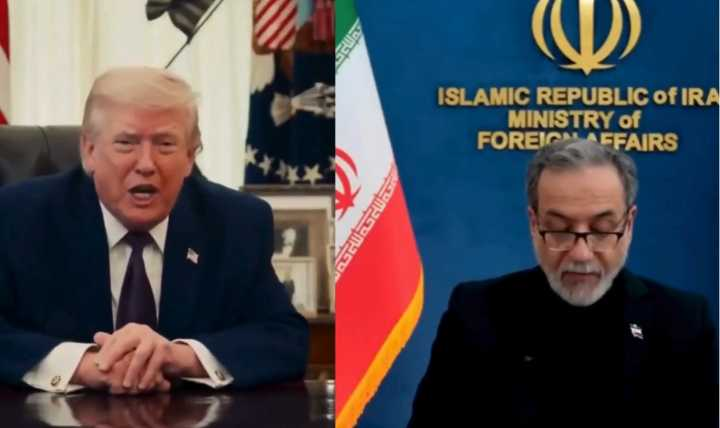
The United States and Iran officially reached a peace deal with a 14-point memorandum of understanding (MOU) on Sunday, ending a nearly four-month war that began with coordinated U.S.-Israeli strikes on February 28.
Pakistan Prime Minister Shehbaz Sharif announced the agreement on X, confirming an "immediate and permanent termination of military operations on all fronts," while President Donald Trump declared the deal "complete" on Truth Social and authorized the removal of the U.S. naval blockade to reopen the Strait of Hormuz.
Tensions nearly derailed the agreement following an Israeli airstrike on Beirut’s Dahiyeh district earlier Sunday, which killed three people and drew sharp criticism from Trump, who told Israeli Prime Minister Benjamin Netanyahu he had “no judgment.”
"This morning’s attack on Beirut should not have happened, particularly on a special day when we are so close to a Peace Deal with Iran," Trump wrote on Truth Social. "Israel has the right to defend itself against threats, but the attack it was responding to was very small and meaningless, nobody was hurt, injured, or killed, and should not disrupt this important process. We are very close to a Deal that will bring peace to the region, including to Lebanon, and all sides should stand down. There should be no more attacks by Israel anywhere in Lebanon, but there should also be no more attacks by any other party, including Hezbollah, against Israel. This could be the beginning of a long and beautiful peace — Let’s not blow it! Thank you for your attention to this matter."
In response to the strike, Iranian officials initially threatened retaliation, but Trump reportedly asked Iran not to respond to preserve the negotiations. Iranian state media later confirmed that commitments to the MOU would take effect pending the official signing, despite hardliner opposition to the terms.
"The Deal with the Islamic Republic of Iran is now complete," Trump, who is celebrating the breakthrough on his 80th birthday, wrote. "Congratulations to all! I hereby fully authorize the toll free opening of the Strait of Hormuz, and, simultaneously herewith, authorize the immediate removal of the United States Naval blockade. Ships of the World, start your engines. Let the oil flow!"
Key provisions of the 14-point agreement reportedly center on a 60-day ceasefire during which nuclear talks will be held. It calls for immediate and permanent cessation of all military operations on all fronts, explicitly extending to the conflict in Lebanon. The Strait of Hormuz, the critical maritime chokepoint to global oil and gas shipping will be reopened on signing the deal Friday. The U.S. has agreed to fully dismantle its naval blockade.
The U.S. will reportedly lift key oil sanctions, and implement a phased release of up to $24 billion in frozen Iranian assets (with $12 billion potentially released upfront to facilitate the start of formal negotiations).
The MOU framework gives both nations a tight 60-day window to negotiate a permanent resolution regarding Iran's damaged nuclear infrastructure and its stockpile of highly enriched uranium.
Trump emphasized that no money will change hands until requirements are met, framing the accord as a "wall to no nuclear weapon" distinct from President Obama's 2015 JCPOA agreement. An official signing ceremony is scheduled for Friday, June 19, in Switzerland, following electronic signatures and technical discussions mediated by Pakistan and Qatar.
Prime Minister Sharif wrote: "Following intensive talks, we are pleased to announce that the Peace Deal between the United States of America and Islamic Republic of Iran has been REACHED. Both sides have declared the immediate and permanent termination of military operations on all fronts, including in Lebanon. The official signing ceremony will be on Friday, 19 June in Switzerland.
"We would like to thank the United States of America and the Islamic Republic of Iran for their commitment to finding a diplomatic solution to the conflict. We would also like to extend our sincere appreciation to our brothers in this mediation effort, the great leadership of State of Qatar, for their support in reaching this agreement. I would also especially thank the visionary leadership of Kingdom of Saudi Arabia and Republic of Türkiye for their immense contributions in this regard.
"With the agreement now in place, mediators will facilitate a series of meetings this week. These pre-implementation discussions will lay the foundation for the technical talks and the official signing ceremony."
Vice President JD Vance told Fox News the agreement is "a great thing for the American people," specifically noting it would drive down the cost of energy and alleviate high gas prices caused by the conflict. Vance said he'll be there to sign the MOU Friday in Switzerland. "I certainly plan to be there, but it's possible the president himself could be there," he said. "We're still figuring out the logistics on who's going to attend that signing ceremony."
Vance revealed how close the deal came to collapsing earlier on Sunday after an Israeli airstrike targeted a southern suburb in Beirut. "After the Israelis struck Beirut, we were very worried," Vance admitted to Fox News. "We saw a lot of evidence that the Iranians were going to launch a large number of missiles at the Israelis."
Ultimately, after more than 14 hours of continuous negotiating marathons, Qatari and Pakistani mediators successfully convinced the Iranian leadership to stand down and accept the text of the memorandum.
Vance, Special Envoy Steve Witkoff and Jared Kushner were reportedly pushing for the peace talks, while Secretaries of State and War, Marco Rubio and Pete Hegseth respectively, pushed for continued bombing and blockade of Iran to weaken the government in Tehran.
Hardline factions in Iran have also expressed opposition to the deal, with protests erupting against Foreign Minister Abbas Araghchi over perceived concessions. Deputy Foreign Minister Kazem Gharibabadi reportedly said that some of the revisions Iran asked to make in the text of the MOU were accepted after the Israeli escalation in Lebanon on Sunday. He claimed the threats issued by Iran's armed forces to retaliate against Israel "helped facilitate progress in the negotiations."
"The armed forces were prepared to deliver a decisive response. It contributed to finalizing the text, and advanced several issues that remained unresolved in the negotiations," Gharibabadi said.
Israel was largely sidelined from the final stages of these negotiations. Because the terms mandate a permanent end to military operations in Lebanon, it remains highly uncertain how Prime Minister Netanyahu will respond, or whether Israel will willingly comply with a ceasefire tied to a U.S.-Iran deal. Netanyahu had reportedly rejected Trump's request to withdraw Israeli troops from Southern Lebanon, and has vowed to continue attacks on Hezbollah targets.
The deal faces skepticism from some U.S. Republicans, zealous Zionists and Israeli officials who argue it lacks immediate restrictions on Iran’s ballistic missile arsenal or support for regional militias. However many 'America first' conservatives and Trump supporters who have been against the war, praised the deal, and urged the president to focus on domestic issues.
Global oil prices fell more than $3 a barrel, and Asian stock markets jumped following the deal announcement.