keneci Network
News • Science & Tech • Comedy
Trump Cancels Planned Attack On Iran After Overnight Strikes, Citing Progress On Peace Negotiations
June 11, 2026
post photo preview

President Trump announced Thursday, he's canceling planned US military strikes on Iran tonight, claiming that progress has been made in the ongoing peace negotiations with the Persian nation. Iranian state-affiliated media however deny the claim, reportedly saying "no text for a preliminary memorandum of understanding with the United States has been approved."

"Based on the fact that discussions with the Islamic Republic of Iran have been brought to the highest level of Iranian leadership and approved, I have, as President of the United States of America, cancelled the scheduled strikes and bombings against Iran this evening," Trump wrote on Truth Social Thursday. "Discussions and final points have been, in both concept and great detail, approved by all parties involved, including the United States, Israel, Saudi Arabia, UAE, Qatar, Turkey, Pakistan, Bahrain, Kuwait, Jordan, Egypt, and others. The Naval Blockade will remain in full force and effect until this Transaction is finalized — Time and place of the signing to be announced shortly."

Trump's announcement comes after U.S. launched "self-defense strikes" overnight, against multiple Iranian targets on Wednesday (June 10), starting at 2115 UTC (5:15 p.m. ET) Wednesday, following President Donald Trump's order to pressure Tehran into signing a peace deal. In retaliation, Iran fired ballistic missiles and drones at U.S. military assets in Kuwait, Jordan, and Bahrain, marking the second consecutive day of exchanged fire that has severely strained an April ceasefire.

CENTCOM confirmed the strikes targeted military surveillance capabilities, communication systems, and air defense sites across southern Iran, including areas near Bandar Abbas, Sirik, and Minab.

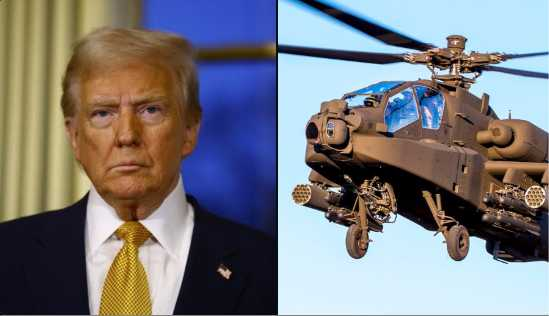
Defense Secretary Pete Hegseth stated the attacks were intended to "negotiate with bombs" by degrading Iranian capabilities and forcing a diplomatic breakthrough after negotiations stalled. The U.S. military described the operation as a response to "unwarranted and continued aggression," specifically citing the recent downing of a U.S. attack helicopter near the Strait of Hormuz.

Iran's Islamic Revolutionary Guard Corps (IRGC) claimed to have struck 18 U.S. military targets, including air bases in Kuwait (Ali Al-Salem, Ahmed Al-Jaber) and Bahrain (Sheikh Isa), as well as a command center in Jordan. While Jordan claim intercepting all incoming missiles without casualties, Bahrain experienced falling shrapnel that caused minor injuries and property damage, and Kuwait temporarily closed its airspace** due to the threat. Iran also declared the Strait of Hormuz closed to all vessels.

The escalation occurs amidst failed efforts to finalize a peace agreement, with Trump threatening to "bomb the shit out of them" if a deal is not signed immediately. Iran's foreign ministry condemned the U.S. strikes on civilian water infrastructure as a "calculated war crime," declaring the existing ceasefire "practically meaningless." Concurrently, the U.S. has intensified a naval blockade, recently striking oil tankers accused of violating restrictions, which has contributed to rising global oil prices.

Trump had earlier on Thursday threatened to conduct more devasting airstrikes on Iran, which he has now called of. Though both Iranian and Israeli sources deny any knowledge of a US-Iran agreement cited by the president.

Negotiations reportedly continued late into Wednesday night in Tehran as Qatari envoy Ali Al-Thawadi and Iranian Foreign Minister Abbas Araghchi worked to bridge the remaining gaps between the U.S. and Iran. And both parties believed on Wednesday that they had reached an agreed-upon text that the U.S. would also accept, pending approval by Iran's supreme leader.


community logo
Join the keneci Network Community
To read more articles like this, sign up and join my community today
0
What else you may like…
Videos
Posts
Articles
SpaceX Starlink Internet Satellites

With Starlink internet, data is continuously being sent between a ground dish and a Starlink satellite orbiting 550km above. Furthermore, the Starlink satellite zooms across the sky at 27,000 km/hr! MORE VIDEOS ON KENECI NETWORK RUMBLE CHANNEL: https://rumble.com/c/Keneci

00:28:08
Elon Musk, DOGE Speak On Waste And Fraud

US Department of Government Efficiency Services (USDS) led by Elon Musk speak on the "mind-boggling" fraud and waste in UInited States federal government

00:00:45
January 17, 2025
SpaceX Launches Starship 7th Test Flight

SpaceX successfully executed its second-ever “chopsticks” catch of a Super Heavy booster (or Booster 14) using the “Mechazilla” launch tower on Thursday(Jan. 16), during the seventh uncrewed test flight of the company's 123-meter Starship rocket. However, the megarocket's upper stage(or Ship 33) was lost approximately 8.5 minutes into the flight in a “rapid unscheduled disassembly(RUD)” or explosion

00:10:30
Welcome to Keneci Network!

Join the conversations!

December 09, 2025
Bitcoin White Paper By Satoshi Nakamoto

Bitcoin white paper

Bitcoin_White_Paper.pdf
September 17, 2024
Charges Against Sean 'Diddy' Combs In Grand Jury Indictment

The rapper was charged with racketeering conspiracy, sex trafficking by force, fraud or coercion, and transportation to engage in prostitution in the indictment unsealed Tuesday(Sept. 17)

Combs-Indictment-24-Cr.-542.pdf
post photo preview
IRGC's 'Surprise Attack' Targets American Base In Jordan, As US, Saudi Arabia Strike Iraqi Sites Linked To Iran-backed Militia, PMF

The Islamic Revolutionary Guard Corps (IRGC) late Tuesday, launched multiple ballistic missiles and drones at U.S. military bases in Jordan, an operation U.S. Central Command (CENTCOM) described as an "attempted surprise attack" on U.S. forces in the Middle East.

At 2145 UTC (5:45 p.m. ET, July 28), IRGC forces fired multiple ballistic missiles from Khomein (a city in central Iran known for missile-related sites) toward U.S. targets, including around the Muwaffaq Salti Air Base near Azraq and a CENTCOM center in Jordan. This marked the first ballistic missile attack on a U.S. base in the region since President Trump ordered a pause on U.S. strikes against Iran on July 24, 2026, to allow for diplomatic negotiations regarding the Strait of Hormuz.

CENTCOM claimed in a statement that all Iranian missiles were successfully intercepted, with no reported damage or casualties to U.S. forces.

"At 5:45 p.m. ET today, Islamic Revolutionary Guard Corps forces launched multiple ballistic missiles from Iran in an attempted surprise attack on U.S. forces based in the Middle East. All Iranian missiles were successfully intercepted. U.S. forces remain vigilant and at a high state of readiness," CENTCOM wrote on X.

Iranian media outlet IRNA published a statement confirming the barrage aimed at the U.S. air base and Central Command node in Jordan, declaring: "As long as the threats against the Islamic Republic of Iran continue and the illegal and evil actions of the American forces against our interests continue, the resistance will continue."

Meanwhile CENTCOM also announced on X that U.S. and Saudi Arabian forces conducted precision strikes in eastern Iraq against sites linked to the Popular Mobilization Forces (PMF). The attacks targeted Iran-aligned militants directed by the IRGC to launch over 30 aerial drone attacks in the previous 72 hours, as well as to attack Saudi energy infrastructure, CENTCOM claimed. The strikes destroyed several logistics hubs and weapons storage facilities used by IRGC-backed militias part of the PMF network.

The Saudi Defense Ministry confirmed its participation, stating it reserved the right to defend itself after Iranian-backed militias launched drones at oil facilities in the Eastern Province. Major General Turki Al-Maliki, spokesperson for the Saudi Ministry of Defense, stated that Saudi Arabia coordinated directly with CENTCOM in exercising its right to self-defense under Article 51 of the UN Charter.

PMF reported attacks on their Basra Operations Command around 2 a.m. local time, wounding at least two members.

Tensions also flared in the Red Sea, where Houthi rebels claimed to have fired missiles at a Saudi oil tanker for violating a Houthi blockade, and in the Strait of Hormuz, where the IRGC reported striking three oil tankers.

The region had seen intense fighting since late February, with the U.S. carrying out 13 nights of airstrikes against Iran in late July to degrade its ability to disrupt shipping. President Trump paused the campaign to engage in "very deep talks" with Tehran, warning that failure would result in **"very strong military action."

=================

 
UPDATE | Trump Halts US Strikes On Iran, As Clashes Between The Houthis and Saudi Arabian Forces Escalate With Aramco Attack

President Donald Trump ordered a halt to U.S. military strikes on Iran on Friday, ending a 13-day streak of consecutive nightly attacks to create space for diplomatic negotiations. He reportedly met with advisers to discuss potential escalation and weighed whether to launch a "massive attack;" as military officials raised worries about U.S. readiness for wider conflicts with adversaries like China.

The decision came shortly after an Omani delegation arrived in Tehran to discuss reopening the Strait of Hormuz, with Trump telling reporters at the White House he preferred to "make a deal" while keeping the military "locked and loaded."

"We're talking to [the Iranians] right now. I think they're getting more and more serious as the days go by. We're locked and loaded and ready to go, but we're talking to them," Trump said.

Later on Friday, during his remarks at the White House Correspondents Association dinner, Trump said he didn't think Iran is ready to make a deal at the moment, "but I'm willing to listen."

The Israeli security cabinet and Israel Defense Force reportedly expected another round of U.S. strikes on Friday and prepared for a massive U.S. attack that could trigger a retaliatory attack on Israel, Israeli officials say.

Trump's decision comes at a critical juncture as regional conflict spreads, maritime blockades persist, and U.S. ammunition stockpile depletes. Iran has closed the Strait of Hormuz, while U.S. Central Command (CENTCOM) has maintained an active maritime blockade to prevent tankers from entering or exiting Iranian oil terminals (such as Kharg Island).

As part of the blockade operations, U.S. forces targeted non-compliant oil tankers—including firing a Hellfire missile directly into the engine room of a vessel attempting to run the blockade—disabling its propulsion system without sinking the ship. Dozens of vessels have been turned back or redirected, according to CENTCOM.

Meanwhile the conflict is escalating on another front, as Iran-aligned Houthi forces launched coordinated ballistic missile and drone strikes overnight on Saturday, targeting major Saudi Aramco refining facilities in Jizan and Yanbu along the Red Sea. Satellite thermal imaging and geolocated footage confirmed active fires and smoke plumes at the Jizan refinery complex.

With transit through the Strait of Hormuz severely disrupted, attacks on Saudi Arabia's Red Sea oil infrastructure directly threaten alternative export routes, compounding global energy market volatility.

Regional mediators are currently pressing for an extended cease-fire or de-escalation off-ramp, as threat of all out war remains high across CENTCOM's area of responsibility.

The ceasefire broke down in early July 2026 after Iranian forces attacked non-compliant commercial vessels near the Strait of Hormuz, after Tehran accused the US of breaking the memorandum of understanding.

The US responded with renewed strikes on Iranian military targets (air defenses, command sites, small boats, radars, etc.) to protect navigation. This led to multiple nights of US action, Iranian retaliation (including on US bases), and blockade enforcement. CENTCOM conducted strikes on Iran for roughly 13 consecutive nights until Friday, targeting capabilities threatening shipping in the Strait of Hormuz.

Read full Article
post photo preview
Trump's Jabs At 'War Hawk' Graham, Netanyahu Over Pickaxe Mountain Reports

In separate remarks Tuesday, at the memoraila service, for Senator Lindsey Graham at the Washington National Cathedral, and during a Fox News interview, President Donald Trump addressed foreign policy, the ongoing conflict with Iran, and his personal and political relationships with both the late senator and Israeli Prime Minister Benjamin Netanyahu who was also present at the ceremony along with Ukrainian President Volodymyr Zelenskyy and other top U.S. officials.

Trump affectionately characterized Graham as a man who "liked war" and was "extremely hawkish," saying during the Fox News interview and his eulogy that the senator "never saw a war he didn't like." While the president acknowledged Graham's recent shift toward support for negotiating a deal with Iran, he maintained that the late senator's primary instinct was military action, particularly regarding the conflicts in Iran and Ukraine.

The U.S. president described Graham as a "force of nature" and a "great politician" whose friendship evolved from their 2016 rivalry during the presidential election campaigns. He remembered Graham as a "true American original," a "beloved friend," and a "giant of the United States Senate" who died at age 71.

In the Fox News interview hours before hosting Netanyahu at the White House, Trump aired frustration regarding discussions over Iran.

Trump dismissed reports originating from Israeli sources regarding Iran’s heavily fortified subterranean nuclear facility at Pickaxe Mountain, located near the Natanz complex.

Asked about the reports, Trump said, "I don't need Bibi to tell me [that]... Bibi is telling me that because he wants me to stay involved. We know exactly what's going on." He continued, "I heard Bibi announce that. I said, 'Why didn't you just tell it to me? Why did you have to announce it to the world?' I know exactly what's going on at Pickaxe. It's not a big problem."

Trump also added that while the site remains an issue, "If we don't make a deal, we'll take it out very easily."

The public friction between the two leaders came during a pause in U.S. aerial bombardment against Iranian installations to explore diplomatic options. Netanyahu sought to ensure the U.S. maintained military pressure on the Iran's deeply buried nuclear infrastructure.

Graham's funeral served as an impromptu summit in Washington D.C., bringing together world leaders including Netanyahu and Zelenskyy, both of whom held separate closed-door meetings with Trump at the White House.

Read full Article
post photo preview
Ukraine Seeks To Avoid 'Escalation' After Strike On Iranian Ship In Caspian Sea: Foreign Minister

Ukrainian Acting Foreign Minister Andrii Sybiha held a "frank" phone conversation with Iranian Foreign Minister Seyyed Abbas Araghchi on Tuesday, following a Ukrainian long-range strike on a vessel in the Caspian Sea that killed one Iranian sailor.

Sybiha asserted that the attack was unintentional regarding civilian targets and emphasized that all Ukrainian actions are aimed solely at countering Russian aggression, accusing Tehran of being a "direct accomplice" to the war by supplying weapons to Moscow.

"I called Iran's Foreign Minister Araghchi for a frank conversation, Sybiha said. "Diplomacy is about direct conversation, even when it's difficult. I stressed that our goal is to avoid unnecessary escalation."

President Volodymyr Zelenskyy announced that Ukraine had struck vessels in the Caspian Sea involved in transporting military cargo from Iran to Russia. In response, Araghchi condemned the strike as a "blatant UN Charter violation" allegedly done at Israel’s behest; he summoned Ukraine’s diplomats, demanded restitution for losses and warned that the attack "cannot go unanswered."

Sybiha said that while the strike targeted military logistics supporting Russia, there was no intent to harm civilians or civilian vessels. He urged Iran to halt support for Russia’s war against Ukraine, and refrain from escalatory steps, asserting that Russia bears full responsibility for all casualties.

In an X post, Araghchi acknowledged Sybiha’s assurance that Ukraine "seeks no escalation" but maintained that any attack on Iranian citizens is unacceptable. He insisted on accountability and restitution, dismissing Ukraine’s claims as "lies" and accusing Kyiv of trying to shift attention from Russia’s attacks on Black Sea shipping.

The Caspian Sea is a strategic supply route between Iran and Russia. This incident marks the first direct link between the war in Ukraine and broader Middle East tensions, with Iran having supplied Shahed drones to Russia since 2022, which have been used in strikes against Ukrainian forces.

Read full Article
See More
Available on mobile and TV devices
google store google store app store app store
google store google store app tv store app tv store amazon store amazon store roku store roku store
Powered by Locals