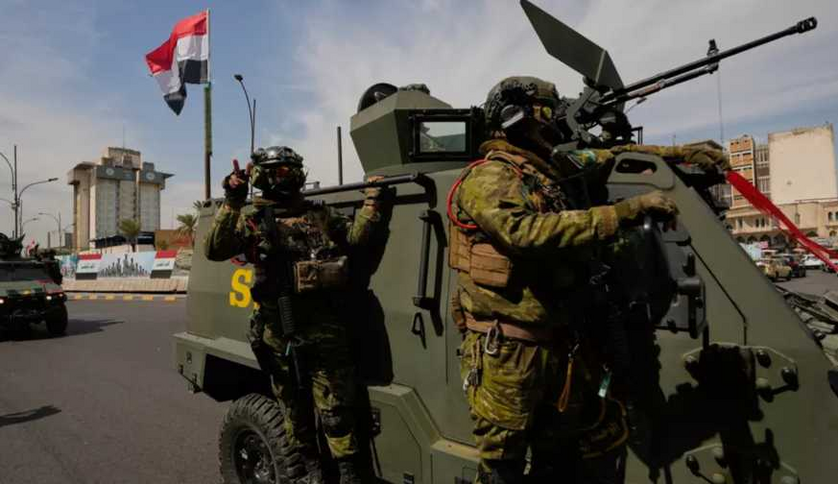
The fragile ceasefire between the United States and Iran has experienced one of its most severe ruptures yet following a recent rapid, high-stakes exchange of fire across the Persian Gulf theater.
The escalations culminated in a wave of Iranian missile and drone launches targeting U.S. and allied infrastructure in Kuwait, Bahrain, and regional waters, responding directly to U.S. Central Command (CENTCOM) enforcing its maritime blockade against an Iran-linked shadow fleet tanker.
The flashpoint began in international waters near the Strait of Hormuz early Tuesday. U.S. Central Command observed the M/T Lexie (a 300,000 deadweight ton crude oil tanker flying the flag of Botswana and previously sanctioned by the U.S. Treasury) moving toward Iran’s primary oil export hub at Kharg Island.
According to U.S. military advisories, empty tankers attempting to enter blockaded Iranian ports are routinely intercepted to prevent Iran from utilizing them as floating oil storage to bolster production capacity. CENTCOM stated that its forces issued repeated maritime warnings to the Lexie over a 24-hour period.
When the crew failed to comply, a U.S. aircraft fired a single Hellfire guided missile directly into the tanker’s engine room, effectively disabling the ship in the water. No injuries were reported, making it the sixth commercial vessel disabled by the U.S. since the maritime blockade began on April 13.
Following the interdiction of the tanker, CENTCOM forces detected and shot down three Iranian one-way attack drones that posed a direct threat to civilian merchant mariners transiting regional waters.
In tandem with the claimed defensive measures, U.S. forces executed a localized "self-defense strike" targeting an Islamic Revolutionary Guard Corps (IRGC) military ground control station and communications array located on Qeshm Island in the southern Strait of Hormuz.
Citing the strike on Qeshm Island and the disabling of the Lexie, the IRGC Aerospace Force launched a coordinated volley of ballistic missiles and drones across the Persian Gulf theater, explicitly targeting locations housing American troops and maritime assets, early Wednesday.
The IRGC claimed a direct missile strike on U.S.-Linked Vessel Panaya in retaliation for the Lexie.
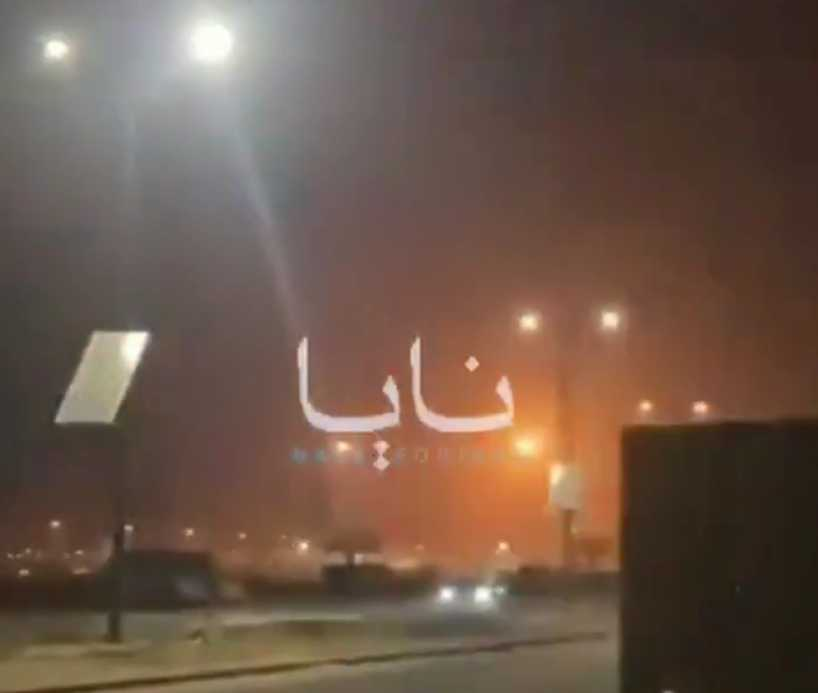
Kuwaiti military command reported that its air defenses actively engaged a hostile barrage of drones and incoming missiles targeting U.S. Ali Al Salem Air Base. Residents reported heavy detonations as interceptions took place over the country.
Several Iranian ballistic missiles were directed toward U.S. Navy's 5th Fleet Headquarters, Bahrain, triggering joint air defense protocols between American and Bahraini forces.
Iranian state media Wednesday, claimed these salvos successfully devastated predetermined U.S. helicopter and air infrastructure. According to IRGC, "Following the hostile and aggressive actions of the terrorist U.S. forces in the Persian Gulf, the Strait of Hormuz, and against our sovereignty on Qeshm Island—where an Iranian oil tanker was targeted by an aerial projectile late Tuesday and an IRGC communications tower was struck—the Aerospace Force of the IRGC has carried out decisive retaliatory strikes.
"Our brave fighters successfully targeted the air and helicopter bases utilized by the aggressors in a regional country [Kuwait], alongside facilities linked to the U.S. Fifth Fleet headquarters in Bahrain. Additionally, a U.S.-linked vessel named Panaya was targeted with missile fire.
"The predetermined targets were successfully neutralized. We warn the criminal American regime and its regional hosts: any new folly, any further aggression, or any move that even touches an inch of our borders and sovereignty will be met with a seismic, crushing, and decisive response that will go beyond the usual rules and boundaries. Our forces will not hesitate to turn all aggressors' bases and interests in the region into ashes."
U.S. Central Command (CENTCOM) in a statement on X said: "On June 2, U.S. and partner military forces successfully defeated multiple Iranian ballistic missiles and drones, and conducted self-defense strikes on Qeshm Island in response to attempted attacks by Iran across the Middle East.
"Iran launched several ballistic missiles toward regional neighbors; however, all failed to hit their intended targets. Two Iranian missiles fired at Kuwait fell short or broke apart enroute, and three missiles launched at Bahrain were immediately intercepted by U.S. and Bahrain air defense forces. Separately, American forces shot down three one-way attack drones launched by Iran toward civilian mariners transiting regional waters. In a precise defensive action, U.S. forces also eliminated an Iranian military ground control station on Qeshm Island responsible for directing these hostile assets.
"Claims by Iran's Islamic Revolutionary Guard Corps (IRGC) that they successfully struck the U.S. 5th Fleet headquarters in Bahrain or a U.S. air base in the region are categorically FALSE. All Iranian attacks on American forces failed. No U.S. or allied personnel were harmed, and no infrastructure damage has occurred. U.S. forces remain highly vigilant, fully postured, and ready to defend against unwarranted Iranian aggression during the ongoing ceasefire."
Despite the ferocity of the June 2–3 engagements, US officials said the ceasefire with Iran holds. US and Tehran are apparently attempting to thread a dangerous needle: engaging in tactical kinetic strikes while publicly claiming they still wish to preserve the broader, highly fragile ceasefire brokered in April.
The primary friction point remains the U.S. maritime blockade. While President Trump has indicated that diplomatic negotiations to permanently reopen the Strait of Hormuz are continuing "at a rapid pace," U.S. forces have made it clear they will continue to disable shadow fleet vessels attempting to bypass the blockade. This ensures that the waters around the Persian Gulf will remain highly volatile as long as a formal, comprehensive diplomatic agreement remains unsigned.
The U.S. has denied reports earlier this week, that Iran has paused peace negotiations with U.S. over Israeli bombardment of Lebanon.
"Fake News Reports that the Islamic Republic of Iran, and the U.S.A., stopped speaking a few days ago are false and erroneous," Trump wrote on Truth Social late Tuesday. "The conversations between us have been going on continuously, including four days ago, three days ago, two days ago, one day ago, and today. Where they lead, one never knows, but as I told Iran, 'It’s time, one way or another, for you to make a Deal. You’ve been doing this for 47 years, and it cannot be allowed to go on any longer!'"