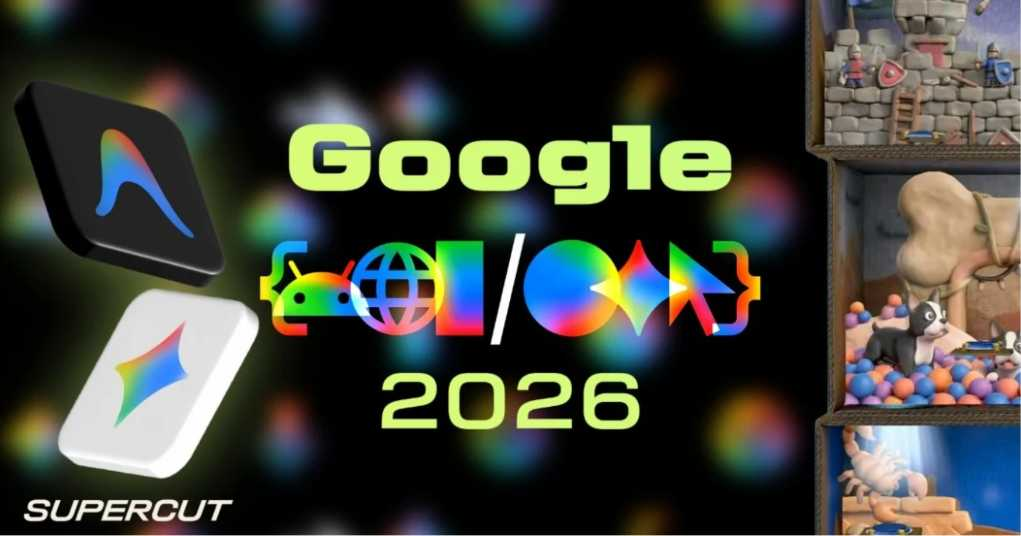
At Google I/O 2026, on Tuesday, Google announced a major shift toward agentic AI, positioning Gemini as the central operating layer across its ecosystem. The keynote, led by CEO Sundar Pichai and DeepMind’s Demis Hassabis, highlighted advancements in AI models, hardware, and search capabilities, with Hassabis predicting that Artificial General Intelligence (AGI) is just a few years away.
Gemini 3.5 Flash was released globally as the default model for the Gemini app and AI Search, it is 4x faster than previous frontier models and outperforms Gemini 3.1 Pro in coding and multimodal tasks.
Gemini Omni, a new multimodal family designed for AI video generation and creative workflows, starting with Omni Flash, accepts text, audio, images, and video inputs.
Gemini Spark, a 24/7 background personal AI agent powered by Gemini Flash 3.5 and the Antigravity 2.0 framework, is capable of automating complex tasks and integrating with third-party tools via the Model Context Protocol (MCP).
Google also unveiled its eighth-generation custom AI chips, including TPU 8t for training and TPU 8i for inference, offering 2x better performance-per-watt.
Intelligent Search Box, the first major redesign of Google Search in 25 years, featuring a dynamic AI-driven interface, accepts multi-modal inputs and includes Search Agents that run in the background to track variables like real estate listings or retail drops.
Universal Cart, a shopping tool leverages the Universal Commerce Protocol to aggregate products from across the web, track deals, and facilitate agentic checkout experiences.
In workspace updates, Google introduced Docs Live and Gmail Live for conversational document structuring and inbox management, alongside a new Google AI Ultra plan at $100/month.
In hardware and Android ecosystem, Google introduced Android XR smart glasses, a partnership with Samsung and eyewear brands Gentle Monster and Warby Parker, a display-less audio glasses with deep Gemini integration, supporting both Android and iOS.
Android Halo, a new UI element for Android 17 that displays the status of background AI agents,was also introduced.
The Gemini app, now with 900 million monthly active users, received a visual overhaul called Neural Expressive with new animations and a repositioned interface.
Google also introduced an AI Ultra plan at $100/month and reduced the price of the previous top-tier Ultra plan from $250 to $200/month to provide higher usage limits for advanced tools like Spark and Antigravity.
Google had previewed Googlebooks, an Android-powered laptop successor to Chromebooks, featuring premium materials from partners like Acer, Dell, and Lenovo and powered by Aluminium OS.