keneci Network
News • Science & Tech • Comedy
GPS III-8: SpaceX Launches Advanced GPS Satellite For The Space Force
April 21, 2026
post photo preview

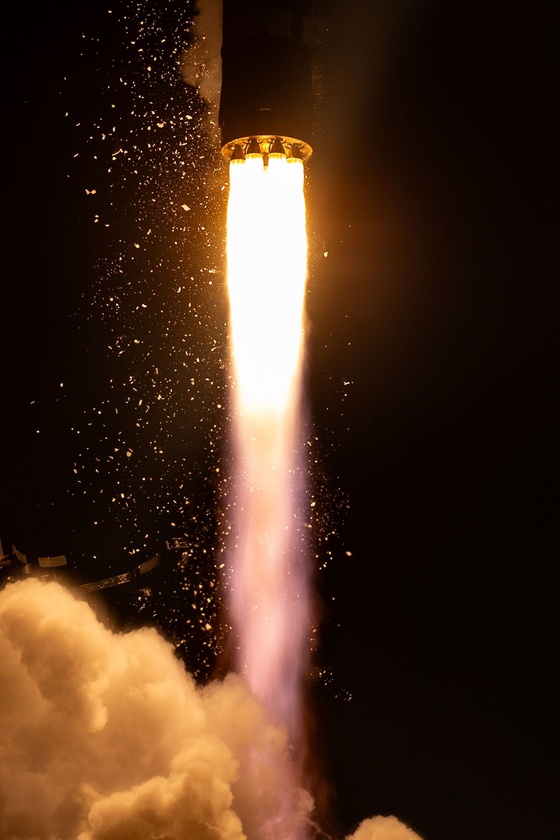
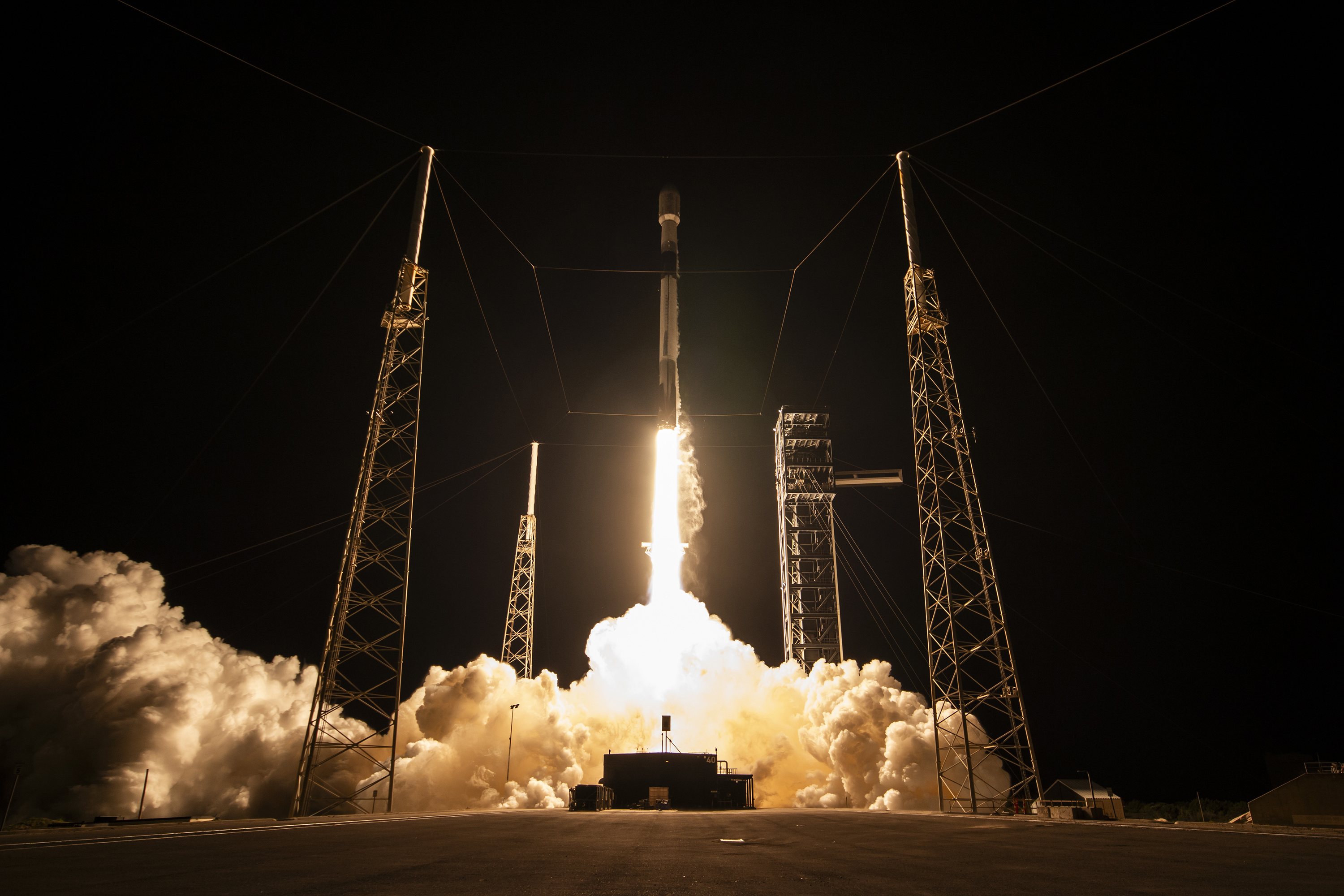
A SpaceX Falcon 9 launched the GPS III SV10 (Space Vehiche 10 also known as GPS III-8) satellite for the U.S. Space Force from Space Launch Complex 40(SLC-40) at Cape Canaveral Space Force Station on Tuesday (April 21) at 0653 UTC marking the delivery of the final satellite in the GPS III production block and completing the service's most resilient constellation to date.

The Falcon 9 Block 5's first-stage booster B1095, came back to Earth about 8.5 minutes after launch as planned on Tuesday, touching down softly in the Atlantic Ocean on the SpaceX droneship "Just Read the Instructions."

This was the seventh launch and landing for this particular booster, according to a SpaceX mission description. And it was the final Falcon landing for "Just Read the Instructions," SpaceX said during Tuesday's launch commentary; the droneship will now pivot to supporting liftoffs of SpaceX's Starship megarocket.

"After 156 successful Falcon 9 landings, Just Read the Instructions will be fully dedicated to support Starship operations going forward," SpaceX wrote on X.

The Falcon 9's upper stage, meanwhile, continued powering its way to medium-Earth orbit, deploying GPS III SV10 about 90 minutes after liftoff. Following separation, the satellite will use its own liquid apogee engines to raise its orbit to the operational medium Earth orbit at approximately 20,200 kilometers altitude, a process taking roughly 10 days.

With the addition of SV10, the active GPS constellation now includes 32 satellites, providing increased redundancy and resiliency. Mission Delta 31 of the Space Force will oversee on-orbit checkout and eventual integration into the live navigation network.

SV10 is the tenth and last spacecraft under the original GPS III production contract awarded to Lockheed Martin in 2008. The satellite, nicknamed "Hedy Lamarr" after the actress and inventor who co-patented frequency-hopping technology, was built in Colorado and declared available for launch in December 2022.

The new satellite enhances the constellation with M-code technology, providing three times greater positional accuracy and eight times improved jam resistance compared to previous generations. This upgrade significantly boosts the effectiveness and lethality of U.S. military weapon systems while improving civilian navigation.

"GPS III satellites have a three-fold increase in positional accuracy and an eight-fold improvement in jam resistance compared to prior versions," Space Force officials said in a statement on Jan. 28, just after GPS III SV09 rode a Falcon 9 to orbit.

"These advanced features enable the constellation to provide an across-the-board boost in effectiveness and lethality to weapon systems in every theater," they added.

SV10 carries several developmental payloads to test future GPS capabilities, including:

  • Crosslink Demonstration Payload: Tests optical crosslink communications to improve ground segment resilience and enable faster satellite tasking.

  • Digital Rubidium Atomic Frequency Standard (DRAFS): A new space-qualified atomic clock to enhance long-term timing precision for future GPS IIIF missions.

  • Laser Retroreflector Array (LRA)**: The second use of an LRA to support NASA's scientific research and improve Earth center determination.

  • 3D-Printed Omni Antenna: The first use of this advanced manufacturing component, which reduces production time and costs by nearly 60 percent.

GPS III-8 mission demonstrated the National Security Space Launch (NSSL) program's flexibility, as SpaceX was selected as the launch provider with less than seven weeks notice following a change in launch service provider. This rapid turnaround built upon accelerated timelines established by previous GPS III launches in 2024, 2025, and early 2026.

GPS III SV10 was originally supposed to fly aboard United Launch Alliance's new Vulcan Centaur rocket. Last month, however, the Space Force announced that it was switching the satellite to a Falcon 9 due to issues that Vulcan has experienced with its solid rocket boosters (SRBs).

As part of this rocket swap, Vulcan Centaur will now launch the USSF-70 national security mission, which had been slated to fly on a SpaceX Falcon Heavy. USSF-70 is expected to launch no earlier than summer 2028, Space Force officials have said. (Presumably, Vulcan Centaur's SRB issues will be worked out by then.)

community logo
Join the keneci Network Community
To read more articles like this, sign up and join my community today
0
What else you may like…
Videos
Posts
Articles
SpaceX Starlink Internet Satellites

With Starlink internet, data is continuously being sent between a ground dish and a Starlink satellite orbiting 550km above. Furthermore, the Starlink satellite zooms across the sky at 27,000 km/hr! MORE VIDEOS ON KENECI NETWORK RUMBLE CHANNEL: https://rumble.com/c/Keneci

00:28:08
Elon Musk, DOGE Speak On Waste And Fraud

US Department of Government Efficiency Services (USDS) led by Elon Musk speak on the "mind-boggling" fraud and waste in UInited States federal government

00:00:45
January 17, 2025
SpaceX Launches Starship 7th Test Flight

SpaceX successfully executed its second-ever “chopsticks” catch of a Super Heavy booster (or Booster 14) using the “Mechazilla” launch tower on Thursday(Jan. 16), during the seventh uncrewed test flight of the company's 123-meter Starship rocket. However, the megarocket's upper stage(or Ship 33) was lost approximately 8.5 minutes into the flight in a “rapid unscheduled disassembly(RUD)” or explosion

00:10:30
Welcome to Keneci Network!

Join the conversations!

December 09, 2025
Bitcoin White Paper By Satoshi Nakamoto

Bitcoin white paper

Bitcoin_White_Paper.pdf
September 17, 2024
Charges Against Sean 'Diddy' Combs In Grand Jury Indictment

The rapper was charged with racketeering conspiracy, sex trafficking by force, fraud or coercion, and transportation to engage in prostitution in the indictment unsealed Tuesday(Sept. 17)

Combs-Indictment-24-Cr.-542.pdf
post photo preview
Artemis III Crew Announced By NASA

NASA Administrator Jared Isaacman announced Monday, the four-person crew for the Artemis III mission at an event in Johnson Space Center in Houston, Texas. The crew, expected to launch in 2027, consists of Commander Randy Bresnik, Pilot Luca Parmitano (European Space Agency), and Mission Specialists Frank Rubio and Andre Douglas, with Bob Hines named as backup.

Isaacman described the mission as the beginning of a new era, likening it to the start of Earth’s first "Starfleet" and emphasizing that the mission is designed to take calculated risks to ensure future lunar safety.

"You carry the fire of exploration from generations past, the confidence of this agency, and the support of this nation, and the dreams of millions who will be cheering you on, knowing that what others believe to be impossible happens to be what we do best here at NASA," Isaacman said during the proceedings.

Unlike the lunar flyby of Artemis II, Artemis III will remain in low Earth orbit for about two weeks to test critical systems before the first lunar landing attempt in 2028. The primary goal is to practice rendezvous and docking procedures with two commercially developed lunar landers: SpaceX’s Starship HLS and Blue Origin’s Mark 2. This mission profile mirrors the Apollo 9 flight, serving as a necessary test of the spacecraft and life support systems in Earth orbit before proceeding to the Moon.

NASA is targeting mid- to late 2027 for Artemis 3, which will fly a very different mission that will last longer than Artemis 2 while remaining much closer to home. The ultimate goal of the Artemis program is to return astronauts to the surface of the moon, where NASA intends to establish a permanent base.

Artemis 3 will be a significant stepping stone toward that endeavor, but won't fly beyond low Earth orbit (LEO). If all goes according to plan the four newly assigned astronauts of Artemis 3 will rendezvous and dock the Orion spacecraft with Starship HLS or Mark 2, and lay the groundwork for future Artemis missions to the moon. Ultimately, the mission will allow NASA to test out much of the most cutting-edge hardware in the American spaceflight portfolio.

"Artemis 3 will be an extraordinary demonstration of what is possible when the greatest aerospace companies across the United States, alongside our European partners come together to showcase the technological might and ambition of the free world," Isaacman said during the event. "This seems like the beginning of the future that we imagined as children. This seems like the very beginning of Earth's first Starfleet to me"

Artemis 3's Orion crew capsule will launch on NASA's Space Launch System (SLS) rocket into LEO, where it will rendezvous with the Blue Origin's Blue Moon lander (which will launch on one of the company's New Glenn rockets) and SpaceX's Starship.

NASA’s Artemis program manager Jeremy Parsons highlighted the complexity of coordinating multiple launch pads and vehicles. However, Blue Origin executives expressed confidence in their timeline despite a recent New Glenn rocket explosion that damaged their launch pad. SpaceX continues to test its Starship vehicle.

"Artemis 3 is an incredibly exciting, complicated, and highly coordinated multi-launch campaign. It's going to happen in a short period of time with three of the world's most powerful rockets," Parsons said during Tuesday's event.

The goal will be to practice docking maneuvers and operations between the vehicles. Both SpaceX and Blue Origin were awarded contracts through NASA's Human Landing System (HLS) program, but each has faced developmental delays that have prompted NASA's willingness to fly Artemis 3 with either or both landers, depending on their availability.

Bresnik, a retired Marine colonel and Space Shuttle veteran, has previously served as ISS commander and will lead the mission.

Parmitano an Italian astronaut and ESA pilot, is a veteran of two ISS expeditions and previously survived a life-threatening water leak incident during a spacewalk.

Rubio, a physician and Army veteran, he holds the record for the longest single spaceflight by an American astronaut at 371 days.

Douglas, a test engineer and Coast Guard commander, this will be his first spaceflight after serving as backup for Artemis II.

Hines, selected as a backup astronaut for Artemis 3, joined NASA's 2017 astronaut class after serving 23 years in the United State Air Force as a fighter pilot and instructor. Hines previously flew to space aboard the SpaceX Crew-4 mission to the International Space Station in 2022 where he logged 170 days in space.

During Tuesday's ceremony, the three NASA astronauts of the Artemis 2 crew including commander Reid Wiseman passed the (literal) Artemis baton to the new crew.

"I know all of us are very touched by the thoughtful symbolism of the passing of the baton, but I think now, after your mission, you're passing us something far greater," Bresnik said. "The world watched your mission, and over the course of those 10 days, we saw how you inspired people worldwide. You saw how something was ignited within people. It was ignited within all of us by watching your mission."

"We, the Artemis 3 crew, are honored to be able to carry this torch forward, to be able to execute our mission, to make that flame burn brighter and pass that flame on to the next crew," Bresnik added.

Somne of the prep work is already underway for Artemis 3. Elements of the mission's SLS rocket are already taking shape at NASA centers and commercial partner facilities. The main stage propellant tank arrived at Kennedy Space Center (KSC) in Florida in April, and the final segments of the launch vehicle's solid rocket boosters recently departed Northrop Grumman's manufacturing facility on a train ride to KSC for stacking and SLS integration. Orion is also at KSC, undergoing final assembly and testing inside the Neil Armstrong Operations and Checkout Building.

Read full Article
post photo preview
Belfast Stabbing Suspect Charged With Attempted Murder, As Anti-immigration Erupt

A 30-year-old Sudanese national was charged with attempted murder, possession of a bladed article, and threats to kill following a brutal knife attack on Kinnaird Avenue, North Belfast, on Monday. The suspect, who claimed asylum upon arriving by bus from Dublin on February 10, 2023, was granted leave to remain in the UK in September 2023 until 2028.

The victim, a man in his 40s, suffered serious injuries to his face, neck, eye, and back; he remains in serious condition in the hospital. Bystanders intervened to save the victim, with one neighbor using a hurling stick to strike the attacker, an act police described as "heroic."

PSNI Chief Constable Jon Boutcher confirmed the suspect is not known to local police, not in national security databases, and the attack is not believed to be terror-related, though investigations are ongoing.

The suspect traveled from Sudan to Paris, then Paris to Dublin, and finally took a bus to Belfast on February 10, 2023, immediately claiming asylum under the Common Travel Area rules.

Northern Ireland First Minister Michelle O’Neill and UK Prime Minister Keir Starmer condemned the attack and urged calm, with Starmer calling the scenes "sickening" and having "no tolerance" for such violence.

The incident has ignited a fierce debate on immigration, with anti-open-borders groups and parties like Reform UK and the Democratic Unionist Party (DUP) blaming uncontrolled immigration for public safety issues. DUP leader Gavin Robinson** called for an end to uncontrolled immigration and the suspect's deportation if convicted.

Protests erupted across Belfast and the UK, with demonstrators setting fire to a bus in Belfast and clashing with far-left counter-protesters in London and Southampton. Security services have heightened alerts, and food delivery services paused operations in affected areas due to safety fears.

Read full Article
post photo preview
WWDC26: Apple Unveils Siri AI, iOS 27 Updates And More At Tim Cook's Final Keynote Event

Apple WWDC 2026, Monday, marked CEO Tim Cook’s final keynote before handing leadership to John Ternus in September. The event centered on a sweeping overhaul of Apple’s software ecosystem, headlined by the introduction of Siri AI, a ground-up redesign of the virtual assistant powered by Google’s Gemini models and Apple Intelligence.

Siri AI is no longer a simple voice command tool but a conversational, context-aware assistant with a dedicated app that syncs history across devices via iCloud.

Key capabilities include multi-turn conversations and natural language interaction that remembers context; and deep system integration, allowing Siri to access Messages, Mail, Photos, and Maps to perform complex, multi-step tasks (for example, finding a restaurant mentioned in a text and setting a reminder).

Visual Intelligence is expanded to iPhone, iPad, Mac, and Apple Vision Pro, including a new Siri Mode in the Camera app for real-time identification and actions like splitting bills. And customizable voice with pace and expressivity sliders, and expansion to CarPlay, AirPods, and Apple Watch.

Siri AI developer beta is available, with a public launch in September 2026. It is initially English-only and unavailable in the EU and China due to regulatory and compliance issues.

Apple also announced other platform updates for iOS 27, macOS Golden Gate, and others. In iOS 27, iPadOS 27, and visionOS 27, Apple Intelligence is woven into nearly every app. Safari can auto-group tabs and monitor pages for changes; Passwords can auto-update compromised credentials; and Home uses AI to summarize security camera footage.

In macOS Golden Gate, the next Mac OS features deeper Siri AI integration and Apple Silicon-only support, ending Intel compatibility.

New Child Accounts offer granular control, including Ask to Browse for web approval, communication filters for gore/violence, and redesigned Screen Time with category-level limits.

Liquid Glass design language is refined with a transparency slider and improved readability. System-wide performance boosts include 30% faster app launches, 70% faster photo loading, and 80% faster AirDrop. In Photo editing, Spatial Reframing uses generative AI to shift perspective in photos after they are taken.

The announcements follow a long-awaited push to modernize Siri, which had lagged behind competitors like Google Gemini and ChatGPT. Apple’s partnership with Google provides the underlying foundation models, enabling the advanced multimodal capabilities seen in Siri AI. This keynote signals Apple’s strategy to make AI central, private, and on-device across its ecosystem, aiming to reduce manual app navigation and enhance user productivity.

Read full Article
See More
Available on mobile and TV devices
google store google store app store app store
google store google store app tv store app tv store amazon store amazon store roku store roku store
Powered by Locals