keneci Network
News • Science & Tech • Comedy
Trump Announces Israel-Lebanon Ceasefire, As Iran Threatens Retaliation Over Port Blockade By US
April 16, 2026
post photo preview

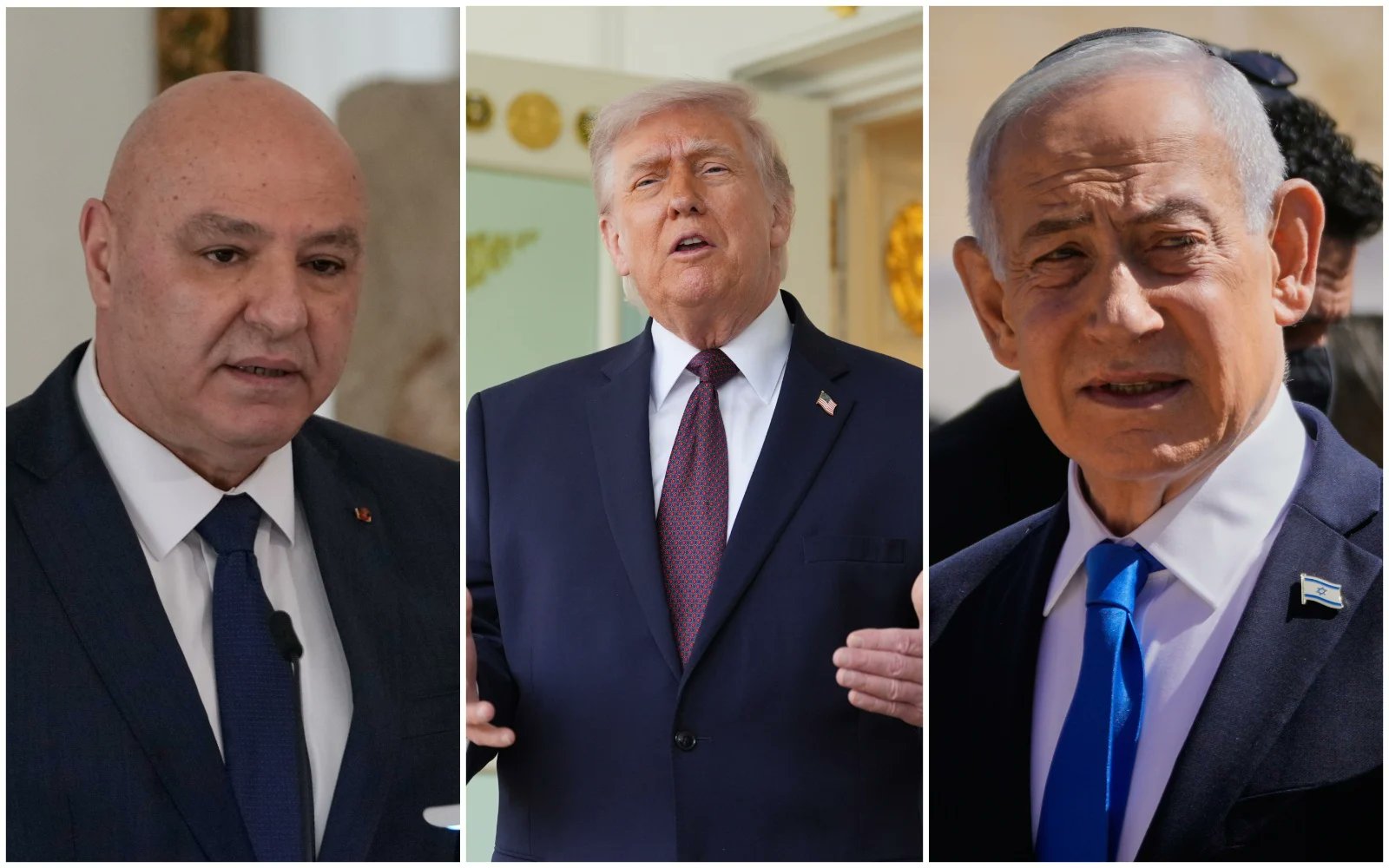
President Donald Trump announced a 10-day ceasefire between Israel and Lebanon on Thursday, stating it would begin at 2100 UTC following conversations with Lebanese President Joseph Aoun and Israeli Prime Minister Benjamin Netanyahu. Trump invited both leaders to the White House for the first meaningful direct talks between Israel and Lebanon since 1983, calling the ceasefire a step toward achieving peace and claiming it as his “10th war” solved.

"I just had excellent conversations with the Highly Respected President Joseph Aoun, of Lebanon, and Prime Minister Bibi Netanyahu, of Israel," Trump wrote on Truth Social. "These two Leaders have agreed that in order to achieve PEACE between their Countries, they will formally begin a 10 Day CEASEFIRE at 5 P.M. EST. On Tuesday, the two Countries met for the first time in 34 years here in Washington, D.C., with our Great Secretary of State, Marco Rubio. I have directed Vice President JD Vance and Secretary of State Rubio, together with the Chairman of the Joint Chiefs of Staff, Dan Razin' Caine, to work with Israel and Lebanon to achieve a Lasting PEACE. It has been my Honor to solve 9 Wars across the World, and this will be my 10th, so let's, GET IT DONE!"

The ceasefire followed a rare meeting between Israeli and Lebanese diplomats in Washington on Tuesday, the first such encounter in decades, hosted by Secretary Rubio. Hostilities between Israel and Lebanese militant group Hezbollah escalated amid the US-Israel war on Iran.

While Lebanese Prime Minister Nawaf Salam welcomed the truce as a “pivotal Lebanese demand,” Hezbollah expressed skepticism, with senior lawmaker Hassan Fadlallah saying their adherence depends on Israel halting all hostilities. Lebanese President Aoun reportedly refused to speak directly with Netanyahu, citing the ongoing Israeli occupation of southern Lebanon, though he thanked Trump and Rubio for their mediation efforts.

Israel conducted a major strike on the last bridge connecting southern Lebanon across the Litani River, severing critical infrastructure just before the ceasefire took effect.

Despite the truce, Netanyahu confirmed Israeli forces would remain in a 6-mile-deep buffer zone in southern Lebanon, framing the ceasefire as a “timeout” contingent on Hezbollah’s disarmament and a future peace agreement.

Trump linked the Lebanon ceasefire to broader negotiations with Iran, emphasizing that U.S. military readiness remains high—Defense Secretary Pete Hegseth warned that combat operations could resume if Iran does not agree to a deal, including on enriched uranium limits. The U.S. asserts the Lebanon ceasefire is separate from its truce with Iran, though Iran claims otherwise.

But Iran had rightly maintained that its 2-week ceasefire agreement with the U.S. also covers the Israel-Hezbollah war, and has reportedly refused to engage in a second round of negotiations with the U.S. in Pakistan, if Israel does not pause it's military operations in Lebanon.

Hegseth, Joint Chiefs Chairman Gen. Dan Caine, and CENTCOM Commander Adm. Bradley Cooper held a briefing confirming a sustained U.S. blockade of all Iranian ports and the coastline, distinct from a full closure of the Strait of Hormuz. The operation, codenamed Operation Epic Fury, began at 1400 UTC on Monday, following the collapse of peace talks in Islamabad, with U.S. forces warning that they will use force against any vessel attempting to enter or leave Iranian ports regardless of nationality.

13 ships have turned away in the past 24 hours after receiving warnings; over 10,000 U.S. personnel, a dozen ships, and dozens of aircraft are involved, with enforcement occurring in both Iranian territorial seas and international waters. Hegseth stated the blockade would last "as long as it takes" and warned that if Iran rejects a deal, U.S. forces are ready to resume strikes on infrastructure, power, and energy facilities.

Caine emphasized that U.S. forces remain "locked and loaded" and that Iran lacks the defense industry to replenish offensive or defensive capabilities lost during over five weeks of prior strikes. Adm. Cooper noted that the current ceasefire is being utilized to rearm, retool, and adjust tactics, with high troop morale and a focus on preventing Iran from moving military assets.

The blockade was initiated after peace talks in Pakistan failed to produce an agreement, prompting the U.S. to escalate pressure on Tehran. While the U.S. insists the operation targets specific Iranian ports rather than the broader Strait of Hormuz, the military has indicated it will pursue any vessel, including those in the "dark fleet," providing material support to Iran.

Hegseth further criticized the press for negative coverage, comparing them to the Pharisees, while affirming that U.S. objectives—preventing Iran from acquiring a nuclear weapon—remain firm.


community logo
Join the keneci Network Community
To read more articles like this, sign up and join my community today
0
What else you may like…
Videos
Posts
Articles
SpaceX Starlink Internet Satellites

With Starlink internet, data is continuously being sent between a ground dish and a Starlink satellite orbiting 550km above. Furthermore, the Starlink satellite zooms across the sky at 27,000 km/hr! MORE VIDEOS ON KENECI NETWORK RUMBLE CHANNEL: https://rumble.com/c/Keneci

00:28:08
Elon Musk, DOGE Speak On Waste And Fraud

US Department of Government Efficiency Services (USDS) led by Elon Musk speak on the "mind-boggling" fraud and waste in UInited States federal government

00:00:45
January 17, 2025
SpaceX Launches Starship 7th Test Flight

SpaceX successfully executed its second-ever “chopsticks” catch of a Super Heavy booster (or Booster 14) using the “Mechazilla” launch tower on Thursday(Jan. 16), during the seventh uncrewed test flight of the company's 123-meter Starship rocket. However, the megarocket's upper stage(or Ship 33) was lost approximately 8.5 minutes into the flight in a “rapid unscheduled disassembly(RUD)” or explosion

00:10:30
Welcome to Keneci Network!

Join the conversations!

December 09, 2025
Bitcoin White Paper By Satoshi Nakamoto

Bitcoin white paper

Bitcoin_White_Paper.pdf
September 17, 2024
Charges Against Sean 'Diddy' Combs In Grand Jury Indictment

The rapper was charged with racketeering conspiracy, sex trafficking by force, fraud or coercion, and transportation to engage in prostitution in the indictment unsealed Tuesday(Sept. 17)

Combs-Indictment-24-Cr.-542.pdf
post photo preview
CIA: Iran Retains 75% Of Missile, Drone Capacity, Can Withstand U.S. Naval Blockade

According to a leaked CIA assessment, Iran retains about 70% of its prewar missile stockpile and 75% of its mobile launchers, contradicting public claims by President Donald Trump and Defense Secretary Pete Hegseth that Iran's military capabilities had been largely destroyed.

The intelligence report indicates Iran has recovered by reopening almost all of its underground storage and launch facilities damaged during initial strikes, repairing damaged missiles, and even assembling new ones that were near completion when the war began.

Trump and Hegseth claimed Iran’s military was “crushed” and its missiles “mostly decimated,” with Trump stating Iran retained only 18–19% of its arsenal. However, the CIA analysis suggests Iran can withstand the U.S. naval blockade for at least three to four months before facing severe economic hardship, especially if it uses overland oil smuggling routes through Central Asia.

Experts note this resilience, combined with Iran’s dispersed and hardened missile infrastructure, undermines U.S. strategic leverage and may have strengthened Tehran’s negotiating position. Analysts argue the U.S. underestimated Iran’s capacity to endure economic pressure and sustain military operations, while overestimating the effectiveness of air and naval campaigns.

This Iran's military resilience complicates U.S. objectives, as analysts warn that even prolonged economic pressure may not force capitulation given the leadership's increased determination and ability to sustain domestic repression.

The assessment emerged during a fragile ceasefire, one month after a genocidal threat by Trump and a reported 60-day war that cost the U.S. an estimated $71.8 billion. Trump has publicly characterized the war as an overwhelming victory, claiming Iran’s missile arsenal is "decimated" and that the country is losing $500 million daily, assertions that directly conflict with the CIA’s findings. The U.S. has paused "Project Freedom," a mission to escort commercial vessels through the Strait.

Iran reportedly launched missiles and drones at U.S. warships on this week prompting retaliatory strikes, signaling a potential collapse of the ceasefire.

Meanwhile ceasefire talks between the U.S. and Iran are ongoing via Pakistan and Qatar are ongoing. Vice President Vance met Friday in the White House with one of the key mediators, Qatari Prime Minister Sheikh Mohammed Bin Abdul Rahman al-Thani. Tehran continues to review U.S. proposals that include demands for nuclear freeze and unrestricted strait access, with Iranian officials dismissing recent reports as an "American wish list."

Read full Article
post photo preview
U.S. Strikes Iran After Attacks On Navy Destroyers In Strait Of Hormuz, Trump Says Ceasefire Still in Effect: 'Love Tap'

The U.S. carried out strikes on Iranian military facilities on Qeshm Island and in Bandar Abbas (not Minab) after Iran attacked three U.S. Navy destroyers transiting the Strait of Hormuz, in an escalation that occurred amid a fragile ceasefire.

President Donald Trump said on Truth Social that three U.S. destroyers—USS Truxtun, USS Rafael Peralta, and USS Mason—successfully transited the Strait of Hormuz under fire from Iranian forces, sustaining no damage. He claimed the Iranian attack, involving missiles, drones, and small boats, was repelled with "great damage" inflicted on the attackers, stating the boats were "completely destroyed" and drones were "incinerated" mid-air, likening their fall to "a butterfly dropping to its grave."

Trump reiterated that Iran is led by "LUNATICS" and warned of far more violent U.S. retaliation if a deal is not signed "FAST."

Iran launched missiles, drones, and small boats at the USS Truxtun, USS Rafael Peralta, and USS Mason, but U.S. forces intercepted the threats and suffered no damage, according to U.S. Central Command (CENTCOM). In response, the U.S. struck Iranian military targets, including missile and drone launch sites, command centers, and surveillance facilities, with reports that the strikes hit Qeshm port and Bandar Abbas based on a senior U.S. official.

Trump described the U.S. retaliation as a “love tap” in call to reporters, and affirmed the ceasefire remained in effect, while warning Iran of harsher consequences if a deal was not reached quickly.

The exchange followed Iran’s earlier attack on Fujairah Port in the UAE, when it fired 12–15 ballistic and cruise missiles two days prior, which the Pentagon downplayed as not violating the ceasefire. This reportedly angered Saudi Arabia and Kuwait, who suspended U.S. access to their airspace and military bases, halting "Project Freedom"—a U.S. operation to escort commercial ships through the Strait of Hormuz. The restrictions were later lifted after diplomatic talks, including a call between President Trump and Saudi Crown Prince Mohammed bin Salman.

Iranian state and IRGC-affiliated media reported explosions on Qeshm, air defense activations in Tehran, and confrontations at sea, but the U.S. maintained the response was limited self-defense and not a resumption of war. The incident cast doubt on ongoing negotiations for a one-page memorandum to end hostilities, with key issues like Iran’s nuclear program still unresolved.

Iran accused the U.S. of violating the ceasefire by attacking an Iranian oil tanker near Jask and conducting air assaults on coastal areas including Qeshm, Sirik, and Bandar Khamir, claiming its forces retaliated and caused "significant damage" to U.S. vessels.

Despite the exchange, Trump and U.S. officials maintained that the ceasefire announced on April 7 remains in effect, describing the U.S. response as a "love tap."

Mediated talks are ongoing, with the U.S. demanding Iran dismantle key nuclear infrastructure, while Iran proposes diluting enriched uranium and a 10–15 year enrichment pause. The U.S. has reportedly submitted a one page proposal to Iran via the Pakistani mediators, to end the war and the U.S and Iranian blockades of the Strait of Hormuz.

Read full Article
post photo preview
Anthropic Claude Gets Access To Colossus 1 AI Compute Capacity In Deal With SpaceX, xAI

SpaceX and Anthropic AI have announced a major compute deal granting Anthropic full access to the Colossus 1 data center in Memphis, Tennessee, a supercomputer built by xAI and now operated by SpaceX. The announcement was made during Anthropic’s second annual “Code with Claude” developer event on Wednesday.

The agreement gives Anthropic access to over 220,000 Nvidia GPUs and more than 300 megawatts of compute capacity, immediately boosting its AI infrastructure to meet surging demand for its Claude models, especially Claude Code and Claude Opus.

In a statement, Anthropic said the deal will allow it to double rate limits for paid users of Claude Code on Pro, Max, Team, and Enterprise plans, remove peak-hour usage reductions, and significantly increase API rate limits for Claude Opus. The company also revealed it has “expressed interest in partnering with SpaceX to develop multiple gigawatts of orbital AI compute capacity,” signaling long-term ambitions for space-based data centers.

Anthropic emphasized this partnership supplements existing agreements with Amazon, Google, Microsoft, and Nvidia, with those larger-scale commitments expected to come online in late 2026 or early 2027.

SpaceX confirmed that Colossus 1—featuring H100, H200, and GB200 Nvidia accelerators—was built in just 122 days and is one of the world’s largest AI supercomputers. The company noted that xAI has transitioned its training operations to Colossus 2, freeing up Colossus 1 for external partners.

The space and AI company framed the deal as part of its broader strategy to monetize underused compute capacity and position itself as a leading AI infrastructure provider, with potential future developments in orbital computing to address Earth’s power and cooling constraints.

SpaceX CEO Elon Musk endorsed the deal on X, writing: “Same here. By way of background for those who care, I spent a lot of time last week with senior members of the Anthropic team to understand what they do to ensure Claude is good for humanity and was impressed. Everyone I met was highly competent and cared a great deal about doing the right thing. No one set off my evil detector. So long as they engage in critical self-examination, Claude will probably be good.”  

He added: “After that, I was ok leasing Colossus 1 to Anthropic, as SpaceXAI had already moved training to Colossus 2,” and reserved the right to reclaim compute if Anthropic’s AI ever harms humanity. Musk also noted SpaceX will offer compute to other AI firms under “fair terms and pricing,” similar to its satellite launch model.

Musk had previously criticized Anthropic, calling it “misanthropic” and its AI “evil,” and accused it of bias against Western civilization. This shift follows xAI’s merger with SpaceX earlier in 2026, forming “SpaceXAI,” which is reportedly preparing for an IPO.

The deal comes amid a legal battle between Anthropic and the Trump administration’s Department of Defense, which seeks unrestricted military use of Claude—something Anthropic has resisted on ethical grounds.

Read full Article
See More
Available on mobile and TV devices
google store google store app store app store
google store google store app tv store app tv store amazon store amazon store roku store roku store
Powered by Locals