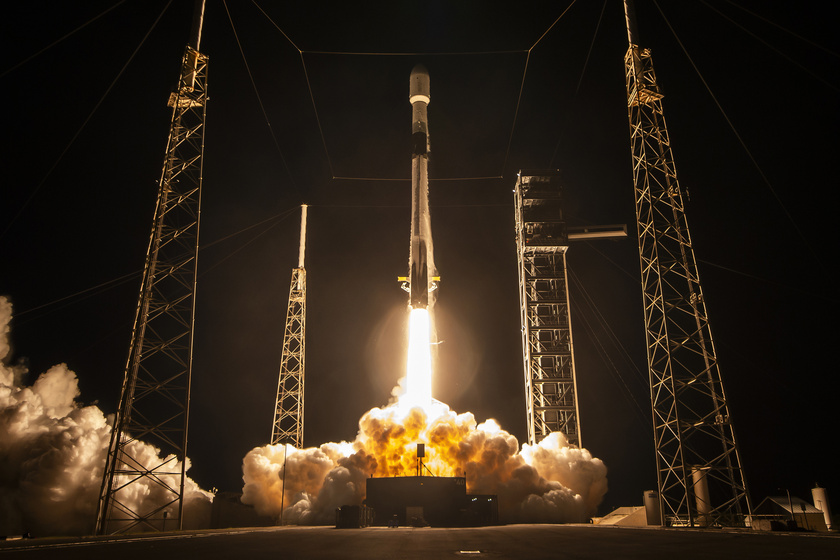
The Artemis II crew successfully completed a historic 10-day mission around the Moon, splashing down at 0007 UTC on April 10, in the Pacific Ocean off the coast of San Diego.
The Orion spacecraft traveled 694,481 miles (1,117,659 km), reaching a maximum distance of 252,756 miles from Earth—surpassing the Apollo 13 record by over 4,000 miles—and returned safely after a 6-minute communication blackout during re-entry at speeds near 25,000 mph.
The four astronauts—Commander Reid Wiseman, Pilot Victor Glover, Mission Specialist Christina Koch, and Canadian Space Agency’s Jeremy Hansen—became the first humans since Apollo 17 in 1970 to travel to the Moon and return.
Despite technical challenges—including repeated toilet malfunctions requiring in-flight repairs—the crew conducted critical tests on life support systems, radiation detectors, and next-generation spacesuits, all vital for future lunar landings. They also observed a 53-minute solar eclipse and captured unprecedented images of the Moon’s far side.
Following splashdown early Saturday, the crew was extracted via an inflatable “front porch” raft, medically assessed, and transported by helicopter to the USS John P. Murtha, before heading to Johnson Space Center in Houston for further evaluations and family reunions.
This mission marked several historic firsts: Koch is the first woman, Glover the first black person, and Hansen the first non-American to orbit the Moon. The crew spent 9 days, 1 hour, and 32 minutes in space, officially counted as 10 days because launch day was designated as Flight Day 1.
President Donald Trump and Canadian Prime Minister Mark Carney both praised the mission as a spectacular success, reaffirming global unity in space exploration.