keneci Network
News • Science & Tech • Comedy
Iran's 10-point Proposal Demands Permanent Ceasefire, Strait Of Hormuz Toll, As Israeli Airstrikes Target South Pars Natural Gas Field
April 07, 2026
post photo preview

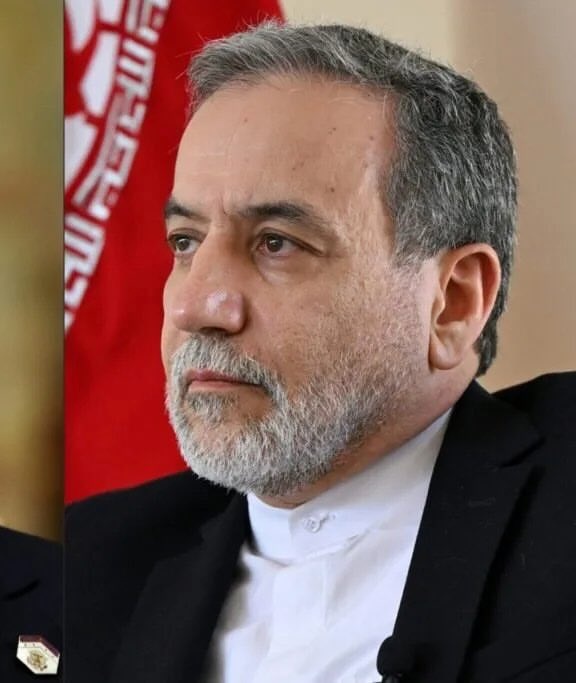
Iran has reportedly rejected a proposed 45-day ceasefire, instead presenting its own 10-point plan demanding a permanent end to the war. The proposal, conveyed through Pakistani mediators, includes conditions such as reparations and guarantees against future attacks, which U.S. officials have deemed unacceptable.

Key elements of Iran’s 10-point response reportedly include:

- A permanent cessation of hostilities in Iran, Lebanon, Gaza, and Iraq.

- Recognition of Iran’s authority over the Strait of Hormuz, including the right to regulate traffic and collect tolls.

- Full removal of U.S. military bases from the Middle East.

- Compensation for war damages inflicted during the conflict.

- Lifting of all economic sanctions on Iran.

- Formal recognition of Iran’s right to enrich uranium under the Nuclear Non-Proliferation Treaty (NPT).

- A regional framework for security ensuring no resumption of aggression.

- Safe passage protocols** for international shipping through the Strait.

- Reconstruction support for war-affected areas.

- Guarantees that negotiations will not be used as cover for future attacks.

This comes amid escalating hostilities, as Israel launched strikes on Iran’s South Pars natural gas field, targeting its largest petrochemical plant—responsible for about 50% of Iran’s petrochemical output—and killing key Iranian military figures, including IRGC intelligence chief Majid Khademi.

The Israeli Defense Forces (IDF) and the United States also conducted large-scale strikes on Tehran's Mehrabad International Airport, targeting dozens of Iranian aircraft and helicopters to degrade the air force capabilities of both the Iranian Air Force and the Islamic Revolutionary Guard Corps (IRGC).

Satellite imagery and military reports confirm the destruction of at least 12 to 17 aircraft, including fighter jets, transport planes, and potentially the world's last in-service Boeing 747-100 converted as a KC-747 tanker, which were used by the IRGC Quds Force to supply proxies.

The operation, part of a broader assault on six military airfields across Iran, specifically targeted hangars, maintenance facilities, and runways in the western sector of the capital, effectively paralyzing the regime's ability to move high-level personnel and military equipment from the capital.

Over 80 Israeli fighter jets participated in the coordinated wave of attacks, which also included strikes on smaller airstrips like Azmayesh Airport and facilities linked to the Quds Force, such as a drone manufacturing factory.

Israeli officials said the strikes were designed to cripple the IRGC's logistics network, which has historically used commercial and military aircraft at Mehrabad to ferry weapons and advisors to proxies like Hezbollah across the Middle East.

The strikes on Mehrabad contributed to a broader campaign that also hit Shahid Beheshti University, the Pasteur Institute, and various military academies, leading to severe disruptions in regional air travel and raising international concerns over attacks on civilian and research infrastructure.

Airstrikes has also hit Sharif University of Technology in Tehran, a sanctioned institution tied to Iran’s military programs, drawing domestic and international condemnation.

Civilian infrastructure across Iran, including power plants and airports, has come under sustained attack, prompting fears of humanitarian crisis and warnings from the UN that targeting such sites may constitute war crimes under international law.

Iran fired missiles at Israel and neighboring countries, with strikes in Haifa killing four; Israel claims to have intercepted most incoming projectiles.

President Trump has intensified threats, vowing to "decimate every bridge and power plant in Iran" by Tuesday night if the Strait of Hormuz remains closed, calling for "free traffic of oil" as a non-negotiable condition. He dismissed Iran’s 10-point plan as “not good enough,” while still suggesting a deal is possible.

At a White House press conference Monday with Trump, Defense Secretary Pete Hegseth and Joint Chiefs Chair Gen. Dan Caine detailed the high-risk rescue of two U.S. airmen from an F-15E shot down by a shoulder-fired missile.

The operation, involving 155 aircraft, CIA "exquisite technologies," and extensive deception tactics, retrieved the pilot within hours and the weapons officer two days later from a mountainous cave. Hegseth likened the Easter-weekend rescue to the resurrection of Jesus Christ, underscoring the administration’s fusion of religious rhetoric with military messaging.

Despite Trump’s repeated deadlines, analysts note a pattern of postponements, raising doubts about the credibility of his ultimatums.


community logo
Join the keneci Network Community
To read more articles like this, sign up and join my community today
0
What else you may like…
Videos
Posts
Articles
SpaceX Starlink Internet Satellites

With Starlink internet, data is continuously being sent between a ground dish and a Starlink satellite orbiting 550km above. Furthermore, the Starlink satellite zooms across the sky at 27,000 km/hr! MORE VIDEOS ON KENECI NETWORK RUMBLE CHANNEL: https://rumble.com/c/Keneci

00:28:08
Elon Musk, DOGE Speak On Waste And Fraud

US Department of Government Efficiency Services (USDS) led by Elon Musk speak on the "mind-boggling" fraud and waste in UInited States federal government

00:00:45
January 17, 2025
SpaceX Launches Starship 7th Test Flight

SpaceX successfully executed its second-ever “chopsticks” catch of a Super Heavy booster (or Booster 14) using the “Mechazilla” launch tower on Thursday(Jan. 16), during the seventh uncrewed test flight of the company's 123-meter Starship rocket. However, the megarocket's upper stage(or Ship 33) was lost approximately 8.5 minutes into the flight in a “rapid unscheduled disassembly(RUD)” or explosion

00:10:30
Welcome to Keneci Network!

Join the conversations!

December 09, 2025
Bitcoin White Paper By Satoshi Nakamoto

Bitcoin white paper

Bitcoin_White_Paper.pdf
September 17, 2024
Charges Against Sean 'Diddy' Combs In Grand Jury Indictment

The rapper was charged with racketeering conspiracy, sex trafficking by force, fraud or coercion, and transportation to engage in prostitution in the indictment unsealed Tuesday(Sept. 17)

Combs-Indictment-24-Cr.-542.pdf
post photo preview
UAE Exits OPEC Amid Iran War Fallout

The United Arab Emirates (UAE) has announced it will leave OPEC and OPEC+ effective May 1, 2026, citing its "long-term strategic and economic vision" and frustration over regional inaction during the ongoing Iran war. The decision marks a significant blow to the oil cartels, particularly Saudi Arabia, OPEC’s de facto leader, as the UAE is the third-largest oil producer in the group and a major, sophisticated exporter.

Geopolitical tensions and regional rifts drove the UAE’s exit. The country faced repeated Iranian missile and drone attacks, with over 500 ballistic missiles and 2,250 drones intercepted since early April, yet received limited military or political support from Gulf allies.

Anwar Gargash, UAE diplomatic adviser, criticized the Gulf Cooperation Council (GCC) and Arab League for their “weakest historical” response. The UAE also clashed with Saudi Arabia over regional influence, oil production quotas, and Saudi Arabia’s defense pact with Pakistan, which the UAE viewed as undermining its security interests amid the conflict.

Gulf and Arab critics view with suspicion the UAE's cozy relationship with Israel. And many believe the U.S. and Israel may have nudged UAE to leave OPEC. President Donald Trump has been a frequent critic of OPEC over its impact on oil prices.

The Iran war, initiated by the U.S. and Israel in February 2026, has severely disrupted energy markets by blocking the Strait of Hormuz—through which about 20% of global oil passes—causing Brent crude to rise above $105 per barrel.

Trump has linked U.S. military support for Gulf states to oil pricing, accusing OPEC of “ripping off the rest of the world.” The UAE’s move is seen as a strategic win for Trump, who recently backed a dollar swap line with the UAE.

Iran is expected to submit a revised peace proposal in the coming days after Trump rejected an earlier version.

Read full Article
post photo preview
Amazon Leo 6: ULA Atlas V Launches 29 Internet Satellites, Ties Record For The Rocket's Heaviest Payload

United Launch Alliance (ULA) launched an Atlas V 551 rocket carrying 29 Amazon Leo broadband satellites from Space Launch Complex 41(SLC-41) at Cape Canaveral Space Force Station, Florida, on Tuesday (April 28), at 0053 UTC.

The Atlas V 551 variant utilized five solid rocket boosters and a 5.4-meter payload fairing to deliver the 29 satellites into an initial Low Earth Orbit (LEO) at 450 km. Following deployment, the satellites will use their Hall-effect thrusters to raise themselves to their operational altitude of 630 km in an orbit with a 51.9-degree inclination.

Amazon Leo 6 (LA-06) mission marked the tenth launch for the Amazon Leo constellation and represented the heaviest payload ever flown by the Atlas V rocket, with a combined satellite mass of approximately 18 tons.

The first four Atlas V Amazon Leo missions sent 27 of the broadband satellites skyward. Amazon Leo 5, which launched on April 4, boosted that number to 29 and set a new record for the heaviest payload ever flown by an Atlas V in the process - 18 tons. Tuesday's launch was part of a rapid "continuous roll-and-launch" campaign.

A rival to SpaceX's StarlinkAmazon Leo, formerly known as Project Kuiper, is managed by Kuiper Systems LLC, a subsidiary of Amazon, with the goal of providing global high-speed internet to underserved communities. The constellation is planned to consist of 3,276 satellites distributed across 98 orbital planes at altitudes of 590 km, 610 km, and 630 km.

As of Tuesday's launch, ULA has deployed 139 satellites for the program, while other missions have utilized SpaceX Falcon and Arianespace Ariane rockets. More than 80 launches are required to complete the full constellation.

Read full Article
post photo preview
Progress MS-34 Cargo Spacecraft Docks With The ISS

Progress MS-34, (designated Progress 95 by NASA), automatically docked with the aft port of the Zvezda service module on the International Space Station (ISS) on Tuesday, (April 28), at about 00:01 UTC. This mission marked the second Russian cargo flight of 2026 and was critical for restoring supply chains after a launch pad accident in late 2025.

Progress MS-34 delivered about 2,500 kilograms of supplies to support Expedition 74. The cargo manifest included:

Pressurized Logistics (1,348 kg): 483 kg of food, 333 kg of hygiene items, 311 kg of repair gear, 146 kg of scientific equipment, and 75 kg of medical supplies.

Unpressurized Cargo: The most prominent item was the Orlan-MKS spacesuit No. 8, the eighth variant of this series, essential for future spacewalks from the Russian segment.

Unpressurized Logistics (1,170 kg): 700 kg of propellant, 420 kg of drinking water, and 50 kg of oxygen.

Scientific Experiments: Payloads included studies on Virtual reality effects on vision and spatial orientation, Neiroimmunitet (immune and nervous system reactions to stress), Biodegradatsiya (microorganism action on materials), and Separatsiya (water recycling improvements).

While docked, Progress MS-34 is responsible for performing orbital reboost burns to maintain the ISS altitude and adjust its orientation, a task previously handled by Progress MS-33, which is docked at the less optimal Poisk module.

The spacecraft is expected to remain attached to the station for roughly seven months before being loaded with waste for a destructive re-entry into Earth's atmosphere. Its arrival followed the undocking and deorbit of Progress MS-32 on April 20, 2026, which had cleared the Zvezda aft port for MS-34.

The spacecraft was launched atop a Soyuz-2.1a rocket from Baikonur Cosmodrome, Site 31/6, on April 25, 2026, at 2221 UTC. The launch occurred at the repaired pad, which had sustained significant damage during the Soyuz MS-28 launch on November 27, 2025.

Progress MS-34 was the second mission to use the repaired pad, following Progress MS-33, and was part of a compressed schedule to replenish the ISS after the interruption. The launch vehicle carried the ~7,280 kg spacecraft into a low-Earth orbit inclined at 51.67 degrees, with the cargo ship separating and beginning its autonomous rendezvous shortly after.

==================

Russian Soyuz rocket launched the Progress 95 cargo spacecraft on Saturday, (April 25), at 2221 UTC from the Baikonur Cosmodrome in Kazakhstan. The robotic freighter will deliver about 3 tons of essential supplies, including food, propellant, water, and scientific equipment, to the International Space Station (ISS) for the Expedition 74 crew.

Progress 95 is scheduled to autonomously dock with the aft port of the Zvezda module on Monday, April 27, at 0000 UTC.

This arrival followed the departure of Progress 93, which undocked on April 20 and burned up in Earth’s atmosphere over the Pacific Ocean to make room for the new cargo ship. Saturday's mission marked the second Russian cargo resupply flight of 2026, following the March 22 launch of Progress 94.

Progress 95 is expected to remain docked to the station for about seven months before departing to dispose of waste. It joins a fleet of four primary resupply vehicles, alongside Japan’s HTV-X, Northrop Grumman’s Cygnus, and SpaceX’s Dragon. All are expendable except Dragon, which makes splashes down in the ocean.

Read full Article
See More
Available on mobile and TV devices
google store google store app store app store
google store google store app tv store app tv store amazon store amazon store roku store roku store
Powered by Locals