keneci Network
News • Science & Tech • Comedy
China Completes TikTok US Sale To Oracle, Consortium, As Critics Slam Larry Ellison Over Pro-Israel Content Moderation
January 27, 2026
post photo preview

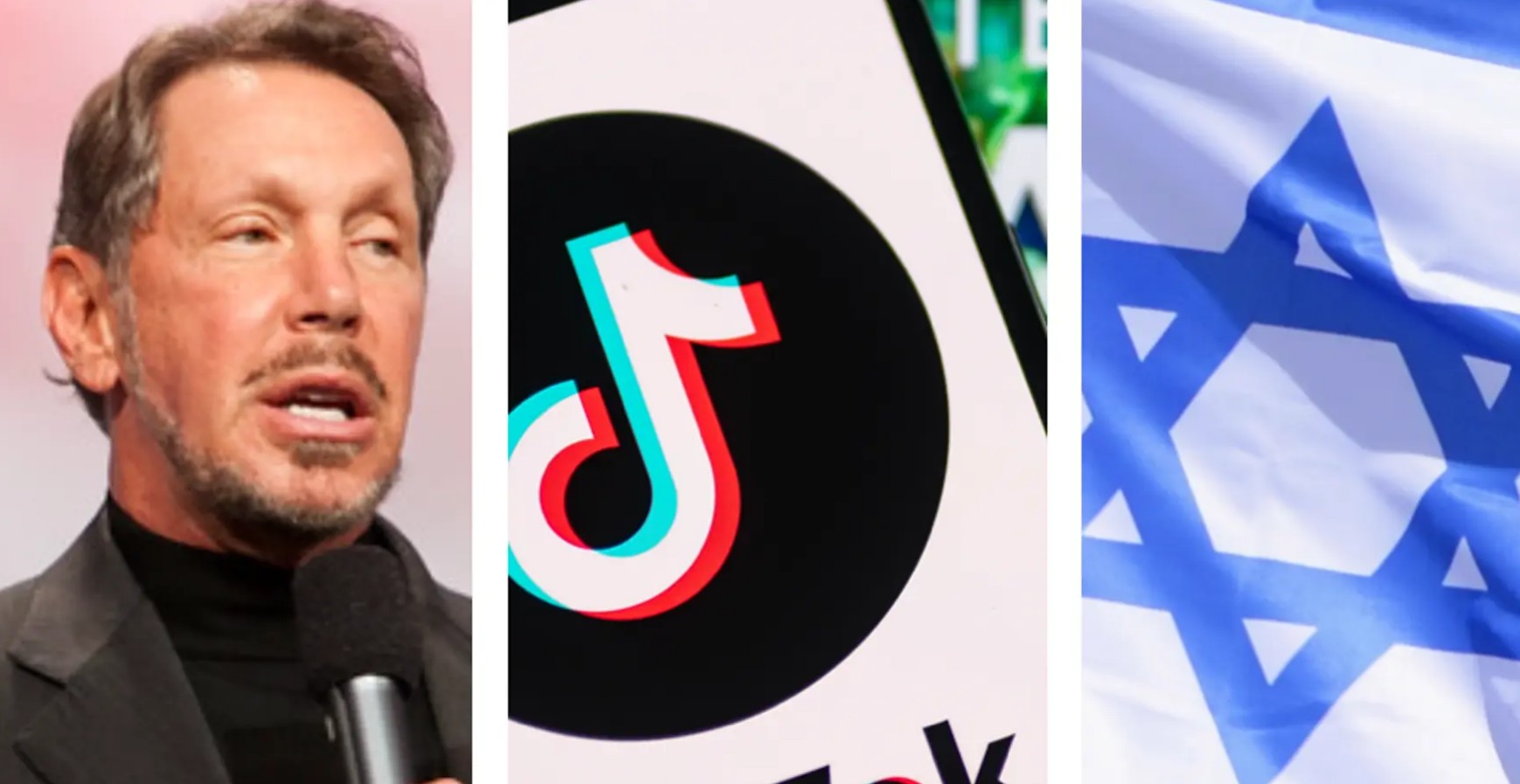
The U.S. and Chinese governments have approved a deal that transfers control of TikTok’s U.S. operations to a new American-owned entity, with Larry Ellison’s Oracle, Silver Lake Partners, and Abu Dhabi’s MGX each holding a 15% stake in the new venture. ByteDance, TikTok’s Chinese parent company, retains a 19.9% share, while the remaining 80.1% is owned by the consortium.

The deal, finalized on Thursday, ended a yearslong legal battle after Congress passed a law in 2024 mandating that TikTok be divested from Chinese ownership to avoid a nationwide ban.

Ellison, the co-founder of Oracle and the largest private donor to the Friends of the Israel Defense Forces (FIDF), has funneled over $26 million to FIDF since 2014, including a record $16.6 million gift in 2017. He has also offered Israeli Prime Minister Benjamin Netanyahu a board seat at Oracle and vacationed with his family on Ellison’s Hawaiian island.

Netanyahu has publicly called TikTok “the most important purchase going on right now,” stating that social media is “the most important weapon” in shaping U.S. public opinion and securing Israel’s political base.

The sale has sparked widespread criticism over censorship and content suppression, particularly regarding coverage of Gaza and the West Bank. Since October 2023, TikTok has faced pressure from U.S. lawmakers and pro-Israel groups over pro-Palestinian content.

Erica Mindle, a former IDF instructor and self-described Zionist, was appointed as TikTok’s hate speech policy manager, and the platform has reportedly removed videos documenting Israeli military actions, deleted hashtags like #FreePalestine, and suppressed content from Arabic news outlets.

Internal Meta data shows a similar pattern of overenforcement against pro-Palestinian speech on Facebook and Instagram, with over 90,000 posts removed in response to Israeli government takedown requests.

The new ownership structure raises concerns about algorithmic control and narrative manipulation. Oracle will serve as the platform’s “security provider,” overseeing data and algorithmic operations in the U.S.

Critics argue the deal is less about national security and more about political control, with pro-Israel billionaires now shaping what American users see online. The U.S. government, under President Trump, approved the deal as a “national security win,” despite earlier offers from TikTok to store U.S. data on Oracle servers and allow third-party audits.

The acquisition reveals a coordinated effort to influence global narratives: Tony Blair, backed by Ellison’s funding, is being positioned to lead a proposed Gaza International Transitional Authority; Clearview AI, a surveillance firm linked to Owen West (a top Pentagon official), has expanded its use in Ukraine and U.S. law enforcement; and Rupert Murdoch, Jeff Yass, and other pro-Israel figures are believed to have influence in the new TikTok ownership structure.

This convergence of tech, media, and political power suggests a strategic shift to control digital discourse in favor of Israeli interests.


community logo
Join the keneci Network Community
To read more articles like this, sign up and join my community today
0
What else you may like…
Videos
Posts
Articles
SpaceX Starlink Internet Satellites

With Starlink internet, data is continuously being sent between a ground dish and a Starlink satellite orbiting 550km above. Furthermore, the Starlink satellite zooms across the sky at 27,000 km/hr! MORE VIDEOS ON KENECI NETWORK RUMBLE CHANNEL: https://rumble.com/c/Keneci

00:28:08
Elon Musk, DOGE Speak On Waste And Fraud

US Department of Government Efficiency Services (USDS) led by Elon Musk speak on the "mind-boggling" fraud and waste in UInited States federal government

00:00:45
January 17, 2025
SpaceX Launches Starship 7th Test Flight

SpaceX successfully executed its second-ever “chopsticks” catch of a Super Heavy booster (or Booster 14) using the “Mechazilla” launch tower on Thursday(Jan. 16), during the seventh uncrewed test flight of the company's 123-meter Starship rocket. However, the megarocket's upper stage(or Ship 33) was lost approximately 8.5 minutes into the flight in a “rapid unscheduled disassembly(RUD)” or explosion

00:10:30
Welcome to Keneci Network!

Join the conversations!

December 09, 2025
Bitcoin White Paper By Satoshi Nakamoto

Bitcoin white paper

Bitcoin_White_Paper.pdf
September 17, 2024
Charges Against Sean 'Diddy' Combs In Grand Jury Indictment

The rapper was charged with racketeering conspiracy, sex trafficking by force, fraud or coercion, and transportation to engage in prostitution in the indictment unsealed Tuesday(Sept. 17)

Combs-Indictment-24-Cr.-542.pdf
post photo preview
U.S., Iran Exchange Fire As Trump Ends 'Project Freedom' In The Strait Of Hormuz

The U.S. and Iran exchanged fire in the Strait of Hormuz during "Project Freedom," a U.S. military operation launched by President Donald Trump on Monday, to escort stranded commercial vessels through the strategic waterway, despite conflicting claims over whether the ceasefire remains intact. He has since announced a pause in the operation at the request of Pakistan.

Iran launched cruise missiles, drones, and deployed small attack boats targeting U.S. warships and commercial vessels, while U.S. forces responded by sinking seven Iranian small boats, intercepting drones and missiles, and guiding two U.S.-flagged merchant ships—including the Maersk-operated Alliance Fairfax—through the strait under naval protection.

Pete Hegseth, U.S. Secretary of Defense, and Gen. Dan Caine, Chairman of the Joint Chiefs of Staff, told reporters Tuesday a the Pentagon, that the ceasefire with Iran is still in effect, emphasizing that Iranian attacks—while frequent—have remained below the threshold for restarting full-scale combat. Hegseth declared, _"No, the ceasefire is not over,"_ and asserted that Iran does not control the Strait of Hormuz, calling its blockade "international extortion."

Caine confirmed Iran had attacked U.S. forces more than 10 times and fired at commercial vessels nine times since the April 7 ceasefire, but described the actions as "low-level harassment" and "below the threshold" of major combat. The U.S. established a mine-free corridor and an "enhanced security area" under an "umbrella" of air and naval assets, with CENTCOM reporting no U.S. or allied ships were hit.

Iran denies any successful U.S. transits, calling the claims "baseless," and accuses the U.S. of violating the ceasefire through "military adventurism." Iranian officials, including Foreign Minister Abbas Araghchi and Parliament Speaker Mohammad Bagher Ghalibaf, labeled "Project Freedom" as "Project Deadlock" and warned the U.S. it has "not even begun" its response.

Meanwhile, the UAE reported repeated Iranian missile and drone attacks, intercepting 15 missiles and multiple drones over two days, with one strike injuring three people at the Fujairah Oil Industry Zone. The U.S. maintains the operation is defensive, temporary, and aimed at restoring freedom of navigation, with plans for partner nations to eventually assume security responsibilities.

Speaking to reporters at the White House Tuesday, U.S. Secretary of State Marco Rubio confirmed that the offensive phase of the Iran conflict, "Operation Epic Fury," was over, stating, _"We achieved the objectives of that operation."

Rubio described "Project Freedom" as a defensive, U.S.-led initiative to create a "protective bubble" for merchant vessels transiting the Strait of Hormuz. He said the operation aims to rescue nearly 23,000 civilians from 87 countries stranded for over two months, accusing Iran of "economic arson" by blocking the strait. Rubio stressed the mission was defensive: _"There's no shooting unless we're shot at first,"_ and noted multiple countries had requested U.S. intervention. He also revealed the U.S. and Gulf partners had drafted a UN resolution demanding Iran cease attacks, disclose mine locations, and stop imposing tolls, while expressing hope China would pressure Iran to de-escalate.

Tensions remain high as over 1,550 commercial ships carrying 22,500 mariners remain stranded in the Persian Gulf. Iran has tightened control over the Strait of Hormuz, with the IRGC warning ships to use only Iran-approved transit corridors or face a "decisive response." Rubio rejected any arrangement allowing Tehran to regulate passage or impose tolls, calling it "completely illegitimate" under international law.

Rubio maintained that economic and diplomatic pressure will continue until Iran reopens the strait and addresses its enriched uranium stockpile, noting, "They have a high pain threshold, but they don’t have an unlimited pain threshold."

On Israel and Lebanon, Rubio said a peace deal is "imminently achievable" but identified Hezbollah as the main obstacle, saying, "The problem with Israel and Lebanon is not Israel or Lebanon, it's Hezbollah." He claimed that Israel's actions in southern Lebanon target Hezbollah, not the Lebanese state, and that both nations desire peace.

U.S. envoys Jared Kushner and Steve Witkoff are pursuing diplomacy, while the U.S. supports strengthening the Lebanese Armed Forces to counter Hezbollah. Rubio warned that a nuclear-armed Iran would empower militant proxies like Hezbollah and Hamas, making the region "untouchable" to external intervention.

Few hours after Rubio's remarks, Trump announced he's pausing Project Freedom: "Based on the request of Pakistan and other Countries, the tremendous Military Success that we have had during the Campaign against the Country of Iran and, additionally, the fact that Great Progress has been made toward a Complete and Final Agreement with Representatives of Iran, we have mutually agreed that, while the Blockade will remain in full force and effect, Project Freedom (The Movement of Ships through the Strait of Hormuz) will be paused for a short period of time to see whether or not the Agreement can be finalized and signed."

Trump announced "Project Freedom" in a Truth Social post Sunday, stating the U.S. would begin guiding ships safely out of the Strait of Hormuz starting Monday. He emphasized that countries whose vessels were stranded had requested U.S. assistance and said, _"For the good of Iran, the Middle East, and the United States, we have told these Countries that we will guide their Ships safely out of these restricted Waterways, so that they can freely and ably get on with their business."_ He reiterated that the U.S. blockade on Iranian ports would remain until Iran fully complies with demands, including verifiably abandoning its nuclear weapons program, and claimed negotiations were "going actually along very well."

Read full Article
post photo preview
CAS500-2: SpaceX Launches 45 Satellites On Rideshare Mission For Government, Private Operators

SpaceX launched a Falcon 9 rocket from Vandenberg Space Force Base at 0700 UTC on Sunday (May 3), delivering 45 satellites -- including the primary payload CAS500-2, a South Korea’s 500 kg-class Earth observation spacecraft -- into Sun-synchronous orbit in a dedicated rideshare mission.

The Falcon 9 first-stage booster, B1071, completed its 33rd flight and landed at Landing Zone 4 (LZ-4) roughly 7.5 minutes after launch. The second stage meanwhile, continued spaceward and started payload deployment sequence about an hour after liftoff, beginning with CAS500-2 and followed by the other payloads over the next hour and a half.

CAS500-2, built by Korea Aerospace Industries (KAI), is designed for high-resolution disaster monitoring and agricultural observation. The satellite captures imagery with a ground resolution of 0.5 meters in panchromatic mode and 2 meters in color mode.

South Korea's CAS500 ("Compact Advanced Satellite 500") program aims to operate a total of five satellites in low Earth orbit. CAS500-2 is the second satellite in the program, following CAS500-1 (launched in 2021) and preceding CAS500-3 (launched on South Korea’s Nuri rocket in late 2025).

The remaining 44 payloads were manifested by various international commercial and governmental operators, including: Planet Labs's three Pelican high-resolution Earth imaging satellites; Exolaunch's diverse batch of 21 CubeSats and 18 MicroSats from various global customers; Italian company Argotec's seven HEO MicroSats for the IRIDE emergency monitoring constellation; Loft Orbital and EarthDaily Analytics' six satellites for an AI-driven data constellation; Lynk Global's two Lynk Tower satellites for direct-to-device connectivity; True Anomaly's Jackal Autonomous Orbital Vehicle; and Indian company GalaxEye's Mission Drishti satellite, featuring synthetic aperture radar and multi-spectral imaging.

CAS500-2 launch faced significant delays due to Russia’s invasion of Ukraine, which disrupted its original 2022 launch plan on a Russian rocket

Read full Article
post photo preview
Iran Damage To U.S. Military Assets Far More Extensive Than The Pentagon Publicly Acknowledge: Report

Iranian missiles and drones have reportedly inflicted far more extensive damage on U.S. military bases and assets than the Pentagon has publicly acknowledge; at least 16 U.S. facilities across eight Gulf countries were struck, some severely damaged or rendered unusable.

The attacks, which began after U.S. and Israeli strikes on Iran on February 28 this year, targeted high-value infrastructure including radar systems, aircraft, communications equipment, and command centers.

Key damaged or destroyed assets include Boeing E-3 Sentry AWACS aircraft, each valued at $500 million, destroyed at Prince Sultan Air Base in Saudi Arabia; Camp Buehring in Kuwait, a major U.S. hub, left largely empty after sustained attacks, including a rare strike by an Iranian F-5 fighter jet.

Other damaged assets include Al-Udeid Air Base in Qatar, hit multiple times, with damage to its runway and early-warning radar systems; U.S. Fifth Fleet headquarters in Bahrain, where communications equipment and the Navy’s command center sustained serious damage; multiple MQ-9 Reaper drones, F-15E and F-35A fighter jets, KC-135 tankers, and advanced radar systems such as the AN/FPS-132, valued at $1 billion, were damaged or destroyed.

Iran’s improved targeting, aided by higher-resolution satellite imagery from the Chinese TEE-01B satellite acquired in 2024, enabled precise strikes.

The Pentagon has not released detailed damage assessments, citing operational security, but internal and external estimates suggest repair and replacement costs could exceed $5 billion.

Congressional aides and Republican lawmakers have expressed frustration over the lack of transparency, especially as the administration prepares a $200 billion supplemental budget request.

Read full Article
See More
Available on mobile and TV devices
google store google store app store app store
google store google store app tv store app tv store amazon store amazon store roku store roku store
Powered by Locals