keneci Network
News • Comedy • Science & Tech
NROL-77: SpaceX Launches Spy Satellite For The US Military
December 09, 2025
post photo preview

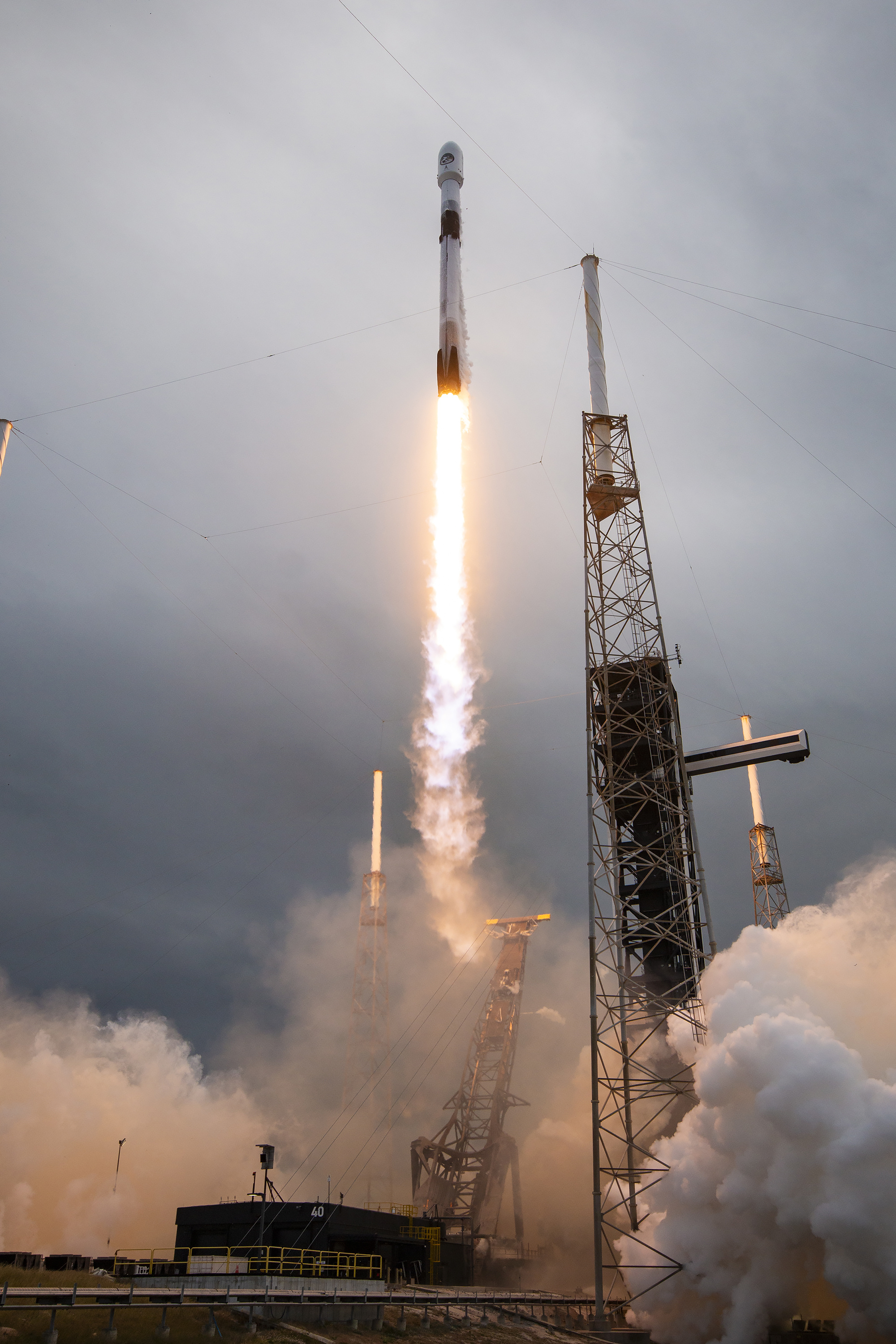
SpaceX Falcon 9 launched the National Reconnaissance Office Launch 77 (NROL-77) mission on Tuesday(Dec. 9), at 1916 UTC from Space Launch Complex 40 (SLC-40) at Cape Canaveral Space Force Station in Florida, carrying a classified national security payload designed, built, and operated by the NRO, which is responsible for the United States’ reconnaissance satellite fleet.

About eight and a half minutes after liftoff, the Falcon 9 first stage booster, B1096 executed a successful landing at LZ-2, marking the 16th touchdown at that site and the 547th booster landing in SpaceX’s history. B1096, which completed its fourth flight, have previously supported NASA’s IMAP mission, Amazon’s Kuiper Falcon 01, and a Starlink 6-87 mission.

The Falcon 9's upper stage deploy the NROL-77 payload less than an hour after launch, confirmed by the NRO. National security missions tend to be classified, and NROL-77 is no exception. The NRO's press release, says the mission "carries a national security payload designed, built and operated by NRO."

The NRO and U.S. Space Force’s Space Systems Command (SSC) emphasized that this partnership strengthens national space superiority through innovative launch solutions and shared expertise, especially in an increasingly contested space environment.

The mission patch for NROL-77 features a flying squirrel symbolizing endurance and the gathering of foundational knowledge from space, with the motto “Another One Gone — Today, Tomorrow and Beyond.”

"The flying squirrel is a symbol of hard work and endurance — always active gathering foundational knowledge from the space domain for the nation and its allies," NRO officials wrote in the press release. "Every mission counts, every decision matters, and every advancement propels us further. 'Another One Gone — Today, Tomorrow, and Beyond' embodies the relentless pursuit of excellence."

NROL-77 was the third mission that SpaceX has launched this year for the NRO and U.S. Space Systems Command, according to the company; and it's the second NRO mission launched by SpaceX under the National Security Space Launch (NSSL) Phase 2 contract awarded in August 2020, which allocates missions between SpaceX and United Launch Alliance (ULA) over five order years.

This particular flight was part of Order Year 5, announced on October 31, 2023, and one of ten missions assigned to SpaceX that year with a combined value of $1.236 billion.

This launch was also the seventh Falcon 9 mission of 2025 carrying the “NROL-” designation, following previous flights such as NROL-153, NROL-57, NROL-69, NROL-192, NROL-145, and NROL-48. The NRO has also procured some missions outside the NSSL program, such as the NROL-174 mission launched on a Northrop Grumman Minotaur 4 rocket in April 2025, due to the need for a bridge between NSSL Phase 2 and Phase 3.

Tuesday's mission marked the final national security payload launch for the NRO in 2025 and the last Falcon 9 booster recovery at Landing Zone 2 (LZ-2) at Cape Canaveral, as SpaceX prepares to shift its recovery infrastructure to new landing sites due to the expiration of its lease at LZ-1 and LZ-2 by December 31, 2025.


community logo
Join the keneci Network Community
To read more articles like this, sign up and join my community today
0
What else you may like…
Videos
Posts
Articles
SpaceX Starlink Internet Satellites

With Starlink internet, data is continuously being sent between a ground dish and a Starlink satellite orbiting 550km above. Furthermore, the Starlink satellite zooms across the sky at 27,000 km/hr! MORE VIDEOS ON KENECI NETWORK RUMBLE CHANNEL: https://rumble.com/c/Keneci

00:28:08
Elon Musk, DOGE Speak On Waste And Fraud

US Department of Government Efficiency Services (USDS) led by Elon Musk speak on the "mind-boggling" fraud and waste in UInited States federal government

00:00:45
January 17, 2025
SpaceX Launches Starship 7th Test Flight

SpaceX successfully executed its second-ever “chopsticks” catch of a Super Heavy booster (or Booster 14) using the “Mechazilla” launch tower on Thursday(Jan. 16), during the seventh uncrewed test flight of the company's 123-meter Starship rocket. However, the megarocket's upper stage(or Ship 33) was lost approximately 8.5 minutes into the flight in a “rapid unscheduled disassembly(RUD)” or explosion

00:10:30
Welcome to Keneci Network!

Join the conversations!

December 09, 2025
Bitcoin White Paper By Satoshi Nakamoto

Bitcoin white paper

Bitcoin_White_Paper.pdf
September 17, 2024
Charges Against Sean 'Diddy' Combs In Grand Jury Indictment

The rapper was charged with racketeering conspiracy, sex trafficking by force, fraud or coercion, and transportation to engage in prostitution in the indictment unsealed Tuesday(Sept. 17)

Combs-Indictment-24-Cr.-542.pdf
post photo preview
Crew-12 Astronauts Return To Earth Aboard SpaceX Dragon After 8 months On ISS

SpaceX Crew-12 mission astronauts aboard Crew Dragon Freedom returned to Earth on Thursday (Oct. 8), after undocking from the International Space Station at 1205 UTC Wednesday (Oct. 7). The capsule executed a deorbit burn before entering the atmosphere at about 1522 UTC, achieving a successful splashdown in the Pacific Ocean off the coast of Los Angeles at 1534 UTC after a roughly 27-hour trip.

Following splashdown, the capsule was secured by recovery teams aboard the Shannon ship, and the astronauts -- Jessica Meir (NASA Commander), Jack Hathaway (NASA Pilot), Sophie Adenot (ESA Mission Specialist), and Andrey Fedyaev (Roscosmos Mission Specialist) -- were lifted aboard for initial medical evaluations before being transported by helicopter to NASA’s Johnson Space Center in Houston for rehabilitation. Crew members.

Meir and Fedyaev were experienced space travelers, while Hathaway and Adenot were on their first spaceflights.

"The crew is doing well. They were all smiles exiting the capsule," Bill Spetch, deputy manager of commercial, NASA’s Low Earth Orbit Program, said during a post-splashdown press conference Thursday. "It's great to have them back after 237 days in space, 235 of those on the space station."

During the mission, which lasted 237 days (nearly eight months), the four astronauts conducted extensive scientific research, including tests on stem cell production, IV fluid generation, and the effects of microgravity on bone density and blood flow.

The Crew-12 astronauts felt a mix of emotions about their homecoming, as big transitions are always bittersweet. Indeed, Meir gave us a sense of this a few weeks back.

"What I'm looking forward to most is seeing my three-and-a-half-year-old daughter,” Meir said during a Sept. 16 call with reporters from the station.

"I'm so looking forward to seeing nature again," she added, "feeling the breeze on my face, the wind rustling through the leaves, experiencing all those things that we don't have up here. But I will very, very much miss being weightless all the time and the incredible views that we have."

The Crew-12 astronauts launched to the ISS aboard Dragon Grace atop a SpaceX Falcon 9 rocket on Feb. 13. Their arrival brought the station up to its normal complement of seven crewmembers. It had been operating with a skeleton crew of three since Jan. 15, when SpaceX's Crew-11 mission headed home a month early to deal with a medical issue experienced by one of its astronauts, NASA's Mike Fincke.

That was the first medical evacuation in the long history of the ISS. But it was not an emergency situation, NASA officials stressed at the time, and Fincke is doing fine now here on terra firma. (He retired in August with a total of 549 days in space, the fourth-most ever for a NASA astronaut). Crew-12, in turn, was relieved by the four astronauts of the Crew-13 mission, which arrived at the ISS last Thursday (Oct. 1).

Read full Article
post photo preview
Microsoft Windows And Surface Event 2026: Surface Laptop Ultra, Local Copilot AI & More

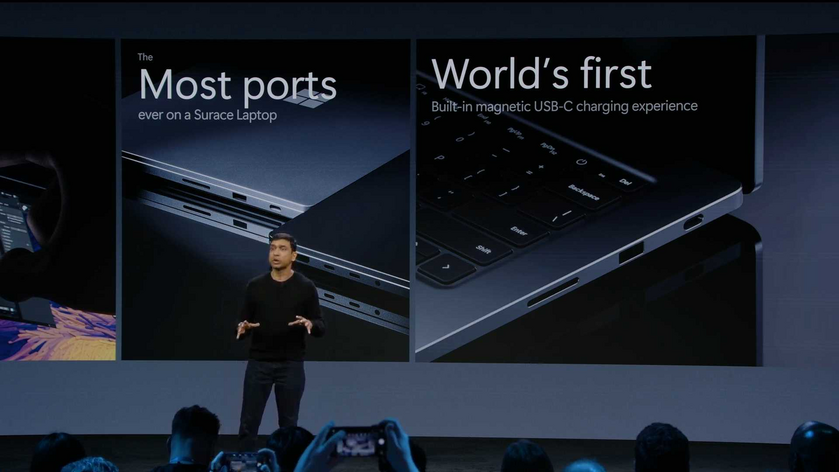
At the Windows and Surface Event 2026 on Wednesday, Microsoft and NVIDIA unveiled the Surface Laptop Ultra, a premium device powered by the NVIDIA RTX Spark superchip, marking a significant push into local AI and high-performance computing. Also announced, are the general availability of Microsoft Execution Containers (MXC) for AI agent governance; a new ecosystem of RTX Spark PCs from major partners, alongside updates to Windows Hybrid Intelligence for Copilot.

The centerpiece, the Surface Laptop Ultra, is Microsoft’s most powerful Surface laptop, featuring a 15-inch PixelSense Ultra display and an NVIDIA RTX Spark platform that combines a Blackwell RTX GPU and Grace CPU with up to 128 GB of unified memory.

Priced starting at $2,599 (base configuration with 24 GB RAM) and up to $5,899 (top tier with 128 GB RAM and 1 TB storage), Surface Laptop Ultra offers up to 1 petaflop of FP4 AI performance and can run local AI models exceeding 120 billion parameters. It ships on October 16, 2026, alongside a compact desktop alternative, the Surface RTX Spark Dev Box which is priced at $5,999 and ships in November.

Beyond Microsoft’s own hardware, the RTX Spark platform expands to a broader ecosystem of Windows PCs from partners including Lenovo, Asus, Dell, HP, MSI, and Gigabyte. These devices, ranging from laptops to compact desktops, are designed to deliver high-end AI and graphics performance, with many already available for pre-order.

On the software side, Microsoft detailed its vision for Windows Hybrid Intelligence, enhancing Copilot with deeper local capabilities. This integration allows Copilot to seamlessly switch between local on-device models and cloud-based models, improving privacy and reducing latency for everyday tasks.

To support the growing use of AI agents, Microsoft announced the general availability of Microsoft Execution Containers (MXC), a technology that isolates and governs AI agents across Windows, macOS, and Linux environments, ensuring secure and controlled access to system resources. The tech giant also showcased partnerships for local AI integration, including Meta’s Muse personal agent coming to Windows.

Read full Article
October 07, 2026
post photo preview
Elon Musk: 'Certain Oligarchs' Blocking Starlink Launch In India

Elon Musk in a Wednesday X post, alleged that unnamed Indian "oligarchs" are blocking Starlink’s entry into the country to protect their "monopolistic chokehold," calling the delay a "crime against the people of India." His post responded to data showing that 11,256 of India’s listed villages still lacked 4G coverage as of May 2026, with Musk adding, "You can guess who they are."

In remarks earlier Wednesday at the India Mobile Congress 2026, Lauren Dreyer, Vice President of SpaceX’s Starlink Business Operations, said that the company is ready to serve India once final government approvals are granted.

Dreyer highlighted that Starlink has invested in local infrastructure, including 20 gateway sites with hundreds of antennas, and has established India-specific security controls to keep user data within the country.

While Starlink holds a satcom permit and authorization from India's space regulator, commercial operations remain stalled pending security approvals and spectrum allocation.

Dreyer confirmed that Starlink has spent five years working with Indian regulators and telecom operators, signing MoUs with companies like Airtel and Jio to complement existing connectivity.

SpaceX aims to support Prime Minister Narendra Modi’s vision of 100% connectivity, particularly for remote classrooms, telemedicine, and disaster recovery. Company sources say Starlink is expected to launch and make significant inroads

Read full Article
See More
Available on mobile and TV devices
google store google store app store app store
google store google store app tv store app tv store amazon store amazon store roku store roku store
Powered by Locals