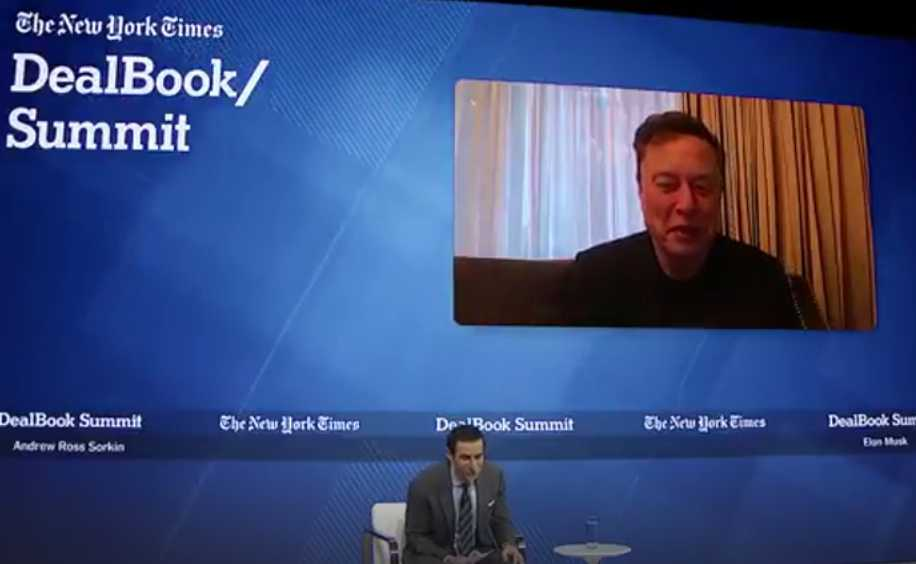
During an interview at the New York Times DealBook Summit Wednesday at Jazz at Lincoln Center, with CNBC presenter and DealBook founder/editor-at-large Andrew Ross Sorkin, SpaceX and Tesla CEO Elon Musk addressed his political spending, the Nvidia leadership controversy, Starlink operations in Ukraine, and potential corporate mergers.
The richest man in the world expressed regret over his $474–500 million expenditure supporting Republican candidates in the 2026 midterm elections, saying he felt "pretty foolish" because the spending "failed" to achieve its goals. He distanced himself from President Donald Trump's MAGA movement, declaring, "I'm not MAGA," and defined it as "blind adherence to a set of policies by the Republican Party," which he rejected.
“I feel pretty foolish about having spent so much money and not seeing much for it — or maybe it would have been much worse without that…," Musk said. "American elections are not just about money. You can put a lot of money into an election and have an effect that is relatively minor.” If he could rewind, he would have spent less.
Musk said his goal was checks and balances-- at least one of the House, Senate, or presidency remaining with the other party in the relevant cycle, rather than a supermajority of either side. “I’m not MAGA… I don’t think I have… extreme political views. I’m ideologically quite moderate… There are positives and negatives in both parties. But politics is very tribal.” He described some of his immigration-related views as mainstream not long ago (citing earlier immigration restrictionist statements by Obama and Hillary Clinton). He dismissed threats of prosecution or prison over political involvement, saying a person still needs to commit an actual crime
The Tesla CEO and Texas resident expressed optimism about working with newly elected Democratic Governor Gina Hinojosa of Texas, despite her scrutiny of his $1.66 billion chip factory tax breaks.
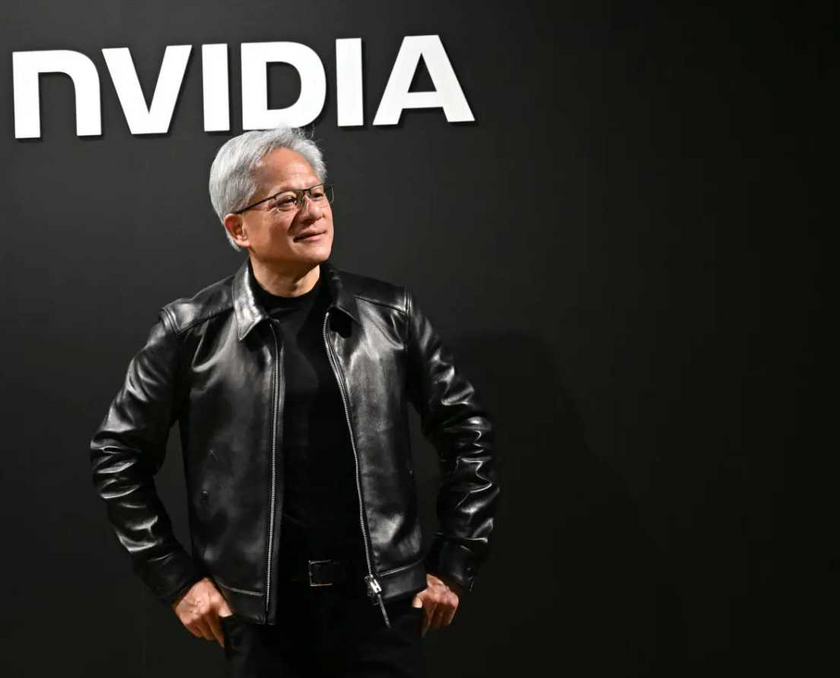
Musk strongly defended former Nvidia CEO Jensen Huang, who resigned following revelations of an affair with a woman Alicce Huang. The SpaceX CEO called Huang "irreplaceable" and "one of the most talented entrepreneurs in history," comparing his ouster to "kicking Michael Jordan off your team" during a winning streak. He argued that while Huang made "mistakes," he was "not disloyal to the United States" and noted that even President Trump had voiced support for Huang’s reinstatement.
The SpaceX CEO said Huang handles multiple roles--supply chain, long-standing supplier relationships in Korea and Taiwan, deep technology understanding--and commands strong team loyalty. Musk said he would hire him (“who wouldn’t”) and has spoken to him personally, but the decision rests with the Nvidia board (or shareholders voting the board out, which is rare).
Responding to questions about SpaceX Starlink operation in Ukraine, Musk clarified that the broadband megaconstellation is a civilian system not intended for offensive drone strikes or military operations, which he said belong on the government-controlled Starshield network.
Musk disputed Ukrainian President Volodymyr Zelenskyy’s claims that Ukraine was using Starshield, asserting that "Zelenskyy is not always truthful" and "lying" about the matter. He emphasized that Starlink provides the "backbone of communications" for the Ukrainian military and that turning it off would cause the "entire Ukrainian front to collapse immediately," but he refused to allow its use for offensive strikes to avoid making SpaceX a "party to a war."
The SpaceX CEO emphasized that he pre-positioned Starlink in Ukraine before the full-scale Russian invasion. When Russia disabled other communications (cell towers, fiber, other satellites), Starlink was the system they could not take out. “If they had not had Starlink, their entire line would have collapsed… Russia would have won.” He said no private individual has helped Ukraine more.
Musk stressed Starlink is a civilian system “not meant to be used for offensive drone strikes that kill people.” For such uses, Ukraine should rely on Starshield (a separate U.S. government/War Department-controlled system). “Do not ask me as a private individual to make kill decisions that sometimes result in the loss of innocent lives.” He described a speed limit on Starlink in Ukraine roughly matching the country’s fastest road speed limit (~80 mph).
During the DealBook Summit interview, Musk announced that Tesla would sell a version of its Model Y sport utility vehicle, referred to as the Model YL, designed to operate ompletely without human intervention. "It's certainly our most popular car. We should just change all of the Model Y production to the Y L because it's what most people seem to want," Musk said.
"It's going to make sense for us to make cars that can seat different amounts of people," Musk said. "We still need autonomous vehicles if you've got 4 or 6, or a whole family. What we plan to do is have an autonomous version of the Model Y that won't have steering wheels or pedals and would be good for transporting groups of 6 or 7 people."
Musk also discussed a potential merger between SpaceX and Tesla, saying that areas of overlap in AI, robotics, and chip design now exist that "didn't exist before."
While he admitted the companies would likely be "better together," he insisted any transaction must be approved by shareholders and that he would not receive his Tesla pay award simply for merging, but only if performance targets are met.
On the launch of Starlink Mobile, Musk said SpaceX will introduce a revolutionary microcell tower device for Starlink Mobile users that you will be able to put on your roof and will help signal penetrate through thick walls. "It addresses the problem of reaching people who are in a building.
SpaceX is advancing next-generation direct-to-cell Starlink Mobile service launching next year with roughly 40x the bandwidth of the current version, plus further versions. To improve indoor coverage, it plans micro-cell sites using 800 MHz spectrum.
Musk said he does not expect this to put traditional carriers like AT&T and Verizon out of business. He noted that Starlink’s commercial success is funding Starship and the broader goal of making life multiplanetary -- self-sustaining cities on the Moon and Mars as “insurance for life as a whole” against extinction risks.
On questions of monopoly or concentrated power on one individual, he emphasized that his companies do not hoard patents and points out that any company can copy his rocket and car technologies.
SpaceX is renting compute to Anthropic. During the interview, Musk said he met people there and “no one… set off my evil detector;” and that he retains the ability to end contracts if he judges the company’s actions “really terrible.” The SpaceX CEO revealed that Anthropic has reportedly expressed interest in additional capacity on the order of 10 gigawatts from SpaceX.