keneci
News • Science & Tech • Comedy
Soyuz MS-28: US-Russian Crew Launches To The Space Station
November 27, 2025
post photo preview

UPDATE | Baikonur Service Tower Damaged After Soyuz MS-28 Mission Launch

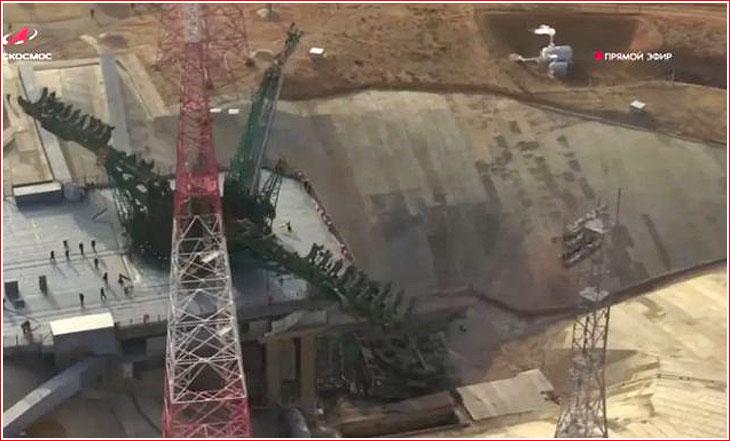
The launch of the Soyuz MS-28 crew vehicle from Site 31/6 at the Baikonur Cosmodrome resulted in a major incident where the mobile service platform, also known as the service cabin (8U0216), collapsed into the flame duct below the launch pad.

This event rendered the facility, Russia’s only operational launch pad for crewed missions to the International Space Station (ISS), essentially unusable. The collapse occurred despite the service platform being designed to retract into a protective niche under the pad and be shielded by a blast shield before launch.

The service platform is a critical structure that provides access to the lower stages of the Soyuz rocket during pre-launch processing, including connections for fuel and oxidizer lines and access to structural supports.

The damage to the platform, including deformation of access bridges and structural elements, has raised serious concerns about the continuity of crewed and cargo launches from Baikonur. The launch of the Progress MS-33 cargo ship, scheduled for December 21, 2025, is now at risk of disruption.

Preliminary assessments indicate that repairs to the service platform could take up to two years, and no immediate temporary solutions have been identified to maintain launch operations. The incident has prompted discussions about potential alternatives, such as utilizing duplicate hardware from the mothballed Site 1 at Baikonur, or from other Soyuz launch facilities at Plesetsk, Vostochny, or even the former Kourou pad in French Guiana. However, these options are complicated by logistical and technical challenges.

Site 31/6 has a long history, originally established in 1958 as a backup launch complex for the R-7 ICBM and later re-purposed for orbital launches, including crewed missions. It became a key site for Soviet and Russian spaceflight, supporting early missions like Soyuz-4 in 1969 and later serving as the primary launch site for the Soyuz-2.1a rocket family, which now carries both crew (Soyuz MS) and cargo (Progress) missions to the ISS.

Crewed launches resumed from Site 31 in 2012 after a 28-year gap, and it has since been the exclusive launch site for Russian crewed missions to the ISS. The facility has also hosted 400 launches in total, including the 400th launch in April 2020 with Soyuz MS-16.

The collapse of the service tower on the day of the Soyuz MS-28 launch marks a significant setback for Russia’s human spaceflight program, threatening the reliability of its access to the ISS and potentially impacting international crew rotations and cargo delivery schedules.

=================

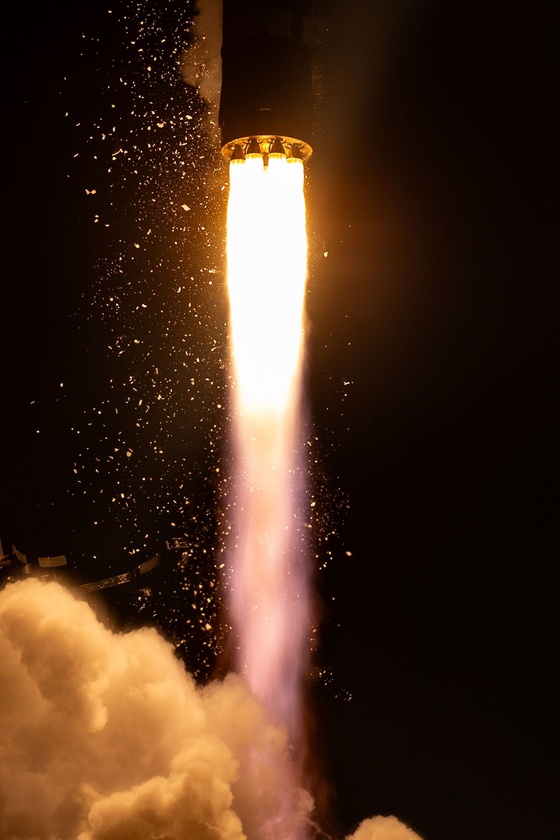
A Soyuz-2.1a rocket launched the Soyuz MS-28 spacecraft from the Baikonur Cosmodrome in Kazakhstan at 0927 UTC(Nov. 27), carrying three crew members—NASA astronaut Christopher Williams and Russian cosmonauts Sergey Kud-Sverchkov and Sergey Mikayev—to the International Space Station (ISS).

The spacecraft docked with the ISS's Rassvet nadir port at 1234 UTC, completing a rapid three-hour rendezvous, with hatch opening at 1516 UTC.

The MS-28 crew were welcomed aboard the ISS as Expedition 73/74 members, by the existing seven members of Expedition 73 commander Sergey Ryzhikov and flight engineers Alexey Zubritsky and Oleg Platonov of Roscosmos; Jonny Kim, Zena Cardman and Mike Fincke of NASA and JAXA (Japan Aerospace Exploration Agency) astronaut Kimiya Yui greeted Kud-Sverchkov, Mikaev and Williams after the hatches opened followed by a "sit down" for a feast.

Williams will be eating his Thanksgiving Day dinner in Earth orbit. Although they are not the first crew to celebrate Thanksgiving in space, the Soyuz MS-28 trio are the first to launch and dock on the holiday day in the United States.

"The kid who played basketball in the driveway with his cousins before Thanksgiving dinner is now a flight engineer on the three-man crew for Expedition 74," wrote Juan Williams, a civil rights historian and Chris' uncle, in a recent column for The Hill newspaper. "Chris's incredible trip to space is rooted in incredible family trips. His grandmother took a voyage to a new world in 1958. She traveled with three children on a freighter boat carrying bananas from Panama to Brooklyn, New York."

"This Thanksgiving, I am grateful to live in a country where the grandson of Panamanian immigrants can represent America in the heavens, on a mission of peace and science," wrote the elder Williams.

"This is my second Thanksgiving in space, so I highly recommend it," said Fincke in a recorded video released by NASA ahead of the holiday. "This time it is going to be with a new Soyuz crew and we're getting food ready, so we have the traditions like turkey [and] there is some cranberry sauce here."

The food lab at NASA's Johnson Space Center in Houston prepared a special "Holiday Bulk Overwrapped Bag" (BOB) that arrived with a cargo delivery in September. "We have got everything here from turkey and the traditional things that Mike mentioned, some mashed potatoes, to crab meat, salmon and we even have some lobster, which is amazing!" said Cardman.

After the holiday and the return to Earth by Ryzhikov, Zubritsky and Kim aboard Soyuz MS-27 in early December, Kud-Sverchkov, Mikaev and Williams, together with Cardman, Fincke, Yui and Platonov will form the new Expedition 74 crew. During their planned stay, the Soyuz MS-28 trio will help carry out hundreds of science experiments and technology demonstrations, as well as conduct possible spacewalks and perform station maintenance as needed.

Williams will help install and test the European Enhanced Exploration Exercise Device (E4D), a modular workout system for long-duration missions that combines bicycling, rowing and resistive capabilities together with rope pulling and climbing. He will also conduct studies to improve cryogenic fuel efficiency and grow semiconductor crystals, as well as assist NASA in developing revised re-entry safety protocols to protect crew members during future missions.

Kud-Sverchkov and Mikaev will be the first cosmonauts to be aided by GigaChat, an artificial intelligence (AI) bot that through both voice and tablet inputs will help make decisions about the operation of the Russian segment of the space station.

Williams, 42, a NASA astronaut and physicist, is on his first spaceflight, Kud-Sverchkov, who logged 185 days in space as a flight engineer on the station's Expedition 63/64 crew in 2021, is on his second spaceflight, while Mikayev is making his first journey to space. The crew, flying under the call sign "Gyrfalcon," will spend approximately 240 days aboard the ISS, with a planned return to Earth on July 26, 2026, landing in the Kazakh Steppe.

Kud-Sverchkov, 42, worked as a rocket engineer for RSC Energia before being selected as a cosmonaut in 2010. Mikaev, 39, was flying as a military pilot in the Russian Air Force when he was recruited for spaceflight training in 2018.

Williams has a doctorate in physics, studied supernovae using the Very Large Array radio telescope and completed residency training at Harvard that later led to him developing new image guidance techniques for cancer treatment. He joined NASA in 2021 and is the second member of his class ("The Flies") to fly into space.

The Soyuz MS-28 mission(or ISS 74S) operated by Roscosmos marks the first crewed flight of the Soyuz MS-28 spacecraft, which was reassigned after its originally scheduled vehicle, MS-28 No. 759, sustained damage to its heat shield during testing.

The Soyuz-2.1a launch vehicle and payload fairing arrived at Baikonur by rail on October 22, 2025, and final preparations, including system checks and tests, were completed in early November.


community logo
Join the keneci Community
To read more articles like this, sign up and join my community today
0
What else you may like…
Videos
Posts
Articles
SpaceX Starlink Internet Satellites

With Starlink internet, data is continuously being sent between a ground dish and a Starlink satellite orbiting 550km above. Furthermore, the Starlink satellite zooms across the sky at 27,000 km/hr! MORE VIDEOS ON KENECI NETWORK RUMBLE CHANNEL: https://rumble.com/c/Keneci

00:28:08
Elon Musk, DOGE Speak On Waste And Fraud

US Department of Government Efficiency Services (USDS) led by Elon Musk speak on the "mind-boggling" fraud and waste in UInited States federal government

00:00:45
January 17, 2025
SpaceX Launches Starship 7th Test Flight

SpaceX successfully executed its second-ever “chopsticks” catch of a Super Heavy booster (or Booster 14) using the “Mechazilla” launch tower on Thursday(Jan. 16), during the seventh uncrewed test flight of the company's 123-meter Starship rocket. However, the megarocket's upper stage(or Ship 33) was lost approximately 8.5 minutes into the flight in a “rapid unscheduled disassembly(RUD)” or explosion

00:10:30
Welcome to Keneci Network!

Join the conversations!

December 09, 2025
Bitcoin White Paper By Satoshi Nakamoto

Bitcoin white paper

Bitcoin_White_Paper.pdf
September 17, 2024
Charges Against Sean 'Diddy' Combs In Grand Jury Indictment

The rapper was charged with racketeering conspiracy, sex trafficking by force, fraud or coercion, and transportation to engage in prostitution in the indictment unsealed Tuesday(Sept. 17)

Combs-Indictment-24-Cr.-542.pdf
post photo preview
CES 2026 | NVIDIA's New AI Model, Chip, Robotics, Rubin, Alpamayo

NVIDIA CEO Jensen Huang unveiled a suite of groundbreaking innovations at CES 2026, centering on the new Vera Rubin AI platform and the Alpamayo reasoning model for autonomous vehicles.

The Vera Rubin platform, now in full production, is a six-chip, extreme-codesigned AI system designed to deliver up to five times the computing power of the previous Blackwell generation while reducing token generation costs by up to 10 times.

This next-generation AI supercomputer integrates 88 custom Olympus cores per Vera CPU and 336 billion transistors per Rubin GPU, with each system containing a pair of both components. The platform is designed for large-scale AI inference and training, capable of being clustered into "pods" with over 1,000 Rubin chips to form a single AI engine. It features a proprietary data format and includes innovations like "context memory storage" to improve long-form AI interactions.

The system is expected to be deployed by major cloud providers including Microsoft, Amazon Web Services, Google Cloud, and CoreWeave, as well as by AI labs such as OpenAI, Anthropic, Meta, and xAI. Cooling is optimized using hot water, and the chassis can be assembled in just five minutes.

Alpamayo, an open-source family of reasoning models, enables autonomous vehicles to handle complex, unfamiliar driving scenarios through chain-of-thought reasoning, with the first deployment in the 2025 Mercedes-Benz CLA set for early 2026.

This 10-billion-parameter chain-of-thought reasoning model is designed to guide autonomous vehicles through unpredictable situations by breaking down complex scenarios into smaller, manageable problems and explaining its decisions at each step. It is part of NVIDIA’s full-stack DRIVE platform and will be used in the 2025 Mercedes-Benz CLA, which has already earned a five-star safety rating from EuroNCAP.

Alpamayo is also being used in conjunction with NVIDIA’s Cosmos simulation environment to train robots and vehicles using synthetic data from digital twins. The model is open-sourced, including the training data, to promote transparency and trust.

In other highlights of his presentation, Huang was joined on stage by autonomous BDX droids from Star Wars, trained using NVIDIA’s Cosmos and Isaac Sim platforms, demonstrating the company’s progress in physical AI.

NVIDIA also announced partnerships with Siemens to enhance manufacturing through digital twin-based robotics training. Additionally, the company emphasized its focus on inference efficiency, with Rubin chips designed to handle real-time AI responses more effectively than previous generations.

While no new GeForce RTX GPUs were announced during the main keynote, NVIDIA covered its gaming advancements on GeForce On Community Update. This included DLSS 4.5, which introduces a second-generation transformer model to reduce ghosting and shimmering, along with support for 6x multi-frame generation and dynamic frame generation.

G-Sync Pulsar, a new flicker reduction technology, was also announced, promising perceived motion clarity equivalent to 1,000Hz through backlight pulsing and adaptive brightness/color temperature adjustments. Pre-orders for G-Sync Pulsar displays are set to open January 7, 2026.

All announced products by NVIDIA are either in full production or scheduled for rollout in the second half of 2026, with the Vera Rubin platform and Alpamayo already being integrated into early partner systems.

Read full Article
post photo preview
Atlas: Boston Dynamics Robot From Prototype To Production For Hyundai, Google DeepMind

Boston Dynamics has officially begun manufacturing its new 1.89-meter humanoid robot, Atlas, with 56 degrees of freedom, for deployment at Hyundai’s Robotics Metaplant Application Center (RMAC) and Google DeepMind, marking a major transition from prototype to production-ready industrial robot.

The robot, unveiled at CES 2026 in Las Vegas, is designed for enterprise use, capable of autonomous operation, lifting up to 50 kg, and performing tasks such as material handling and parts sequencing with minimal supervision.

The Atlas robot features fully rotational joints, a reach of up to 2.3 meters, and human-scale hands with tactile sensors for fine manipulation. It operates in temperature ranges from -20°C to 40°C and has an IP67 rating, making it water-resistant and suitable for industrial environments.

Atlas can autonomously navigate to a charging station, swap its own battery, and resume work without human intervention, enabling continuous operation.

The robot is equipped with 360-degree vision and human detection systems for safe interaction in shared workspaces. It can learn new tasks in under a day, and once trained, the skill is instantly shared across the entire fleet of Atlas robots.

Atlas is being developed in partnership with Google DeepMind to integrate advanced AI foundation models, enhancing its cognitive and adaptive capabilities.

The robot will be the first test case, according to Carolina Parada, senior director of robotics at Google DeepMind.

“We’re looking to integrate our cutting-edge AI foundation models with Boston Dynamics’ new Atlas robots, and we’ll aim to develop the world’s most advanced robot foundation model to fulfill the promise of true general-purpose human needs,” Parada said onstage at CES 2026.

While some of the interaction and working with humans has been handled on the hardware side -- the 360-degree cameras to allow it to see when people are approaching -- DeepMind’s work could help the Atlas learn how to act.

“Rather than having a set of predefined, loaded tasks onto the robot, we think robots should understand the physical world the same way we do,”Parada said. “They should be able to learn from their experience. Should be able to generalize new situations and get better over time. So whether it is to assemble a new car part or to tie your shoelaces, robots should learn the same way we do from a handful of examples, and then get better very quickly with a little bit of practice.”

Hyundai Motor Group, which owns a majority stake in Boston Dynamics, will supply the actuators and is investing $26 billion in U.S. operations, including a new factory capable of producing 30,000 robots annually.

Initial deployments are scheduled for 2028 at Hyundai’s RMAC in Savannah, Georgia, starting with parts-sorting tasks, with plans to expand to component assembly by 2030.

The robot can be controlled via autonomous mode, teleoperation using a VR headset, or a tablet steering interface.

The product version of Atlas is in full production, according to the company, with all 2026 deployments already committed to Hyundai and Google DeepMind, and additional customers expected in early 2027.

Read full Article
January 05, 2026
post photo preview
Vance Home Break-in Attempt Suspect Is A Transgender Leftist

U.S. Secret Service and local police arrested 26-year-old William DeFoor, early Monday, for allegedly attempting to break into Vice President JD Vance’s Cincinnati home in the East Walnut Hills neighborhood, by smashing four windows with a hammer and damaging a U.S. Secret Service vehicle in the driveway.

After being detained, DeFoor was taken into custody by the Cincinnati Police Department. "The residence was unoccupied at the time of the incident, and the Vice President and his family were not in Ohio," the agency said.

DeFoor, who is reportedly transgender and now identifies as Julia DeFoor, has a prior criminal history involving vandalism and mental health issues, including a 2024 conviction that led to two years of mandatory mental health treatment. He has been linked to social media profiles under the name “Julia DeFoor,” using “she/her” pronouns on Instagram and Facebook, and has liked pages such as “Heartland Trans Wellness.”

The suspect is charged with obstructing official business, criminal damaging or endangering, criminal trespass, vandalism (a fifth-degree felony), and federal charges including damaging government property and assaulting federal officers.

"I appreciate everyone's well wishes about the attack at our home," Vance wrote in part, Monday, on X. "As far as I can tell, a crazy person tried to break in by hammering the windows. I'm grateful to the secret service and the Cincinnati police for responding quickly. We weren't even home as we had returned already to DC."

DeFoor’s father, William R. DeFoor Jr., a pediatric urologist at Cincinnati Children’s Hospital and a professor at the University of Cincinnati’s College of Medicine, is a registered Democrat and has made significant donations to Democratic causes, including Kamala Harris and Joe Biden. His mother, Catherine DeFoor, is a general pediatrician, and the family resides in a $1.3 million home in Cincinnati’s affluent Hyde Park neighborhood.

The suspect previously pleaded guilty in April 2024 to two counts of vandalism involving a business, resulting in a sentence of two years of mental health treatment and $5,500 in restitution. And in 2023, DeFoor was arrested for trespassing at UC Health’s Psychiatric Emergency Services and was found not competent to stand trial; charges were dismissed.

Read full Article
See More
Available on mobile and TV devices
google store google store app store app store
google store google store app tv store app tv store amazon store amazon store roku store roku store
Powered by Locals