keneci
News • Science & Tech • Comedy
Tesla Shareholders Approve Elon Musk's $1T Pay Package: Cybercab, Optimus, Roadstar Updates
November 07, 2025
post photo preview

Tesla shareholders have officially approved Elon Musk’s 2025 CEO Performance Award plan, with over 75% of votes in favor, marking a pivotal moment for the company as it aligns executive compensation with ambitious long-term goals.

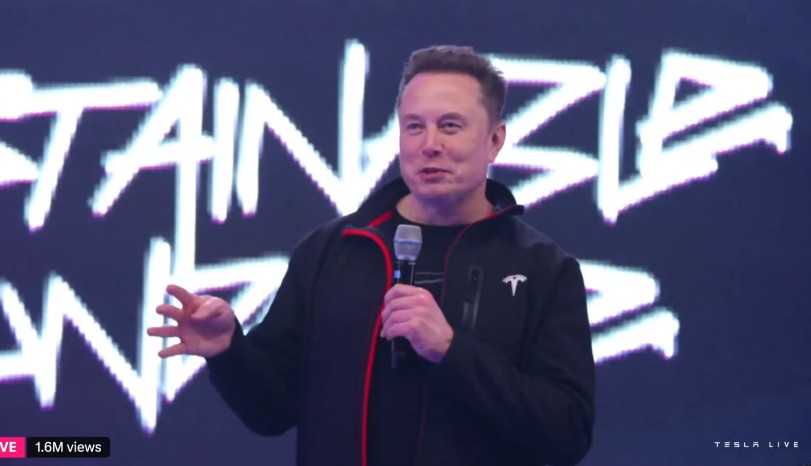
The approval, announced during the 2025 Annual Shareholder Meeting at Gigafactory Texas, Thursday evening, was met with enthusiastic applause and celebration from attendees, including Musk dancing on stage alongside Tesla’s Optimus humanoid robots, which also performed synchronized movements.

The landmark pay package, worth up to $1 trillion over a decade, is contingent on Tesla achieving specific performance benchmarks, including reaching a $8.5 trillion market capitalization, delivering 1 million Optimus robots, and operating 1 million robotaxis.

The 2025 CEO Performance Award requires Musk to grow Tesla’s market capitalization from approximately $1.1 trillion to $8.5 trillion within ten years, a target that would make Tesla the most valuable company in history.

Additional requirements include increasing Tesla’s operating profit from $17 billion to $400 billion annually, delivering 20 million vehicles cumulatively, securing 10 million active Full Self-Driving (FSD) subscriptions, and achieving 1 million robotaxi operations.

The vote was supported by major institutional investors like Schwab Asset Management, which cited alignment with shareholder value, despite opposition from proxy advisors such as Glass Lewis and ISS.

Musk expressed gratitude for the approval, celebrating on stage with a dance and acknowledging the support of fellow tech leaders like Jack Dorsey and Michael Dell, who publicly endorsed the pay package as a governance and engineering necessity.

The approval was facilitated by Tesla’s reincorporation in Texas, allowing Musk to vote his 15% stake, unlike in a previous Delaware-based vote.

The meeting also featured major announcements on Tesla’s AI, robotics, and vehicle development, including the planned production of the Cybercab, Optimus robots, and the AI5 chip, all central to Tesla’s new mission of "Sustainable Abundance."

Tesla confirmed a rapid production ramp of Optimus humanoid robot, starting with a 1 million unit line in Fremont and a future 10 million unit line in Texas. The robot is expected to cost around $20,000 in current dollars and is seen as a tool to eliminate poverty and provide advanced medical care. Musk suggested that future versions could potentially host human consciousness via Neuralink, though this is likely over 20 years away.

At the meeting, Musk claimed that Optimus robots “will eliminate poverty,” “give everyone amazing medical care,” and will be “bigger than cell phones, bigger than anything.” He also said the robots could be used for “containment of future crime” by following criminals around and stopping them from “doing crime.”

The fully autonomous Cybercab, designed without pedals or steering wheels, will begin production in April 2026 at Gigafactory Texas. Tesla aims for a production cycle time of under 10 seconds, with a theoretical goal of five seconds.

The event featured a video of the unboxed manufacturing process of the Cybercab, with sightings of the vehicle on public roads becoming increasingly frequent, signaling progress toward its commercial rollout.

Musk revealed details about Tesla’s next-generation AI5 chip (formerly Hardware 5), which will be manufactured by Samsung and TSMC and is designed to power self-driving systems, Optimus robots, and other AI applications. The chip promises a 50x improvement over the AI4 chip, with 5x block quantization, 9x memory capacity, and 10x raw compute increase.

The final production iteration of the Tesla Semi, with a 500-mile range and 800kW drive power, will begin volume production in Nevada in 2026, targeting 50,000 units annually.

The new Tesla Roadster (V2) supercar Roadster will be unveiled on April 1, 2026, with production expected 12–18 months later, according to Musk.

The electric vehicle company is moving toward allowing "texting and driving" with Full Self-Driving, FSD V14, based on safety data, with the goal of opening this feature within months. FSD use has already led to 85% fewer crashes and 35,000 fewer fatalities over the past year, according to Musk.

Tesla’s new lithium refinery in South Texas is now the largest outside of China, capable of producing 50 GWh of lithium annually. A new Giga Texas cathode factory is under construction to strengthen supply chain resilience.

The company reaffirmed its mission to achieve "Sustainable Abundance," encompassing EVs, solar, energy storage, Optimus, and charging infrastructure.

Tesla is exploring space-based solar power and considering building a Tesla TeraFab for chip production. The company also plans to expand Tesla Insurance and the Tesla App to new languages like Hebrew.

The pay package approval has already had a market impact, with Tesla shares rising about 2% in after-hours trading, reflecting investor confidence in Musk’s long-term vision for autonomous vehicles, robotaxis, and humanoid robotics.


community logo
Join the keneci Community
To read more articles like this, sign up and join my community today
0
What else you may like…
Videos
Posts
Articles
SpaceX Starlink Internet Satellites

With Starlink internet, data is continuously being sent between a ground dish and a Starlink satellite orbiting 550km above. Furthermore, the Starlink satellite zooms across the sky at 27,000 km/hr! MORE VIDEOS ON KENECI NETWORK RUMBLE CHANNEL: https://rumble.com/c/Keneci

00:28:08
Elon Musk, DOGE Speak On Waste And Fraud

US Department of Government Efficiency Services (USDS) led by Elon Musk speak on the "mind-boggling" fraud and waste in UInited States federal government

00:00:45
January 17, 2025
SpaceX Launches Starship 7th Test Flight

SpaceX successfully executed its second-ever “chopsticks” catch of a Super Heavy booster (or Booster 14) using the “Mechazilla” launch tower on Thursday(Jan. 16), during the seventh uncrewed test flight of the company's 123-meter Starship rocket. However, the megarocket's upper stage(or Ship 33) was lost approximately 8.5 minutes into the flight in a “rapid unscheduled disassembly(RUD)” or explosion

00:10:30
Welcome to Keneci Network!

Join the conversations!

December 09, 2025
Bitcoin White Paper By Satoshi Nakamoto

Bitcoin white paper

Bitcoin_White_Paper.pdf
September 17, 2024
Charges Against Sean 'Diddy' Combs In Grand Jury Indictment

The rapper was charged with racketeering conspiracy, sex trafficking by force, fraud or coercion, and transportation to engage in prostitution in the indictment unsealed Tuesday(Sept. 17)

Combs-Indictment-24-Cr.-542.pdf
post photo preview
U.S. Bars EU Censorship Officials From Entering The Country

The U.S. State Department, under Secretary of State Marco Rubio, has imposed visa restrictions barring five Europeans from entering the United States, accusing them of leading efforts to pressure American tech firms to censor or suppress American viewpoints online.

The move announced Tuesday, is part of a broader President Trump administration campaign against foreign influence over online speech, using immigration law rather than platform regulations or sanctions.

The targeted individuals include former European Union Commissioner Thierry Breton, leaders of German anti-hate group HateAid, and heads of organizations focused on so-called disinformation and digital hate

Breton, former EU Commissioner for Digital Affairs, was sanctioned for his role in enforcing the EU’s Digital Services Act (DSA), which has clashed with tech companies like Elon Musk’s X. He previously sent a letter to Musk demanding compliance with the DSA ahead of a Trump interview.

Imran Ahmed, CEO of the Centre for Countering Digital Hate, was targeted for his organization’s 2022 “Disinformation Dozen” report, which highlighted anti-vaccine figures including Robert F. Kennedy Jr.

Clare Melford, CEO of the Global Disinformation Index, was sanctioned for allegedly using U.S. taxpayer funds to advocate for censorship and blacklisting of American speech.

Josephine Ballon and Anna-Lena von Hodenberg, leaders of HateAid, were sanctioned for their ostensible work combating so-called online hate and disinformation, with the group calling the U.S. actions an “authoritarian attack on free speech.”

The State Department cited these individuals as part of a “global censorship-industrial complex” that advances foreign government censorship campaigns targeting American speakers and companies.

The sanctions are based on a visa policy announced in May 2025 that restricts entry for foreigners deemed responsible for censorship of protected speech in the U.S. The Department of Homeland Security may initiate removal proceedings against those already in the country.

The move follows a broader trend of U.S. officials, including Vice President JD Vance, criticizing European nations for censorship, particularly over content related to the Covid-19 lab leak theory and other political topics.

The EU has not yet responded publicly to the sanctions, but European officials have expressed concern over the U.S. actions undermining European sovereignty.

The U.S. has also previously targeted visitors from certain African and Middle Eastern countries and the Palestinian Authority with similar visa restrictions.

Read full Article
December 23, 2025
post photo preview
Spotify Music Library Scraped, Released Online By Activist Pirate Group: 86M Files

A pirate activist group known as Anna’s Archive has claimed to have scraped and begun releasing a massive archive of Spotify’s music catalog, asserting it has backed up nearly all of the platform’s most popular tracks. As of Tuesday. Spotify has confirmed the breach.

Anna’s Archive claims to have scraped 86 million audio files from Spotify, representing approximately 99.6% of total listens on the platform, with the entire archive totaling around 300 terabytes in size.

The archive includes metadata for 256 million tracks—covering an estimated 99.9% of Spotify’s catalog—already released via torrent, with the actual music files planned for future release in order of popularity. The group has also indicated that individual file downloads may be added if there is sufficient demand.

The group states this constitutes the “world’s first preservation archive” for music, prioritizing tracks by popularity and aiming to protect humanity’s musical heritage from potential loss due to disasters or corporate decisions.

The full release of the music torrents are expected to in the coming days, organized by popularity and quality—160 kbit/s for popular tracks and 75 kbit/s for less popular ones to conserve space.

Spotify has confirmed the incident and stated that it has identified and disabled the user accounts involved in the unlawful scraping. The company emphasized its ongoing commitment to protecting artists and rights holders, noting it has implemented new safeguards against such anti-copyright attacks, and is actively monitoring for suspicious behavior.

Anna’s Archive, known for its shadow library of books and academic papers, frames the action as a preservation effort rather than pure piracy, arguing that existing digital archives are overly focused on popular content and high-quality files. The group acknowledges that Spotify does not contain all music ever produced but considers it a strong starting point.

AAzXCkfWc740EhWPlYCMNUZkGJP8PAD5DrEtONI1CfVGSXmgrEn2PR7fWdNTJrth7VKqH4i-ejSTRQ0FJERrH45Gwm2TR75ygt8uakl5zWQIq8dqCWZI2KuIpqaHuA8_i1oCdS8bsYVdOQWBABQirIwGO8-WG5h3k8apU2AAj63qqbgnXOZzUlTfBnf4D-WUvP3wNk-BlA410fjnn4f0gG8l4FGCPq5uu-E5eKNV=w1280
AAzXCkdoVIcnt0jcwVHxWv3dw8Sp_fn6sfxMtHBfOEaEK8KzaxMVRK6mhEyWdj1ghDiUU502g4Dhl2DNxwUa9h4Pbfm7_xaFOWF8xNaS-RWumg4pTBKZ0KpotNVNeLlqgnE9fzO5dts3_VKjpFr8SiIcArtGQVpM8eLCiNCx5EKTH3Mk0_kiC6v1D44tn1aBRscN4IarcFPVMxwdm7Z3OEX8V7Oztl6TFivNS-fKn68=w1280

The breach raises concerns about the potential use of the 300TB dataset to train AI models without consent, a growing ethical and legal issue in the tech industry. The group’s actions also highlight vulnerabilities in how public metadata and DRM can be exploited to access copyrighted content at scale.

Read full Article
December 23, 2025
post photo preview
China Builds EUV Prototype Machine To Challenge Western Advanced Chipmaking Dominance

China has completed a prototype extreme ultraviolet (EUV) lithography machine in a high-security Shenzhen laboratory, marking a major milestone in its drive for semiconductor independence through a state-led 'Manhattan Project-style' initiative.

The machine, operational since early 2025 and now undergoing testing, was built by a team of former ASML(Advanced Semiconductor Materials Lithography) Holding engineers like Lin Nan, who filed key patents. They reverse-engineered the Dutch company’s technology, using parts from older ASML systems and secondary markets to circumvent Western export controls.

While the prototype successfully generates EUV light, it has not yet produced functional chips, with analysts estimating a realistic timeline for working chip production between 2030 and 2035, despite an official government target of 2028.

The project, launched as a six-year national effort under President Xi Jinping’s strategic priorities, is coordinated by Huawei and overseen by Ding Xuexiang, a close confidant of Xi and head of the Central Science and Technology Commission.

Former ASML engineers were recruited with substantial incentives, including signing bonuses of up to $700,000, and worked under aliases with false identification cards to maintain secrecy.

The prototype occupies nearly an entire factory floor and is operated within a highly isolated, secure compound where staff often sleep on-site, with strict communication restrictions and surveillance.

Despite ASML CEO Christophe Fouquet’s public statements in 2024 and 2025 that China would need "many, many years" to develop EUV capability, the existence of the prototype suggests Beijing’s timeline may be accelerating significantly.

While the Chinese machine’s light generation is confirmed, major technical hurdles remain, particularly in replicating the precision optical systems—such as specialized mirrors from Germany’s Zeiss—that are critical for high-volume, reliable chip manufacturing.

The breakthrough challenges long-standing U.S.-led export controls that have barred China from acquiring advanced EUV systems since 2018, with the Biden administration expanding restrictions in 2022.

The ultimate goal, as stated by sources, is to produce advanced chips on entirely China-made machines and to fully remove U.S. influence from its semiconductor supply chains.

Advanced chip manufacturing machine generates extreme ultraviolet light to etch tiny circuits for AI, smartphones, and military systems—tech once monopolized by ASML

Read full Article
See More
Available on mobile and TV devices
google store google store app store app store
google store google store app tv store app tv store amazon store amazon store roku store roku store
Powered by Locals