keneci
News • Science & Tech • Comedy
US Sanctions Russian Oil Firms, Calls For Ukraine-Russia Ceasefire
October 23, 2025
post photo preview

The U.S. Department of the Treasury’s Office of Foreign Assets Control (OFAC) announced on Wednesday, sweeping sanctions targeting Russia’s two largest oil companies, Rosneft and Lukoil, as part of a broader effort to pressure Moscow into agreeing to an immediate ceasefire in Ukraine.

Rosneft and Lukoil account for nearly half of Russia’s total crude-oil exports, with combined daily exports of 3.1 million barrels, making them critical to Russia’s economy and war funding.

OFAC designated both companies for operating in the Russian energy sector, effectively prohibiting transactions involving them or any entity in which they hold a 50% or greater ownership stake.

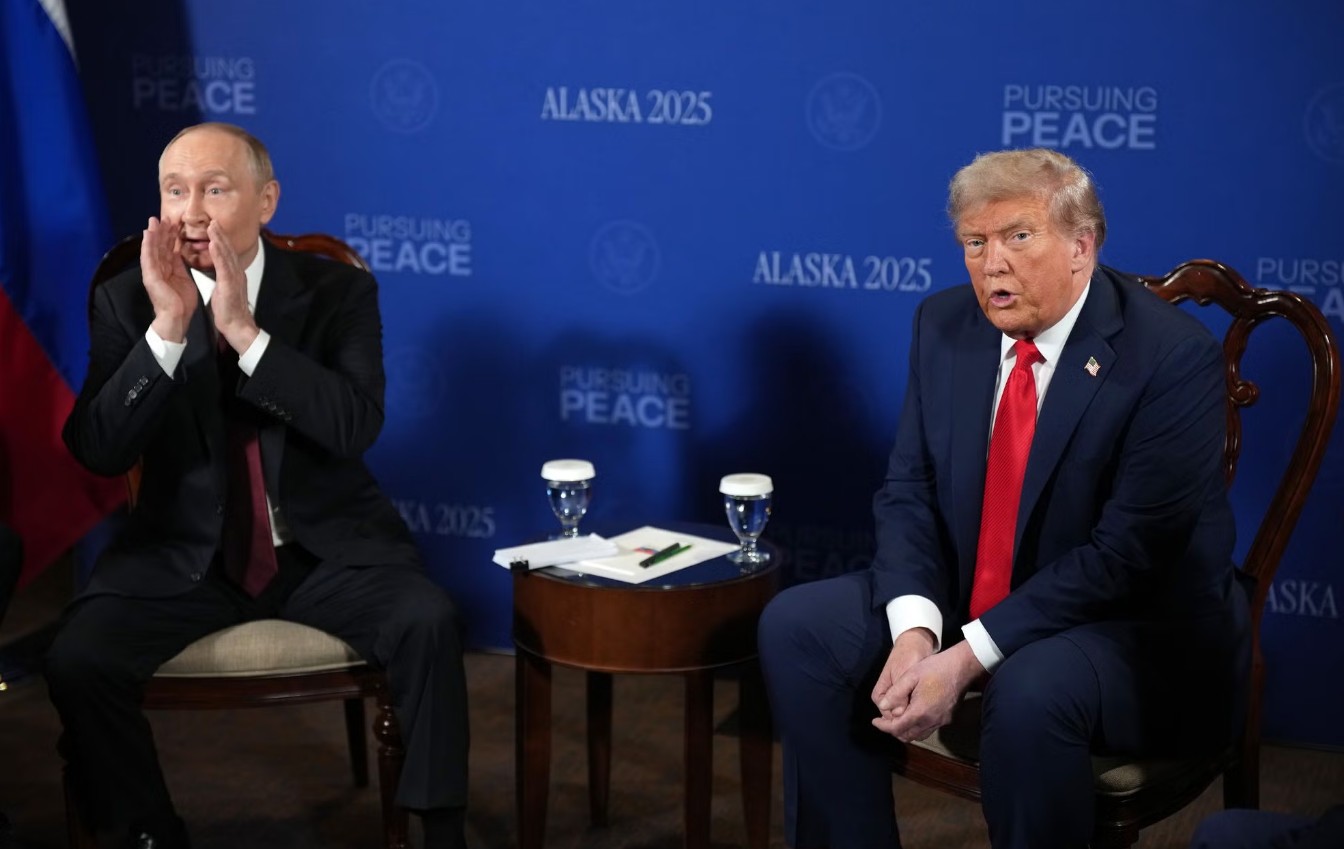
The move, the first direct economic action against Russia’s energy sector under President Donald Trump’s second term, was justified by the Treasury as a response to Russia’s "lack of serious commitment to a peace process" and President Vladimir Putin’s "refusal to end this senseless war."

The sanctions, enacted under Executive Order 14024, block all property and interests in property of the designated companies and their subsidiaries within U.S. jurisdiction, aiming to degrade the Kremlin’s ability to fund its war machine and weaken its energy-dependent economy.

The sanctions were announced just hours after President Trump canceled a planned summit with Putin in Budapest, stating it "didn’t feel right" and that he felt it was "time" to act.

Treasury Secretary Scott Bessent emphasized that the targeted companies fund the Kremlin’s "war machine" and called for an immediate ceasefire, stating, "Now is the time to stop the killing." He said the sanction is a response to Putin’s "refusal to end this senseless war."

The move follows similar sanctions imposed by the UK a week prior and is part of a coordinated effort to isolate Russia economically, with the U.S. urging its allies to align with the new measures.

The European Union also approved its 19th sanctions package, including a ban on Russian liquefied natural gas (LNG), with short-term contracts phased out within six months and long-term deals ending by January 1, 2027.

Wednesday's announcement coincided with Russia’s large-scale nuclear training drills and a significant air attack on Ukraine, including Kyiv, further escalating tensions.

Ukrainian Ambassador to the U.S., Olga Stefanishyna, welcomed the sanctions, stating they align with Ukraine’s position that peace is possible only through strength and pressure on the aggressor.

The sanctions have already caused global oil prices to surge, with Brent crude rising 5% following the announcement

The U.S. is also pressuring major Russian energy buyers like China and India to halt purchases, warning of potential secondary sanctions if they continue.

Putin has delivered a defiant response to new U.S. sanctions calling the measures an "unfriendly act" with "certain consequences" but asserting they will not significantly affect Russia's economic well-being. He emphasized that no self-respecting country yields to pressure, declaring Moscow would never bow down to Washington or any other nation. He described the U.S. sanctions as a "hostile act" that damages Russian-American relations but insisted Russia's energy sector remains confident.

In reaction to reports that Ukraine might use long-range Tomahawk missiles acquired from the U.S., Putin stated this constitutes an "attempt at escalation." He explicitly threatened that if such weapons are used to attack Russian territory, the response would be "very serious, if not overwhelming," urging the West to "think about it."

While the sanctions are seen as a significant symbolic and economic move, analysts suggest their long-term effectiveness in forcing a diplomatic breakthrough remains uncertain, as Russia’s economy may adapt, and Putin’s position on Ukraine’s territory has not shifted.


community logo
Join the keneci Community
To read more articles like this, sign up and join my community today
0
What else you may like…
Videos
Posts
Articles
SpaceX Starlink Internet Satellites

With Starlink internet, data is continuously being sent between a ground dish and a Starlink satellite orbiting 550km above. Furthermore, the Starlink satellite zooms across the sky at 27,000 km/hr! MORE VIDEOS ON KENECI NETWORK RUMBLE CHANNEL: https://rumble.com/c/Keneci

00:28:08
Elon Musk, DOGE Speak On Waste And Fraud

US Department of Government Efficiency Services (USDS) led by Elon Musk speak on the "mind-boggling" fraud and waste in UInited States federal government

00:00:45
January 17, 2025
SpaceX Launches Starship 7th Test Flight

SpaceX successfully executed its second-ever “chopsticks” catch of a Super Heavy booster (or Booster 14) using the “Mechazilla” launch tower on Thursday(Jan. 16), during the seventh uncrewed test flight of the company's 123-meter Starship rocket. However, the megarocket's upper stage(or Ship 33) was lost approximately 8.5 minutes into the flight in a “rapid unscheduled disassembly(RUD)” or explosion

00:10:30
Welcome to Keneci Network!

Join the conversations!

December 09, 2025
Bitcoin White Paper By Satoshi Nakamoto

Bitcoin white paper

Bitcoin_White_Paper.pdf
September 17, 2024
Charges Against Sean 'Diddy' Combs In Grand Jury Indictment

The rapper was charged with racketeering conspiracy, sex trafficking by force, fraud or coercion, and transportation to engage in prostitution in the indictment unsealed Tuesday(Sept. 17)

Combs-Indictment-24-Cr.-542.pdf
December 24, 2025
post photo preview
U.S. Bars EU Censorship Officials From Entering The Country

The U.S. State Department, under Secretary of State Marco Rubio, has imposed visa restrictions barring five Europeans from entering the United States, accusing them of leading efforts to pressure American tech firms to censor or suppress American viewpoints online.

The move announced Tuesday, is part of a broader President Trump administration campaign against foreign influence over online speech, using immigration law rather than platform regulations or sanctions.

The targeted individuals include former European Union Commissioner Thierry Breton, leaders of German anti-hate group HateAid, and heads of organizations focused on so-called disinformation and digital hate

Breton, former EU Commissioner for Digital Affairs, was sanctioned for his role in enforcing the EU’s Digital Services Act (DSA), which has clashed with tech companies like Elon Musk’s X. He previously sent a letter to Musk demanding compliance with the DSA ahead of a Trump interview.

Imran Ahmed, CEO of the Centre for Countering Digital Hate, was targeted for his organization’s 2022 “Disinformation Dozen” report, which highlighted anti-vaccine figures including Robert F. Kennedy Jr.

Clare Melford, CEO of the Global Disinformation Index, was sanctioned for allegedly using U.S. taxpayer funds to advocate for censorship and blacklisting of American speech.

Josephine Ballon and Anna-Lena von Hodenberg, leaders of HateAid, were sanctioned for their ostensible work combating so-called online hate and disinformation, with the group calling the U.S. actions an “authoritarian attack on free speech.”

The State Department cited these individuals as part of a “global censorship-industrial complex” that advances foreign government censorship campaigns targeting American speakers and companies.

The sanctions are based on a visa policy announced in May 2025 that restricts entry for foreigners deemed responsible for censorship of protected speech in the U.S. The Department of Homeland Security may initiate removal proceedings against those already in the country.

The move follows a broader trend of U.S. officials, including Vice President JD Vance, criticizing European nations for censorship, particularly over content related to the Covid-19 lab leak theory and other political topics.

The EU has not yet responded publicly to the sanctions, but European officials have expressed concern over the U.S. actions undermining European sovereignty.

The U.S. has also previously targeted visitors from certain African and Middle Eastern countries and the Palestinian Authority with similar visa restrictions.

Read full Article
December 23, 2025
post photo preview
Spotify Music Library Scraped, Released Online By Activist Pirate Group: 86M Files

A pirate activist group known as Anna’s Archive has claimed to have scraped and begun releasing a massive archive of Spotify’s music catalog, asserting it has backed up nearly all of the platform’s most popular tracks. As of Tuesday. Spotify has confirmed the breach.

Anna’s Archive claims to have scraped 86 million audio files from Spotify, representing approximately 99.6% of total listens on the platform, with the entire archive totaling around 300 terabytes in size.

The archive includes metadata for 256 million tracks—covering an estimated 99.9% of Spotify’s catalog—already released via torrent, with the actual music files planned for future release in order of popularity. The group has also indicated that individual file downloads may be added if there is sufficient demand.

The group states this constitutes the “world’s first preservation archive” for music, prioritizing tracks by popularity and aiming to protect humanity’s musical heritage from potential loss due to disasters or corporate decisions.

The full release of the music torrents are expected to in the coming days, organized by popularity and quality—160 kbit/s for popular tracks and 75 kbit/s for less popular ones to conserve space.

Spotify has confirmed the incident and stated that it has identified and disabled the user accounts involved in the unlawful scraping. The company emphasized its ongoing commitment to protecting artists and rights holders, noting it has implemented new safeguards against such anti-copyright attacks, and is actively monitoring for suspicious behavior.

Anna’s Archive, known for its shadow library of books and academic papers, frames the action as a preservation effort rather than pure piracy, arguing that existing digital archives are overly focused on popular content and high-quality files. The group acknowledges that Spotify does not contain all music ever produced but considers it a strong starting point.

AAzXCkfWc740EhWPlYCMNUZkGJP8PAD5DrEtONI1CfVGSXmgrEn2PR7fWdNTJrth7VKqH4i-ejSTRQ0FJERrH45Gwm2TR75ygt8uakl5zWQIq8dqCWZI2KuIpqaHuA8_i1oCdS8bsYVdOQWBABQirIwGO8-WG5h3k8apU2AAj63qqbgnXOZzUlTfBnf4D-WUvP3wNk-BlA410fjnn4f0gG8l4FGCPq5uu-E5eKNV=w1280
AAzXCkdoVIcnt0jcwVHxWv3dw8Sp_fn6sfxMtHBfOEaEK8KzaxMVRK6mhEyWdj1ghDiUU502g4Dhl2DNxwUa9h4Pbfm7_xaFOWF8xNaS-RWumg4pTBKZ0KpotNVNeLlqgnE9fzO5dts3_VKjpFr8SiIcArtGQVpM8eLCiNCx5EKTH3Mk0_kiC6v1D44tn1aBRscN4IarcFPVMxwdm7Z3OEX8V7Oztl6TFivNS-fKn68=w1280

The breach raises concerns about the potential use of the 300TB dataset to train AI models without consent, a growing ethical and legal issue in the tech industry. The group’s actions also highlight vulnerabilities in how public metadata and DRM can be exploited to access copyrighted content at scale.

Read full Article
December 23, 2025
post photo preview
China Builds EUV Prototype Machine To Challenge Western Advanced Chipmaking Dominance

China has completed a prototype extreme ultraviolet (EUV) lithography machine in a high-security Shenzhen laboratory, marking a major milestone in its drive for semiconductor independence through a state-led 'Manhattan Project-style' initiative.

The machine, operational since early 2025 and now undergoing testing, was built by a team of former ASML(Advanced Semiconductor Materials Lithography) Holding engineers like Lin Nan, who filed key patents. They reverse-engineered the Dutch company’s technology, using parts from older ASML systems and secondary markets to circumvent Western export controls.

While the prototype successfully generates EUV light, it has not yet produced functional chips, with analysts estimating a realistic timeline for working chip production between 2030 and 2035, despite an official government target of 2028.

The project, launched as a six-year national effort under President Xi Jinping’s strategic priorities, is coordinated by Huawei and overseen by Ding Xuexiang, a close confidant of Xi and head of the Central Science and Technology Commission.

Former ASML engineers were recruited with substantial incentives, including signing bonuses of up to $700,000, and worked under aliases with false identification cards to maintain secrecy.

The prototype occupies nearly an entire factory floor and is operated within a highly isolated, secure compound where staff often sleep on-site, with strict communication restrictions and surveillance.

Despite ASML CEO Christophe Fouquet’s public statements in 2024 and 2025 that China would need "many, many years" to develop EUV capability, the existence of the prototype suggests Beijing’s timeline may be accelerating significantly.

While the Chinese machine’s light generation is confirmed, major technical hurdles remain, particularly in replicating the precision optical systems—such as specialized mirrors from Germany’s Zeiss—that are critical for high-volume, reliable chip manufacturing.

The breakthrough challenges long-standing U.S.-led export controls that have barred China from acquiring advanced EUV systems since 2018, with the Biden administration expanding restrictions in 2022.

The ultimate goal, as stated by sources, is to produce advanced chips on entirely China-made machines and to fully remove U.S. influence from its semiconductor supply chains.

Advanced chip manufacturing machine generates extreme ultraviolet light to etch tiny circuits for AI, smartphones, and military systems—tech once monopolized by ASML

Read full Article
See More
Available on mobile and TV devices
google store google store app store app store
google store google store app tv store app tv store amazon store amazon store roku store roku store
Powered by Locals