keneci Network
News • Comedy • Science & Tech
Louvre Heist: Royal Jewelry Pieces Stolen In Daring Daylight Robbery
October 21, 2025
post photo preview

Four masked thieves, on Sunday, Oct. 19, carried out a daring daylight robbery at the Galerie d'Apollon (Gallery of Apollo), a 16th-century hall within the Louvre Museum in Paris, France, specifically on the south side of the building facing the Seine River, stealing eight to nine pieces of historically significant crown jewels in less than eight minutes.

The stolen items, valued at $102 million, include pieces from the French royal family's history, a diamond and emerald necklace from Napoleon I, a tiara worn by Empress Eugénie, and a sapphire set once belonging to Queen Marie-Amelie, with the Regent diamond, valued at over $60 million, reportedly left behind by the thieves.

The robbery, occurred at about 9:30 a.m., shortly after the museum opened, and was executed with remarkable speed and precision by a team of professionals. The heist involved a truck-mounted mechanical lift to access a second-floor balcony, followed by the use of power tools to break through a glass window.

The thieves used a monte-meubles (a furniture hoist truck) to reach the balcony near the River Seine, climbed up with a mechanical lift, and entered the museum through a glass window using angle grinders and other power tools. After threatening museum guards, who evacuated the building, the thieves smashed two display cases and stole the jewellery before escaping on two scooters.

The thieves fled on scooters, leaving behind a damaged crown and equipment, and authorities believe the jewels have likely been broken down for their precious metals and gems, making recovery extremely difficult.

A damaged crown belonging to Empress Eugénie was found near the escape route, and the thieves attempted to set fire to their vehicle but were thwarted by a museum staff member.

The Louvre remains closed for investigations as of Tuesday, with no official reopening date announced; refunds are being issued to ticket holders.

French authorities have launched a nationwide manhunt, led by the Paris police's Brigade de Répression du Banditisme (BRB) unit, which specializes in high-profile robberies.

Experts warn that the jewels are likely already being dismantled, with recovery efforts having only a few days before the items are lost forever.

This heist is the first major theft from the Louvre since 1998 and follows a recent spate of museum robberies in France, including a gold theft from the Natural History Museum and a porcelain heist in Limoges.

The incident has sparked national outrage, with French President Emmanuel Macron calling it an "attack on France's heritage" and Justice Minister Gérald Darmanin admitting security failures.

The theft has reignited debate over museum security, with critics pointing to a recent spate of museum robberies in France, including a $11 million porcelain theft from the Adrien Dubouche Museum in Limoges and a gold heist from the National Museum of Natural History.

Critics of the museum security, allege that the Louvre's security chief, Dominique Buffin, was appointed as part of a "feminization policy" or "diversity hire" by director Laurence Des Cars.

The Louvre had previously requested government funding for a major renovation and security upgrade as part of President Macron’s New Renaissance project, which includes reinforced security.


community logo
Join the keneci Network Community
To read more articles like this, sign up and join my community today
0
What else you may like…
Videos
Posts
Articles
SpaceX Starlink Internet Satellites

With Starlink internet, data is continuously being sent between a ground dish and a Starlink satellite orbiting 550km above. Furthermore, the Starlink satellite zooms across the sky at 27,000 km/hr! MORE VIDEOS ON KENECI NETWORK RUMBLE CHANNEL: https://rumble.com/c/Keneci

00:28:08
Elon Musk, DOGE Speak On Waste And Fraud

US Department of Government Efficiency Services (USDS) led by Elon Musk speak on the "mind-boggling" fraud and waste in UInited States federal government

00:00:45
January 17, 2025
SpaceX Launches Starship 7th Test Flight

SpaceX successfully executed its second-ever “chopsticks” catch of a Super Heavy booster (or Booster 14) using the “Mechazilla” launch tower on Thursday(Jan. 16), during the seventh uncrewed test flight of the company's 123-meter Starship rocket. However, the megarocket's upper stage(or Ship 33) was lost approximately 8.5 minutes into the flight in a “rapid unscheduled disassembly(RUD)” or explosion

00:10:30
Welcome to Keneci Network!

Join the conversations!

December 09, 2025
Bitcoin White Paper By Satoshi Nakamoto

Bitcoin white paper

Bitcoin_White_Paper.pdf
September 17, 2024
Charges Against Sean 'Diddy' Combs In Grand Jury Indictment

The rapper was charged with racketeering conspiracy, sex trafficking by force, fraud or coercion, and transportation to engage in prostitution in the indictment unsealed Tuesday(Sept. 17)

Combs-Indictment-24-Cr.-542.pdf
November 15, 2026
post photo preview
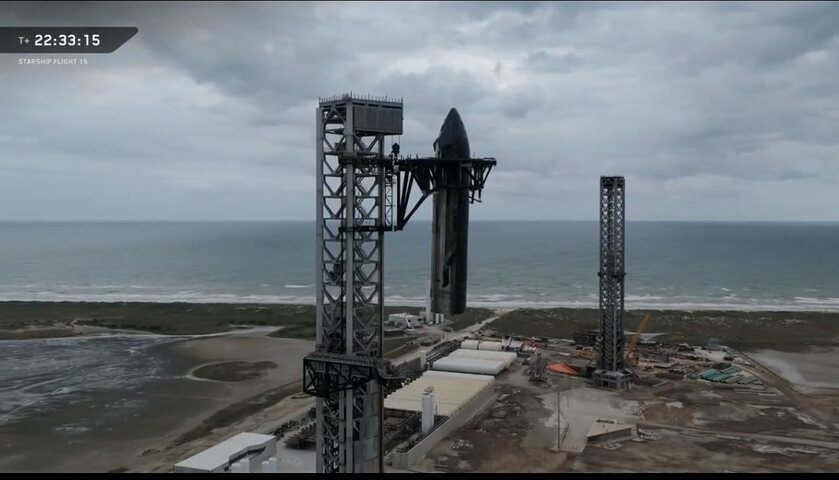
Starship Flight 15: SpaceX Megarocket Came In For A Historic Chopstick Catch

SpaceX's megarocket, Starship lifted off on its 15th flight from Starbase at 2247 UTC Friday (Nov. 13), and achieved a historic milestone by successfully capturing its upper stage, Ship 42, 22.5 hours after liftoff, with the launch tower arms or Mechazilla, marking the first time an orbital spacecraft has been caught mid-air.

On liftoff of the 124.4-meter-tall vehicle, all 33 Raptor engines on the Super Heavy (or the Starship's first stage, Booster 22) ignited at 22:47:36 UTC. About 2.5 minutes later, hot-staging occured with the upper stage (or Ship 42) igniting its six Raptor engines and separating cleanly from the booster. The mission launched with the goal of recovering both stages.

However, Booster 22 suffered a partial failure during its boostback burn when one engine failed to relight. This resulted in slight underperformance that left the booster low on fuel, forcing the GNC (Guidance, Navigation and Control) system to trigger an automated abort of the catch attempt. Consequently, the the flight termination system(FTS) was triggered, the booster performed a controlled offshore splashdown and exploded in the water 6 minutes 40 seconds after liftoff, preventing the first full two-stage recovery.

While SpaceX previously caught three Super Heavy V1 boosters on Flights 5, 7, and 8, no organization had ever recovered an orbital rocket's upper stage upright at its launch pad. Eliminating heavy landing legs in favor of tower catches maximizes payload capacity and speeds up turnaround times.

"Yes, the green flame is caused by burning copper from depleting fuel in the regenerative cooling circuit and going oxygen-rich (closer to stoichiometric temperature) in the main combustion chamber," SpaceX CEO Elon Musk explained in an X post Saturday. "Slight underperformance of engines on this flight is the reason. The booster is meant to land with tiny residuals, so the solution is to improve engine performance and performance consistency (underway with Raptor V3.2), as well as adjust flight software to do MECO1 about one second earlier to ensure enough propellant for boostback and landing (tiny change). These early ships and boosters are already outdated by improved designs in production or on the test stand, so this booster loss does not change our timeline to reach high volume, fully reusable Starship flights."

While the booster failed, Ship 42 successfully reached a low Earth orbit(LEO) at an altitude of 275 kilometers. About 34 minutes after liftoff, the spacecraft began deploying 26 Starlink V3 satellites, completing the payload delivery in about 42 minutes.

Some of those Starlink satellites took video and images of Ship 42's heat shield to check its health for today's landing attempt. Those images, combined with ground-based cameras, found Ship 42 to be in good shape and ready for its big moment.

Each Starlink V3 satellite adds roughly 1 Terabit per second of bandwidth to the network. The 26 satellites deployed on Flight 15 add 26 Tbps of capacity—matching the output of roughly 10 Falcon 9 launches carrying Starlink V2 Mini satellites.

After coasting in orbit for about 22.5 hours, Ship 42 returned to Earth, executed a precise belly-flop maneuver, and was caught by the Mechazilla arms at Starbase on Saturday(Nov. 14). This achievement validates the vehicle's reusability marking the first time the upper stage of a privately-built rocket was recovered.

"That was the missing link," SpaceX's Dan Huot said during the company's landing webcast today, his voice thick with emotion. "That was the holy grail of spaceflight, plummeting through fire to be snatched out of the air by steel. We caught a Starship, and now everything changes."

Many SpaceX employees went outside to watch the Ship 42 descend through the clouds. The space vehicle nestled gently into Mechazilla's waiting arms, while "Baby Come Back" played over SpaceX's landing webcast.

"This is so incredible to see," SpaceX's Jessie Anderson said during the livestream. "One of the most incredible and historic engineering feats of all time has just happened right in front of our eyes."

Recovering both stages is essential for SpaceX to achieve the high launch cadence needed for in-orbit propellant transfer. NASA relies on a lunar lander variant of Starship—which requires multiple orbital tanker refueling flights—for upcoming Artemis moon missions, including Artemis III's planned Earth-orbit docking tests and Artemis IV's lunar landing.

Ship 42 deployed 26 of SpaceX's next-gen Starlink V3 broadband satellites in low Earth orbit (LEO) on Flight 14, and it did so again on Flight 15. These 52 spacecraft are the first members of a constellation that will eventually consist of 100,000 satellites, if all goes according to SpaceX's plan.

SpaceX plans to use Starship to build an even bigger network in LEO than the Starlink V3 system — Starmind, an AI data-center constellation that will harbor a million spacecraft, according to Musk. (For context: SpaceX's current-gen Starlink network employs about 11,000 satellites at the moment).

Assembling these megaconstellations will require an incredible launch cadence making the double chopstick catch key to that vision, SpaceX says, to enable quicker inspection, refurbishment and reflight of Starship.

Read full Article
November 14, 2026
post photo preview
100th Flight: Rocket Lab Electron Launches Japanese Earth-observing Satellite, Marking Historic Milestone

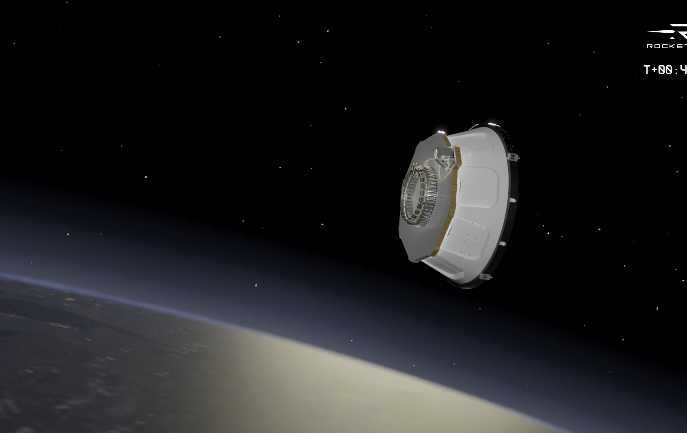
Electron, topped by YAMATSUMI-II (a.k.a. QPS-SAR-19) satellite, lifted off Saturday(Nov. 14), at 0530 UTC, from Launch Complex 1 (LC-1), Mahia Peninsula New Zealand, on the "The Mountain God Rises" mission, completing the 100th launch of the Rocket Lab's rocket, and marking a historic milestone as the fastest commercial rocket to reach triple-digit flights.

The rocket's upper "kick stage" deployed a single iQPS spacecraft 575 kilometers with a 42-degree inclination above Earth. The satellite successfully separated about 50 minutes after liftoff, with iQPS confirming first communications and antenna deployment shortly thereafter.

YAMATSUMI-II is a synthetic aperture radar (SAR) satellite built for the Tokyo-based company iQPS, as the company expands its constellation of 36 SAR satellites designed to provide high-resolution Earth imaging through clouds and at night. This was iQPS’s 11th launch with Rocket Lab, with seven additional dedicated Electron launches booked through 2030 to complete the constellation.

Electron achieved 100 launches in less than a decade since its debut in 2017, surpassing previous records for commercially developed rockets.

"It's an unprecedented milestone for a commercial small-lift orbital rocket, and a threshold rarely crossed in modern spaceflight," Rocket Lab founder and CEO Peter Beck said on Monday (Nov. 9), during Rocket Lab's third-quarter earnings call with investors. "But what matters most to us and our customers is that we have achieved a 96% reliability rate across 99 launches."

In the years since, the 18-meter-tall rocket has become one of the most prolific and reliable rockets in the world, carrying small payloads to the final frontier for a variety of customers. SpaceX workhorse, Falcon 9, still dominates the mass-to-orbit by far, launching nearly 85% of the world's payloads to orbit. The Elon Musk company launched the world's most powerful megarocket, Starship, from its Starbase launch site earlier on Friday(Nov. 13)

Read full Article
November 12, 2026
post photo preview
Jensen Huang Resigns As Nvidia CEO, Amid Revelations Of Affairs With Alice Huang, 2 Other Women

Jensen Huang resigned as Nvidia CEO, President, and board member effective immediately, Thursday, following an internal investigation into multiple extramarital affairs and alleged foreign intelligence threats. Jewish CFO Colette Kress has been named interim CEO, while the board appoints a permanent successor.

The departure followed recent reports that Huang had an affair with Alice Huang (no relation), a Chinese national and executive at Singapore-based Megaspeed, whom U.S. intelligence suspects is a Chinese spy. Huang admitted to being "unfaithful to my wife" on November 8, but denied compromising national security.

On Wednesday, reports emerged of two other affairs, one with an unnamed employee, and a second affair with Nvidia VP of Healthcare Kimberly Powell -- who reported directly to him with sources claiming the two were seen being affectionate as recently as March 2026, raising direct corporate governance and conflict-of-interest violations.

The reports prompted the board to accept Huang's resignation late Wednesday, appointed Harvey Jones as its first chair and hired outside counsel Wachtell, Lipton, Rosen & Katz to conduct an independent investigation.

The scandal triggered significant concern over U.S. security, as Megaspeed allegedly used its relationship with Huang to access 240,000 restricted AI chips banned from export to China, potentially benefiting competitor Huawei.

The FBI is investigating the ties, and Huang has agreed to testify before Congress. President Donald Trump called the news "horrible" and in a Truth Social post Thursday, suggested ex-Apple CEO Tim Cook as a successor.

Nvidia stock dropped as much as 14% on the news before recovering some ground, closing down approximately 4%.

Following Kress's appointment as interim CEO,, social media commentators and viral online posts began questioning whether Huang’s ouster amounted to an "Israeli coup" inside Nvidia. Critics pointed to a July 2023 interview with Israeli business daily Globes, in which Kress noted that her workday typically begins with meetings with Nvidia’s Israeli executives before moving on to California. Others noted that Nvidia’s board is searching for a permanent CEO and speculated that Israeli executives—such as Nvidia CTO Michael Kagan (co-founder of Mellanox) or Apple hardware chief Johny Srouji—could be contenders.

Nvidia’s footprint in Israel dates back to its $6.9 billion acquisition of Israeli networking firm Mellanox in 2020, a deal spearheaded by Huang himself. By 2026, Nvidia employed nearly 6,000 people in Israel (roughly 12% of its global workforce), and its Mellanox-derived networking division generated roughly $40 billion in annual revenue—about 16% of Nvidia's total.

Prior to Nvidia, Kress spent eight years in finance at Texas Instruments, 13 years at Microsoft (including four years as CFO of its Server and Tools division), and three years as a senior finance executive at Cisco. Her first major test arrives on November 17, 2026, when Nvidia is scheduled to report its fiscal third-quarter earnings.

Read full Article
See More
Available on mobile and TV devices
google store google store app store app store
google store google store app tv store app tv store amazon store amazon store roku store roku store
Powered by Locals