keneci Network
News • Comedy • Science & Tech
U.S. Military Contractor Recounts Harrowing Story Of Palestinian Child Killed By IDF Soldiers
July 30, 2025
post photo preview

Anthony Aguilar, a retired U.S. special forces veteran, recounted a harrowing incident in which a Palestinian child named Amir was shot dead by Israeli forces at a Gaza Humanitarian Foundation (GHF) aid distribution site in May.

Aguilar described how Amir, a 5-year-old boy who had walked 12 kilometers barefoot to receive aid, thanked him for the food he received before being shot by Israel Defense Forces(IDF) soldiers.

“On May 28, at secure distribution site #2, this young boy, Amir, walks over to me, reaches out & kisses my hand," Aguilar recalled. "This boy is not wearing shoes. His clothes are falling off of him because he is so skinny….He doesn’t have a box, he has half a bag of rice, lentils, and he was thanking us.

"He walked 12 kilometers to get there … and when he got there he thanked us for the crumbs he got … and he set them on the ground and his frail, skeletal, emaciated hands, and he kissed me and said 'thank you.'

"And then he collected his items, walked back to the group, and then he was shot at with pepper spray, and tear gas, and stunt grenades, and bullets, and he was shot at, at his feet and in the air, and he runs away...and the IDF were shooting at the crowd … they are shooting … and they are shooting into this crowd and Palestinians, civilians, human beings, are dropping to the ground, and Amir was one of them... Amir walked 12 kilometers to get food, got nothing but scraps, thanked us for it, and died."

GHF is backed by Israel as an alternative to United Nations groups in providing aid to Gaza. The organization has faced criticisms because of IDF's indiscriminate shooting into crowds, which they claim is a crowd-control measure.


community logo
Join the keneci Network Community
To read more articles like this, sign up and join my community today
0
What else you may like…
Videos
Posts
Articles
SpaceX Starlink Internet Satellites

With Starlink internet, data is continuously being sent between a ground dish and a Starlink satellite orbiting 550km above. Furthermore, the Starlink satellite zooms across the sky at 27,000 km/hr! MORE VIDEOS ON KENECI NETWORK RUMBLE CHANNEL: https://rumble.com/c/Keneci

00:28:08
Elon Musk, DOGE Speak On Waste And Fraud

US Department of Government Efficiency Services (USDS) led by Elon Musk speak on the "mind-boggling" fraud and waste in UInited States federal government

00:00:45
January 17, 2025
SpaceX Launches Starship 7th Test Flight

SpaceX successfully executed its second-ever “chopsticks” catch of a Super Heavy booster (or Booster 14) using the “Mechazilla” launch tower on Thursday(Jan. 16), during the seventh uncrewed test flight of the company's 123-meter Starship rocket. However, the megarocket's upper stage(or Ship 33) was lost approximately 8.5 minutes into the flight in a “rapid unscheduled disassembly(RUD)” or explosion

00:10:30
Welcome to Keneci Network!

Join the conversations!

December 09, 2025
Bitcoin White Paper By Satoshi Nakamoto

Bitcoin white paper

Bitcoin_White_Paper.pdf
September 17, 2024
Charges Against Sean 'Diddy' Combs In Grand Jury Indictment

The rapper was charged with racketeering conspiracy, sex trafficking by force, fraud or coercion, and transportation to engage in prostitution in the indictment unsealed Tuesday(Sept. 17)

Combs-Indictment-24-Cr.-542.pdf
post photo preview
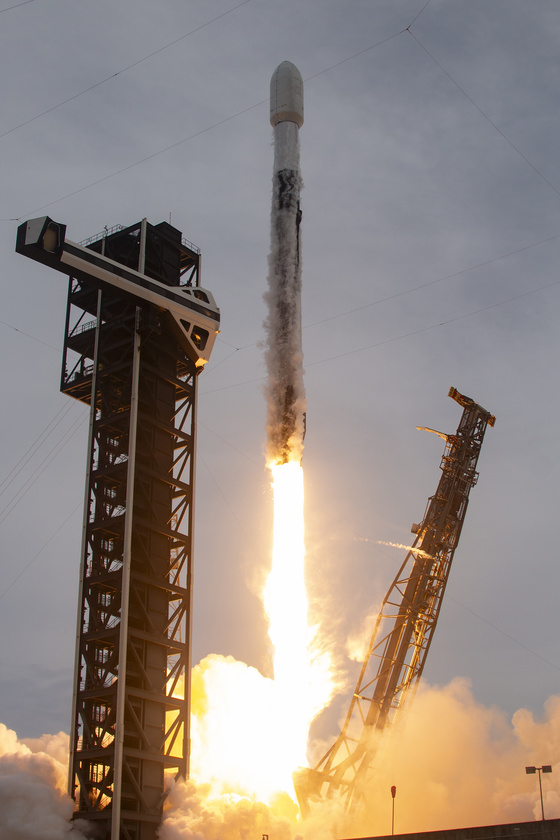
NG-25: SpaceX Falcon 9 Launches Northrop Grumman’s Cygnus XL Cargo Capsule To The ISS

A SpaceX Falcon 9 rocket lifted off from Space Launch Complex 40 (SLC-40), Cape Canaveral Space Force Station at 1547 UTC, launching Northrop Grumman’s Cygnus XL cargo spacecraft to the International Space Station on the NG-25 (or Northrop Grumman CRS-25), marking the 25th Cygnus resupply flight under NASA’s Commercial Resupply Services contract; and it's the fourth flight of the upgraded, enlarged Cygnus XL variant, which carries about 30 percent more cargo than the original design.

The Falcon 9 first-stage booster, B1096, executed a successful return-to-launch-site (RTLS) landing at Landing Zone 40(LZ-40) about 7.5 minutes after liftoff, marking its ninth flight. The upper stage deployed the Cygnus XL spacecraft into low Earth orbit roughly 14.5 minutes after launch. The launch occurred under overcast skies, with SpaceX warning residents in nine Florida counties about potential sonic booms from the booster's return.

The Northrop Grumman’s Cygnus XL cargo spacecraft named S.S. James “Jim” A. Lovell in honor of the late Apollo 13 commander -- as the company names each Cygnus after spaceflight pioneers -- was scheduled to be captured by the station’s Canadarm2 robotic arm and berthed to the Earth-facing (nadir) port of the Unity module on December 1, 2026, where it will remain until May 2027. NASA astronauts Jessica Watkins and Luke Delaney were tasked with monitoring the vehicle’s arrival and overseeing the capture and berthing process.

The spacecraft delivered about 4,990 kg of supplies and scientific experiments to the orbiting laboratory. The payload breakdown included roughly 1,587 kg of crew supplies, 1,814 kg of research equipment supporting studies on cancer treatment, radiation sensing, and food production, and 1,133 kg of spare parts and spacewalk gear.

Among the research gear are "experiments to improve drug delivery for cancer and osteoarthritis, predict cancer spread, and advance treatments for muscle loss, as well as improve radiation sensing and advance food production for future long-duration missions," NASA officials wrote in a mission description.

The ISS has four robotic resupply vehicles that currently service the ISS, of which Cygnus XL is one, along with Russia's Progress, Japan's HTV-X and SpaceX's Dragon which is the only one reusable; it returns to Earth in one piece.

Read full Article
post photo preview
Iran Exploited Starlink Earlier In US-Israel-Iran War, Enraging Elon Musk: Report

Iran reportedly used Starlink satellite internet for command-and-control and drone operations against U.S. forces in the opening days of the war, while the U.S. military operated LUCAS drones on a cheaper Starshield plan meant only for stationary or slow-moving ground operations, enraging SpaceX CEO Elon Musk, who fired at least two SpaceX executives.

The war began February 28, 2026, when the U.S. and Israel launched strikes on Iran; Tehran retaliated with ballistic missiles and drones targeting U.S. bases across the Middle East. In the first week of March, SpaceX detected two unauthorized uses of Starlink tied to Iran’s campaign.

A classified U.S. Central Command(CENTCOM) update delivered to Defense Secretary Pete Hegseth over the summer confirmed Iran used Starlink as an alternative communications channel after U.S. forces degraded traditional networks, and to oversee one-way attack drone operations.

The timing of the CENTCOM update coincided with the March 1 drone strike on a U.S. tactical operations center in Port Shuaiba, Kuwait, which killed six servicemen. Iranian use of Starlink in that specific attack was not confimed. SpaceX reportedly began imposing emergency network restrictions within hours of the attack.

Musk was reportedly enraged and "fuming" upon learning of the exploitation, particularly because two months earlier he had already restricted Starlink/Starshield use after Russia was caught powering long-range drones with it. He fired at least two executives over the unauthorized access.

Starlink is not licensed to operate in Iran, yet Musk had previously said the service was active there; the U.S. government reportedly had about six thousand terminals smuggled into Iran after January protests. Shutting down Starlink would also cut off dissidents and ordinary Iranians using it to bypass state internet controls.

Once commercial terminals enter gray-market circulation, preventing hostile actors from acquiring or seizing them is difficult. Musk, in an X post then, said that using commercial Starlink terminals for weapon systems violates SpaceX’s terms of service and would be shut down.

Separately, the U.S. military was flying LUCAS (Low-cost Uncrewed Combat Attack System) drones on Starshield while paying for a ~$5,000/terminal ground plan instead of the ~$25,000/terminal aerial plan—a fivefold difference. SpaceX executives argued this violated commercial terms, and the issue fueled public clashes in May 2026, over Starshield pricing. The company reportedly demanded the Pentagon pay the higher aerial rate, which the Donald Trump administration ultimately agreed to.

Within hours of the March 1 Port Shuaiba strike, SpaceX introduced strict identity-verification requirements for terminals moving faster than 100 mph, mirroring a 70 km/h speed cap implemented in Ukraine earlier in 2026 after Russian forces mounted Starlink dishes onto attack drones. The company paused its Indirect Reselling Program—which had allowed third-party sub-resellers to distribute dishes with limited oversight—and mandated strict know-your-customer (KYC) identity verification for every terminal buyer and activation.

The Pentagon declined to confirm the classified report’s existence, with Press Secretary Kingsley Wilson stating the department was "not aware" of the specific CENTCOM update to the Office of the Secretary of Defense, and declined to comment on either Iran's alleged use of Starlink or the Starshield pricing arrangement.

Read full Article
post photo preview
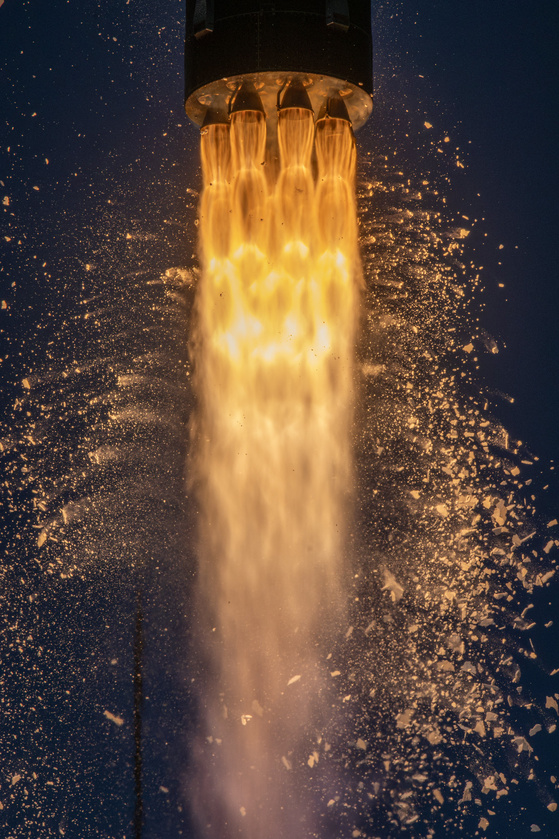
Rocket Lab Launches 14th StriX SAR Satellite For Synspective On 'Night Owls Never Sleep' Mission

Rocket Lab launched its 101st Electron rocket on the “Night Owls Never Sleep” mission on Friday (Nov. 27) at 0015 UTC, from Launch Complex 1 (LC-1) on the Māhia Peninsula, New Zealand, deploying the 14th StriX synthetic aperture radar (SAR) satellite for Synspective, marking the company’s 22nd launch of 2026 and a record-breaking 19th orbital flight for the year.

The mission deployed the satellite into a 569 kilometers(km) low Earth orbit with a 38-degree inclination, nearly 54 minutes after liftoff. Previous missions have utilized sun-synchronous orbits. The StriX constellation provides high-resolution Earth imagery, a ground resolution of 1-3m and a swath width of 10-30km, regardless of weather or daylight, supporting applications in disaster response, infrastructure monitoring, and urban planning.

This flight maintains Rocket Lab’s 100% success rate for Synspective, having launched all 14 StriX satellites to date. The company is Rocket Lab’s largest launch customer, with 47 missions booked in total. A recent contract signed in September 2026 covers 20 dedicated launches between 2028 and 2031, bringing the total manifest to 33 dedicated missions through 2031.

Read full Article
See More
Available on mobile and TV devices
google store google store app store app store
google store google store app tv store app tv store amazon store amazon store roku store roku store
Powered by Locals