keneci Network
News • Comedy • Science & Tech
Deputy Director Bongino: What I Have Learned At The FBI 'Shocked Me To My Core'
July 26, 2025
post photo preview

FBI Deputy Director Dan Bongino has posted a cryptic message on social media stating that he has learned things during his tenure that "shocked" him to "his core" and have changed him forever. The post comes amid ongoing tensions within the Trump administration, including revelations by Tulsi Gabbard and calls to release the Jeffrey Epstein files.

Bongino stated that during his time as Deputy Director, he has repeatedly mentioned that things are happening that may not be immediately visible but are occurring. He emphasized the need to combat public corruption and the political weaponization of law enforcement and intelligence operations.

"During my tenure here as the Deputy Director of the FBI, I have repeatedly relayed to you that things are happening that might not be immediately visible, but they are happening," Bongino.

"The Director and I are committed to stamping out public corruption and the political weaponization of both law enforcement and intelligence operations," he continued. "It is a priority for us. But what I have learned in the course of our properly predicated and necessary investigations into these aforementioned matters, has shocked me down to my core. We cannot run a Republic like this. I’ll never be the same after learning what I’ve learned."

Bongino concluded, "We are going to conduct these righteous and proper investigations by the book and in accordance with the law. We are going to get the answers WE ALL DESERVE. As with any investigation, I cannot predict where it will land, but I can promise you an honest and dignified effort at truth. Not 'my truth,' or 'your truth,' but THE TRUTH. God bless America, and all those who defend Her."

The deputy director has been at odds with other administration members, particularly Attorney General Pam Bondi, over the handling of the Epstein files investigation. This has led to speculation about his future with the FBI, with reports indicating that President Donald Trump was furious with him 

The Trump administration has started investigating and uncovering past treasonous effort by the Obama administration to undermine then incoming president-elect Trump. These revelations are part of a broader context which makes Bongino's social media post ominous.

There are also increasing calls to release the Jeffrey Epstein files, which have been a source of controversy and speculation about cover-up which many Trump supporters blame on AG Bondi.

Bongino's post suggests that the FBI is conducting investigations into these matters, although the specifics remain unclear.


community logo
Join the keneci Network Community
To read more articles like this, sign up and join my community today
0
What else you may like…
Videos
Posts
Articles
SpaceX Starlink Internet Satellites

With Starlink internet, data is continuously being sent between a ground dish and a Starlink satellite orbiting 550km above. Furthermore, the Starlink satellite zooms across the sky at 27,000 km/hr! MORE VIDEOS ON KENECI NETWORK RUMBLE CHANNEL: https://rumble.com/c/Keneci

00:28:08
Elon Musk, DOGE Speak On Waste And Fraud

US Department of Government Efficiency Services (USDS) led by Elon Musk speak on the "mind-boggling" fraud and waste in UInited States federal government

00:00:45
January 17, 2025
SpaceX Launches Starship 7th Test Flight

SpaceX successfully executed its second-ever “chopsticks” catch of a Super Heavy booster (or Booster 14) using the “Mechazilla” launch tower on Thursday(Jan. 16), during the seventh uncrewed test flight of the company's 123-meter Starship rocket. However, the megarocket's upper stage(or Ship 33) was lost approximately 8.5 minutes into the flight in a “rapid unscheduled disassembly(RUD)” or explosion

00:10:30
Welcome to Keneci Network!

Join the conversations!

December 09, 2025
Bitcoin White Paper By Satoshi Nakamoto

Bitcoin white paper

Bitcoin_White_Paper.pdf
September 17, 2024
Charges Against Sean 'Diddy' Combs In Grand Jury Indictment

The rapper was charged with racketeering conspiracy, sex trafficking by force, fraud or coercion, and transportation to engage in prostitution in the indictment unsealed Tuesday(Sept. 17)

Combs-Indictment-24-Cr.-542.pdf
October 31, 2026
post photo preview
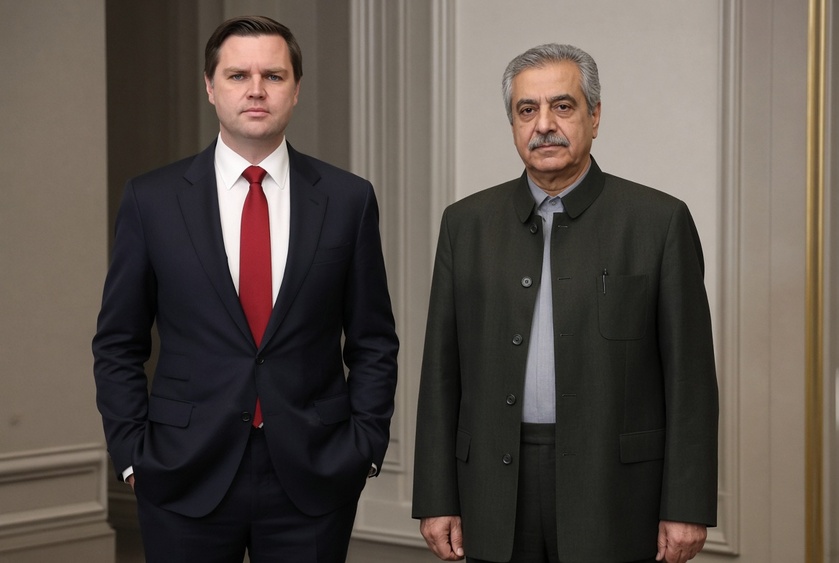
Vance Proposes Restart Of Negotiations In Letter To Top Iranian Official

U.S. Vice President JD Vance reportedly sent a letter to secretary of Iran’s Supreme National Security Council and former Islamic Revolutionary Guard Corps commander, Mohsen Rezaei, recently, to assess whether Washington and Tehran could agree on a framework for negotiations. The move was reportedly made at the direction of President Donald Trump, who later publicly denied instructing Vance to initiate peace talks, characterizing the contact as an effort to deliver medical supplies.

Rezaei said last week that Tehran would not negotiate until its core demands—immediate economic relief, lifting of oil sanctions, and unfreezing of assets—are met.

The outreach occurs as Trump reportedly threatens a “short, intense” military campaign against Iran following the November 3, 2026, U.S. midterm elections. Vance aims to determine if diplomacy can avert this escalation, though no detailed peace proposal has yet been produced.

The cost of the U.S. military engagement with Iran has topped $47 billion. Rising domestic gas prices and economic costs associated with the conflict have become major points of political debate ahead of the U.S. midterm elections.

Qatar reprtedly presented a draft agreement in Tehran on Sunday, outlining a seven-day timeline for daily confidence-building steps by Washington and Tehran. Iran is reportedly considering the proposal, with a response expected by the end of the week.

Rezaei met on Monday, with security chiefs from Saudi Arabia, Pakistan, and Turkey in Tehran. This was described as a rare, high-level engagement aimed at de-escalating tensions in the region.

Engaging Rezaei, a hardliner and close ally of Supreme Leader Mojtaba Khamenei, risks sidelining traditional negotiators like Foreign Minister Abbas Araghchi and Parliament Speaker Mohammad Bagher Ghalibaf.

"While our Brave Armed Forces are fully prepared to defend the Homeland, Iran continues to give diplomacy a chance to succeed," Araghchi wrote Wednesday, on X. "We remain in close and ongoing contact with intermediaries to review ideas that can ensure implementation of our 7-Day Plan in even less than a week."

Regional mediators, including Qatar, are urging Iran to demonstrate “good faith” by reopening the Strait of Hormuz and stopping threats to neighboring countries, as part of a broader effort to establish a new regional security framework.

Read full Article
October 31, 2026
post photo preview
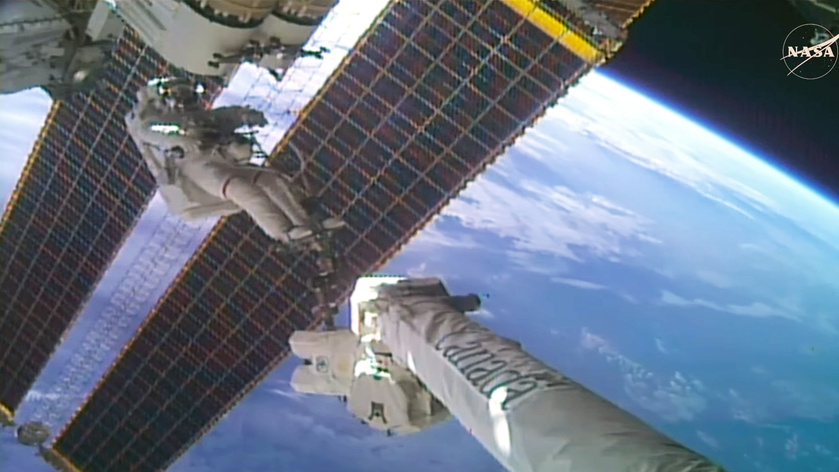
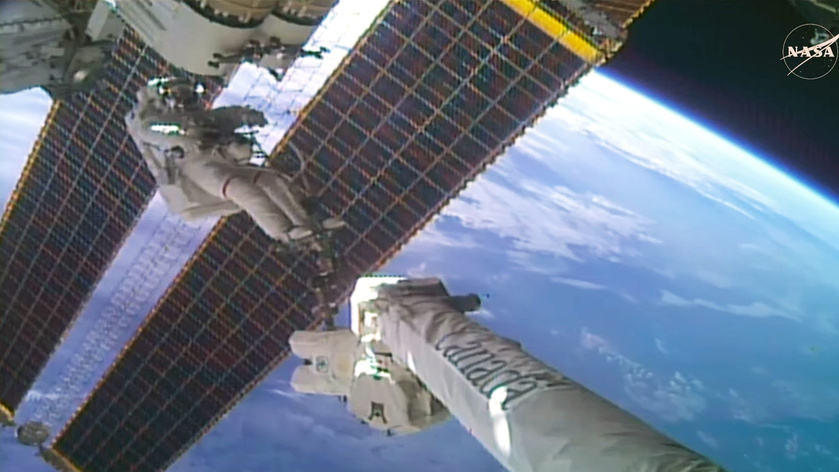
US Spacewalk 100: Astronauts Deploy New Solar Array On 100th EVA

NASA astronaut Anil Menon and Canadian Space Agency astronaut Joshua Kutryk, wearing NASA's extravehicular mobility unit (EMU) spacesuits, completed the 100th U.S. spacewalk (or extravehicular activity, EVA) from the International Space Station (ISS) on Thursday, beginning at about 1200 UTC, and ending 7 hours and 11 minutes later at 1908 UTC. The Expedition 75 crewmates installed and deployed the seventh International Space Station Roll-Out Solar Array (IROSA) on the station’s 2A electrical power channel.

Once outside the ISS, Menon and Kutryk worked on unbolting the iROSA from a temporary stowage platform. The 3-by-0.6-by-1.2-meter rolled-up assembly was delivered to the space station inside the unpressurized trunk of SpaceX's Dragon cargo capsule earlier this month, on the company's 35th ISS resupply mission for NASA.

Menon then secured himself at the end of the Canadarm2 robotic arm and carried the 340-kilogram iROSA to the space station's port side, where he and Kutryk next installed it on the 2A electrical power channel. Kutryk made his way to the worksite along the station's backbone truss.

Using bolts to mount the IROSA in place and connecting its electrical cables to tie it into the station's power system (during a night pass, out of safety concerns), the array was ready to be extended. No motor was needed to deploy the iROSA to its 19-meter length. The potential energy held by the assembly's rolled-up carbon composite booms was enough to fully unroll the panel.

"And we see the iROSA deploying now," reported Mission Control four hours and 23 minutes into the spacewalk.

About 12 minutes later, the array had fully extended, draping over about half of the larger but less capable legacy panel on the P4 truss. The station's eight original arrays are showing degraded power output as they have exceeded their 15-year design life. The iROSAs, when used in tandem with their older counterparts, have increased the station's power supply by 20% to 30%.

Having worked ahead of their schedule, Menon and Kutryk removed some of the beams holding the final iROSA in place on its temporary platform and rotated two launch locks that were used in its delivery on Dragon. The crew completed preparatory tasks for the final IROSA installation, which is scheduled for November 5, 2026, on the 3B power channel.

"Being outside, I can say it is always sunny in space," said Menon at the conclusion of Thursday's EVA. "I find it incredible what we have been able to do to provide new solar arrays to the space station. In fact, we have been ... doing complex operations like this for over 26 years."

"This is USOS [United States Operating Segment] EVA 100, which is an incredible milestone. I think it really signifies how much we have done," he said.

This installation is part of a multi-year upgrade to increase the ISS power-generating capacity by up to 30%, raising output from 160 kilowatts to roughly 215 kilowatts to support operations through the station's planned retirement in 2030.

This was Menon’s fourth spacewalk, adding to his total of 26 hours and 31 minutes in space, while it was Kutryk’s first, making him the fifth Canadian to perform a spacewalk and the first since 2019.

Thursday's EVA was the 100th U.S. outing from the space station without a now-retired space shuttle docked to the complex. Overall, it was the 285th spacewalk in support of ISS assembly, maintenance and upgrades, including 66 EVAs out of the Russian segment of the station and 119 by visiting shuttle crews.

The first U.S. spacewalk outside of the Quest airlock was made by Expedition 4 crewmates Carl Walz and Daniel Bursch on Feb. 20, 2002. The 5-hour-and-47-minute EVA mostly tested Quest's systems and completed "housekeeping chores."

Read full Article
See More
Available on mobile and TV devices
google store google store app store app store
google store google store app tv store app tv store amazon store amazon store roku store roku store
Powered by Locals