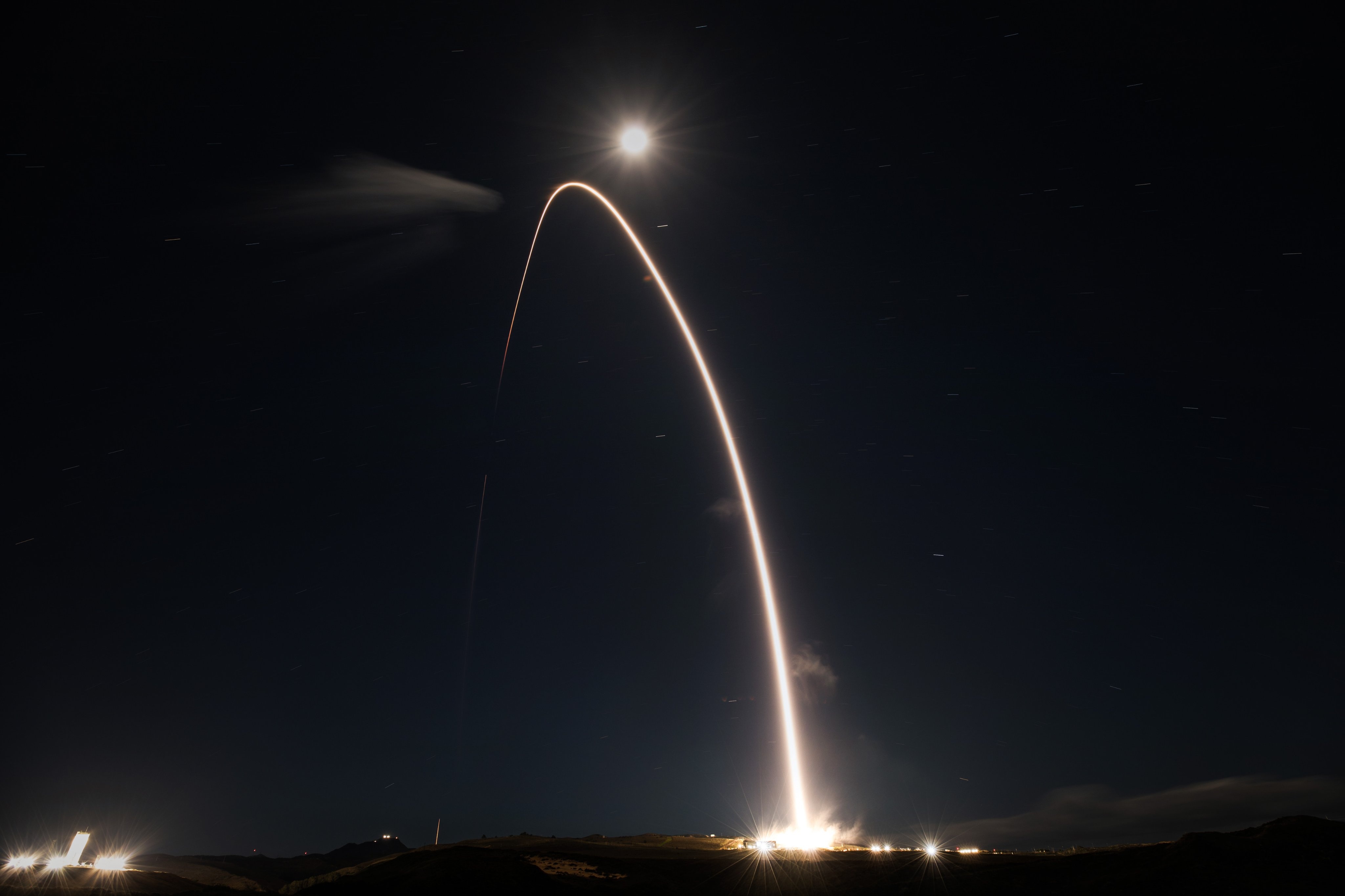
SpaceX Falcon 9 launched classified USSF-317 mission for the U.S. Space Force, Saturday(Nov. 21), from at 0420 UTC from Space Launch Complex 4 East(SLC-4E), Vandenberg Space Force Base in California, carrying an undisclosed national security payload into Low Earth Orbit(LEO), continuing the Space Force’s reliance on rapid commercial launch capacity to sustain its satellite networks.
The Falcon 9 first-stage booster B1100 -- which was making its 11th flight following previous missions including NROL-105, USSF-385, and eight batches of Starlink satellites -- returned to Earth about 8.5 minutes after liftoff. The booster executed a precise landing on the autonomous droneship 'Of Course I Still Love You' stationed in the Pacific Ocean, marking the 235th landing on that vessel and the 679th successful Falcon booster recovery to date.
Because the mission was classified, SpaceX ended its live webcast immediately after the booster landing, withholding details regarding the upper stage's ascent, final orbital insertion, and the specific nature of the payload.
While the U.S. Space Force did not disclose the contents, open-source analysts suggest the payload may consist of Starshield satellites intended for the Space Force’s Space Based Sensing and Targeting (SBST) portfolio, potentially aiding in global target tracking.
This flight marked the 121st Falcon 9 launch of 2026 and the third Space Force mission conducted by SpaceX in November alone, following a scrubbed attempt on the preceding Thursday. SpaceX apparently plans to retire Flacon 9 and in favor of its fully reusable Starship megarocket, which deployed 26 of SpaceX's next-gen Starlink V3 satellites on its most recent two test flight.