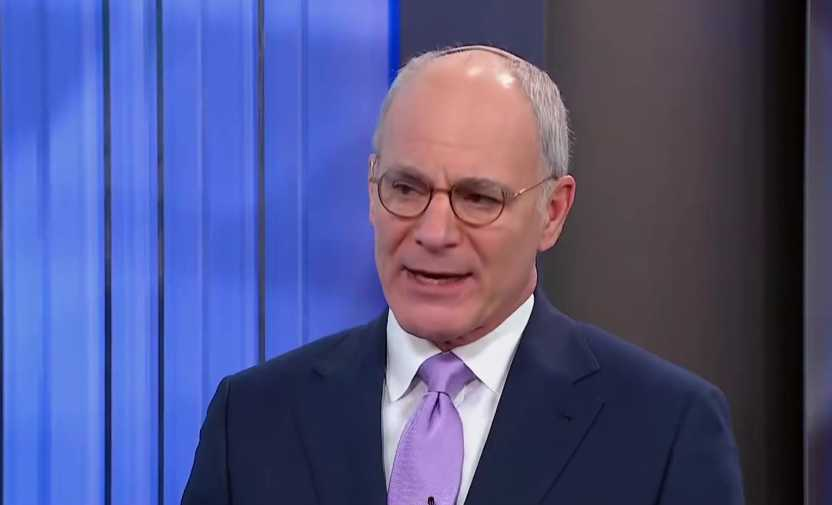
Israeli Ambassador to the United States, Yechiel Leiter, in a Thursday interview with Newsmax, said that US soldiers will only return home to their families once Iran is "defeated." This comment, made in response to questions about Iran's strikes on ships in the Hormuz Strait, sparked immediate outrage among US military members, veterans, and their families, who criticized the Israeli diplomat for dictating conditions for American troop deployments.
"You get American soldiers back here to the United States, to their families, when Iran is defeated," the Ambassador said. "And Iran will be defeated."
Leiter later said that "defeat" of Iran implies full regime change in Tehran and called for US-Israeli "resilience" to see the goal through. He asserted that once the Iranian regime falls, allied groups including Hamas, Hezbollah, the Houthis, and the Muslim Brotherhood would also fall. He drew parallels between Presidents Donald Trump and Ronald Reagan, labeling Iran an "evil empire" that must be dismantled.
The Ambassador, who immigrated to Israel at age 18, is a zealous Jewish extremist and Zionist and served in the Israel Defense Forces during the 1982 Lebanon War. He has long resided in West Bank settlements.
Leiter warned that Iran poses an "existential" threat to Israel if it mounts chemical or biological agents onto warheads. While noting that "the decision will be taken by President Trump as to whether or not to act kinetically once again against Iran," he added that high-level planning exists and Israel would fly "shoulder to shoulder, wing to wing" with the U.S. if strikes resume.
Clips from the interview went viral on social media, drawing sharp criticism across the American political spectrum as well as mockery from Tehran.
Critics argue that after effectively renouncing his American citizenship, and becoming a foreign nation's Ambassador, Leiter lacks the authority to speak for US military policy. Online backlash included accusations that he treated American personnel as "slaves for Israel" and that US troops are not Israel's property. Critics from both the anti-interventionist right and the political left accused him of overstepping his diplomatic role and dictating terms for American troops.
Former U.S. National Counterterrorism Center Director Joe Kent, in an X post, called for Leiter's visa to be revoked, pointing out that Leiter had renounced his U.S. citizenship to take the ambassadorship. Online watchdog accounts and anti-war commentators argue that the Ambassador's remark is evidence that Israel was pushing Washington into an open-ended conflict against U.S. national security interests, and the wishes of U.S. military families.
"Israel is a parasite sucking America dry, it's incredible we have not done something about this," one user wrote on X.
Iranian Foreign Minister Abbas Araghchi mocked the interview in an X post, writing: "We did not know that the Israeli Ambassador to Washington was the Commander-in-Chief of the U.S. Military."
Born in Scranton, Pennsylvania in 1959 before emigrating to Israel, Leiter is a longtime confidant of Prime Minister Benjamin Netanyahu and a former chief of staff in Israel's Finance Ministry. Appointed ambassador early 2025 specifically for his fluency in American conservative media and politics, he has previously drawn headlines for combative media appearances—including accusing The New York Times and political critics of spreading "blood libels" over coverage of the Gaza war.
Leiter's statement coincides with reports that Prime Minister Benjamin Netanyahu has been pressuring Trump to order another intensive round of U.S. military strikes on Iran before the end of the year to overthrow the Iranian regime. Critics and commentators have also panned recent reports that Israeli intelligence warned the Trump administration about Iran's plot to detonate a dirty bomb in the U.S.
The U.S. and Israel have been engaged in a protracted military confrontation with Iran for nearly nine months, marked by prolonged U.S. naval and troop deployments in the region and debate in Washington over whether to launch renewed strikes.
The war has become a major political liability in the U.S., with recent polling showing strong opposition among military families and Republican leaders including Vice President JD Vance. Just hours before Leiter's interview aired, the 'lame duck' U.S. Senate narrowly voted 51–48 to reject a resolution that would have withdrawn American forces from hostilities with Iran.