keneci Network
News • Science & Tech • Comedy
Emmanuel Macron Facing Backlash Over The Arrest Of Telegram CEO Pavel Durov By French Authorities
August 26, 2024
post photo preview

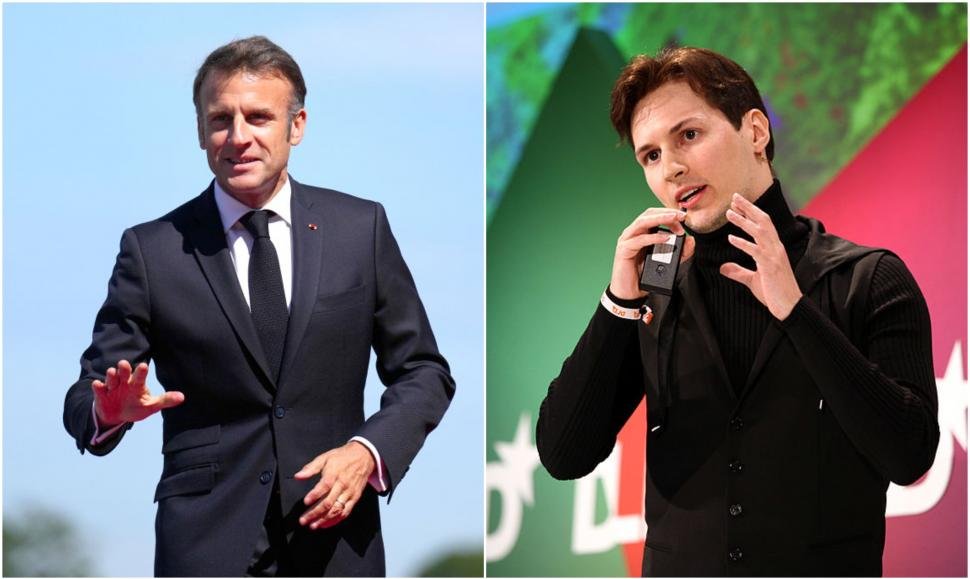
Days after French authorities detained Telegram CEO Pavel Durov, President Emmanuel denied that there was any political motive behind the arrestand claimed that France remains deeply committed to free speech -- a claim that drew swift condemnations and mockery on social media, with many pointing to the 'kitchen sink' of allegations by prosecutors against Durov for refusing to censor users of Telegram.

"I have seen false information regarding France following the arrest of Pavel Durov," Macron wrote on X, Monday. "France is deeply committed to freedom of expression and communication, to innovation, and to the spirit of entrepreneurship. It will remain so. In a state governed by the rule of law, freedoms are upheld within a legal framework, both on social media and in real life, to protect citizens and respect their fundamental rights. It is up to the judiciary, in full independence, to enforce the law. The arrest of the president of Telegram on French soil took place as part of an ongoing judicial investigation. It is in no way a political decision. It is up to the judges to rule on the matter."

Paris prosecutor Laure Beccuau has revealed in a statement that Durov was arrested as part of a probe into an unnamed person launched by the office's cybercrime unit on July 8.

The investigation is over suspected complicity in various crimes including running an online platform that allows illicit transactions, child pornography, drug trafficking and fraud, as well as the refusal to communicate information to authorities, money laundering and providing cryptographic services to criminals, the statement said. In other words, Durov is being investigated for crimes others may have engaged in using his messaging app.

Critics slam French authorities' hypocrisy pointing out that Mark Zuckerberg's Meta platforms including Instagram and Whatsapp have in several instances, been exposed as hosting such prohibited content. Legal experts argue that it's absurd to arrest a platform owner in the manner that Durov was, over the actions of users of the platform.

Chris Pavlovski, CEO of YouTube rival Rumble, also called out Macron's claim that he's committed to upholding the principles of free speech.

"When you say you are committed to freedom of expression, you are lying," Pavlovski wrote on X. "We have a letter from France that proves this, without a doubt. We had to shutdown Rumble in France because you have NO committment to freedom of expressionWhen you say you are committed to freedom of expression, you are lying. We have a letter from France that proves this, without a doubt. ...We had to shutdown Rumble in France because you have NO commitment to freedom of expression."

Durov, who was arrested over the weekend, can be held in custody until Wednesday, according to prosecutors.

The arrest comes as left-wing leaders in the west are ramp up their crackdown on free speech online, following in the footsteps of authoritarian regimes in countries like North Korea and China.

d5lrKXtTf_USXlYelMUOhoJFIalXXs0K53008rw_9i1S6xqFRdGCOEYn1ilrZ4O2eBbSceYDMF1nVUVIHtWeYE3VVJl8Q-aEcT_1AYUWa0oSW7_DpWHXljb9fI80vYC_LQ=w1280
5n8OpYQTUWxafvgIt3MoVIAqhWPXO0r2QD9qEOMT97126QijQ15mOH0dkzE5CDWM6VrnxCdh72nckrIerBKzbIKRyBmVdE_MSqDVJRHY-7UHISjEPUh_8EfgUYWl-XVviw=w1280

Left-wing politicians and bureaucrats have intensified their effort in recent years to censor content online and criminalize speech on social media platforms.

Zuckerberg admitted in a letter Monday, to the US House Judiciary Committee, that President Joe Biden administration "pressured" Facebook to censor Americans; and that the platform throttled the explosive Hunter Biden laptop story during the 2020 election campaign season. He had expressed his regrets for colluding with the FBI.

community logo
Join the keneci Network Community
To read more articles like this, sign up and join my community today
0
What else you may like…
Videos
Posts
Articles
SpaceX Starlink Internet Satellites

With Starlink internet, data is continuously being sent between a ground dish and a Starlink satellite orbiting 550km above. Furthermore, the Starlink satellite zooms across the sky at 27,000 km/hr! MORE VIDEOS ON KENECI NETWORK RUMBLE CHANNEL: https://rumble.com/c/Keneci

00:28:08
Elon Musk, DOGE Speak On Waste And Fraud

US Department of Government Efficiency Services (USDS) led by Elon Musk speak on the "mind-boggling" fraud and waste in UInited States federal government

00:00:45
January 17, 2025
SpaceX Launches Starship 7th Test Flight

SpaceX successfully executed its second-ever “chopsticks” catch of a Super Heavy booster (or Booster 14) using the “Mechazilla” launch tower on Thursday(Jan. 16), during the seventh uncrewed test flight of the company's 123-meter Starship rocket. However, the megarocket's upper stage(or Ship 33) was lost approximately 8.5 minutes into the flight in a “rapid unscheduled disassembly(RUD)” or explosion

00:10:30
Welcome to Keneci Network!

Join the conversations!

December 09, 2025
Bitcoin White Paper By Satoshi Nakamoto

Bitcoin white paper

Bitcoin_White_Paper.pdf
September 17, 2024
Charges Against Sean 'Diddy' Combs In Grand Jury Indictment

The rapper was charged with racketeering conspiracy, sex trafficking by force, fraud or coercion, and transportation to engage in prostitution in the indictment unsealed Tuesday(Sept. 17)

Combs-Indictment-24-Cr.-542.pdf
post photo preview
Trump Formally Signs The US-Iran Peace Deal: To Avoid 'Economic Catastrophe'

President Donald Trump personally signed the U.S.-Iran Memorandum of Understanding (MOU) on Wednesday, during a dinner with French President Emmanuel Macron at the Palace of Versailles, confirming the deal's immediate effect and canceling a planned formal ceremony in Switzerland.

The dinner was held, after the G7 summit in Évian-les-Bains, to honor the 250th anniversary of American independence. As Trump left the former palace of French kings, he cupped his hands and shouted to reporters: "It's signed, yeah. I signed it in Versailles."

Iranian President Masoud Pezeshkian also signed the document digitally, finalizing an interim agreement designed to end hostilities, reopen the Strait of Hormuz, and initiate a 60-day negotiation period regarding Iran's nuclear program.

The following is the MOU as released bu US officials. 

The United States of America and the Islamic Republic of Iran have jointly agreed in good faith on [ __ date] on the following:

  1. The United States of America and the Islamic Republic of Iran and their allies in the current war are signing this MOU to declare the immediate and permanent termination of military operations on all fronts, including in Lebanon, and undertake from now on not to initiate any war or any military operation against each other, and to refrain from the threat or use of force against each other, and ensuring the territorial integrity and sovereignty of Lebanon. The final deal will confirm the permanent termination of the war on all fronts, including in Lebanon and other provisions of this paragraph.

  2. The United States of America and the Islamic Republic of Iran undertake to respect each other’s sovereignty and territorial integrity and to refrain from interfering in each other’s internal affairs.

  3. The United States of America and the Islamic Republic of Iran commit to negotiating and achieving the final deal in maximum 60 days, extendable with mutual consent.

  4. Immediately upon the signing of this MOU, the United States of America will begin the removal of its naval blockade and any disturbances or impediments against the Islamic Republic of Iran, and will fully end the naval blockade within 30 days. During this period, the traffic of vessels will be in proportion to the numbers of pre-war traffic being restored by the Islamic Republic of Iran. The United States of America further undertakes to remove its forces from the proximity of the Islamic Republic of Iran within 30 days after the final deal.

  5. Upon the signing of this MOU, the Islamic Republic of Iran will make arrangements using its best efforts for the safe passage of commercial vessels with no charge, for 60 days only, from the Persian Gulf to the Sea of Oman and vice versa. The traffic of commercial vessels will immediately start, and considering the need for removing the technical and military obstacles and demining by the Islamic Republic of Iran will be instated within 30 days. The Islamic Republic of Iran will conduct dialog with the Sultanate of Oman to define the future administration and maritime services in the Strait of Hormuz in discussion with other Persian Gulf littoral states in line with the applicable international law and the sovereign rights of coastal states of the Strait of Hormuz.

  6. The United States of America undertakes with regional partners to develop a definitive, mutually agreed plan with at least USD 300 billion for the reconstruction and economic development of the Islamic Republic of Iran. The mechanism for the implementation of this plan will be finalized as part of a final deal within 60 days. All required licenses, waivers, and permissions needed for the relevant financial transactions will be granted by the United States of America.

  7. The United States of America undertakes to terminate all types of sanctions against the Islamic Republic of Iran, including the United Nations Security Council resolutions, IAEA Board of Governors resolutions, all unilateral US sanctions, primary and secondary in an agreed upon schedule as part of the final deal. The Islamic Republic of Iran and the United States of America acknowledge the critical importance of the sanctions termination issue above mentioned, and expressed their intentions to immediately address these issues in the negotiations in order to achieve mutual agreement on them.

  8. The Islamic Republic of Iran reaffirms that it shall not procure or develop nuclear weapons. The United States of America and the Islamic Republic of Iran have agreed to resolve the disposition of stockpile enriched material pursuant to a mechanism that will be mutually agreed upon in accordance with the schedule mentioned in paragraph seven with the minimum methodology to be down blended on site under the supervision of the IAEA. The two parties also agreed to discuss the issue of enrichment and other mutually agreed matters related to the Islamic Republic of Iran’s nuclear needs, based on a satisfactory framework being agreed upon in the final deal. The final deal will confirm the provisions of this paragraph and the Islamic Republic of Iran acknowledge the critical importance of the nuclear issues above missions. They express their intention to immediately address these issues in the negotiations in order to achieve mutual agreement on them.

  9. Pending the final deal, the United States of America and the Islamic Republic of Iran agree to maintain the status quo. The Islamic Republic of Iran will maintain the current status quo of its nuclear program, and the United States of America will not impose any new sanctions and will not deploy additional forces in the region.

  10. The United States of America undertakes that immediately upon the signing of this MOU and until the termination of sanctions, US Department of Treasury will issue waivers for the export of Iranian crude oil, petroleum products, and derivatives, and all associated services, including banking transactions, insurances, transportation, etc.

  11. The United States of America undertakes to make fully available for use the frozen or restricted funds and assets of the Islamic Republic of Iran upon the implementation of this MOU. The United States of America and the Islamic Republic of Iran will mutually agree on the procedures related to the release of these funds during negotiations. Such funds, whether obtaining the original account or transfer, shall be made fully usable for payment to any ultimate beneficiary designed by the Central Bank, excuse me, ultimate beneficiary designated by the Central Bank of the Islamic Republic of Iran. The United States of America undertakes to issue all necessary licenses and authorizations accordingly.

  12. The United States of America and the Islamic Republic of Iran agree that an executive mechanism will be established to monitor the successful implementation of this MOU and the future compliance of the final deal.

  13. After signing this MOU, and subject to the beginning of the implementation of paragraphs 1, 4, 5, 10, and 11 of this MOU, and the continuing implementation of these measures, the United States of America and the Islamic Republic of Iran will start negotiations regarding the final deal exclusively on the other paragraphs.

  14. The final deal will be endorsed by a binding UNSC resolution.


The agreement, formally known as the Islamabad MOU, was quietly brokered behind the scenes over several weeks by Pakistani and Qatari negotiators.

The text was finalized days prior but held back at Iran's request. While Vice President JD Vance earlier confirmed a formal diplomatic signing ceremony to be hosted by Pakistan and Qatar in Geneva on Friday, Trump's sudden signature at Versailles effectively binds the executive branch to the ceasefire immediately.

A major focus of upcoming negotiations within the next 60 days, will be establishing robust verification mechanisms for Iran's nuclear commitments, a point emphasized by G7 leaders who welcomed the deal but urged a comprehensive follow-on agreement.


Trump Defends US-Iran Peace Deal, Iran's Ballistic Missiles And Civilian Nuclear Program


As the President spoke at a press conference after the G7 summit in Évian-les-Bains prior to signing the MOU, senior U.S. officials briefed the press, reading the 14 points of the memorandum aloud. The interim deal aims to halt the 110-day U.S.-Israel–Iran conflict that disrupted global markets.

During the marathon press conference alongside Secretary of State Marco Rubio and Commerce Secretary Howard Lutnick, Trump fiercely defended the agreement against escalating criticism from domestic hardliners and regional allies like Israel.

Trump defended the agreement as a necessary measure to avert a "worldwide depression" and economic catastrophe caused by prolonged conflict and closed oil routes. He characterized the MOU as a preliminary step rather than a final settlement, explicitly reserving the right to resume military attacks if Iran fails to comply with terms within the 60-day window, stating, "If they don't behave, we'll go right back to dropping bombs."

"It’s not final," Trump said. "It’s a memorandum of understanding, and if I don’t like it, we’ll go back to shooting at them, dropping bombs on their head... If it doesn't get done in 60 days, that's all right. We go back to bombing. I don't want to do that, because it's so good, but we might have to, because we're never going to let them have a nuclear weapon."

The President clarified that the referenced $300 billion reconstruction plan involves no direct U.S. funding, but rather facilitates the release of frozen Iranian assets and encourages private investment contingent on Tehran's adherence to the deal.

The agreement marks a shift from maximalist demands, accepting Iran's conventional missile capabilities in exchange for verifiable nuclear restrictions and the reopening of the Strait of Hormuz to toll-free commercial traffic.

When asked about Iran's ballistic missiles Trump defended allowing Iran to retain them, arguing they are necessary for regional balance since neighbors like Saudi Arabia possess them, saying, "Missiles are not the problem. They hurt a little location but they don't blow up the planet... If other countries have them, it’s a little bit unfair for them not to have some. If Saudi Arabia and Qatar... they all have some, I would say, in relative proportion, I think it’s okay."

 Zionists and Israeli officials have been demanding restrictions be imposed on Iranian missile production, a demand critics call delusional and unrealistic since Iran is a sovereign nation of about 95 million people.

The President rebuked Israel's military actions in Lebanon, criticizing Prime Minister Benjamin Netanyahu for excessive force, "you do not have to knock down buildings in Beirut," he said, insisting the deal requires an immediate termination of hostilities in Lebanon involving Hezbollah.

Critics slammed the decision to grant oil waivers and unfreeze billions in Iranian assets. Speaking at the press conference, Trump countered with a pragmatic economic defense: "We have taken their money, it's their money. If we didn't give it back, nobody would ever invest in the dollar again... We have sanctions that will never let them rebuild [if they violate this]. There would be poverty."

Observers are now watching to see how Israel reacts to the US-Iran deal, as officials declare the Israel Defense Forces will not withdraw from Lebanon as demaded by Trump and Iran.

Read full Article
post photo preview
BlueBird 8-10: SpaceX Launches 3 Huge Direct-to-cell Satellites

SpaceX launched three AST SpaceMobile BlueBird Block 2 satellites (BlueBird 8, 9, and 10) aboard a Falcon 9 rocket from Space Launch Complex 40 at Cape Canaveral Space Force Station on Wednesday, at 0639 UTC on BlueBird 8-10 mission; marking a critical recovery for AST SpaceMobile following the loss of its previous satellite.

The rocket's first stage booster B1077, which touched down  8.5 minutes later on the drone ship "A Shortfall of Gravitas in the Atlantic Ocean, completed its 29th flight, previously supporting missions such as Crew-5, GPS III SV06, and CRS-28. The upper stage deployed the satellites into Low Earth Orbit starting 54.5 minutes after launch, with BlueBird 10 deploying last in a sequence spaced roughly five minutes apart.

The launched spacecraft are next-generation Block 2 BlueBird satellites, each featuring a massive communications array spanning approximately 2,400 square feet (223 square meters). These are the largest commercial communications arrays ever deployed in Low Earth Orbit. The satellites are designed to provide space-based cellular broadband directly to unmodified smartphones, supporting voice, data, and video over standard cellular bands without requiring specialized hardware -- this is a competitor to SpaceX's own Starlink Mobile.

Before today, the company had launched seven spacecraft. This launch serves as a direct replacement for BlueBird 7, which was lost in April 19 due to an upper stage anomaly during a Blue Origin New Glenn launch. AST SpaceMobile estimates the carrying value of the lost satellite at $155–160 million. BlueBird 7 was the second of AST SpaceMobile's "next-generation" spacecraft to launch, after BlueBird 6, which reached LEO successfully atop an Indian LVM3 rocket in December 2025.

"Our upcoming launch marks another important milestone as we continue advancing the deployment of our space-based cellular broadband network," Scott Wisniewski, president of AST SpaceMobile, said in a June 9 statement. "Each BlueBird satellite launched expands our ability to support seamless space-based broadband mobile connectivity directly to everyday smartphones," he added.

Following the successful deployment, AST SpaceMobile (ASTS) shares rose 4%, reflecting investor confidence in the company's progress toward its goal of deploying a 45-satellite constellation by year-end. AST SpaceMobile currently holds agreements with nearly 60 mobile networks globally, including AT&T, Verizon, and Vodafone. SpaceX (SPCX) shares gained 2.98% in pre-market trading,

Read full Article
post photo preview
Trump Rebukes Israeli Bombardment Of Lebanon, As Vance Slams 'Neocons' Opposed To US-Iran Peace Deal

President Donald Trump publicly rebuked Israel's military campaign in Lebanon during a bilateral meeting with Qatari Emir Sheikh Tamim bin Hamad Al Thani on the sidelines of the G7 summit in Evian-les-Bains, France, on Tuesday.

Trump said he was "not happy" with how Israel has conducted its operations, criticizing the duration of the conflict and the high civilian casualty count, asserting that "too many people are being killed."

The public friction between Trump and Prime Minister Netanyahu signals a significant diplomatic rift over the trajectory of the US-Israeli-Iran war. The United States and Iran recently moved toward a major diplomatic agreement to de-escalate hostilities and reopen the Strait of Hormuz. A core element of the broader regional peace framework involves stabilizing Lebanon.

Netanyahu has heavily resisted international calls to halt operations. In a public address, he said that Israel has established "deep security zones" in Gaza, Lebanon, and Syria, and intends to remain in them for as long as necessary to protect the country.

According to Lebanon's health ministry, intense military actions since early March have resulted in thousands of deaths and injuries, alongside the displacement of over 600,000 residents from southern Lebanon.

While Trump dismissed the conflict in Lebanon as a "minor war" compared to broader regional tensions, his statements at the G7 underscore that the White House views Israel's continuous bombardment of Beirut and civilian infrastructure as a direct impediment to securing a historic deal with Iran.

"Israel is fighting Hezbollah too long and too many people are being killed" Trump said. "And you don't have to knock down an apartment house every time you're looking for somebody. Because there are a lot of people in those apartment houses. And they're not all Hezbollah—that I can tell you."

The US president specifically condemned the destruction of residential infrastructure, remarking, "You don't have to knock down an apartment house every time you're looking for somebody because there's a lot of people in those apartment houses – and they're not all Hezbollah." He argued that Israel's fight against Hezbollah has gone on "too long" and should have been concluded faster, noting that the ongoing violence threatens to derail delicate peace negotiations between the U.S. and Iran.

"I'm not happy with the way Israel has handled themselves with Lebanon and with Hezbollah, Trump said. "They should have been able to do the job faster. It just goes on forever. And when that happens, it throws a negative light on the big deal, and that's the deal with Iran."

In a surprising suggestion, Trump proposed that Syria should "take care" of Hezbollah, claiming Syrian President Ahmed al-Sharaa would "do a better job" than Israel at managing the threat without mass casualties.

"I suggested to Israel to let Syria take care of Hezbollah," Trump said. "Because to be honest with you, I think they'd do a better job of doing it... He’s very capable. And he's been very good for me. He’s protected everything that I’ve asked for. If Israel can't do the job without killing everyone else, he'll do the job. Syria will do the job."

While Trump maintained he has a "great relationship" with Netanyahu, he issued a stark warning that "there would be no Israel" without U.S. support and demanded Netanyahu be "more responsible with respect to Lebanon," particularly following an Israeli airstrike on Beirut that occurred just hours before a planned U.S.-Iran agreement signing.

"I had a great relationship with Bibi, but now Bibi has to be more responsible with respect to Lebanon..." Trump said. "Without us, without the United States, there would be no Israel. Without me, there would be no Israel because no other president was willing to do what I did. Israel would have been blown off the face of the earth, 100 percent. And every smart person in Israel knows that."

Trump was particularly vocal about the Israeli airstrike executed in Beirut just hours before the U.S. and Iran finalized an interim peace agreement: "I didn't like where, two hours before we're signing the agreement, that there was an attack in Lebanon, in Beirut. I let them know that. I didn't like that, not at all."


Vance Rebukes 'Neocons' Opposed To US-Iran Peace Deal, For Pushing 'Forever Wars'

The leaked text of the multi-point U.S.–Iran memorandum of understanding (MOU) has exposed deep fissures within the Republican coalition. Following a dramatic escalation that began with joint U.S.–Israel military strikes in late February 2026, Trump announced on Sunday that a formal ceasefire framework had been reached.

During a media blitz, Tuesday, on The Megyn Kelly Show, Tuesday, Vice President JD Vance aggressively defended the agreement, directing his sharpest rebukes not just at traditional neoconservatives, but also at non-interventionist allies who feel betrayed by the administration's military actions and subsequent diplomacy.

"They want this to go on until every bomb has been dropped, or until every Iranian is dead. That is not what the President of the United States wants," Vance said of neoconservative warhawks who have been having a meltdown on social media, since Trump announced that the US and Iran has signed the MOU.

The leaked draft text of the U.S.–Iran memorandum, reportedly reveals a temporary structure designed to halt hostilities for 60 days while permanent nuclear talks take place.

The core elements of the leaked document include:

  • Regional Ceasefire: A total cessation of hostilities from all sides, explicitly extending to Iran's proxies and the Israel-Hezbollah front in Lebanon.

  • Maritime Reopening: The U.S. will lift its naval blockade, and Iran must restore commercial navigation to pre-war volumes through the critical Strait of Hormuz.

  • Sanctions & Oil Relief: The U.S. will grant immediate sanctions relief allowing Iranian oil exports and refrain from introducing new sanctions or deploying additional troops during the 60-day window.

  • The Nuclear Question: Iran must reaffirm its commitment to never develop or acquire nuclear weapons. It must halt current uranium enrichment and maintain a strict status quo while negotiating the timeline for dismantling its nuclear sites. (The U.S. is pushing for a 20-year freeze; Iran is holding at 10).

  • The Investment Controversy: Most controversially, reports indicate the framework outlines a path to release Iran’s frozen assets, potentially funneling into a $300 billion reconstruction and regional investment fund, though the administration claims these funds are strictly conditional on verifiable behavior changes.

On the Megyn Kelly’s podcast, Vance faced tough questions about a GOP "civil war." Right-leaning figures—including Kelly herself, Tucker Carlson, and Candace Owens—had previously criticized the administration's aggressive military steps, while hawkish Republicans are now furious over the diplomatic concessions being offered to Tehran.

Vance dismissed the idea that Republicans should abandon Trump over the deal, calling the internal revolt "immature."

“Even if you disagree with this particular action, it's completely ridiculous to pick up your marbles and go home, Vance said. "That's not how politics works... You can't just quit politics because the leader of a country of 330 million people makes a decision that you disagree with.”

Vance noted his frustration with non-interventionist Republicans who distance themselves from the administration whenever a disagreement arises, contrasting them with establishment hawks. “The reason why neocons are so much more effective in politics than the people on the other side in our coalition is because they play the game," he said. "They get disappointed, they make their criticisms, and they go back to fight another day.”

When pressed on the optics of lifting blockades and freeing up frozen capital for Iran, Vance downplayed the immediate financial windfall, insisting that regional investment and asset releases are entirely locked behind compliance benchmarks. “Iran won't get unfrozen funds without behavior changes,” he said.

Vance reminded Kelly that the populist MAGA coalition was built on a wide tent—ranging from non-interventionists like Tucker Carlson and Joe Rogan to traditional hawks like Mark Levin—and that maintaining a "good deal for the American people" requires staying engaged in the messy realities of governance rather than walking away.

The digital MOU framework has already been electronically signed by both nations. Vice President Vance, along with Middle East Special Envoy Steve Witkoff and Jared Kushner, are scheduled to fly to Geneva, Switzerland, to formally sign the physical accord, after which the White House is expected to officially publish the unredacted terms of the deal.

Read full Article
See More
Available on mobile and TV devices
google store google store app store app store
google store google store app tv store app tv store amazon store amazon store roku store roku store
Powered by Locals