keneci Network
News • Science & Tech • Comedy
Fram2: SpaceX Announces First Human Spaceflight To Earth's Polar Regions
August 18, 2024
post photo preview

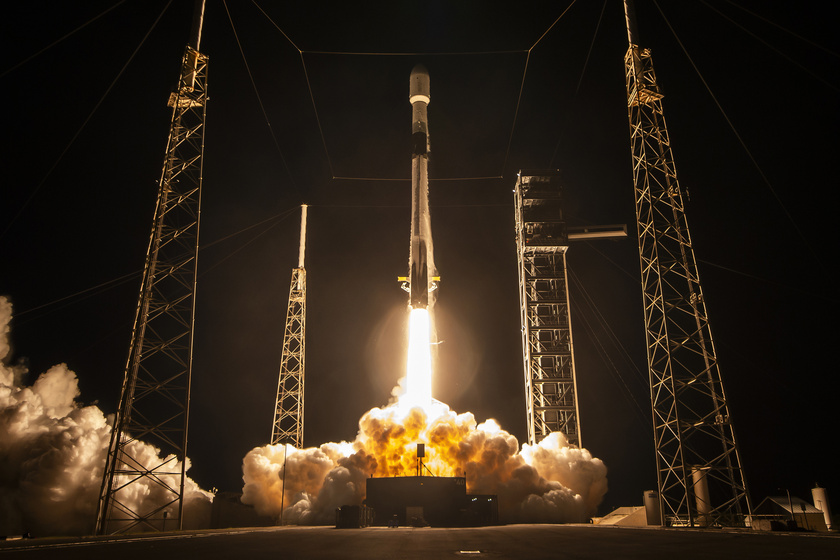
SpaceX announced on Aug. 12, the first human spaceflight mission, Fram2, to fly over Earth's polar regions -- the North and South poles. It will be launched by Falcon 9 from Florida, targeting a polar orbit.

Scheduled for late 2024, the mission will be led by Chinese cryptocurrency entrepreneur and adventurer Chun Wang, from Malta, and will include Jannicke Mikkelsen, a polar explorer from NorwayEric Philips, a roboticist from Australia, and Rabea Rogge, a filmmaker from Germany. The crew will observe Earth’s polar regions from a SpaceX Dragon spacecraft.

Fram2 aims to leverage insights from space physicists and citizen scientists. And the crew will conduct various research activities, including: observing Earth’s polar regions through Dragon’s cupola at an altitude of 425-450 km; studying unusual light emissions resembling auroras; capturing the first human x-ray images in space, and investigating the effects of spaceflight on the human body and behavioral health.

The mission is in honor of the Norwegian ship that made pioneering voyages to the Arctic and Antarctic between 1893 and 1912.

"Fram2 will be commanded by Chun Wang, an entrepreneur and adventurer from Malta," SpaceX wrote in a mission description. "Wang aims to use the mission to highlight the crew's explorational spirit, bring a sense of wonder and curiosity to the larger public, and highlight how technology can help push the boundaries of exploration of Earth and through the mission's research."

The mission is expected to last 3-5 days.

community logo
Join the keneci Network Community
To read more articles like this, sign up and join my community today
0
What else you may like…
Videos
Posts
Articles
SpaceX Starlink Internet Satellites

With Starlink internet, data is continuously being sent between a ground dish and a Starlink satellite orbiting 550km above. Furthermore, the Starlink satellite zooms across the sky at 27,000 km/hr! MORE VIDEOS ON KENECI NETWORK RUMBLE CHANNEL: https://rumble.com/c/Keneci

00:28:08
Elon Musk, DOGE Speak On Waste And Fraud

US Department of Government Efficiency Services (USDS) led by Elon Musk speak on the "mind-boggling" fraud and waste in UInited States federal government

00:00:45
January 17, 2025
SpaceX Launches Starship 7th Test Flight

SpaceX successfully executed its second-ever “chopsticks” catch of a Super Heavy booster (or Booster 14) using the “Mechazilla” launch tower on Thursday(Jan. 16), during the seventh uncrewed test flight of the company's 123-meter Starship rocket. However, the megarocket's upper stage(or Ship 33) was lost approximately 8.5 minutes into the flight in a “rapid unscheduled disassembly(RUD)” or explosion

00:10:30
Welcome to Keneci Network!

Join the conversations!

December 09, 2025
Bitcoin White Paper By Satoshi Nakamoto

Bitcoin white paper

Bitcoin_White_Paper.pdf
September 17, 2024
Charges Against Sean 'Diddy' Combs In Grand Jury Indictment

The rapper was charged with racketeering conspiracy, sex trafficking by force, fraud or coercion, and transportation to engage in prostitution in the indictment unsealed Tuesday(Sept. 17)

Combs-Indictment-24-Cr.-542.pdf
post photo preview
NROL-172: SpaceX Launches Secret Satellites For The US Reconnaissance Office

SpaceX launched the NROL-172 mission aboard a Falcon 9 Block 5 rocket from Space Launch Complex 4 East (SLC-4E) at Vandenberg Space Force Base at 0213 UTC on Tuesday (May 12). The flight carried a batch of classified intelligence-gathering satellites for the National Reconnaissance Office (NRO), marking the 13th mission supporting the agency’s "proliferated architecture" constellation.

The first-stage booster, B1097 (flown for the 9th time), successfully landed on the drone ship 'Of Course I Still Love You' approximately 8.5 minutes after liftoff. It was the second launch and landing for this particular booster, according to a SpaceX mission description. SpaceX's livestream ended shortly thereafter, at the request of the NRO.

This mission is part of the National Security Space Launch (NSSL) Phase 3 Lane 1 contract, managed by the Space Systems Command (SSC), and follows previous proliferated architecture launches such as NROL-145, NROL-48, and NROL-105.

"To stay ahead of the competition and ensure it can continue to operate in a heightened threat environment, the NRO is modernizing its architecture in space and on the ground — delivering more capability faster with increased resilience," agency officials wrote in the NROL-172 press kit.

"A greater number of satellites — large and small, government and commercial, in multiple orbits — will deliver an order of magnitude more signals and images than is available today," they added.

The NRO did not disclose the exact quantity of satellites, but they are part of a constellation including electro-optical, radar, and relay satellites contributed by the Geospatial Intelligence Systems Acquisitions Directorate (GEOINT). These relay satellites enable inter-satellite optical communications and support the Department of War’s space-data network.

The NRO utilizes this proliferated architecture to provide greater revisit rates, increased coverage, and resilience by eliminating single points of failure. The satellites for the new network were built by SpaceX and Northrop Grumman. Their exact purpose, location in orbit or number remain classified.

The use of Falcon 9 for these missions allows for shorter, more responsive timelines compared to traditional major system acquisitions. All of the proliferated architecture satellites have reached orbit atop the SpaceX rockets flying out of Vandenberg, which sits on California's scenic but often foggy central coast. The first such launch, NROL-146, lifted off in May 2024. The most recent before today, NROL-105, took place this past January.

This was the second flight under the NSSL Phase 3 Lane 1 contract for SpaceX, following NROL-145 in April 2025. The mission was originally targeted for May 11 but was delayed to May 12 due to weather or technical checks, with propellant loading commencing successfully on the night of May 11.

NROL-172 was the 55th Falcon 9 launch of the year. The vast majority of the rocket's liftoffs so far in 2026 — 44 of 55 — have been dedicated to building out Starlink, SpaceX's broadband megaconstellation in low Earth orbit.

Read full Article
post photo preview
Google, Apple Roll Out End-to-end Encryption For RCS Messaging

Google and Apple have begun rolling out end-to-end encryption (E2EE) for Rich Communication Services (RCS) messaging between Android and iPhone users, marking a significant shift in cross-platform privacy that addresses the longstanding lack of encryption in standard SMS texts.

The feature is currently rolling out in beta today. Android users must have the latest version of Google Messages, while iPhone users must be running iOS 26.5 with a supported carrier. Encryption is on by default for cross-platform RCS chats. Users will see a lock icon in their conversation threads, similar to the indicator used for Android-to-Android encrypted chats, requiring no manual setup.

The encryption protects message content from being intercepted in transit, ensuring that no third party, including Google, Apple, or carriers, can read the messages. The feature currently applies only to RCS conversations; if RCS is unavailable, messages fall back to unencrypted SMS. Group chat encryption across platforms and support for Google Voice or third-party RCS-enabled apps may have varying availability.

While Apple added RCS support to iOS last year to improve interoperability with Android (providing features like read receipts and high-res media), it previously lacked end-to-end encryption. This rollout closes the security gap where iPhone-to-Android texts were vulnerable to eavesdropping, unlike encrypted iMessage chats.

This development is the result of a cross-industry effort led by Google and Apple to standardize secure RCS messaging, building on Google’s previous implementation of E2EE for Android-to-Android chats using the Signal Protocol.

Read full Article
post photo preview
Trump Rejects Latest Iran's Proposal To End The War: 'TOTALLY UNACCEPTABLE'

President Donald Trump rejected Iran's latest proposal to end the war in a Truth Social post on Sunday, calling it "TOTALLY UNACCEPTABLE" without detailing specific objections. The post stated: "I have just read the response from Iran’s so-called 'Representatives.' I don't like it — TOTALLY UNACCEPTABLE!"

Iran's proposal, conveyed via mediator Pakistan, included demands for an end to U.S. sanctions on Iranian oil for 30 days, lifting the naval blockade on Iranian ports, and Iranian management of the Strait of Hormuz under certain U.S. commitments. It also called for separate nuclear negotiations, offering to dilute part of its highly enriched uranium (HEU) stockpile and send the rest to a third country—returnable if the U.S. exits any future deal.

However, Iran refused U.S. demands to dismantle nuclear facilities or surrender its enriched uranium, which Israeli Prime Minister Benjamin Netanyahu emphasized on CBS' 60 Minutes, Sunday, as a reason the war was "not over."

Iranian officials did not publicly release the full text of the proposal, but state media described its focus as ending hostilities on all fronts and ensuring maritime safety in the Persian Gulf.

Lawmakers began drafting a bill to formalize Iran’s control over the Strait of Hormuz, including restricting passage for vessels from "hostile states."

Despite the rejection, a Qatari LNG tanker crossed the strait on Sunday—the first since the war began—suggesting limited confidence-building measures were in motion. The ceasefire remained fragile, with drone attacks reported in Kuwait, the UAE, and Qatari waters on the same day.

Read full Article
See More
Available on mobile and TV devices
google store google store app store app store
google store google store app tv store app tv store amazon store amazon store roku store roku store
Powered by Locals