keneci Network
News • Science & Tech • Comedy
Kamala Harris Facing Backlash, Ridicule, For Past Comment In Viral Video: 'We Have To Stay Woke'
August 05, 2024
post photo preview

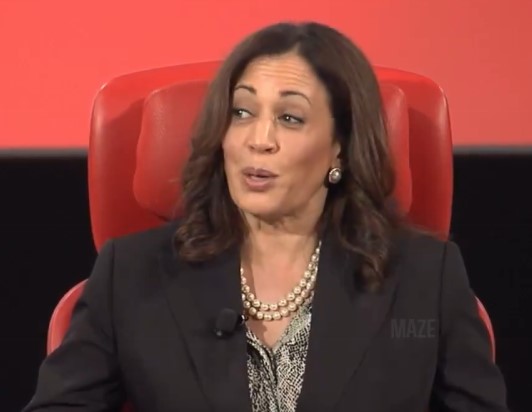
In a video that resurfaced on social media Monday, US Vice President and Democrat party 2024 presidential nominee Kamala Harris said "everybody needs to be woke," while speaking at the 2017 Recode's annual Code Conference, alongside philanthropist Laurene Powell Jobs, the widow of Apple co-founder Steve Jobs, during the conference.

During the Recode conference which focused on issues such as immigration and the environment, Harris spoke out against the Trump administration's strict immigration polices just moments ahead of her "woke" comment.

"We have to stay woke. Like everybody needs to be woke," Harris said, cackling. "And you can talk about if you're the wokest or woker, but just stay more woke than less woke." She also posted on X: "We have to stay active. We have to stay woke. #codecon."

The term woke colloquially refers to leftists advocating for LGBTQ degeneracy, open borders, abortion-on-demand and anti-white racism. The left in America started using it to virtue-signal to their supporters. However in recent years, conservatives in the west use it derogatively against the left.

The video of Harris' remarks went viral and sparked condemnations and ridicule on social media.

"Kamala is a low-level Communist functionary, and I'm tired of being told we have to pretend she's not," an X user wrote of Harris. Another writes: "Kamala Harris is too radical for the White House."

Harris became the Democrat nominee in what political observers called a coup by billionaire party elite against President Joe Biden who was forced to drop out of the race..

community logo
Join the keneci Network Community
To read more articles like this, sign up and join my community today
0
What else you may like…
Videos
Posts
Articles
SpaceX Starlink Internet Satellites

With Starlink internet, data is continuously being sent between a ground dish and a Starlink satellite orbiting 550km above. Furthermore, the Starlink satellite zooms across the sky at 27,000 km/hr! MORE VIDEOS ON KENECI NETWORK RUMBLE CHANNEL: https://rumble.com/c/Keneci

00:28:08
Elon Musk, DOGE Speak On Waste And Fraud

US Department of Government Efficiency Services (USDS) led by Elon Musk speak on the "mind-boggling" fraud and waste in UInited States federal government

00:00:45
January 17, 2025
SpaceX Launches Starship 7th Test Flight

SpaceX successfully executed its second-ever “chopsticks” catch of a Super Heavy booster (or Booster 14) using the “Mechazilla” launch tower on Thursday(Jan. 16), during the seventh uncrewed test flight of the company's 123-meter Starship rocket. However, the megarocket's upper stage(or Ship 33) was lost approximately 8.5 minutes into the flight in a “rapid unscheduled disassembly(RUD)” or explosion

00:10:30
Welcome to Keneci Network!

Join the conversations!

December 09, 2025
Bitcoin White Paper By Satoshi Nakamoto

Bitcoin white paper

Bitcoin_White_Paper.pdf
September 17, 2024
Charges Against Sean 'Diddy' Combs In Grand Jury Indictment

The rapper was charged with racketeering conspiracy, sex trafficking by force, fraud or coercion, and transportation to engage in prostitution in the indictment unsealed Tuesday(Sept. 17)

Combs-Indictment-24-Cr.-542.pdf
Ukraine Launches Massive Drone Attacks Hitting Moscow Oil Refinery

Ukraine on Thursday, launched its largest drone offensive on Moscow since the start of the full-scale war, striking the Moscow Oil Refinery in the Kapotnya district for the second time in a week, leaving parts of the capital blanketed in heavy black smoke.

Russian authorities reported that air defenses intercepted 194 drones approaching the capital and 555 nationwide, but multiple kamikaze drones breached defenses, causing five fires and an explosion that blew the roof off a fuel tank at the facility, which supplies approximately 40% of Moscow’s fuel and jet fuel to all major regional airports.

The attack resulted in 17 injuries, including two children, and caused significant disruptions, with 527 flights canceled or delayed at Moscow’s airports and sooty "oil rain" reported by residents.

Simultaneously, a separate Ukrainian drone operation successfully targeted and ignited a major fuel storage depot in Gukovo, located in Russia's Rostov Oblast near the Ukrainian border.

Ukrainian President Volodymyr Zelensky described the strike as a "justified response" to recent Russian attacks on Kyiv, including damage to the UNESCO-listed Kyiv Pechersk Lavra, and stated, "If Ukraine is engulfed in flames, so will your Moscow be," calling for an immediate end to the war.

"It is time the war ended, and Russia must take the necessary steps in diplomacy... Moscow will burn if Russian attacks continue," Zelensky said.

The attack occurred precisely as Zelensky was returning from the G7 Summit in France, following critical coordination calls with Western leaders, including a unified push for expanded defense commitments.

Intelligence assessments from the week of the strike suggest a deeper structural issue for the Kremlin: Russia is facing localized shortages of short-range interceptor missiles. Because Ukraine has successfully scaled up the domestic production of low-cost, long-range drones, they are able to launch massive swarms that effectively oversaturate and exhaust expensive Russian air defense arrays—allowing trailing drones to slip through to high-value targets.

Russia fired back with 239 drones and seven missiles against Ukrainian targets in the Kyiv and Poltava regions, while Foreign Minister Sergei Lavrov threatened further mass strikes against Ukrainian military targets.

By taking the war directly to Russia's refining capacity, Ukraine has increasingly choked military supply lines and induced civilian fuel shortages in occupied territories like Crimea, forcing ordinary Russian citizens to experience the direct economic consequences of the ongoing conflict.

The Moscow Oil Refinery is not just a symbolic target; it is a vital economic asset operated by Gazprom Neft. It processes roughly 11 million tons of crude oil annually, supplying over a third of all gasoline and half of the diesel fuel consumed across the massive Moscow metropolitan region.

Crucially, the refinery had already been hit days earlier on June 16, which damaged its primary ELOU-AVT-6 crude processing unit and forced a temporary halt in operations. Thursday’s massive wave aimed to decisively compound that damage.

Read full Article
post photo preview
Trump Formally Signs The US-Iran Peace Deal: To Avoid 'Economic Catastrophe'

President Donald Trump personally signed the U.S.-Iran Memorandum of Understanding (MOU) on Wednesday, during a dinner with French President Emmanuel Macron at the Palace of Versailles, confirming the deal's immediate effect and canceling a planned formal ceremony in Switzerland.

The dinner was held, after the G7 summit in Évian-les-Bains, to honor the 250th anniversary of American independence. As Trump left the former palace of French kings, he cupped his hands and shouted to reporters: "It's signed, yeah. I signed it in Versailles."

Iranian President Masoud Pezeshkian also signed the document digitally, finalizing an interim agreement designed to end hostilities, reopen the Strait of Hormuz, and initiate a 60-day negotiation period regarding Iran's nuclear program.

The following is the MOU as released bu US officials. 

The United States of America and the Islamic Republic of Iran have jointly agreed in good faith on [ __ date] on the following:

  1. The United States of America and the Islamic Republic of Iran and their allies in the current war are signing this MOU to declare the immediate and permanent termination of military operations on all fronts, including in Lebanon, and undertake from now on not to initiate any war or any military operation against each other, and to refrain from the threat or use of force against each other, and ensuring the territorial integrity and sovereignty of Lebanon. The final deal will confirm the permanent termination of the war on all fronts, including in Lebanon and other provisions of this paragraph.

  2. The United States of America and the Islamic Republic of Iran undertake to respect each other’s sovereignty and territorial integrity and to refrain from interfering in each other’s internal affairs.

  3. The United States of America and the Islamic Republic of Iran commit to negotiating and achieving the final deal in maximum 60 days, extendable with mutual consent.

  4. Immediately upon the signing of this MOU, the United States of America will begin the removal of its naval blockade and any disturbances or impediments against the Islamic Republic of Iran, and will fully end the naval blockade within 30 days. During this period, the traffic of vessels will be in proportion to the numbers of pre-war traffic being restored by the Islamic Republic of Iran. The United States of America further undertakes to remove its forces from the proximity of the Islamic Republic of Iran within 30 days after the final deal.

  5. Upon the signing of this MOU, the Islamic Republic of Iran will make arrangements using its best efforts for the safe passage of commercial vessels with no charge, for 60 days only, from the Persian Gulf to the Sea of Oman and vice versa. The traffic of commercial vessels will immediately start, and considering the need for removing the technical and military obstacles and demining by the Islamic Republic of Iran will be instated within 30 days. The Islamic Republic of Iran will conduct dialog with the Sultanate of Oman to define the future administration and maritime services in the Strait of Hormuz in discussion with other Persian Gulf littoral states in line with the applicable international law and the sovereign rights of coastal states of the Strait of Hormuz.

  6. The United States of America undertakes with regional partners to develop a definitive, mutually agreed plan with at least USD 300 billion for the reconstruction and economic development of the Islamic Republic of Iran. The mechanism for the implementation of this plan will be finalized as part of a final deal within 60 days. All required licenses, waivers, and permissions needed for the relevant financial transactions will be granted by the United States of America.

  7. The United States of America undertakes to terminate all types of sanctions against the Islamic Republic of Iran, including the United Nations Security Council resolutions, IAEA Board of Governors resolutions, all unilateral US sanctions, primary and secondary in an agreed upon schedule as part of the final deal. The Islamic Republic of Iran and the United States of America acknowledge the critical importance of the sanctions termination issue above mentioned, and expressed their intentions to immediately address these issues in the negotiations in order to achieve mutual agreement on them.

  8. The Islamic Republic of Iran reaffirms that it shall not procure or develop nuclear weapons. The United States of America and the Islamic Republic of Iran have agreed to resolve the disposition of stockpile enriched material pursuant to a mechanism that will be mutually agreed upon in accordance with the schedule mentioned in paragraph seven with the minimum methodology to be down blended on site under the supervision of the IAEA. The two parties also agreed to discuss the issue of enrichment and other mutually agreed matters related to the Islamic Republic of Iran’s nuclear needs, based on a satisfactory framework being agreed upon in the final deal. The final deal will confirm the provisions of this paragraph and the Islamic Republic of Iran acknowledge the critical importance of the nuclear issues above missions. They express their intention to immediately address these issues in the negotiations in order to achieve mutual agreement on them.

  9. Pending the final deal, the United States of America and the Islamic Republic of Iran agree to maintain the status quo. The Islamic Republic of Iran will maintain the current status quo of its nuclear program, and the United States of America will not impose any new sanctions and will not deploy additional forces in the region.

  10. The United States of America undertakes that immediately upon the signing of this MOU and until the termination of sanctions, US Department of Treasury will issue waivers for the export of Iranian crude oil, petroleum products, and derivatives, and all associated services, including banking transactions, insurances, transportation, etc.

  11. The United States of America undertakes to make fully available for use the frozen or restricted funds and assets of the Islamic Republic of Iran upon the implementation of this MOU. The United States of America and the Islamic Republic of Iran will mutually agree on the procedures related to the release of these funds during negotiations. Such funds, whether obtaining the original account or transfer, shall be made fully usable for payment to any ultimate beneficiary designed by the Central Bank, excuse me, ultimate beneficiary designated by the Central Bank of the Islamic Republic of Iran. The United States of America undertakes to issue all necessary licenses and authorizations accordingly.

  12. The United States of America and the Islamic Republic of Iran agree that an executive mechanism will be established to monitor the successful implementation of this MOU and the future compliance of the final deal.

  13. After signing this MOU, and subject to the beginning of the implementation of paragraphs 1, 4, 5, 10, and 11 of this MOU, and the continuing implementation of these measures, the United States of America and the Islamic Republic of Iran will start negotiations regarding the final deal exclusively on the other paragraphs.

  14. The final deal will be endorsed by a binding UNSC resolution.


The agreement, formally known as the Islamabad MOU, was quietly brokered behind the scenes over several weeks by Pakistani and Qatari negotiators.

The text was finalized days prior but held back at Iran's request. While Vice President JD Vance earlier confirmed a formal diplomatic signing ceremony to be hosted by Pakistan and Qatar in Geneva on Friday, Trump's sudden signature at Versailles effectively binds the executive branch to the ceasefire immediately.

A major focus of upcoming negotiations within the next 60 days, will be establishing robust verification mechanisms for Iran's nuclear commitments, a point emphasized by G7 leaders who welcomed the deal but urged a comprehensive follow-on agreement.


Trump Defends US-Iran Peace Deal, Iran's Ballistic Missiles And Civilian Nuclear Program


As the President spoke at a press conference after the G7 summit in Évian-les-Bains prior to signing the MOU, senior U.S. officials briefed the press, reading the 14 points of the memorandum aloud. The interim deal aims to halt the 110-day U.S.-Israel–Iran conflict that disrupted global markets.

During the marathon press conference alongside Secretary of State Marco Rubio and Commerce Secretary Howard Lutnick, Trump fiercely defended the agreement against escalating criticism from domestic hardliners and regional allies like Israel.

Trump defended the agreement as a necessary measure to avert a "worldwide depression" and economic catastrophe caused by prolonged conflict and closed oil routes. He characterized the MOU as a preliminary step rather than a final settlement, explicitly reserving the right to resume military attacks if Iran fails to comply with terms within the 60-day window, stating, "If they don't behave, we'll go right back to dropping bombs."

"It’s not final," Trump said. "It’s a memorandum of understanding, and if I don’t like it, we’ll go back to shooting at them, dropping bombs on their head... If it doesn't get done in 60 days, that's all right. We go back to bombing. I don't want to do that, because it's so good, but we might have to, because we're never going to let them have a nuclear weapon."

The President clarified that the referenced $300 billion reconstruction plan involves no direct U.S. funding, but rather facilitates the release of frozen Iranian assets and encourages private investment contingent on Tehran's adherence to the deal.

The agreement marks a shift from maximalist demands, accepting Iran's conventional missile capabilities in exchange for verifiable nuclear restrictions and the reopening of the Strait of Hormuz to toll-free commercial traffic.

When asked about Iran's ballistic missiles Trump defended allowing Iran to retain them, arguing they are necessary for regional balance since neighbors like Saudi Arabia possess them, saying, "Missiles are not the problem. They hurt a little location but they don't blow up the planet... If other countries have them, it’s a little bit unfair for them not to have some. If Saudi Arabia and Qatar... they all have some, I would say, in relative proportion, I think it’s okay."

 Zionists and Israeli officials have been demanding restrictions be imposed on Iranian missile production, a demand critics call delusional and unrealistic since Iran is a sovereign nation of about 95 million people.

The President rebuked Israel's military actions in Lebanon, criticizing Prime Minister Benjamin Netanyahu for excessive force, "you do not have to knock down buildings in Beirut," he said, insisting the deal requires an immediate termination of hostilities in Lebanon involving Hezbollah.

Critics slammed the decision to grant oil waivers and unfreeze billions in Iranian assets. Speaking at the press conference, Trump countered with a pragmatic economic defense: "We have taken their money, it's their money. If we didn't give it back, nobody would ever invest in the dollar again... We have sanctions that will never let them rebuild [if they violate this]. There would be poverty."

Observers are now watching to see how Israel reacts to the US-Iran deal, as officials declare the Israel Defense Forces will not withdraw from Lebanon as demaded by Trump and Iran.

Read full Article
post photo preview
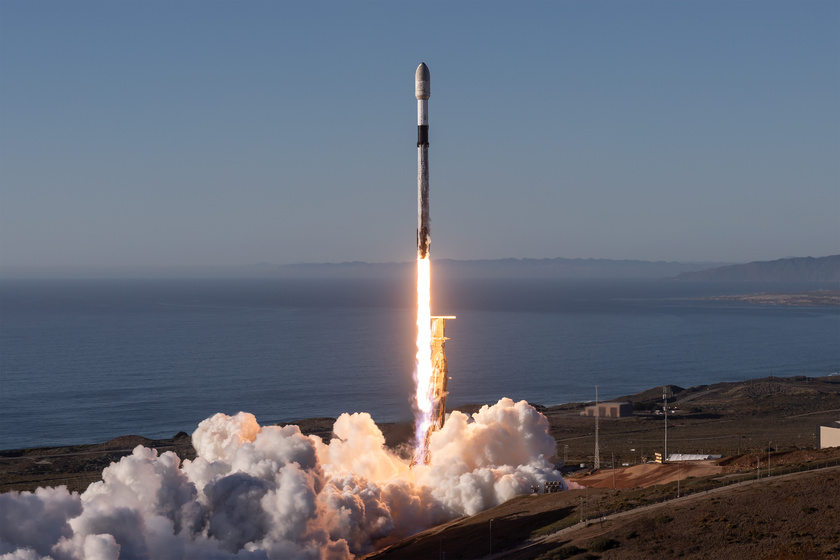
BlueBird 8-10: SpaceX Launches 3 Huge Direct-to-cell Satellites

SpaceX launched three AST SpaceMobile BlueBird Block 2 satellites (BlueBird 8, 9, and 10) aboard a Falcon 9 rocket from Space Launch Complex 40 at Cape Canaveral Space Force Station on Wednesday, at 0639 UTC on BlueBird 8-10 mission; marking a critical recovery for AST SpaceMobile following the loss of its previous satellite.

The rocket's first stage booster B1077, which touched down  8.5 minutes later on the drone ship "A Shortfall of Gravitas in the Atlantic Ocean, completed its 29th flight, previously supporting missions such as Crew-5, GPS III SV06, and CRS-28. The upper stage deployed the satellites into Low Earth Orbit starting 54.5 minutes after launch, with BlueBird 10 deploying last in a sequence spaced roughly five minutes apart.

The launched spacecraft are next-generation Block 2 BlueBird satellites, each featuring a massive communications array spanning approximately 2,400 square feet (223 square meters). These are the largest commercial communications arrays ever deployed in Low Earth Orbit. The satellites are designed to provide space-based cellular broadband directly to unmodified smartphones, supporting voice, data, and video over standard cellular bands without requiring specialized hardware -- this is a competitor to SpaceX's own Starlink Mobile.

Before today, the company had launched seven spacecraft. This launch serves as a direct replacement for BlueBird 7, which was lost in April 19 due to an upper stage anomaly during a Blue Origin New Glenn launch. AST SpaceMobile estimates the carrying value of the lost satellite at $155–160 million. BlueBird 7 was the second of AST SpaceMobile's "next-generation" spacecraft to launch, after BlueBird 6, which reached LEO successfully atop an Indian LVM3 rocket in December 2025.

"Our upcoming launch marks another important milestone as we continue advancing the deployment of our space-based cellular broadband network," Scott Wisniewski, president of AST SpaceMobile, said in a June 9 statement. "Each BlueBird satellite launched expands our ability to support seamless space-based broadband mobile connectivity directly to everyday smartphones," he added.

Following the successful deployment, AST SpaceMobile (ASTS) shares rose 4%, reflecting investor confidence in the company's progress toward its goal of deploying a 45-satellite constellation by year-end. AST SpaceMobile currently holds agreements with nearly 60 mobile networks globally, including AT&T, Verizon, and Vodafone. SpaceX (SPCX) shares gained 2.98% in pre-market trading,

Read full Article
See More
Available on mobile and TV devices
google store google store app store app store
google store google store app tv store app tv store amazon store amazon store roku store roku store
Powered by Locals