keneci Network
News • Comedy • Science & Tech
X Users Outraged Over New ID Verification Requirement Facilitated By Company With Ties To Israeli Intelligence
July 12, 2024

The Elon Musk company has started sending out email notifications to users announcing that from July 1, government ID verification will be required to earn income on the platform "through Ad Revenue Sharing and Creator Subscriptions programs."

The new requirement is supposedly part of X's effort to protect against impersonation and fraud and improve user support.

"We're making changes to our Creator Subscriptions and Ads Revenue Share programs to further promote authenticity and fight fraud on the platform," the update to X's verification page reads. "Starting today, all new creators must verify their ID to receive payouts. All existing creators must do so by July 1, 2024."

There's one problem. X has apparently contracted Au10tix, an Israeli company known for its identity verification solutions, and founded by Ron Atzomn, a retired member of the Israel Defense Force’s clandestine unit 8200, which provides the Jewish nation with 90% of its electronic intelligence material.

The new requirement has trigged criticisms with many calling it a direct threat to anonymity which has historically been the cornerstone of free speech online. Citizens and activists have been able to criticize their governments, expose corruption and organize without risking their safety and livelihood.

Some critics are even more dismayed by the involvement of Au10tix, given Israeli intel's notoriety in aggressive electronic spying and blackmail operations.

Many users have since expressed their disappointment with Musk who had in recent past expressed support for the importance of anonymity online. The platform owner and Tesla chief has not commented publicly about the new ID requirement.


community logo
Join the keneci Network Community
To read more articles like this, sign up and join my community today
0
What else you may like…
Videos
Posts
Articles
SpaceX Starlink Internet Satellites

With Starlink internet, data is continuously being sent between a ground dish and a Starlink satellite orbiting 550km above. Furthermore, the Starlink satellite zooms across the sky at 27,000 km/hr! MORE VIDEOS ON KENECI NETWORK RUMBLE CHANNEL: https://rumble.com/c/Keneci

00:28:08
Elon Musk, DOGE Speak On Waste And Fraud

US Department of Government Efficiency Services (USDS) led by Elon Musk speak on the "mind-boggling" fraud and waste in UInited States federal government

00:00:45
January 17, 2025
SpaceX Launches Starship 7th Test Flight

SpaceX successfully executed its second-ever “chopsticks” catch of a Super Heavy booster (or Booster 14) using the “Mechazilla” launch tower on Thursday(Jan. 16), during the seventh uncrewed test flight of the company's 123-meter Starship rocket. However, the megarocket's upper stage(or Ship 33) was lost approximately 8.5 minutes into the flight in a “rapid unscheduled disassembly(RUD)” or explosion

00:10:30
Welcome to Keneci Network!

Join the conversations!

December 09, 2025
Bitcoin White Paper By Satoshi Nakamoto

Bitcoin white paper

Bitcoin_White_Paper.pdf
September 17, 2024
Charges Against Sean 'Diddy' Combs In Grand Jury Indictment

The rapper was charged with racketeering conspiracy, sex trafficking by force, fraud or coercion, and transportation to engage in prostitution in the indictment unsealed Tuesday(Sept. 17)

Combs-Indictment-24-Cr.-542.pdf
post photo preview
Transporter-18: SpaceX Launches Google AI Satellite, 129 Payloads In Rideshare Mission

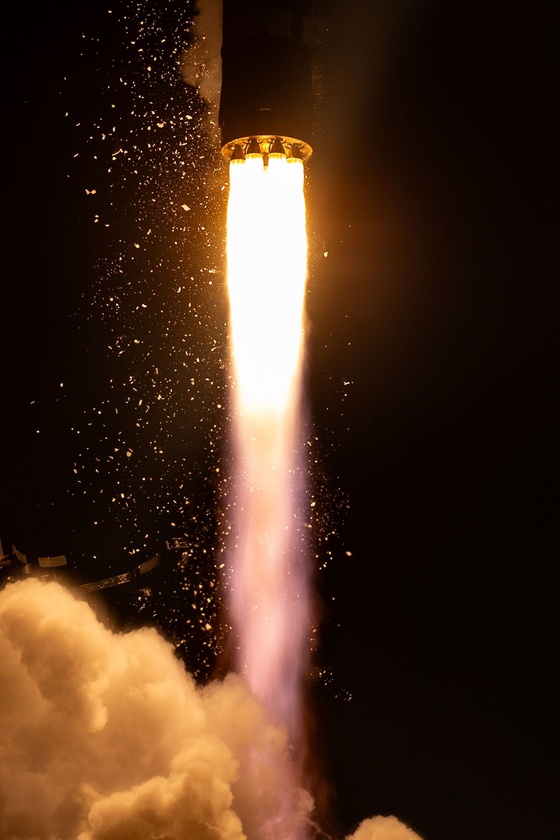
SpaceX Falcon 9 launched its Transporter-18 rideshare mission from Vandenberg Space Force Base in California at 1832 UTC on Thursday (Oct. 1), deploying 130 payloads into a sun-synchronous orbit. The mission’s primary payload was a prototype satellite for Google’s Project Suncatcher, designed to test the resilience of Tensor Processing Units (TPUs) against space radiation and thermal challenges.

About 8 minutes after liftoff, the Falcon 9's first stage booster, B1082 came back to Vandenberg for a landing, completing its 25th flight to date. Meanwhile the rocket's upper stage powered its way to low Earth orbit (LEO), where it deployed the 130 payloads over a roughly 11-minute window starting about 54.5 minutes after liftoff, and bringing the total count for SpaceX’s Rideshare program to over 1,800 payloads.

The highest-profile payload on Transporter-18, is a pathfinder spacecraft for Project Suncatcher, the AI constellation that Google plans to build and operate in LEO, which explores scalable machine learning infrastructure.

This satellite will help the project team determine how TPUs — Google chips that are core Suncatcher hardware — perform in the space environment. Of particular importance are how the TPUs withstand space radiation, and how efficiently the heat they generate is dissipated.

Another company with AI data center ambitions flew on Transporter-18 as well: Cowboy Space put its Reason-1 satellite on the Falcon 9.

"Its job is to prove out power beaming: using a high-power laser to transfer energy from low Earth orbit to a receiver on the ground," Cowboy Space said of Reason-1 in a Sept. 28 X post. "If you want to build data centers in space, you have to master the optical systems between orbit and Earth. This is where that journey begins."

Transporter-18 also launched Starfish Space's first Otter servicing satellite.

"This is a big moment for Starfish Space," the Washington-based company said via X on Sept. 24. "We've spent years developing, iterating, and proving out the key technologies required for affordable, available satellite servicing. Now we’re launching Otters, putting our satellite servicing vehicles to work for customers in orbit."

The rest of the 130 payloads were a diverse lot, consisting of "cubesats, microsats, hosted payloads and two spacecraft with reentry vehicles and four orbital transfer vehicles carrying 41 of those payloads to be deployed at a later time," SpaceX wrote in its Transporter-18 mission description. The manifest included Carbon Mapper’s Tanager-2 satellites for methane monitoring, and spacecraft from Varda Space Industries featuring reentry vehicles.

Transporter-18 was part of a very busy day for SpaceX. The company also launched the Crew-13 astronaut mission for NASA earlier, and it aims to launch the NROL-97 flight for the U.S. National Reconnaissance Office later.

Read full Article
post photo preview
Crew-13: SpaceX Launces Astronauts On Fastest Dragon Flight To The ISS

SpaceX Falcon 9 launches Dragon 'Grace' Spacecraft on SpaceX Falcon 9 launched Crew Dragon 'Grace' on the Crew-13 mission from Space Launch Complex 40 at Cape Canaveral Space Force Station, Florida, at 1510 UTC on Thursday (Oct. 1) carrying NASA astronauts Jessica Watkins and Luke Delaney, Canadian Space Agency astronaut Joshua Kutryk, and Roscosmos cosmonaut Sergey Teteryatnikov to the International Space Station (ISS). This will be the fastest Crew Dragon flight ever to the orbiting lab, expected to dock with the ISS in about 8 hours.

As planned, about 2.5 minutes after liftoff, the Falcon 9's first stage booster, B1101, separated from the second stage which in short succession, began executing its orbital insertion burn. B1101 performed a simultaneous boostback burn to reset its trajectory for a return and touchdown at landing zone(LZ-40). An entry and landing burn followed, with a successful touchdown about 7 minutes and 40 seconds after liftoff. This was the third launch and recovery of B1101.

Their trip to LEO took less than 10 minutes. 

Meanwhile the Falcon 9 second-stage engine burn ended about a minute later, wrapping up an orbital insertion maneuver that lasted roughly six minutes. The trip to low earth orbit(LEO) took less than 10 minutes from liftoff. Crew Dragon Grace was released another minute afterward to begin its 8-hour journey to the ISS.

"Thanks for an amazing ride," Mission Commander Watkins told Mission Control shortly after that milestone was reached.

"They say that courage is grace under pressure, and the incredible teams that got us to orbit today truly embody that," she added. "Thank you for your hard work, perseverance, and courageous commitment to ensuring Grace was ready and safe to fly. We carry with us on this journey all of you who have supported us along the way, and we hope to make you proud."

Watkins became the first NASA astronaut to fly twice aboard a SpaceX Dragon spacecraft, having previously served on Crew-4 in 2022. Mission pilots Luke Delaney, Joshua Kutryk, and Sergey Teteryatnikov are making their first spaceflights.

Typical Crew Dragon missions take 15 to 24 hours to catch up to the space station. For comparison, Russian launch profiles deliver the Soyuz crew capsule to the ISS anywhere between three hours to two days after liftoff. Grace will only have about 7 hours, 50 minutes on orbit before docking with the ISS, setting a new speed record for an American spacecraft.

"We got lucky this time," Julianna Scheiman, director of NASA science and dragon programs at SpaceX, said in the post-launch briefing. "The space station was in an opportune spot in space, and the orbital mechanics, the physics of it all, worked out for it to be the the shortest launch to docking time we've had to date."

The crew will join the ISS for a six-month mission as part of Expedition 75, conducting scientific research, technology demonstrations, and station maintenance. Many of their research will focus on astronaut health and the long-term effects of microgravity on the human body. Other experiments on the Crew-13 docket include studies into stem-cell derived tissues to treat Parkinson's and heart disease, as well as the harvesting of produce in zero-g.

"It was an incredible launch," NASA Administrator Jared Isaacman said. "This is an absolutely great start to Crew 13. We will be watching very closely, cheering them on throughout their great expedition."

The astronauts' time aboard the ISS is expected to wrap up sometime next year, around February or March, when SpaceX launches NASA's Crew-14 astronauts to replace them. Similarly, Crew-13 will relieve the four Crew-12 astronauts. Crew-13's arrival will signal the beginning of departure preparations for the members of Crew-12, who launched to the ISS about 7.5 months ago — a slightly longer stay than originally anticipated.

Crew-12 was expected to return to Earth last month, but a delay in Crew-13 extended their mission by a few weeks. An oxidizer leak in Grace's propulsion system was discovered in August, prompting NASA and SpaceX to allot more time for prelaunch checkouts and tests.

Grace is the fifth and final Crew Dragon built by SpaceX; it previously flew the private Axiom Mission 4 (Ax-4) in summer 2025.

Read full Article
post photo preview
US Troops Withdraw From Iraq After 23 Years, Amid Gains By Iran-backed Militia

The U.S. military completed the "orderly departure" of all remaining troops and equipment from Erbil Air Base on Wednesday, formally ending Operation Inherent Resolve in Iraq and concluding a 23-year continuous U.S. military presence in the country.

U.S. Central Command confirmed the withdrawal marks the "successful conclusion of the military mission that defeated ISIS in Iraq." Pentagon Spokesman Sean Parnell said the move transitions Iraq from a wartime coalition mission to an "Iraqi-led security effort supported by a more normal bilateral security relationship."

CENTCOM Commander Adm. Brad Cooper noted that Iraqi security forces, including the Peshmerga, now possess the "operational independence to unilaterally manage threats."

In a Truth Social post, President Donald Trump announced the withdrawal as "a victory for the United States, a victory for Iraq, and a decisive victory over ISIS." He described the long U.S. involvement as "a very expensive excursion into Hell" and "a quagmire," stating that "very bad decision-making" initially led to the conflict but that the era is now "part of History."

"Today, I am pleased to announce that the last American Forces are leaving Iraq! It has been a long time, with very bad decision-making that got us involved in this quagmire in the first place, but soon, that will be part of History...," Trump wrote. "This Day is a victory for the United States, a victory for Iraq, and a decisive victory over ISIS, which has been completely decimated... We came to fight a caliphate. There is no longer a caliphate. We are going home!"

In 2003 the U.S. invaded Iraq to oust Saddam Hussein**, leading to a civil war and the rise of insurgencies. All U.S. troops withdrew in 2011. The U.S. returned in 2014 for Operation Inherent Resolve after ISIS seized large territories. At its peak, roughly 2,500 U.S. troops were stationed in Iraq.

President Hunter Biden administration negotiated a phased withdrawal with Baghdad in 2024, a plan continued by the Trump administration. Most forces left in late 2025, leaving only ~1,500 personnel in the Kurdish region until this final departure.

The Combined Joint Task Force for Operation Inherent Resolve has relocated its headquarters to Jordan, where it will continue counter-ISIS operations in Syria. CENTCOM confirmed that CJTF-OIR headquarters has relocated. Roughly 4,000 U.S. troops remain in Jordan (including at Muwaffaq Salti Air Base).

Iraqi Prime Minister Ali Al-Zaidi celebrated the handover as a milestone for sovereignty. Iranian state media and Tehran-aligned groups framed the departure as a key objective achieved by the "axis of resistance." However, Kurdish officials expressed concern over the loss of U.S. air-defense capabilities amid ongoing drone threats. The U.S. will continue providing limited training and intelligence support under the new bilateral defense framework.

The withdrawal occurs amid an ongoing U.S.-Iran war, with Erbil facing over 1,000 drone and missile attacks by Iranian-aligned militias during the conflict. More than 4,500 U.S. service members lost their lives during the 23 years of conflict in Iraq.

Erbil Air Base and U.S. regional outposts faced repeated drone and missile strikes, including a fatal July attack on Muwaffaq Salti Air Base in Jordan.

Read full Article
See More
Available on mobile and TV devices
google store google store app store app store
google store google store app tv store app tv store amazon store amazon store roku store roku store
Powered by Locals