keneci Network
News • Comedy • Science & Tech
US Spacewalk 100: Astronauts Deploy New Solar Array On 100th EVA
October 31, 2026
post photo preview

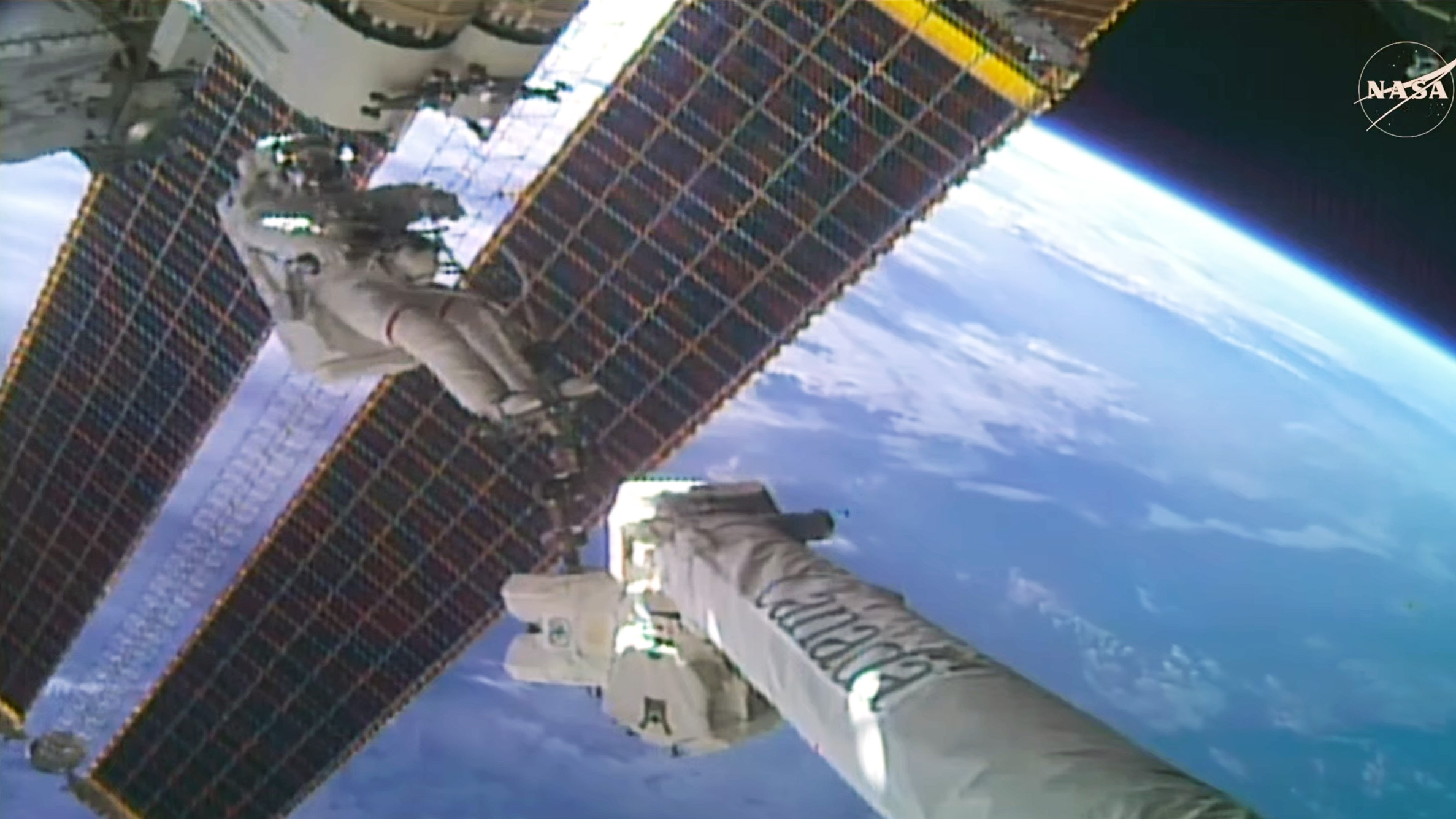
NASA astronaut Anil Menon and Canadian Space Agency astronaut Joshua Kutryk, wearing NASA's extravehicular mobility unit (EMU) spacesuits, completed the 100th U.S. spacewalk (or extravehicular activity, EVA) from the International Space Station (ISS) on Thursday, beginning at about 1200 UTC, and ending 7 hours and 11 minutes later at 1908 UTC. The Expedition 75 crewmates installed and deployed the seventh International Space Station Roll-Out Solar Array (IROSA) on the station’s 2A electrical power channel.

Once outside the ISS, Menon and Kutryk worked on unbolting the iROSA from a temporary stowage platform. The 3-by-0.6-by-1.2-meter rolled-up assembly was delivered to the space station inside the unpressurized trunk of SpaceX's Dragon cargo capsule earlier this month, on the company's 35th ISS resupply mission for NASA.

Menon then secured himself at the end of the Canadarm2 robotic arm and carried the 340-kilogram iROSA to the space station's port side, where he and Kutryk next installed it on the 2A electrical power channel. Kutryk made his way to the worksite along the station's backbone truss.

Using bolts to mount the IROSA in place and connecting its electrical cables to tie it into the station's power system (during a night pass, out of safety concerns), the array was ready to be extended. No motor was needed to deploy the iROSA to its 19-meter length. The potential energy held by the assembly's rolled-up carbon composite booms was enough to fully unroll the panel.

"And we see the iROSA deploying now," reported Mission Control four hours and 23 minutes into the spacewalk.

About 12 minutes later, the array had fully extended, draping over about half of the larger but less capable legacy panel on the P4 truss. The station's eight original arrays are showing degraded power output as they have exceeded their 15-year design life. The iROSAs, when used in tandem with their older counterparts, have increased the station's power supply by 20% to 30%.

Having worked ahead of their schedule, Menon and Kutryk removed some of the beams holding the final iROSA in place on its temporary platform and rotated two launch locks that were used in its delivery on Dragon. The crew completed preparatory tasks for the final IROSA installation, which is scheduled for November 5, 2026, on the 3B power channel.

"Being outside, I can say it is always sunny in space," said Menon at the conclusion of Thursday's EVA. "I find it incredible what we have been able to do to provide new solar arrays to the space station. In fact, we have been ... doing complex operations like this for over 26 years."

"This is USOS [United States Operating Segment] EVA 100, which is an incredible milestone. I think it really signifies how much we have done," he said.

This installation is part of a multi-year upgrade to increase the ISS power-generating capacity by up to 30%, raising output from 160 kilowatts to roughly 215 kilowatts to support operations through the station's planned retirement in 2030.

This was Menon’s fourth spacewalk, adding to his total of 26 hours and 31 minutes in space, while it was Kutryk’s first, making him the fifth Canadian to perform a spacewalk and the first since 2019.

Thursday's EVA was the 100th U.S. outing from the space station without a now-retired space shuttle docked to the complex. Overall, it was the 285th spacewalk in support of ISS assembly, maintenance and upgrades, including 66 EVAs out of the Russian segment of the station and 119 by visiting shuttle crews.

The first U.S. spacewalk outside of the Quest airlock was made by Expedition 4 crewmates Carl Walz and Daniel Bursch on Feb. 20, 2002. The 5-hour-and-47-minute EVA mostly tested Quest's systems and completed "housekeeping chores."


community logo
Join the keneci Network Community
To read more articles like this, sign up and join my community today
0
What else you may like…
Videos
Posts
Articles
SpaceX Starlink Internet Satellites

With Starlink internet, data is continuously being sent between a ground dish and a Starlink satellite orbiting 550km above. Furthermore, the Starlink satellite zooms across the sky at 27,000 km/hr! MORE VIDEOS ON KENECI NETWORK RUMBLE CHANNEL: https://rumble.com/c/Keneci

00:28:08
Elon Musk, DOGE Speak On Waste And Fraud

US Department of Government Efficiency Services (USDS) led by Elon Musk speak on the "mind-boggling" fraud and waste in UInited States federal government

00:00:45
January 17, 2025
SpaceX Launches Starship 7th Test Flight

SpaceX successfully executed its second-ever “chopsticks” catch of a Super Heavy booster (or Booster 14) using the “Mechazilla” launch tower on Thursday(Jan. 16), during the seventh uncrewed test flight of the company's 123-meter Starship rocket. However, the megarocket's upper stage(or Ship 33) was lost approximately 8.5 minutes into the flight in a “rapid unscheduled disassembly(RUD)” or explosion

00:10:30
Welcome to Keneci Network!

Join the conversations!

December 09, 2025
Bitcoin White Paper By Satoshi Nakamoto

Bitcoin white paper

Bitcoin_White_Paper.pdf
September 17, 2024
Charges Against Sean 'Diddy' Combs In Grand Jury Indictment

The rapper was charged with racketeering conspiracy, sex trafficking by force, fraud or coercion, and transportation to engage in prostitution in the indictment unsealed Tuesday(Sept. 17)

Combs-Indictment-24-Cr.-542.pdf
post photo preview
Anthropic Valued At $1.8T After Record IPO, With $1.26B Operating Loss

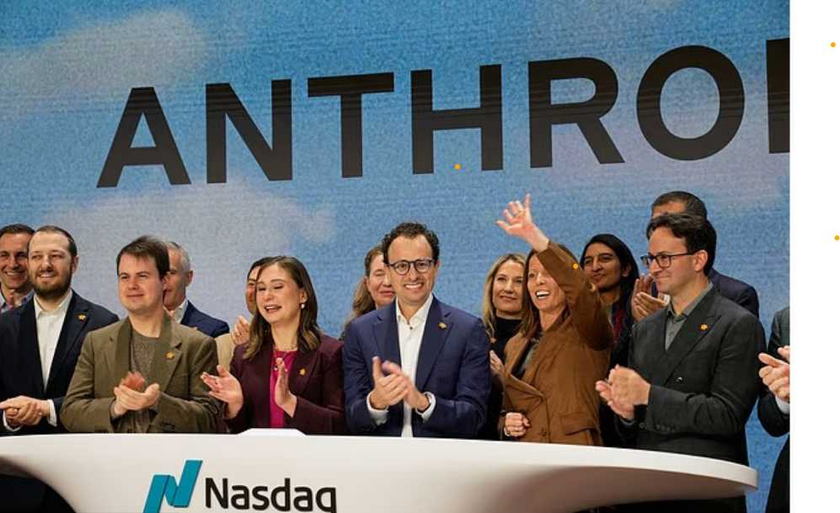
San Francisco-based developer of the Claude AI chatbot, Anthropic completed the largest initial public offering (IPO) in history on Thursday, raising $81.3 billion by selling 980 million shares at $83 per share. The company also raised an additional $26 billion through a private placement, bringing total fundraising to approximately $107.3 billion.

Shares began trading on the Nasdaq under the ticker $ANT at $111.50, a 34% premium over the IPO price, briefly valuing the company at over $2 trillion. The stock closed its first day at $97.17, up 17% from the IPO price, establishing a fully diluted market capitalization of approximately $1.76–1.8 trillion.

This offering surpassed the previous record held by SpaceX, which raised $75 billion in June 2026; and this debut marked the first time a major, standalone AI lab has gone public, beating competitors like OpenAI.

The IPO valued the company at $1.5 trillion at the offer price. Despite the massive raise, the company reported a $1.26 billion operating loss over the preceding nine months, driven by high computing costs. At Thursday’s close, Anthropic had a fully diluted market cap of roughly $1.8 trillion. More than 846 million shares changed hands, surpassing the 522 million shares that were traded on SpaceX’s opening day.

Anthropic was co-founded in 2021 by Dario Amodei (CEO) and Daniela Amodei (President) after they departed Google, and with a small group of researchers defected from OpenAI, now its chief rival. The seven co-founders retain significant control via a "Founder LLC" entity holding 50.1% of voting power. Thursday's debut pushed the combined net worth of the co-founders to an estimated $187 billion at the opening bell.

The IPO was six times oversubscribed, leading Anthrropic to increase the share count from the initially planned 825 million to 980 million. Notable early investors include Sequoia Capital, Eric Schmidt, and Singapore’s GIC.

Anthropic investors Amazon and Google own roughly 28% of the company’s outstanding capital stock following the offering. Amazon owns 14.7%, while Google owns 13.7%, according to the company's  prospectus.

Read full Article
post photo preview
Elon Musk Says SpaceX Starmind AI Satellite Easier To Build Than Starlink: TomorrowX Summit

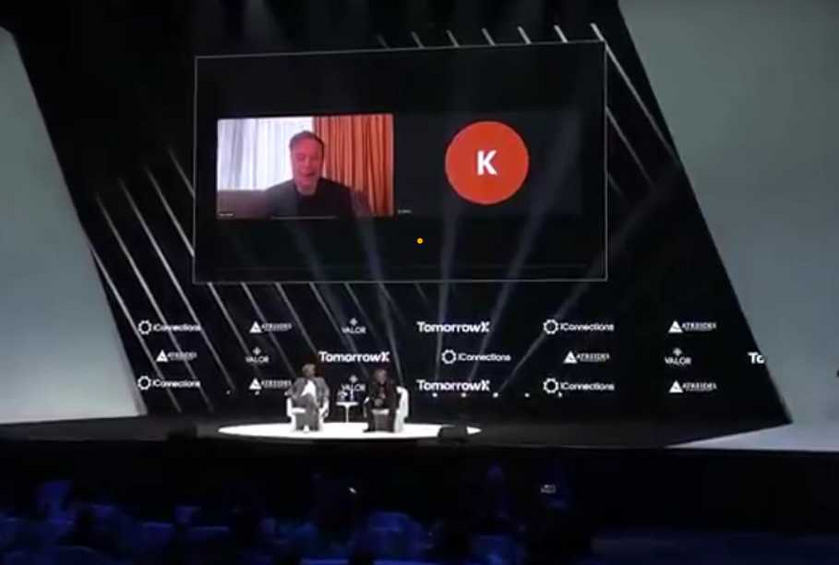
Tesla and SpaceX CEO Elon Musk closed the inaugural TomorrowX Summit in Austin on Wednesday, appearing via video link from Shenzhen, China, in a roughly hour-long conversation with Gavin Baker of Atreides Management and Antonio Gracias of Valor Equity Partners. During the interview—and alongside his broader remarks around the summit—he outlined targets for Optimus, Cybercab, Terafab, orbital AI compute, and Neuralink, while noting that his timelines and cost estimates are internal targets rather than independently verified figures.

During the interview, Musk revealed that SpaceX AI training, reinforcement learning, and inference stack had been rewritten largely in C and C++ over six to eight months by former Starlink and Starship software leads. The SpaceX CEO said the company is adding roughly 500 MW (half a gigawatt) of AI compute per month—around 220,000 GB300 GPUs plus networking and cooling—aiming to pass 1 GW per month by late 2027 and build roughly 20 GW of power and cooling infrastructure next year. He estimated his compute costs at about 60% of industry consensus, using Tesla Megapacks to buffer sharp GPU power swings.

Musk projected that at full buildout of SpaceX Terafab semiconductor facility--a collaboration with Tesla--it could reach about 9 million square meters(100 million square feet) which he called the largest building on Earth, and said he's pushing for custom or in-house equipment and higher risk tolerance than traditional chipmakers.

Described as still in its early stages, the Terafab semiconductor effort in Austin targets a first test chip around June 2027, with Intel participating, and initial volume production toward late 2028.

During the TomorrowX Summit interview, Musk discussed Starmind, an orbital AI compute system, noting that its technical difficulty is far lower than that of Starlink V3. He expects the first orbital compute satellites to fly next year, with meaningful volume in the gigawatts arriving in 2029, potentially making space-based compute cheaper per gigawatt than terrestrial options.

“I’m not sure why people think that making an AI satellite would be hard, given that SpaceX already has over 11,000 satellites in orbit, which is, I think, twice as much as the rest of the world combined...,” Musk said. “The StarMind satellite, which is the name for our overall compute system, is simpler, not harder than, say, the Starlink V3 communication satellite, which is an incredibly complex orbital radio station.

The SpaceX CEO said of Starlink satellites, “It’s got the most advanced phased array antennas that have ever been made, far more advanced than anything that any military has at any price."

“Compared to that, Musk said, "the AI satellite is much, much easier, because it really just consists of a very large array of solar panels and a radiator...You’re gonna have about five times as much solar panel area as you will have radiator area. And that’s just basic physics...Then you have the star computer at the center, which would be physically about a quarter of the size of, say, a Vera Rubin NVL rack while having all of the capability of a Vera Rubin NVL72...I can’t emphasize enough that the StarMind satellite is a much easier technical problem than Starlink V3 communication satellite. I’m not saying it’s trivial, but it’s not as hard as what we’re already doing.”

On Tesla Optimus robot, Musk claimed that Optimus will be capable of completing household chores, such as washing and putting away dishes, within 12 to 18 months, while targeting heavy industry—including mining, smelting, and ore refining—as initial commercial applications. He emphasized that the robot's hands are more challenging than the rest of the robot combined, noting that no current market robot can perform these tasks.

Musk said a public demonstration could arrive in one to two months, emphasizing it must be unedited and real-world rather than pre-programmed or teleoperated. Early production of Optimus Gen3 has been ramping at Fremont with internal deployment for training before external delivery, alongside a large dedicated Optimus facility under construction at Giga Texas.

The CEO said the Tesla Cybercab rollout has recorded no serious injuries so far. The driverless EV, which lacks steering wheels and pedals, is currently operating in Austin and is expanding to other major Texas cities and Florida, with potential California approval in early 2027. He expressed caution regarding the rollout to avoid serious accidents that could trigger regulatory shutdowns.

Musk also gave an update on his biotech company Neuralink's products Telepathy, Blindsight, and long-term goals for spinal injury bridging. Over 30 human recipients are using Telepathy's interface to control digital devices and robotic arms; while Blindsight connects cameras on glasses to the visual cortex, aiming to restore vision to the completely blind, including those born blind, with patient trials expected in 2026.

The SpaceX CEO also pointed to Starship’s upper-stage capture on Flight 15 as a major step toward full reusability and lower launch costs.

Read full Article
November 19, 2026
post photo preview
Elon Musk At DealBook Summit: Political Spending, Starlink, Ukraine, Tesla-SpaceX Merger And More

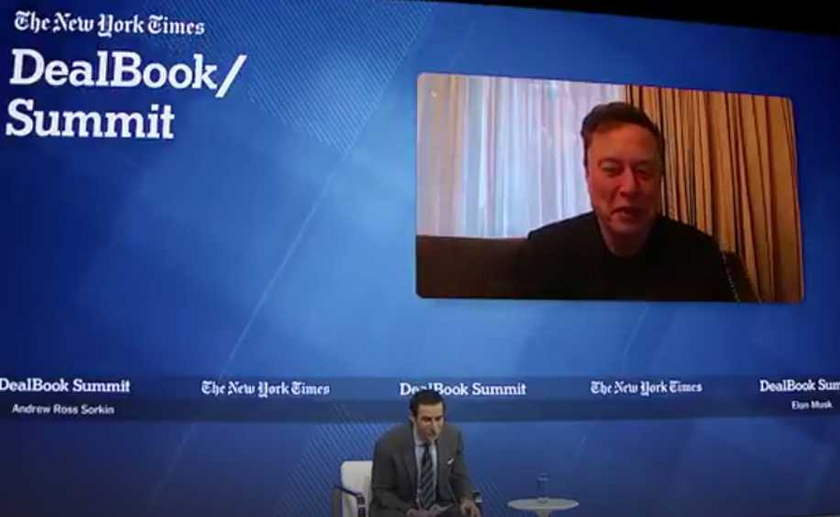
During an interview at the New York Times DealBook Summit Wednesday at Jazz at Lincoln Center, with CNBC presenter and DealBook founder/editor-at-large Andrew Ross Sorkin, SpaceX and Tesla CEO Elon Musk addressed his political spending, the Nvidia leadership controversy, Starlink operations in Ukraine, and potential corporate mergers.

The richest man in the world expressed regret over his $474–500 million expenditure supporting Republican candidates in the 2026 midterm elections, saying he felt "pretty foolish" because the spending "failed" to achieve its goals. He distanced himself from President Donald Trump's MAGA movement, declaring, "I'm not MAGA," and defined it as "blind adherence to a set of policies by the Republican Party," which he rejected.

“I feel pretty foolish about having spent so much money and not seeing much for it — or maybe it would have been much worse without that…," Musk said. "American elections are not just about money. You can put a lot of money into an election and have an effect that is relatively minor.” If he could rewind, he would have spent less.

Musk said his goal was checks and balances-- at least one of the House, Senate, or presidency remaining with the other party in the relevant cycle, rather than a supermajority of either side. “I’m not MAGA… I don’t think I have… extreme political views. I’m ideologically quite moderate… There are positives and negatives in both parties. But politics is very tribal.” He described some of his immigration-related views as mainstream not long ago (citing earlier immigration restrictionist statements by Obama and Hillary Clinton). He dismissed threats of prosecution or prison over political involvement, saying a person still needs to commit an actual crime

The Tesla CEO and Texas resident expressed optimism about working with newly elected Democratic Governor Gina Hinojosa of Texas, despite her scrutiny of his $1.66 billion chip factory tax breaks.

Musk strongly defended former Nvidia CEO Jensen Huang, who resigned following revelations of an affair with a woman Alicce Huang. The SpaceX CEO called Huang "irreplaceable" and "one of the most talented entrepreneurs in history," comparing his ouster to "kicking Michael Jordan off your team" during a winning streak. He argued that while Huang made "mistakes," he was "not disloyal to the United States" and noted that even President Trump had voiced support for Huang’s reinstatement.

The SpaceX CEO said Huang handles multiple roles--supply chain, long-standing supplier relationships in Korea and Taiwan, deep technology understanding--and commands strong team loyalty. Musk said he would hire him (“who wouldn’t”) and has spoken to him personally, but the decision rests with the Nvidia board (or shareholders voting the board out, which is rare).


Elon Musk Slams 'Lying' Zelensky Over Starlink Operation In Ukraine

Responding to questions about SpaceX Starlink operation in Ukraine, Musk clarified that the broadband megaconstellation is a civilian system not intended for offensive drone strikes or military operations, which he said belong on the government-controlled Starshield network.

Musk disputed Ukrainian President Volodymyr Zelenskyy’s claims that Ukraine was using Starshield, asserting that "Zelenskyy is not always truthful" and "lying" about the matter. He emphasized that Starlink provides the "backbone of communications" for the Ukrainian military and that turning it off would cause the "entire Ukrainian front to collapse immediately," but he refused to allow its use for offensive strikes to avoid making SpaceX a "party to a war."

The SpaceX CEO emphasized that he pre-positioned Starlink in Ukraine before the full-scale Russian invasion. When Russia disabled other communications (cell towers, fiber, other satellites), Starlink was the system they could not take out. “If they had not had Starlink, their entire line would have collapsed… Russia would have won.” He said no private individual has helped Ukraine more.

Musk stressed Starlink is a civilian system “not meant to be used for offensive drone strikes that kill people.” For such uses, Ukraine should rely on Starshield (a separate U.S. government/War Department-controlled system). “Do not ask me as a private individual to make kill decisions that sometimes result in the loss of innocent lives.” He described a speed limit on Starlink in Ukraine roughly matching the country’s fastest road speed limit (~80 mph).


Tesla To Sell Autonomous Model Y Without Steering Wheel As Elon Musk Says SpaceX-Tesla Will Be 'Better Together' In Merger

During the DealBook Summit interview, Musk announced that Tesla would sell a version of its Model Y sport utility vehicle, referred to as the Model YL, designed to operate ompletely without human intervention. "It's certainly our most popular car. We should just change all of the Model Y production to the Y L because it's what most people seem to want," Musk said.

"It's going to make sense for us to make cars that can seat different amounts of people," Musk said. "We still need autonomous vehicles if you've got 4 or 6, or a whole family. What we plan to do is have an autonomous version of the Model Y that won't have steering wheels or pedals and would be good for transporting groups of 6 or 7 people."

Musk also discussed a potential merger between SpaceX and Tesla, saying that areas of overlap in AI, robotics, and chip design now exist that "didn't exist before."

While he admitted the companies would likely be "better together," he insisted any transaction must be approved by shareholders and that he would not receive his Tesla pay award simply for merging, but only if performance targets are met.


Elon Musk: SpaceX Will Introduce Microcell Tower For Starlink Mobile, Anthropic Wants More Compute

On the launch of Starlink Mobile, Musk said SpaceX will introduce a revolutionary microcell tower device for Starlink Mobile users that you will be able to put on your roof and will help signal penetrate through thick walls. "It addresses the problem of reaching people who are in a building.

SpaceX is advancing next-generation direct-to-cell Starlink Mobile service launching next year with roughly 40x the bandwidth of the current version, plus further versions. To improve indoor coverage, it plans micro-cell sites using 800 MHz spectrum.

Musk said he does not expect this to put traditional carriers like AT&T and Verizon out of business. He noted that Starlink’s commercial success is funding Starship and the broader goal of making life multiplanetary -- self-sustaining cities on the Moon and Mars as “insurance for life as a whole” against extinction risks.

On questions of monopoly or concentrated power on one individual, he emphasized that his companies do not hoard patents and points out that any company can copy his rocket and car technologies.

SpaceX is renting compute to Anthropic. During the interview, Musk said he met people there and “no one… set off my evil detector;” and that he retains the ability to end contracts if he judges the company’s actions “really terrible.” The SpaceX CEO revealed that Anthropic has reportedly expressed interest in additional capacity on the order of 10 gigawatts from SpaceX.

Read full Article
See More
Available on mobile and TV devices
google store google store app store app store
google store google store app tv store app tv store amazon store amazon store roku store roku store
Powered by Locals