keneci Network
News • Comedy • Science & Tech
Israeli Spyware Pegasus Targeted Polish Citizens: PM Donald Tusk
October 13, 2026
post photo preview

Polish Prime Minister Donald Tusk has condemned the use of Pegasus spyware by the previous Law and Justice (PiS) government as a "crime against the state," following revelations that the Israeli firm NSO Group retained technical access to sensitive data harvested from Polish citizens.

A parliamentary investigation and prosecutorial findings confirm that the spyware, acquired for roughly $15 million (60 million PLN), was used to monitor thousands of individuals, including opposition figures, independent prosecutors, and Tusk’s own family, while data was transmitted through servers outside Poland’s control.

Experts determined that Poland’s Central Anti-Corruption Bureau (CBA) lacked full administrative control, missing passwords for some accounts and leaving the infection module under NSO’s exclusive control.

The software was deployed in at least 578 cases between 2017 and 2022, with documented targets including prominent political critics and even citizens of other EU nations like France and Germany.

The system was purchased using funds from a Justice Fund intended for crime victims, operated without required IT security accreditation, and judges authorizing its use were not informed of its full capabilities.

Judges who signed off on surveillance warrants did not fully understand the technical scope of Pegasus. Unlike standard wiretaps, Pegasus granted complete retroactive and real-time remote extraction of phone contents.

The current government has filed 11 criminal complaints against former officials, including former Justice Minister Zbigniew Ziobro and former security chiefs, who deny wrongdoing and argue the tool was essential for national security.

Tusk said it is "beyond any doubt" that NSO Group cooperates with Israeli intelligence, raising serious concerns about digital sovereignty and foreign oversight of Polish state secrets.

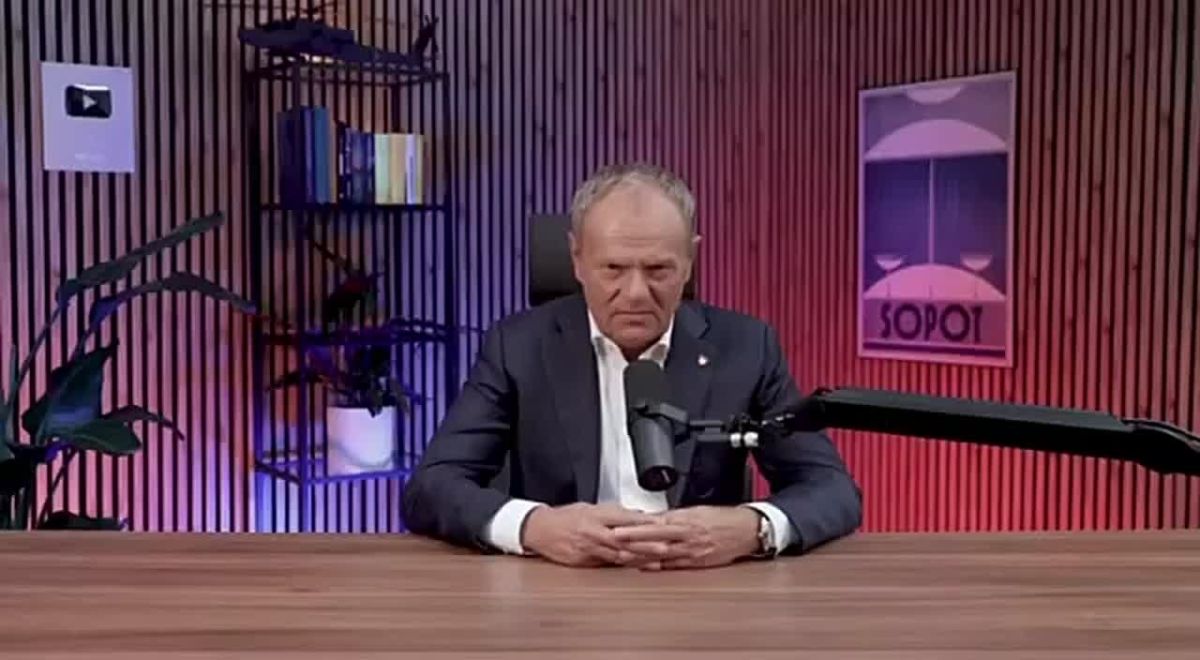
In the video address posted on X, Tusk said that the revelations represent “one of the biggest scandals in the history of Poland after the fall of communism.”

Tusk pointed out that while the software contract restricted targeting phone numbers from Russia, Belarus, and North Korea, Polish agencies instead directed the tool at Polish citizens, political opposition figures, journalists, and even officials in partner EU nations such as France and Germany.

"Imagine that the people responsible for justice and national security [in Poland] handed over thousands, tens of thousands, of sensitive details about Polish citizens to a foreign country, Israel, without having any control over it," Tusk said.

When Tusk’s pro-EU coalition won power in late 2023, his administration opened formal criminal investigations and established a special parliamentary commission of inquiry to examine operational abuse between 2015 and 2023.

The latest prosecutor findings confirm that the system was not only used domestic-politically, but was operated in a way that exposed sensitive national security information to foreign commercial and intelligence entities.


community logo
Join the keneci Network Community
To read more articles like this, sign up and join my community today
0
What else you may like…
Videos
Posts
Articles
SpaceX Starlink Internet Satellites

With Starlink internet, data is continuously being sent between a ground dish and a Starlink satellite orbiting 550km above. Furthermore, the Starlink satellite zooms across the sky at 27,000 km/hr! MORE VIDEOS ON KENECI NETWORK RUMBLE CHANNEL: https://rumble.com/c/Keneci

00:28:08
Elon Musk, DOGE Speak On Waste And Fraud

US Department of Government Efficiency Services (USDS) led by Elon Musk speak on the "mind-boggling" fraud and waste in UInited States federal government

00:00:45
January 17, 2025
SpaceX Launches Starship 7th Test Flight

SpaceX successfully executed its second-ever “chopsticks” catch of a Super Heavy booster (or Booster 14) using the “Mechazilla” launch tower on Thursday(Jan. 16), during the seventh uncrewed test flight of the company's 123-meter Starship rocket. However, the megarocket's upper stage(or Ship 33) was lost approximately 8.5 minutes into the flight in a “rapid unscheduled disassembly(RUD)” or explosion

00:10:30
Welcome to Keneci Network!

Join the conversations!

December 09, 2025
Bitcoin White Paper By Satoshi Nakamoto

Bitcoin white paper

Bitcoin_White_Paper.pdf
September 17, 2024
Charges Against Sean 'Diddy' Combs In Grand Jury Indictment

The rapper was charged with racketeering conspiracy, sex trafficking by force, fraud or coercion, and transportation to engage in prostitution in the indictment unsealed Tuesday(Sept. 17)

Combs-Indictment-24-Cr.-542.pdf
post photo preview
US Strikes Target Qeshm Island, As Tucker Carlson Warns Netanyahu is Pressuring Trump To Nuke Iran's Pickaxe Mountain

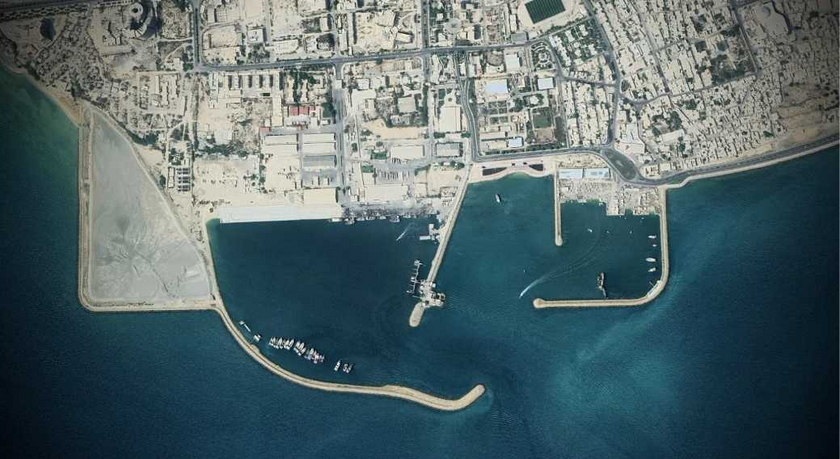
The United States reportedly carried out limited, “defensive” airstrikes on Iran’s Qeshm Island on Monday. This comes as popular American journalist Tucker Carlson claimed in a long post on X that Prime Minister Benjamin Netanyahu is urgently pressuring Donald Trump to launch a nuclear strike on Iran’s Pickaxe Mountain enrichment site, as conventional weapons cannot penetrate the site's 91-meter granite protection.

Iranian state media IRNA reported five to six explosions on the island and in nearby Bandar Abbas, though it initially did not confirm the cause. The Islamic Revolutionary Guard Corps (IRGC) claimed to have downed US drones, including MQ-9s and MQM-170s, using electronic warfare.

The U.S. strikes were reportedly part of a weeks-long secret campaign of smaller-scale attacks deliberately kept out of the public eye to avoid signaling a return to full-scale war.

The strikes occurred on the eve of the US midterm elections. President Donald Trump publicly downplayed the prospect of renewed large-scale hostilities, saying, “We had a war with Iran. We won;” and denying plans for new attacks.

However, according to journalist Carlson, Prime Minister Netanyahu reportedly pressed Trump to consider fresh military action after the elections. "Under pressure from Israeli prime minister Benjamin Netanyahu, the Trump administration may be within days of launching a nuclear strike on Iran," Carlson wrote on X. "The target would be Pickax Mountain in central Iran, where Israeli intelligence claims the Iranian government has restarted its nuclear enrichment program."

Carlson linked Netanyahu’s desperation for  to recent Israeli election results, claiming the Prime Minister needs Trump’s intervention to secure a 61-seat Knesset majority or face imprisonment, and alleged that officials like Pete Hegseth and Brad Cooper support renewed combat while JD Vance and Steve Witkoff urge diplomacy. The commentator warned that a decision could come by November 7, predicting inevitable World War III and massive civilian casualties from fallout.

Trump and Netanyahu reportedly held a "tough" phone call over the weekend, with the prime minister pressing for strikes immediately after Tuesday's U.S. midterms while Trump wanted negotiations to play out. The White House and Netanyahu's office declined to comment.

Iran's foreign ministry spokesperson Esmail Baghaei stated "no nuclear activity is taking place" at Pickaxe Mountain, calling US threats "a fabricated pretext for aggression." CSIS satellite analysis of the mountain captured construction but could not confirm centrifuges or enrichment equipment inside.

The US has previously struck Natanz, Fordow, and Isfahan, but Pickaxe Mountain remains untouched. Trump has discussed deploying the conventional GBU-43/B "Mother of All Bombs" as an alternative.

Meanwhile, Vice President JD Vance said there's progress toward a negotiated settlement with Tehran, and Iranian officials signaled willingness to reopen the Strait of Hormuz if US demands were met. "We've had a number of conversations with the Iranians. I actually just spoke with the president of the United States about about an hour ago about this," he told reporters Tuesday. "Look, the president and I both feel pretty good about the prospects for potentially coming to a negotiated settlement. We're going to keep on working at it."

Read full Article
October 31, 2026
post photo preview
Vance Proposes Restart Of Negotiations In Letter To Top Iranian Official

U.S. Vice President JD Vance reportedly sent a letter to secretary of Iran’s Supreme National Security Council and former Islamic Revolutionary Guard Corps commander, Mohsen Rezaei, recently, to assess whether Washington and Tehran could agree on a framework for negotiations. The move was reportedly made at the direction of President Donald Trump, who later publicly denied instructing Vance to initiate peace talks, characterizing the contact as an effort to deliver medical supplies.

Rezaei said last week that Tehran would not negotiate until its core demands—immediate economic relief, lifting of oil sanctions, and unfreezing of assets—are met.

The outreach occurs as Trump reportedly threatens a “short, intense” military campaign against Iran following the November 3, 2026, U.S. midterm elections. Vance aims to determine if diplomacy can avert this escalation, though no detailed peace proposal has yet been produced.

The cost of the U.S. military engagement with Iran has topped $47 billion. Rising domestic gas prices and economic costs associated with the conflict have become major points of political debate ahead of the U.S. midterm elections.

Qatar reprtedly presented a draft agreement in Tehran on Sunday, outlining a seven-day timeline for daily confidence-building steps by Washington and Tehran. Iran is reportedly considering the proposal, with a response expected by the end of the week.

Rezaei met on Monday, with security chiefs from Saudi Arabia, Pakistan, and Turkey in Tehran. This was described as a rare, high-level engagement aimed at de-escalating tensions in the region.

Engaging Rezaei, a hardliner and close ally of Supreme Leader Mojtaba Khamenei, risks sidelining traditional negotiators like Foreign Minister Abbas Araghchi and Parliament Speaker Mohammad Bagher Ghalibaf.

"While our Brave Armed Forces are fully prepared to defend the Homeland, Iran continues to give diplomacy a chance to succeed," Araghchi wrote Wednesday, on X. "We remain in close and ongoing contact with intermediaries to review ideas that can ensure implementation of our 7-Day Plan in even less than a week."

Regional mediators, including Qatar, are urging Iran to demonstrate “good faith” by reopening the Strait of Hormuz and stopping threats to neighboring countries, as part of a broader effort to establish a new regional security framework.

Read full Article
October 31, 2026
post photo preview
US Spacewalk 100: Astronauts Deploy New Solar Array On 100th EVA

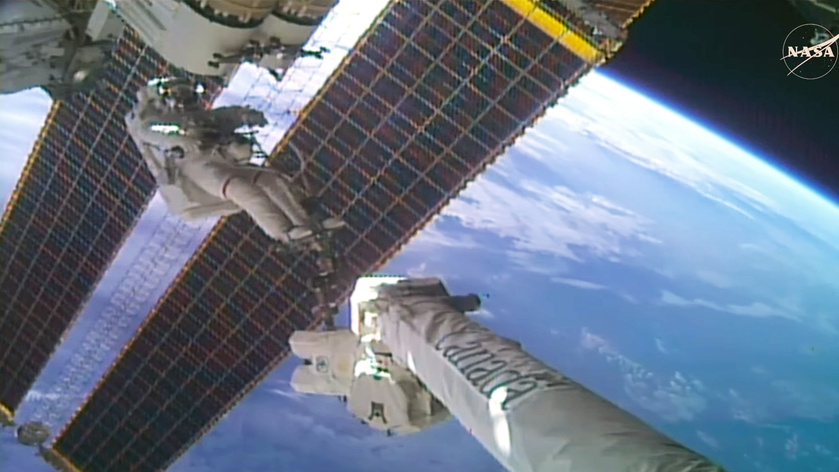
NASA astronaut Anil Menon and Canadian Space Agency astronaut Joshua Kutryk, wearing NASA's extravehicular mobility unit (EMU) spacesuits, completed the 100th U.S. spacewalk (or extravehicular activity, EVA) from the International Space Station (ISS) on Thursday, beginning at about 1200 UTC, and ending 7 hours and 11 minutes later at 1908 UTC. The Expedition 75 crewmates installed and deployed the seventh International Space Station Roll-Out Solar Array (IROSA) on the station’s 2A electrical power channel.

Once outside the ISS, Menon and Kutryk worked on unbolting the iROSA from a temporary stowage platform. The 3-by-0.6-by-1.2-meter rolled-up assembly was delivered to the space station inside the unpressurized trunk of SpaceX's Dragon cargo capsule earlier this month, on the company's 35th ISS resupply mission for NASA.

Menon then secured himself at the end of the Canadarm2 robotic arm and carried the 340-kilogram iROSA to the space station's port side, where he and Kutryk next installed it on the 2A electrical power channel. Kutryk made his way to the worksite along the station's backbone truss.

Using bolts to mount the IROSA in place and connecting its electrical cables to tie it into the station's power system (during a night pass, out of safety concerns), the array was ready to be extended. No motor was needed to deploy the iROSA to its 19-meter length. The potential energy held by the assembly's rolled-up carbon composite booms was enough to fully unroll the panel.

"And we see the iROSA deploying now," reported Mission Control four hours and 23 minutes into the spacewalk.

About 12 minutes later, the array had fully extended, draping over about half of the larger but less capable legacy panel on the P4 truss. The station's eight original arrays are showing degraded power output as they have exceeded their 15-year design life. The iROSAs, when used in tandem with their older counterparts, have increased the station's power supply by 20% to 30%.

Having worked ahead of their schedule, Menon and Kutryk removed some of the beams holding the final iROSA in place on its temporary platform and rotated two launch locks that were used in its delivery on Dragon. The crew completed preparatory tasks for the final IROSA installation, which is scheduled for November 5, 2026, on the 3B power channel.

"Being outside, I can say it is always sunny in space," said Menon at the conclusion of Thursday's EVA. "I find it incredible what we have been able to do to provide new solar arrays to the space station. In fact, we have been ... doing complex operations like this for over 26 years."

"This is USOS [United States Operating Segment] EVA 100, which is an incredible milestone. I think it really signifies how much we have done," he said.

This installation is part of a multi-year upgrade to increase the ISS power-generating capacity by up to 30%, raising output from 160 kilowatts to roughly 215 kilowatts to support operations through the station's planned retirement in 2030.

This was Menon’s fourth spacewalk, adding to his total of 26 hours and 31 minutes in space, while it was Kutryk’s first, making him the fifth Canadian to perform a spacewalk and the first since 2019.

Thursday's EVA was the 100th U.S. outing from the space station without a now-retired space shuttle docked to the complex. Overall, it was the 285th spacewalk in support of ISS assembly, maintenance and upgrades, including 66 EVAs out of the Russian segment of the station and 119 by visiting shuttle crews.

The first U.S. spacewalk outside of the Quest airlock was made by Expedition 4 crewmates Carl Walz and Daniel Bursch on Feb. 20, 2002. The 5-hour-and-47-minute EVA mostly tested Quest's systems and completed "housekeeping chores."

Read full Article
See More
Available on mobile and TV devices
google store google store app store app store
google store google store app tv store app tv store amazon store amazon store roku store roku store
Powered by Locals