keneci Network
News • Comedy • Science & Tech
Iran Proposes 7-day Plan To End War With US, Reopen Strait of Hormuz
September 25, 2026
post photo preview

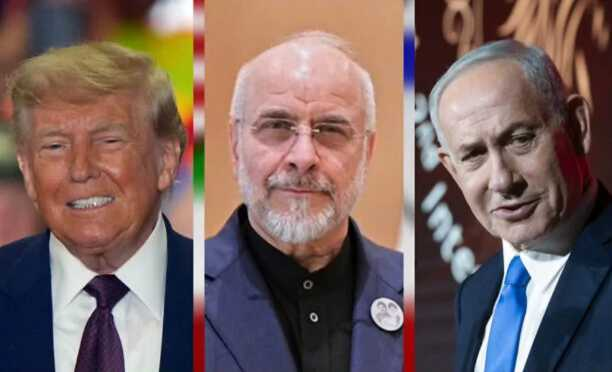
Iranian Foreign Minister Abbas Araghchi confirmed this week, that Tehran has submitted a seven-day plan to the United States via Qatari mediators to end the war, reopen the Strait of Hormuz, and restart nuclear talks. The proposal, presented on the sidelines of the 81st U.N. General Assembly in New York, is a compressed version of the June Islamabad Memorandum that previously collapsed, designed to move from a 60-day negotiation window to a seven-day implementation timeline.

The proposal outlines a plan that includes an immediate end to all hostilities, including in Lebanon and Gaza; lifting U.S. naval blockade of Iranian ports; sanctions waiver on Iranian oil exports; and the release of at least $12 billion in frozen Iranian assets.

If Washington accepts the terms, the seven-day clock starts the following day, with the Strait of Hormuz reopening on the final day to allow comprehensive nuclear negotiations to begin immediately, including frameworks to re-admit UN nuclear inspectors (IAEA) to inspect nuclear stockpiles and damaged facilities.

Araghchi said that a deal before the U.S. midterm elections would be preferable, noting that the economic impact of the strait's closure on global energy prices is a critical pressure point. He detailed the proposal to reporters and in private briefings on the sidelines of the 81st United Nations General Assembly in New York.

While U.S. officials described discussions as "positive and constructive," they emphasized they are not rushing into an agreement, and UAE and Saudi Arabia have reportedly expressed skepticism about the latest push.

The closure of the Strait of Hormuz—through which roughly 20% of global oil flows—triggered record-high energy and gasoline prices globally.


Pezeshkian Vows Iran Will Resist US-Israeli Aggression 'Until The Very End'

Meanwhile, Iranian President Masoud Pezeshkian appeared on Fox News on Thursday, following a defiant address to the UN General Assembly the day prior. He slammed the U.S. and Israel for imposing war on Iran, insisting Tehran does not seek conflict but will resist "until the very end."

The president said that "it is America that must choose whether it wants to end this or not," placing the responsibility for peace squarely on the Donald Trump administration. Despite seeking a deal, he vowed Iran would "keep resisting" U.S. sanctions and military strikes, stating, "We will find ways, and the life of our country will continue."

Pezeshkian categorically rejected any intent to build nuclear weapons, citing a religious decree by the late Supreme Leader Ali Khamenei that deems it "unholy and illegal." He said Iran is ready to dilute its 60% enriched uranium reserves and accepted verification under the NPT framework.

The president noted the war was "imposed" on Iran by U.S. and Israeli "instigations." He expressed willingness to revive the June memorandum for peace, which collapsed over disputes regarding the Strait of Hormuz. He denied that U.S. midterm elections influence Iran's timeline for a deal.

On the cinflict in Yemen, Pezeshkian said that the Houthis are "responsible for their own actions" and that Iran has "no systematic relationship" with them, contradicting U.S. claims of direct Iranian command.

The interview followed Pezeshkian's historic UN speech on Wednesday, where he became the first world leader to address the UNGA while his country is at active war with the host nation. He held up photos of Ali Khamenei, who was assassinated in a US-Israeli strike on February 28, 2026, and in which over 150 schoolchildren were killed. The U.S. and Israeli delegations boycotted or walked out of his address. The conflict, now in its seventh month, has seen repeated breakdowns in diplomacy.


community logo
Join the keneci Network Community
To read more articles like this, sign up and join my community today
0
What else you may like…
Videos
Posts
Articles
SpaceX Starlink Internet Satellites

With Starlink internet, data is continuously being sent between a ground dish and a Starlink satellite orbiting 550km above. Furthermore, the Starlink satellite zooms across the sky at 27,000 km/hr! MORE VIDEOS ON KENECI NETWORK RUMBLE CHANNEL: https://rumble.com/c/Keneci

00:28:08
Elon Musk, DOGE Speak On Waste And Fraud

US Department of Government Efficiency Services (USDS) led by Elon Musk speak on the "mind-boggling" fraud and waste in UInited States federal government

00:00:45
January 17, 2025
SpaceX Launches Starship 7th Test Flight

SpaceX successfully executed its second-ever “chopsticks” catch of a Super Heavy booster (or Booster 14) using the “Mechazilla” launch tower on Thursday(Jan. 16), during the seventh uncrewed test flight of the company's 123-meter Starship rocket. However, the megarocket's upper stage(or Ship 33) was lost approximately 8.5 minutes into the flight in a “rapid unscheduled disassembly(RUD)” or explosion

00:10:30
Welcome to Keneci Network!

Join the conversations!

December 09, 2025
Bitcoin White Paper By Satoshi Nakamoto

Bitcoin white paper

Bitcoin_White_Paper.pdf
September 17, 2024
Charges Against Sean 'Diddy' Combs In Grand Jury Indictment

The rapper was charged with racketeering conspiracy, sex trafficking by force, fraud or coercion, and transportation to engage in prostitution in the indictment unsealed Tuesday(Sept. 17)

Combs-Indictment-24-Cr.-542.pdf
post photo preview
USSF-481: SpaceX Launches Classified Payload To Orbit For The US Space Force

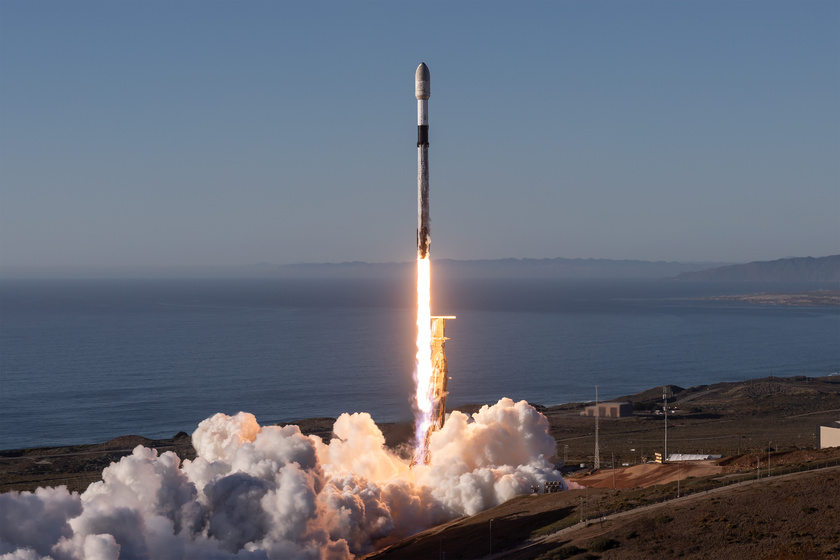
A SpaceX Falcon 9 launched the classified USSF-481 mission from Space Launch Complex 4 East (SLC-4E) at Vandenberg Space Force Base in California, at 0001 UTC on Friday (Oct. 16), carrying a classified payload to a polar low-Earth orbit, for the United States Space Force. The rocket followed a southerly trajectory, reaching a low-Earth orbit inclined approximately 80 degrees to the Equator, a path necessary for polar coverage without overflying populated land.

Vandenberg SLC-4E is the only U.S. launch pad permitting southward polar departure azimuths, making it critical for national security satellites requiring global coverage.

About 8.5 minutes after launch, the first stage booster, B1081 landed on the autonomous droneship Of Course I Still Love You in the Pacific Ocean as scheduled. This recovery marked the 228th booster landing on a droneship and the 671st total Falcon booster landing. This marks the 28th flight for B1081 which has flown previous missions including Crew-7, CRS-29, PACE, Transporter-10, EarthCARE, NROL-186, Transporter-13, TRACERS, NROL-48, COSMO-SkyMed Second Generation FM3, and 16 Starlink deployments.

The USSF-481 mission cargo remains classified, but public notices identify the mission as TH-2 (Task Order 2) under the Space-Based Sensing and Targeting (SBST) contract.

USSF-481 is part of a roughly $1.6 billion Pentagon contract for 18 Falcon 9 launches through the end of 2027, supporting the Proliferated Warfighter Space Architecture (PWSA) and missile-defense initiatives.

Friday's mission wmarks the 114th Falcon 9 launch of 2026, highlighting SpaceX's high-frequency launch rate. The launch was preceded by a formal ceremony at Vandenberg, featuring the five o'clock bugle call "Retreat" and the U.S. National Anthem.

Read full Article
October 16, 2026
post photo preview
Roadster: Tesla Unveils Next-gen Flying Car, In Collaboration With SpaceX

In a futuristic live demonstration at SpaceX McGregor, Texas test site Thursday night, Tesla unveiled its next-generation Roadster, nearly nine years since its initial 2017 prototype reveal. Developed in collaboration with SpaceX, the electric supercar utilizes cold-gas thrusters and advanced aerodynamics to achieve unprecedented performance metrics, including a demonstrated 0-60 miles per hour(mph) time in 0.81 seconds and the ability to perform mid-air flips and vertical ramp climbs.

The Roadster features SpaceX-inspired propulsion system which has tri-motor electric drive and 4 SpaceX cold-gas rear thrusters, and uses compressed air stored in ultra-high-pressure tanks rather than chemical propellants. The vehicle employs a fan-based multi-mode suction system capable of generating up to 2G active aero downforce to maximize ground grip, allowing it to drive upside down on vertical surfaces.

The supercar automatically adjusts ground clearance and underbody airflow to glue the chassis to the track regardless of speed. Traditional tires struggle with mechanical grip under instant electrical and rocket torque.

For aerial maneuvers, the car utilizes attitude-control and main thrusters to execute rolls and controlled landings. During the live demonstration the supercar successfully drove up a multi-story ramp, flipped in mid-air, and landed on its wheels, while also achieving the 0.81-second acceleration benchmark in a live test.

"When we started redesigning the Roadster, we didn't just want to build an incremental improvement over the original concept," Chief Designer Franz von Holzhausen said during the live demonstration. "We wanted to delete the boundary between aerospace engineering and automotive design. Working directly with the SpaceX team allowed us to integrate hardware that has never existed on a street-legal vehicle before."

CEO Elon Musk said: "There will never be another car like this, if you could even call it a car. We radically increased the design goals... Combining Tesla electric powertrain technology with SpaceX rocket thrusters creates a vehicle that defies conventional physics. Achieving 0 to 60 in 0.81 seconds is incredible, but the maneuverability and active flight-assist capabilities are what really make this a true science fiction machine on the road."

Tesla Roadster will come in the following configurations and specifications.

A Performance mode with two-seater designed for road use, featuring active aerodynamics and a multi-mode suction system. It claims a 0-60 mph time of under 1.6 seconds and is available by reservation with a $50,000 deposit.

The Thrust mode is a two-seater race-ready variant that adds rear-mounted cold-gas thrusters to boost acceleration. It achieves 0-60 mph in under 0.9 seconds (demonstrated at 0.81s) and is offered as a limited release with a $250,000 deposit.

The third mode is Rocket, a single-seater "air-ready" configuration featuring perimeter-mounted thrusters for upward and rotational movement, enabling flight capabilities. It claims a 0-60 mph time of under 0.59 seconds, a top speed exceeding 230 mph, and a range of over 300 miles. Access is strictly "invite only," and it is not approved for public road use.

The next-generation Roadster prototype was initially revealed in late 2017 with base specs promising a 0–60 mph time of 1.9 seconds, a 200 kWh battery pack, and a 620-mile range.

Musk teased a "SpaceX package" featuring 10 small cold-gas thrusters, initially targeting a ~1.1-second 0–60 time. The project underwent multiple redesign cycles to integrate new powertrain components, advanced battery cell technologies, and specialized high-pressure air systems. The refined design moves from prototype concept to production engineering with 2028 release date.

Read full Article
October 15, 2026
post photo preview
SpaceX CRS-35 Dragon Delivers 2,860 Kg Of Cargo To The Space Station

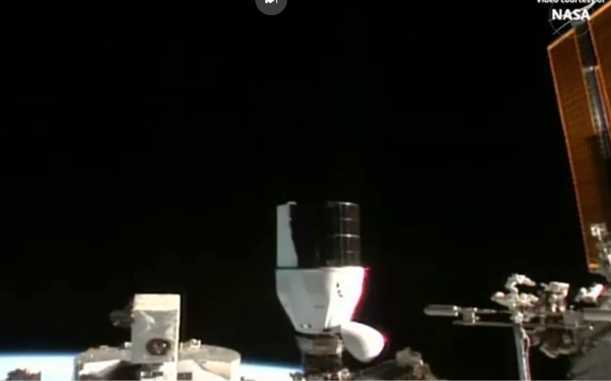
A SpaceX Dragon docked with the Harmony module’s space-facing (zenith) port of the International Space Station (ISS) on Thursday (Oct. 15), at 1427 UTC, as both spacecraft traveled 400 kilometers (km) over South Africa at 28,000 kph, delivering 2,860 kilograms of cargo including fresh food, long-term provisions, research and hardware to the orbital lab and its crew. From inside the ISS, NASA astronaut Anil Menon led the monitoring of Dragon's approach and autonomous procedures.

The Cargo Dragon C211 spacecraft launched on a Falcon 9 rocket from Cape Canaveral Space Force Station, Florida, on Tuesday (Oct. 13), on SpaceX's 35th Commercial Resupply Services (CRS) mission for NASA. After a roughly 51-hour autonomous chase, C211 caught up with the space station. Tuesday's launch produced a notable "space jellyfish" visual phenomenon as sunlight illuminated the rocket’s exhaust plume in the upper atmosphere.

C211 delivered a variety of payloads to support Expedition 75 crew and the newly arrived SpaceX Crew-13 astronauts, including the last pair of International Space Station Roll-Out Solar Arrays (iROSAs), critical for augmenting the station's power capabilities; hardware to manufacture artificial retinas in microgravity and 3D heart tissue models for drug testing; components for the Canadarm2 (including a joint for analysis), a toilet dose pump, and a robot micro-conical tool; and general Supplies like food, water, and flight support equipment for the crew.

In addition to the usual provisions carried on this mission, Dragon also brought a special suprise for Menon, who is celebrating his 50th birthday today, according to NASA's broadcast spokesperson.

Dragon will remain docked to the ISS for about one month, before a mid-November undocking from the ISS, packed with completed experiments and waste for its return to Earth. The spacecraft will perform a safe splashdown in the Pacific Ocean off the coast of California, where recovery teams will retrieve the capsule for refurbishment.

Read full Article
See More
Available on mobile and TV devices
google store google store app store app store
google store google store app tv store app tv store amazon store amazon store roku store roku store
Powered by Locals