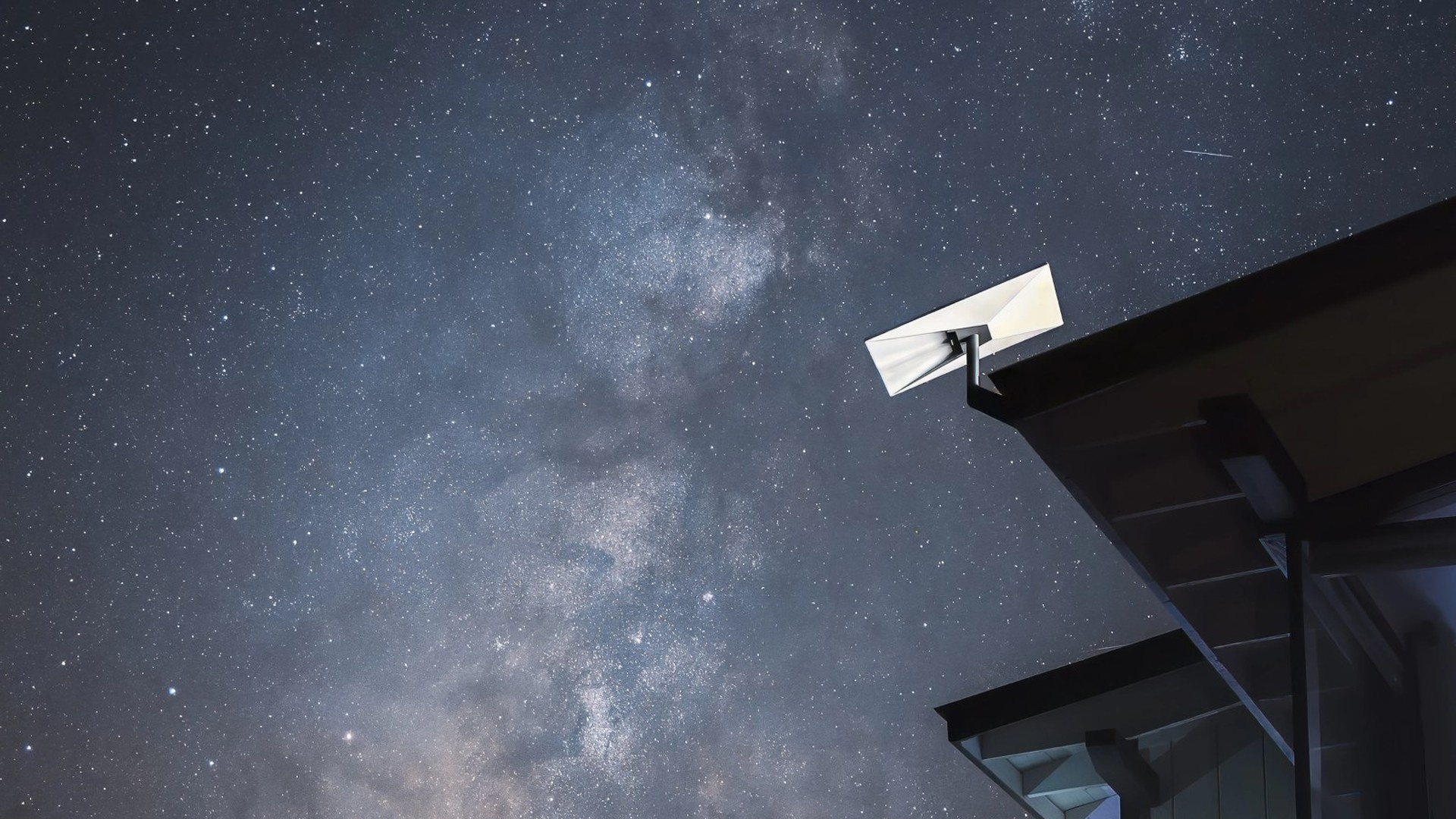
SpaceX selected Qualcomm to supply Dragonwing Cellular Infrastructure platforms for Starlink Mobile’s nationwide terrestrial 5G network in the U.S. Announced Wednesday, the multi-year agreement covers tens of thousands of cell sites, with deployment beginning in 2027.
The terrestrial network will complement Starlink’s satellite capabilities, creating what SpaceX calls “the first fully-integrated US nationwide satellite and terrestrial network.”
“At last there will be one network with good signal everywhere!,” SpaceX CEO Elon Musk wrote on X. And added in another post, “Qualcomm’s technology is excellent.”
SpaceX is designing its own end-to-end base station architecture; Qualcomm supplies the radio, processing, and Layer 1 building blocks.
Thge network will be built on Qualcomm Dragonwing QRU100 (radio unit signal processing) and QDU100 (baseband/Layer 1 processing) platforms, plus commercial-grade Layer 1 software; with massive MIMO -- 64 transmit/64 receive paths (64T64R) to improve coverage, capacity, and spectral efficiency.
“Together with SpaceX, we are building world-leading cellular infrastructure in the United States, advancing 5G today, with an opportunity to lay the foundation for AI-native 6G in the years ahead,” Durga Malladi, Qualcomm EVP and GM for technology planning, edge solutions, and data center, said in an X post. “Our agreement with SpaceX is structured in such a way that as the deployment begins, starting from next year, it's going to ramp up pretty rapidly from there onwards. Building a nationwide network demands high performance and power efficiency at every site.”
The network will use a 2 GHz block acquired from EchoStar in a September 2025 deal, which closed Boost Mobile’s 5G ambitions.
“We’re excited to collaborate with Qualcomm Technologies and leverage their industry expertise and platform to accelerate our timeline to develop our base station end-to-end architecture,” Starlink SVP Michael Nicolls said. “We shouldn’t live in a time where phone calls are still dropping whether you’re at home or on-the-go.”
SpaceX has been expanding spectrum holdings throughout 2025 and is aiming to become a fourth major U.S. wireless carrier competing with Verizon, AT&T, and T-Mobile.
Qualcomm CEO Cristiano Amon called the deal “the beginning of a relationship with tremendous potential,” with revenue expected to ramp in FY28. Financial terms of the deal were not disclosed.
"Together with @elonmusk and the @SpaceX team, we’re excited to build world-leading cellular infrastructure and a path to AI-native 6G," Amon wrote on X.