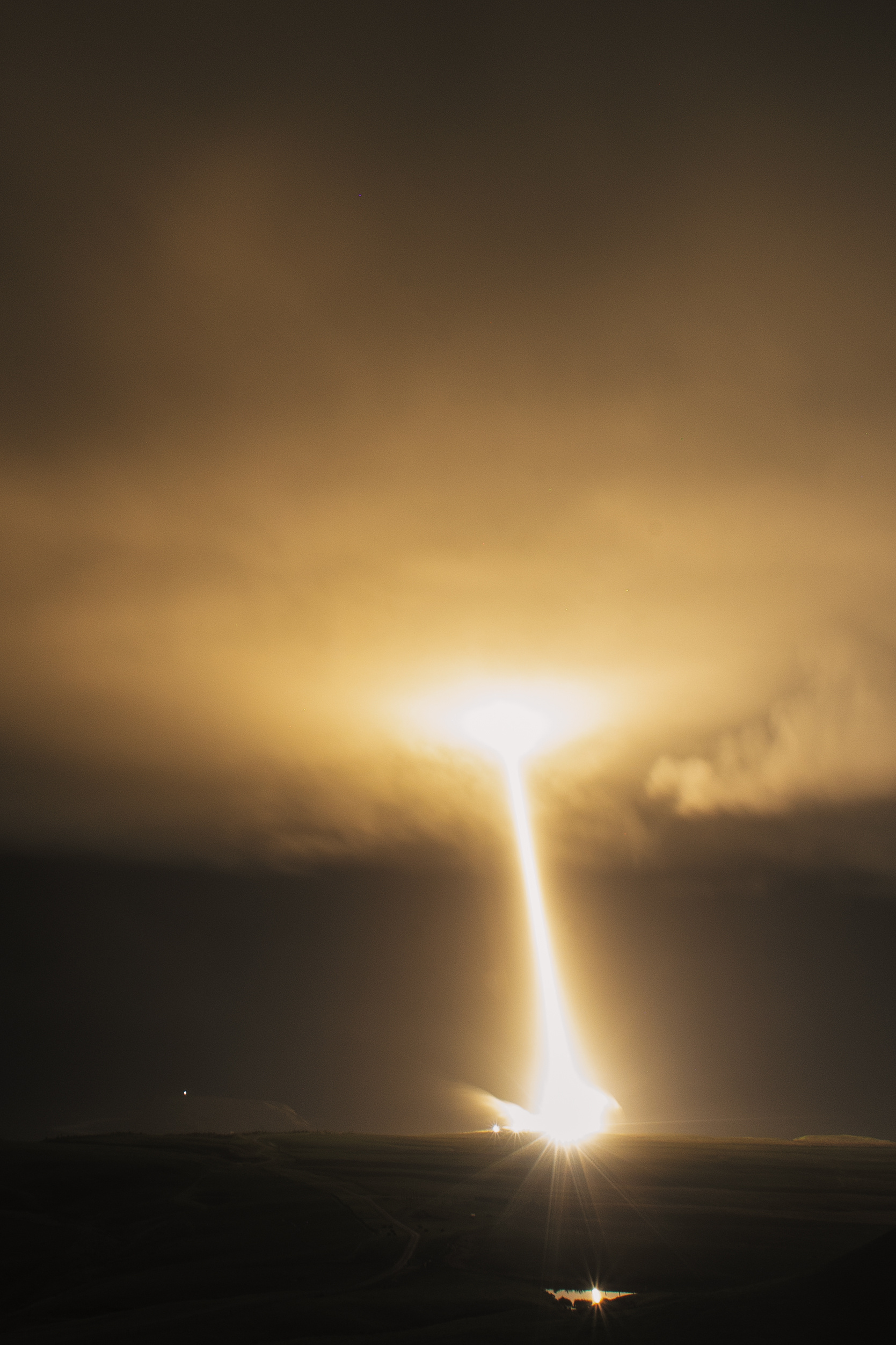
Rocket Lab’s Electron rocket launched the QPS-SAR-18 satellite, nicknamed SUSANOO-II, for the Japanese company iQPS on Thursday (Aug. 20). The "The Lightning God Defends," mission lifted off at 1304 UTC from Launch Complex 1 in New Zealand.
The nine 3D-printed Rutherford engines that power Electron's first stage shut off as planned about 2.5 minutes after liftoff. Separation with the rocket's second stage immediately followed, which burned for another 6.5 minutes before releasing Electron's "kick stage" with the IQPS payload for a 40-minute coast phase. SUSANOO-II (nicknamed after a Japanese lightning god) was deployed into a 575-kilometer low Earth orbit about 50 minutes after launch.
The launch adds to iQPS’s expanding constellation of 36 synthetic aperture radar (SAR) satellites designed to provide near-real-time, high-resolution Earth imagery every 10 minutes.
SAR technology allows the satellites to peer through cloud cover and operate day or night, supporting applications in maritime domain awareness, disaster response, and defense monitoring under Japan’s Ministry of Defense. The satellite utilizes a patented 3.6-meter X-band mesh antenna to achieve sub-meter resolution while remaining lightweight enough for the Electron rocket.
The iQPS network "is being developed and deployed at a rapid pace to provide high resolution and near-real time SAR imagery to its global users," Rocket Lab wrote in "The Lightning God Defends" mission description.
Following Thursday's deployment, nine additional dedicated Electron launches remain booked by iQPS to complete the constellation by 2030. This mission succeeded the previous launch of QPS-SAR-13 (Mikura-I) on August 6, which occurred after a five-week delay caused by a launch abort on June 30, 2026.
The continued block-buying of dedicated launches underscores the necessity of precise orbital insertion for iQPS’s Walker-class constellation geometry, which cannot be achieved through cheaper rideshare options. Rocket Lab also operates a suborbital variant of Electron called HASTE, which allows customers to test sensors and other tech in the hypersonic flight environment.
Thursday's launch marked Rocket Lab’s 93rd overall Electron mission and its 14th launch of 2026, continuing a partnership with a 100% mission success rate for iQPS deployments.