keneci Network
News • Science & Tech • Comedy
The Grain Goddess Provides: Rocket Lab Launches Japanese Earth-imaging Satellite QPS-SAR-13
52 minutes ago
post photo preview

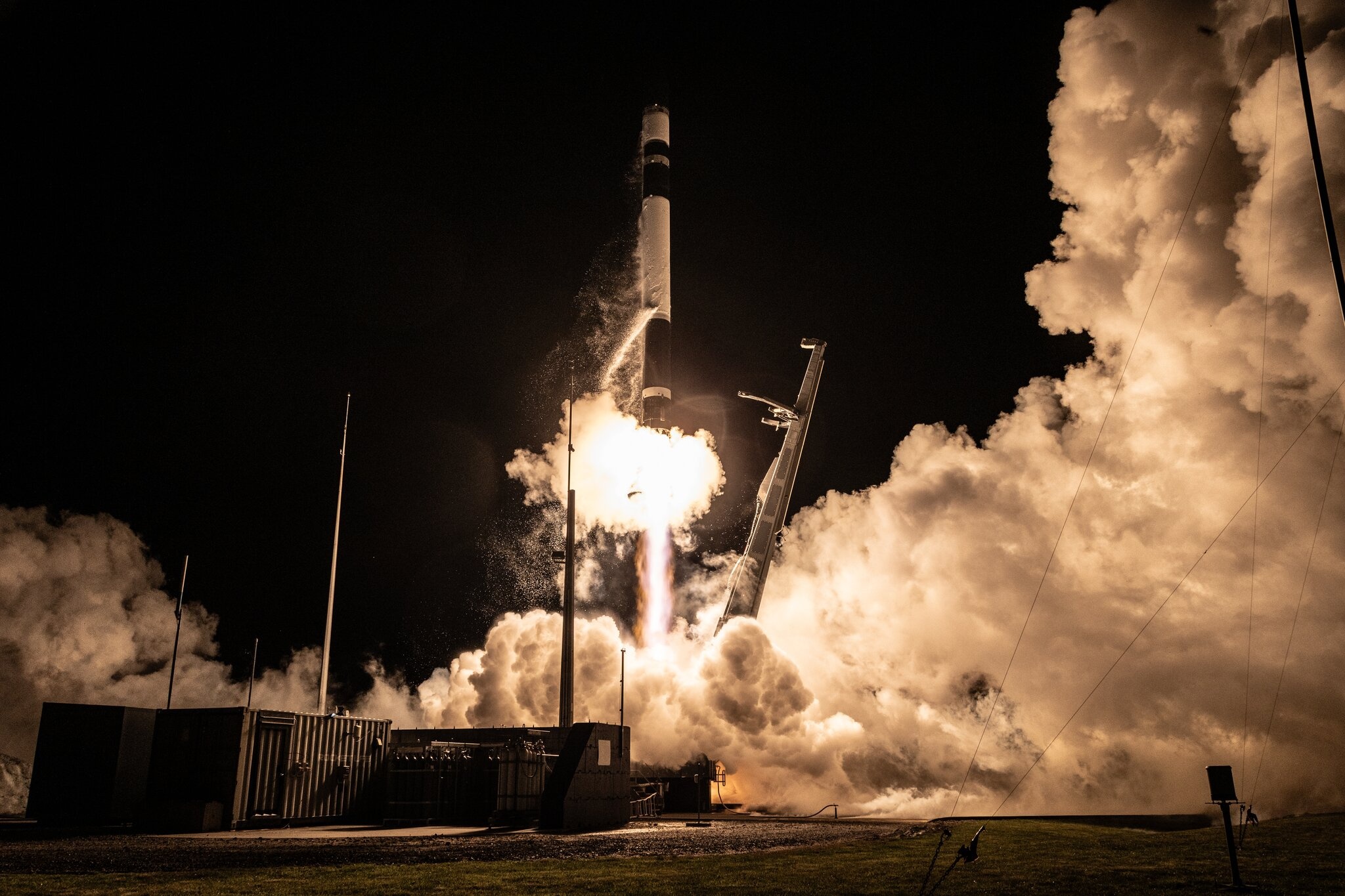
Rocket Lab launched the QPS-SAR-13 (nicknamed Mikura-I) satellite on Thursday (Aug. 6), completing its 92nd overall Electron mission. The launch, dubbed "The Grain Goddess Provides," lifted off from Launch Complex 1 in New Zealand at 0918 UTC, deploying the satellite into a 575-kilometer circular low Earth orbit at a 42-degree inclination.

Operated by the Tokyo-based company iQPS, MIKURA-I named after a Japanese goddess associated with abundance and prosperity, uses synthetic aperture radar (SAR) to provide high-resolution, near-real-time Earth imagery through clouds and adverse weather. 

iQPS is building a constellation of 36 such SAR satellites in low Earth orbit. Electron is the primary launcher for this network; "The Grain Goddess Provides" was the eighth of a total of 15 launches that Rocket Lab will conduct to help assemble the constellation.

Thursday's launch was the 13th Electron flight of 2026 for Rocket Lab. It followed a last-second abort on June 30, 2026, when an earlier attempt to launch Mikura-I was halted after the first-stage Rutherford engines ignited. Following the abort, the company conducted inspections and addressed the cause of the failure before rescheduling the flight.


community logo
Join the keneci Network Community
To read more articles like this, sign up and join my community today
0
What else you may like…
Videos
Posts
Articles
SpaceX Starlink Internet Satellites

With Starlink internet, data is continuously being sent between a ground dish and a Starlink satellite orbiting 550km above. Furthermore, the Starlink satellite zooms across the sky at 27,000 km/hr! MORE VIDEOS ON KENECI NETWORK RUMBLE CHANNEL: https://rumble.com/c/Keneci

00:28:08
Elon Musk, DOGE Speak On Waste And Fraud

US Department of Government Efficiency Services (USDS) led by Elon Musk speak on the "mind-boggling" fraud and waste in UInited States federal government

00:00:45
January 17, 2025
SpaceX Launches Starship 7th Test Flight

SpaceX successfully executed its second-ever “chopsticks” catch of a Super Heavy booster (or Booster 14) using the “Mechazilla” launch tower on Thursday(Jan. 16), during the seventh uncrewed test flight of the company's 123-meter Starship rocket. However, the megarocket's upper stage(or Ship 33) was lost approximately 8.5 minutes into the flight in a “rapid unscheduled disassembly(RUD)” or explosion

00:10:30
Welcome to Keneci Network!

Join the conversations!

December 09, 2025
Bitcoin White Paper By Satoshi Nakamoto

Bitcoin white paper

Bitcoin_White_Paper.pdf
September 17, 2024
Charges Against Sean 'Diddy' Combs In Grand Jury Indictment

The rapper was charged with racketeering conspiracy, sex trafficking by force, fraud or coercion, and transportation to engage in prostitution in the indictment unsealed Tuesday(Sept. 17)

Combs-Indictment-24-Cr.-542.pdf
post photo preview
A SpaceX Falcon 9 Stage Crashed Into The Moon, Scientists Race To Study Impact

A ~4,000 kilogram (kg) upper stage of a SpaceX Falcon 9 rocket impacted the Moon near the Einstein Crater on Wednesday (Aug. 5), at about 0635 UTC, traveling at roughly 8,690 kilometer/hour(km/h). The object, which had been drifting since its launch on January 15, 2025, was carrying the Blue Ghost 1 lander for Firefly Aerospace and the Resilience lander for ispace toward the Moon as part of NASA’s Commercial Lunar Payload Services.

The rocket stage remained in space because the high-energy mission required extra thrust, leaving it in a deep-space orbit where gravitational forces and solar radiation gradually nudged it into a collision course.

NASA confirmed the impact poses no danger to Earth and is expected to create a crater approximately 18–27 meters wide and 4 meters deep, blasting a dust plume up to 100 kilometers into space.

To dissect what exactly happened, scientists are utilizing NASA’s Lunar Reconnaissance Orbiter and South Korea’s Danuri (Pathfinder Lunar Orbiter) to capture before-and-after imagery of the impact site. This accidental collision provides a rare opportunity to study lunar impact dynamics, regolith ejection, and the potential hazards of space debris for future Artemis missions and lunar bases.

While the impact flash was likely obscured by daylight, astronomers aim to analyze the dust plume and crater formation to refine models for planetary surface evolution and debris mitigation.

"NASA’s Lunar Reconnaissance Orbiter and NASA’s ShadowCam instrument on the Korea Pathfinder Lunar Orbiter will look for opportunities to capture before‑and‑after imagery of the impact site," NASA spokesperson Rob Garner, of NASA's Goddard Space Flight Center in Maryland, told Space.com. "Image availability depends on several factors, including the impact location, lighting conditions, and when each spacecraft’s orbit next carries it over the area, which may take a few days to receive any imagery."

This was certainly not the original intended outcome for this rocket's upper stage. But it presents an opportunity for researchers, who plan to take advantage of it to learn more about the moon.

"NASA’s Meteoroid Environments Office will attempt to image the impact around the predicted time using ground‑based telescopes at the agency's Marshall Space Flight Center in Huntsville [Alabama]," Garner added. "Because the impact flash and plume are expected to be faint, the chance of seeing anything from Earth remains low, and local weather can affect observations as well. Any data collected will help scientists better understand impacts from artificial objects and the potential effects on future lunar exploration."

So far, observations from Earth have revealed some information. Scientists at the Lowell Observatory in Flagstaff, Arizona reported detections of a lunar plume from the impact.

"We can safely say that we measured a response from the rocket stage impact as a sodium and lithium gas plume a few 10’s of kilometers in size lasting between 5 and 10 minutes after impact," Carl Schmidt told Inside Outer Space's Leonard David.

Such images of the event would provide "an opportunity to test pipelines for measuring flash properties to locate impact events seismically, and to better understand the multi-modal hazards posed to future lunar infrastructure and astronauts from space debris impacting the moon," researchers led by Benjamin Fernando of Los Alamos National Laboratory in New Mexico wrote in a recent paper discussing the then-upcoming event.

While you've likely seen the first stages of Falcon 9 rockets gracefully land back on Earth for reuse, the rocket's upper stage is disposable. Typically, it's sent to burn up in our atmosphere after its missions are over.

In a post on X, SpaceX wrote, "On January 15, 2025, Falcon 9 successfully deployed Firefly Aerospace’s Blue Ghost Mission 1 and ispace’s RESILIENCE lunar landers on a trajectory to the Moon from pad 39A in Florida.

"For most of our missions, we plan a controlled deorbit of the Falcon second stage so it safely reenters over the ocean. For higher energy missions like those to a lunar transfer orbit, nearly all performance on the vehicle is devoted to successfully placing the payload in the intended orbit, and a controlled disposal maneuver is not always possible.

"We actively work to be as responsible as possible with hardware left in space to ensure space safety, including for more complex missions. In this case, over time, solar activity and gravity led the second stage toward the Moon. Impacts like this are rare, but they can happen with objects in these types of orbits, and we worked with NASA on the optimal disposal solution.

"Our focus remains on advancing reliable access to space while working toward even more sustainable operations with Starship in the future. As a fully reusable vehicle, Starship is designed to eliminate expendable upper stages entirely, reducing hardware left in orbit and enabling even more missions to the Moon, Mars, and beyond."

Read full Article
post photo preview
BlueBird 11-13: SpaceX Falcon 9 Launches 3 Huge Direct-to-cell Satellites For AST SpaceMobile

A SpaceX Falcon 9 rocket launched three AST SpaceMobile BlueBird satellites (BlueBird 11, 12, and 13) from Space Launch Complex 40 (SLC-40) Cape Canaveral Space Force Station in Florida at 0749 UTC, Wednsday (Aug. 5).

The Falcon 9's first stage booster B1077 returned to Earth roughly 8.5 minutes after liftoff as planned, touching down in the Atlantic Ocean on the SpaceX drone ship "A Shortfall of Gravitas." It was B1077's 30th launch and landing, according to a SpaceX mission description. The rocket also flew the BlueBird 8-10 mission in June.

The next-generation Block 2 satellites deployed on this BlueBird 11-13 mission, features massive 223-square-meter phased-array antennas, and is designed to deliver direct-to-cell broadband to unmodified smartphones.

These new satellites offer nearly double the peak download speeds of the first-generation Block 1 models. Wednesday's launch follows the successful deployment of BlueBirds 8, 9, and 10 in June and brings the total number of BlueBird spacecraft launched to 13, positioning the company for beta services later in 2026. BlueBird 7 was lost shortly after liftoff this past April after its Blue Origin New Glenn rocket suffered an anomaly.

"This orbital launch, combined with expanded manufacturing capacity and the recent successful launch and deployment of BlueBird satellites 8, 9, and 10, position us for beta services later this year with our space-based cellular broadband coverage," Scott Wisniewski, the company's president, said in a July 28 statement.

BlueBirds 11 through 13 nearly double the off-Earth population. "These next-generation BlueBird satellites are expected to deliver nearly double the peak download speeds achieved by the company's initial Block 1 BlueBird satellites, which recently demonstrated peak download speeds of 98.9 Mbps directly to standard smartphones," AST SpaceMobile wrote in the same statement.

Wednesday's launch expands AST SpaceMobile's constellation, which holds FCC authorization for up to 248 satellites and partnerships with major carriers like AT&T, Verizon, and Vodafone. Manufacturing is advancing rapidly, with BlueBirds 14, 15, and 16 already in production and assembly flowing through satellite 42.

Read full Article
post photo preview
Elon Musk's SpaceX Tops Revenue Expectations In 1st Earnings Call: Starmind AI1 Satellites, Starship, Starlink, Grok

In its first earnings call since going public on June 2026, SpaceX reported Q2 2026 revenue of $7.8 billion, beating analyst expectations of $6.93 billion, though shares fell 7% after-hours due to $18.4 billion in capital expenditures, mostly for AI.

CEO Elon Musk and President Gwynne Shotwell highlighted a new exclusive partnership with Nvidia to develop "Starmind AI1" satellites equipped with Nvidia's Vera Rubin architecture for orbital computing, with launches expected as early as 2027.

Starlink remained the top revenue generator at $4.29 billion (up 66% YoY), fueled by the upcoming V3 satellites which Musk says could deliver "a majority of the world's internet" within 10 years.

Musk also announced accelerated AI goals, including $100 billion in annualized revenue run rate by December 2026 and a potential $1 trillion revenue target by 2029–2030, while confirming Grok 4.6 would launch within a week and Grok 5 by year-end, integrating all SpaceX data.

CFO Johnsen highlighted favorable cloud economics (sub-1-year payback on new compute deployments) and additional ~$6.7 billion in early Q3 cloud contracts ramping from October. Musk raised this further, calling the $100B figure a “do nothing” baseline that would likely be exceeded, and accelerated the internal $1 trillion revenue target from 2031 to 2030 (non-zero chance of 2029).

Regarding Starship, Musk said the heat shield problem is "solved" and hinted at daily launches by mid-2027, though Shotwell tempered expectations, citing NASA milestones for human lunar landing by 2028.

"I don't want to jinx it or anything, but I think I would call the heat shield problem solved at this point," Musk said. "All indications from data and visual inspection is we have solved it. That doesn't mean we won't make improvement, but we do not see any technical obstacles to achieving rapid reusability at this point."

The call also noted SpaceX's $541 million net loss (narrowed from $1 billion YoY) and an impending lock-up expiration that could allow insiders to sell up to 20% of shares.

SpaceX went public on June 12, 2026, under the ticker SPCX (Nasdaq and Nasdaq Texas), in the largest IPO in history. It raised roughly $75–85.7 billion (including overallotment) at $135 per share, implying a $1.77 trillion valuation. Shares opened higher (around $150) and closed the debut day up ~19%. Musk retained strong control.

Read full Article
See More
Available on mobile and TV devices
google store google store app store app store
google store google store app tv store app tv store amazon store amazon store roku store roku store
Powered by Locals