keneci Network
News • Comedy • Science & Tech
US Military Strikes Iran For The 10th Consecutive Night, As Mediators Push For 10-day Ceasefire To Allow Transit Through The Strait Of Hormuz
July 21, 2026
post photo preview

U.S. Central Command (CENTCOM) at 2000 UTC Monday, initiated a major wave of airstrikes across Iran whic lasted five hours, concluding around 0100 UTC, Tuesday, marking the 10th consecutive day of high-intensity U.S. air operations against Iranian targets amid mouting U.S. casualties.

Operations targeted Iranian military command-and-control centers, air defense systems, coastal surveillance radars, naval assets, communications networks, and missile/drone launch sites, according to CENTCOM, stating the primary objective is to degrade Iranian military capabilities used to disrupt commercial shipping and enforce a naval blockade in the Strait of Hormuz.

U.S. officials reported nearly 100 U.S. service members have sustained varying degrees of injuries since the current campaign intensified earlier in July, with three U.S. troops killed in Jordan.

In response to the expanding U.S. campaign, Iranian military forces and Islamic Revolutionary Guard Corps (IRGC) units launched widespread counter-strikes across the Persian Gulf region, targeting U.S. bases and host infrastructure across Jordan, Bahrain, and Kuwait using ballistic missiles and attack drones.

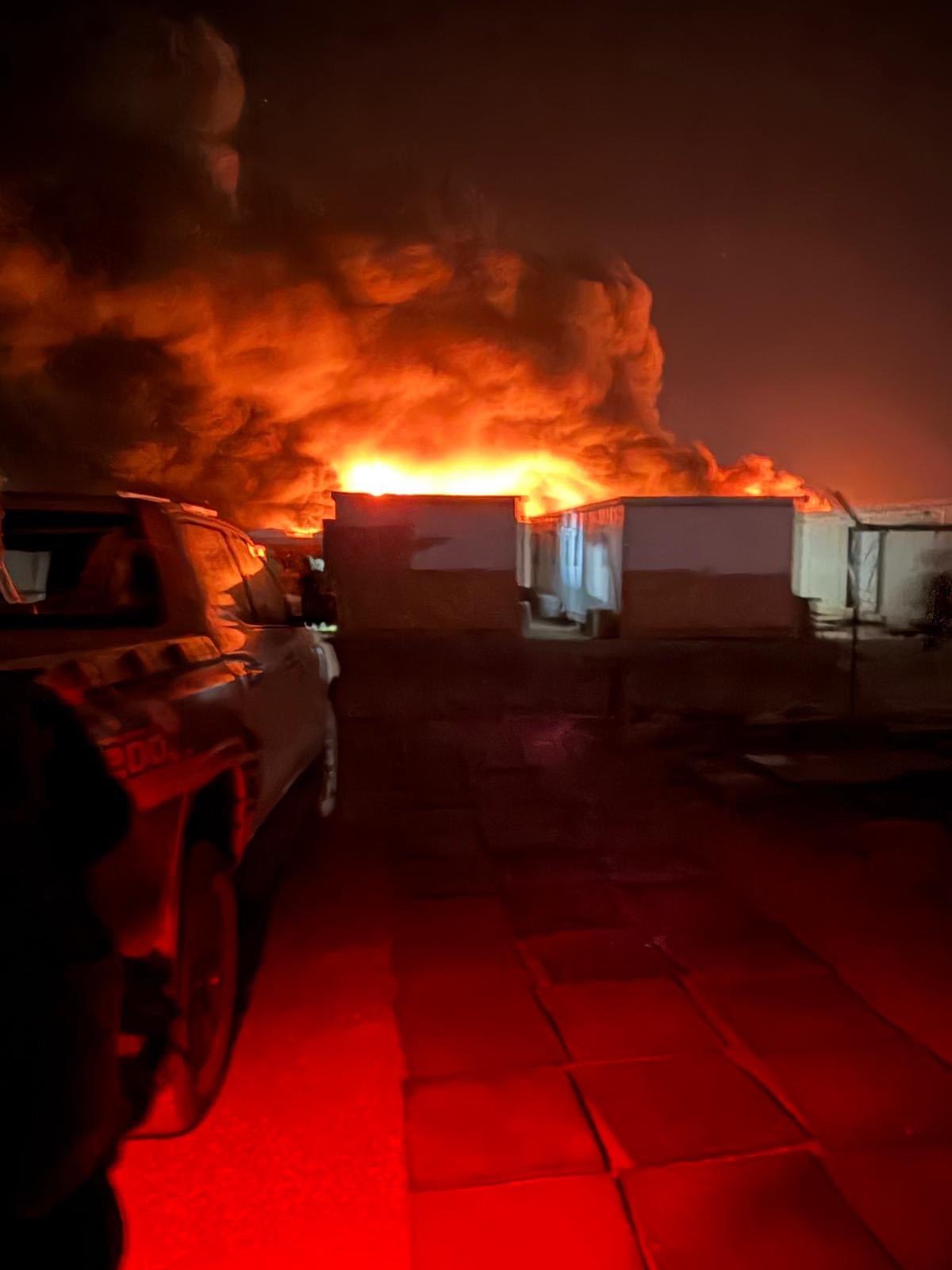
Jordan air defenses intercepted multiple incoming missiles over the port of Aqaba. Iranian strikes targeted utility infrastructure in Kuwait, including a power and water desalination plant, causing localized blackouts and fires. And nationwide air-raid sirens sounded as air defense units attempted to intercepted incoming drones and missiles aimed at facilities hosting U.S. assets.

Iranian President Masoud Pezeshkian declared Monday that the Islamic Republic considers itself in an "all-out war" against the United States, warning citizens to prepare for sustained strikes.

Despite the major escalation, international mediators—including regional Gulf partners and European diplomats—have been actively attempting to broker a 10-day temporary ceasefire to allow human-interest corridors and secure critical energy shipping routes.

Mediators including Pakistan and Qatar reportedly presented Washington D.C and Tehran, the 10-day ceasefire that will open both the southern and northern routes on the Strait of Hormuz, while talks continue on a permanent transit management framework which could allow Iran to collect "reasonable service fees" modeled on the Strait of Malacca, or the fees could flow into a joint fund involving the International Maritime Organization.

However, the crumbling of crumbling of earlier interim agreements and continued attacks on commercial oil tankers in the Strait of Hormuz have repeatedly stalled these diplomatic efforts, as the level of trust between both sides is at all time. An Iranian spokesman Monday, confirmed receiving a proposal but gave no details.

Tensions surged in July when Iran after Iran attacked some ships on the Strait of Hiormuz, accusing the U.S. of breaking the meomrandum of understanding signed by both countries, by escorting commercial vessels through the Omani corridor on the strait without coordinating with Iran.

Following Iranian attacks on international oil tankers, President Donald Trump signed off on aggressive CENTCOM operations to enforce freedom of navigation. The death of U.S. personnel in Jordan triggered multi-day blitzes against IRGC coastal batteries and small-boat fleets, drawing direct counter-attacks against Gulf states that host American installations.


community logo
Join the keneci Network Community
To read more articles like this, sign up and join my community today
0
What else you may like…
Videos
Posts
Articles
SpaceX Starlink Internet Satellites

With Starlink internet, data is continuously being sent between a ground dish and a Starlink satellite orbiting 550km above. Furthermore, the Starlink satellite zooms across the sky at 27,000 km/hr! MORE VIDEOS ON KENECI NETWORK RUMBLE CHANNEL: https://rumble.com/c/Keneci

00:28:08
Elon Musk, DOGE Speak On Waste And Fraud

US Department of Government Efficiency Services (USDS) led by Elon Musk speak on the "mind-boggling" fraud and waste in UInited States federal government

00:00:45
January 17, 2025
SpaceX Launches Starship 7th Test Flight

SpaceX successfully executed its second-ever “chopsticks” catch of a Super Heavy booster (or Booster 14) using the “Mechazilla” launch tower on Thursday(Jan. 16), during the seventh uncrewed test flight of the company's 123-meter Starship rocket. However, the megarocket's upper stage(or Ship 33) was lost approximately 8.5 minutes into the flight in a “rapid unscheduled disassembly(RUD)” or explosion

00:10:30
Welcome to Keneci Network!

Join the conversations!

December 09, 2025
Bitcoin White Paper By Satoshi Nakamoto

Bitcoin white paper

Bitcoin_White_Paper.pdf
September 17, 2024
Charges Against Sean 'Diddy' Combs In Grand Jury Indictment

The rapper was charged with racketeering conspiracy, sex trafficking by force, fraud or coercion, and transportation to engage in prostitution in the indictment unsealed Tuesday(Sept. 17)

Combs-Indictment-24-Cr.-542.pdf
post photo preview
Yemen War: Houthi Attacks On Saudi Arabia Intensify Amid Escalating US-Iran Tensions

The conflict between the Houthis and Saudi Arabia has escalated in recent days, into a full-scale war, with the Houthis launching repeated missile and drone strikes on Saudi cities, oil infrastructure, and air bases, while Saudi warplanes have intensified airstrikes on Yemen, causing significant civilian casualties and displacement.

The Houthis claim to have targeted multiple high-value assets in southern and western Saudi Arabia using dozens of ballistic missiles and drones. Key targets include the Saudi Aramco facility in Yanbu, the King Khalid Air Base in Khamis Mushait, and the Abha International Airport.

Saudi authorities on Wednesday, warned of a "red line" after intercepting a Houthi drone near the holy city of Mecca, which Riyadh condemned as a terrorist attack.

The Houthis also released video claiming to have shot down a Saudi F-15 fighter jet over Marib Governorate using a locally manufactured surface-to-air missile, though Saudi authorities have not confirmed the loss.

The Saudi-led coalition has vowed to respond "firmly" to the Houthi aggression.

Saudi warplanes have conducted massive retaliatory campaigns, with Houthi spokesperson Yahya Saree alleging that up to 450 airstrikes were carried out across seven Yemeni provinces in a single week. Saudi F-15 fighter jets carried out dozens of airstrikes over Houthi-controlled territory, targeting weapons depots, launch sites, and troop movements in provinces including Taiz, Hajjah, and around Sanaa.

More recently, the Houthis accused Saudi Arabia of launching 26 attacks in just 24 hours, targeting Houthi-held territories in Taiz and Hajjah.

Houthi leadership seeks to compel Riyadh to ease remaining sea and air blockades on Houthi-controlled territory, facilitate public-sector salary payments from energy revenues, and halt support for anti-Houthi forces in Yemen.

While Saudi Arabia had spent recent years attempting to negotiate a direct diplomatic exit from the Yemeni civil war, the renewed cycle of strikes—initiated following Houthi moves near economic regions like Marib and Red Sea trade corridors—has severely disrupted the de-escalation pathway.

The United Nations Security Council condemned the attacks for causing civilian casualties and threatening maritime security in the Bab el-Mandeb strait.

The humanitarian situation in Yemen is critical, with the UN estimating that 125,000 people have been displaced since the start of September, and the Saudi-backed government reporting that approximately 150 civilians have been killed by Houthi forces since early September. The U.S. has tightened travel warnings for Saudi Arabia, banning government employees from traveling within 32 kilometers of the Yemen border.

The conflict has severely disrupted global energy supplies; Houthi attacks on Saudi pipelines and the Red Sea coast have disrupted up to 4% of global oil shipments and forced Saudi Arabia to rely more heavily on alternative routes.

This recent Yemen-Saudi Arabia escalation occurs against the backdrop of heightened Middle Eastern confrontations involving Iran, the U.S., and regional proxy forces. The Houthis have increasingly linked their military actions to broader regional dynamics, using long-range strike capabilities to pressure both Riyadh and international maritime security along Red Sea routes and the Bab al-Mandeb Strait.

Read full Article
September 17, 2026
post photo preview
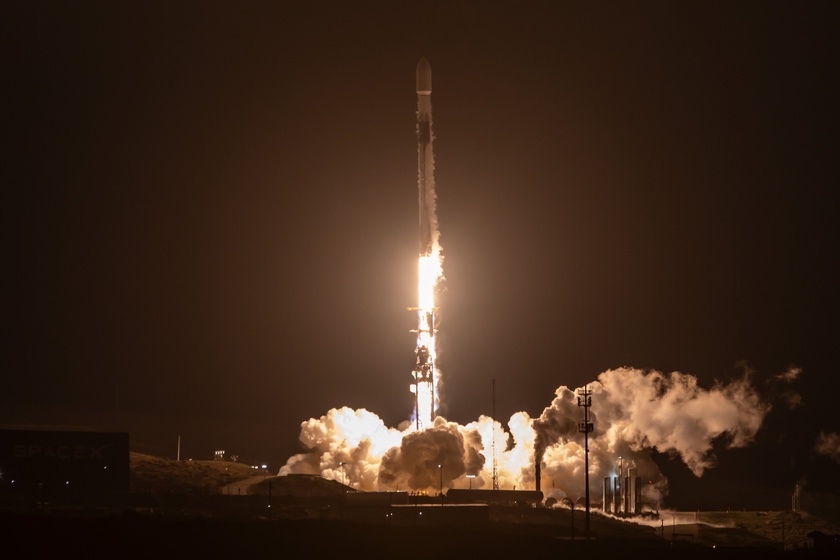
USSF-259: SpaceX Launches Classified Payload To Orbit For The US Space Force

SpaceX Falcon 9 launched the USSF-259 mission from Space Launch Complex 4E(SLC-4E), Vandenberg Space Force Base on Wednesday(Sept. 16), at 0107 UTC, carrying classified payload for the U.S. Space Force’s Space Systems Command (SSC) under the National Security Space Launch (NSSL) Phase 3 Lane 1 contract.

Following stage separation, the Falcon 9 first-stage booster, B1097 performed a controlled landing on the Of Course I Still Love You droneship in the Pacific Ocean, about 8 minutes after liftoff. B1097 completed its 13th flight, having previously supported missions including Sentinel-6B, Twilight, NROL-172, Transporter-17, and eight Starlink deployments.

Meanwhile the Falcon 9 upper stage flew a southerly trajectory to deploy its payload into a low Earth orbit inclined roughly 80 degrees from the Equator.

This mission, identified in public documents as TH-1, marks the third recent national security launch for SpaceX procured by SSC, following USSF-366 (launched August 15) and USSF-153 (launched September 10). Previous missions in this series, identified as R1 and R2, each carried 23 satellites.

Read full Article
September 16, 2026
post photo preview
Trump Admin Plan To Supply $2.8B Worth Of 2000-pound Bombs To Israel, Critics Outraged

The President Donald Trump administration is reportedly preparing a $2.8 billion arms sale to Israel for 40,000 heavy 2,000-pound bombs, comprising 20,000 MK-84s and 20,000 BLU-117s, plus 20,000 I-2000 penetrator warheads.

The MK 84 and BLU-117 are among the most destructive non-nuclear conventional munitions in the U.S. arsenal. Defense experts note that while effective against hardened underground infrastructure, their broad blast radius and shrapnel field cause severe collateral damage in densely populated urban environments.

This would be the largest single sale of these munitions to Israel in recent years, funded by U.S. taxpayer military aid. The deal has been informally notified to congressional committees but still requires formal approval from Congress.

This package comes as U.S.-Israeli operations against Iran continue, with fighting stretching across Gaza, Lebanon, Syria, and the Gulf.

The Biden administration previously paused transfers of these specific munitions due to concerns over civilian casualties in Gaza and Lebanon, where they have been regularly used by the IDF.

A prior $2.04 billion package approved in 2025 included 35,529 bomb bodies and 4,000 penetrator warheads, with deliveries beginning in 2026.

“All foreign arms sales are moving through the appropriate process. We do not comment on pending sales,” a US offical reportedly said.

U.S. public support for Israel has declined since 2023; a June 2026 Quinnipiac University poll found 66% of Democrats believe the U.S. is too supportive of Israel.

The proposed deal triggered backlash among foreign policy realists and "America First" conservatives, most notably commentator Tucker Carlson.

Critics note the munitions are linked to numerous civilian casualties in Gaza, where more than 73,000 Palestinians have been killed according to local health authorities.

The report intensified a widening rift within the conservative coalition between non-interventionist "America First" populist figures—who oppose continuous foreign military aid—and traditional neoconservative supporters of robust defense backing for Israel. Progressive and human rights organizations have similarly denounced the deal, citing the ongoing humanitarian toll and destruction in Gaza and southern Lebanon.

In an X post Tuesday, Carlson criticized the scale, noting the shipment equals 40,000 tons of bombs 7.5 times the tonnage dropped in the largest WWII U.S. air raid on Berlin. He said the MK-84 has a half-mile destruction radius, causes rock to melt and flesh to vaporize within 100 feet, and that the U.S. military generally avoids using it in urban areas due to high civilian death tolls.

Carlson called out key figures overseeing or supporting the weapons sale approval pipeline, including U.S. Ambassador to Israel Mike Huckabee, Secretary of State Marco Rubio, and congressional leadership, questioning why U.S. taxpayer resources continue to fund large-scale foreign warfare rather than domestic priorities.

Read full Article
See More
Available on mobile and TV devices
google store google store app store app store
google store google store app tv store app tv store amazon store amazon store roku store roku store
Powered by Locals