Keir Starmer formally resigned as U.K. Prime Minister on Monday, ending a tenure of 745 days marked by a 2024 landslide victory followed by significant political turbulence and election defeats. Standing outside 10 Downing Street, Starmer delivered an emotional farewell speech declaring "my work is done" and asserting that Britain is now "stronger and fairer" than when he took office, before traveling to Buckingham Palace to tender his resignation to King Charles III.
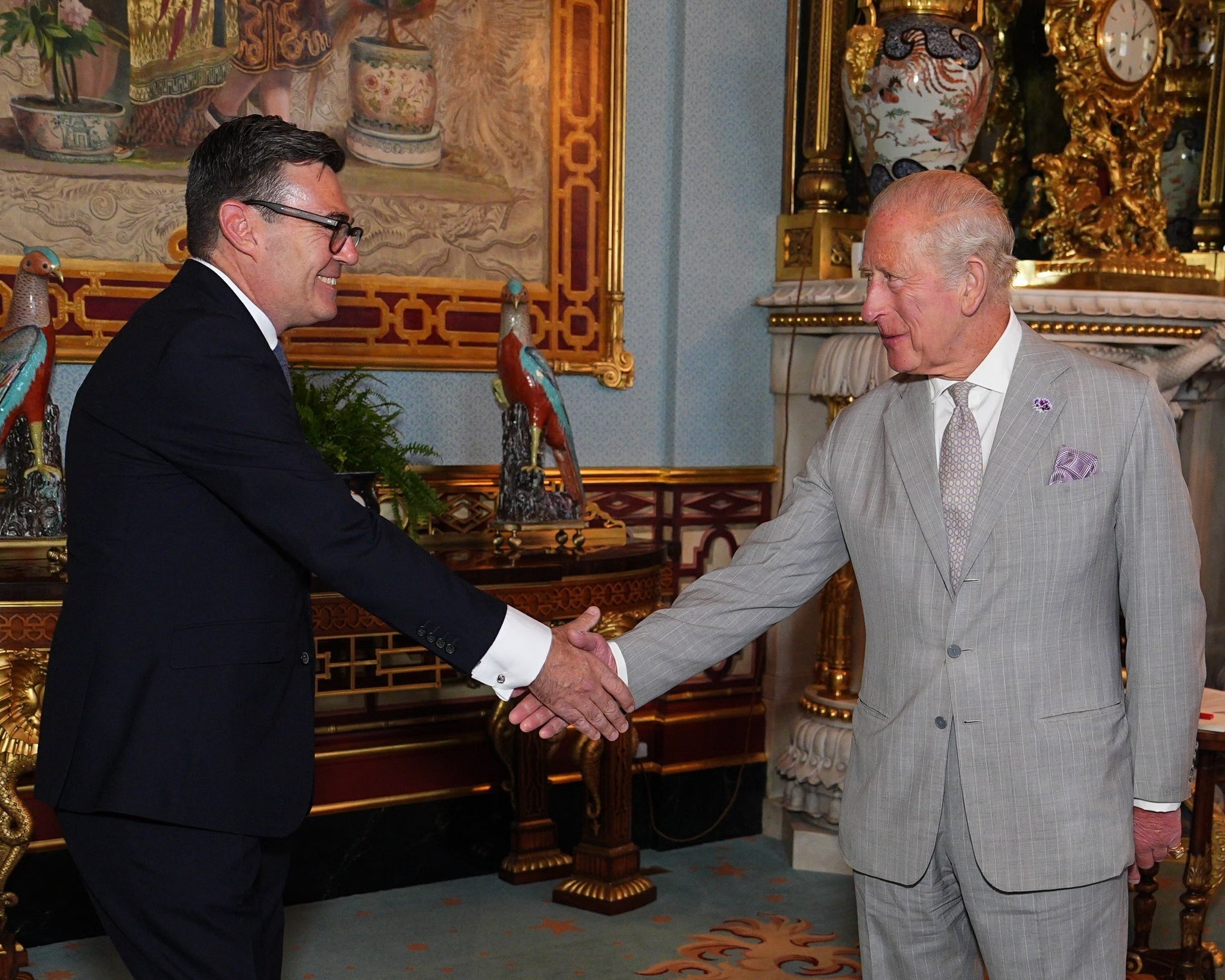
Andy Burnham immediately succeeded Starmer as the U.K.'s seventh prime minister in a decade after meeting with the King in a ceremony known as "kissing hands" to form a government.
The former left-wing Mayor of Greater Manchester, dubbed the "King of the North," secured the Labour Party leadership unchallenged with nominations from 379 lawmakers following Starmer's announcement in June that he would step down. Burnham's ascent required him to first win a seat in Parliament via the Makerfield by-election, a necessary step as prime ministers are traditionally sitting members of the House of Commons.
Burnham pledged a "circuit breaker for Britain" in his inaugural address, promising radical changes to reverse political centralization and economic privatization trends dating back to the 1980s.
The new prime minister has said he's committed to ending rough sleeping and addressing the cost-of-living crisis; re-industrializing the country and placing essential services under stronger public control; decentralizing power to local communities and ordinary people; maintaining steadfast support for Ukraine while navigating relations with U.S. President Donald Trump; and delivering a comprehensive 10-year plan for the nation later in the year.