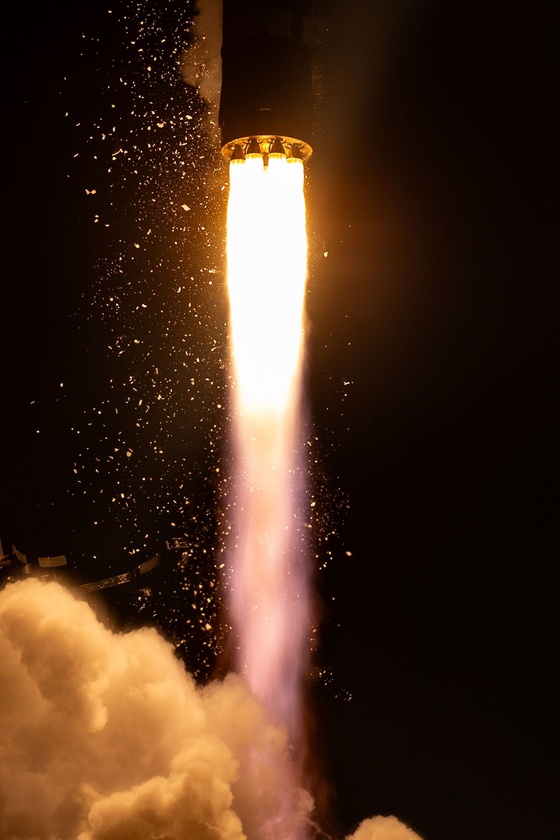
SpaceX successfully launched its first **Starfall reentry capsule aboard a Falcon 9 rocket from Space Launch Complex-40 (SLC-40) at Cape Canaveral Space Force Station on Tuesday (June 23), at 1053 UTC, initiating a demonstration mission to test a new uncrewed cargo return vehicle designed to bring sicentific payloads and goods manufactured in low Earth orbit (LEO) back to Earth.
Following stage separation about 2.5 minutes after liftoff, the Falcon 9 first stage booster B1078 touched down on the SpaceX autonomous droneship "A Shortfall of Gravitas" downrange in the Atlantic, about 9 minutes after launch. B1078's previous missions include NASA's Crew-6 launch to the International Space Station, a Space Force mission and 23 Starlink launches, among others.
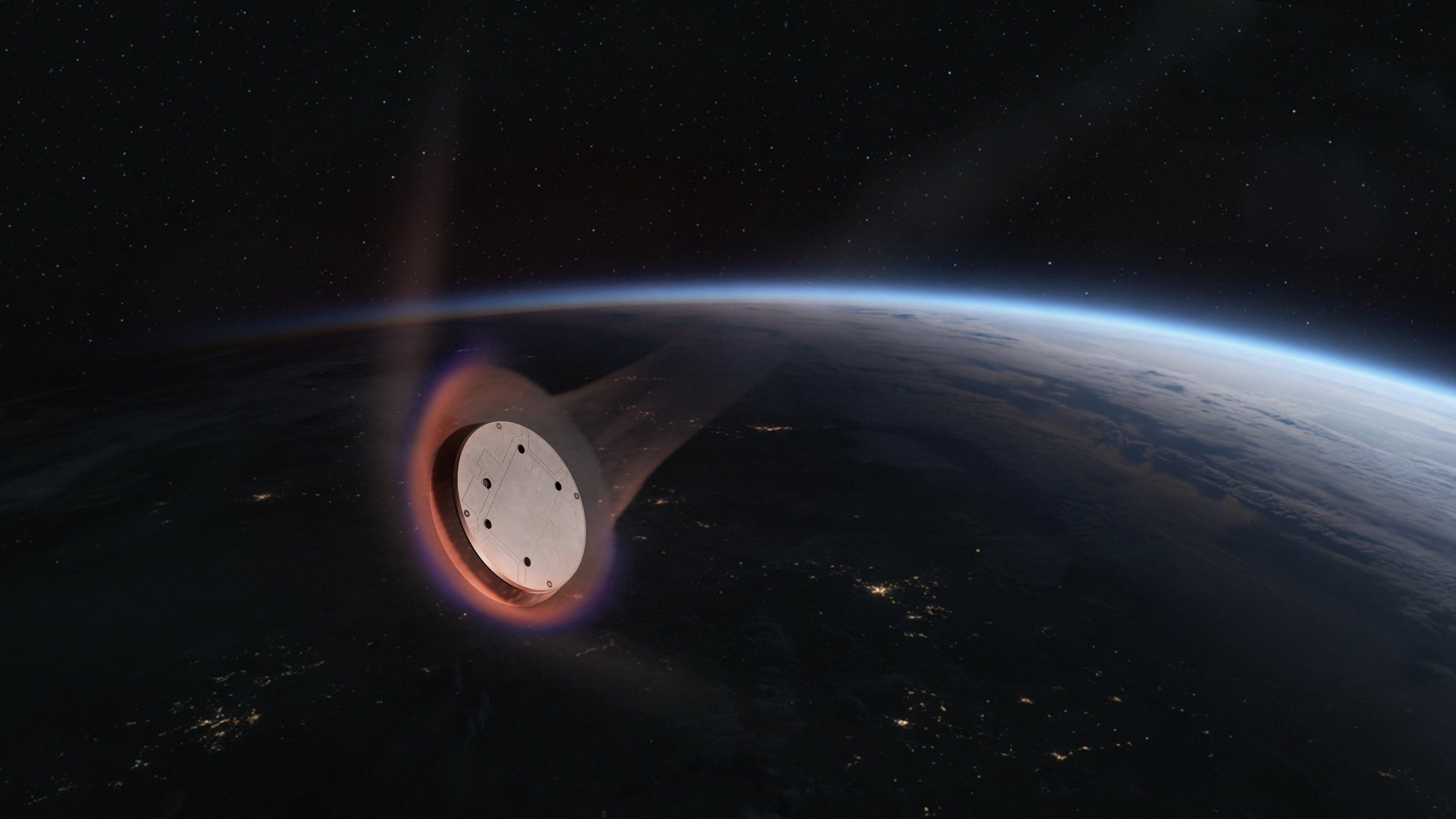
Starfall is a disk-shaped, cylindrical capsule measuring 3.1 meters (10.2 feet) in diameter and 0.75 meters (2.5 feet) tall, with a dry mass of 2,100 kilograms and a payload capacity of 1,000 kilograms.

Unlike traditional conical spacecraft, Starfall features an aluminum top plate for payload storage and a carbon-fiber heat shield that uses compressed nitrogen gas for attitude control during reentry. The vehicle lacks a dedicated propulsion system for independent deorbiting, relying instead on the Falcon 9’s second stage or an external kick-stage to initiate the return trajectory.
Starfall is designed to support commercial in-space manufacturing and rapid point-to-point cargo delivery, offering a scalable solution for returning materials from microgravity environments after their exposure to space conditions.
In the event that Starfall experiences some sort of issue in space or during reentry, SpaceX has designed the spacecraft for safe expendability. "Capsules use nonhazardous inert cold gas (nitrogen) for attitude control and contain no liquid propellants or hazardous substances. All pressurized systems would be vented prior to splashdown, therefore, no propellants would be released into the ocean," the company says in the Federal Aviation Administration (FAA)'s document.
This debut mission targets a splashdown in the Pacific Ocean, approximately 1,300 kilometers off the U.S. West Coast, following recent approval from the FAA for two reentry tests.
SpaceX plans to launch Starfall on suborbital missions, in addition to the longer-term stretches it will be able to spend in LEO. The company has not yet specified how long it plans to keep the test Starfall vehicle in orbit on this debut mission, and did not broadcast views of the Falcon 9 second stage after separation from the rocket's booster.
Varda Space has landed five of the company's own 0.9 m-wide, roughly 300 kg conical "W-series" capsules to date, one of which returned a payload for the U.S. Air Force after more than eight weeks on orbit. Starfall is more than three times as large.