keneci Network
News • Comedy • Science & Tech
US General Warns Pentagon About Insufficient Forces To Defend Israel, 'Forced To Choose' Defense Of US Homeland
August 01, 2026
post photo preview

Gen. Alexus Grynkewich, head of U.S. European Command (EUCOM), reportedly privately warned the Pentagon that he lacks sufficient naval forces to protect Israel from Iranian ballistic missiles, stating he would be forced to prioritize the U.S. homeland without an additional Navy destroyer. This warning, sent in a written letter, highlights severe strain on U.S. military resources as the conflict with Iran enters its fifth month.

Pentagon officials described the memo as a standard "operational risk warning" that commanders issue when competing for scarce global military assets.

The U.S. Navy has five destroyers based in Rota, Spain, with a sixth expected later in the year, but maintenance backlogs due to high operational tempo have reduced availability. Currently, two destroyers are in the eastern Mediterranean, three are in Rota, and one is in the Red Sea, with another fleet operating near Iran.

Sustained engagements shooting down Iranian and Houthi ballistic missiles have rapidly consumed Standard Missile-3 (SM-3) and SM-6 interceptors faster than U.S. defense industrial lines can produce them.

U.S. forces, including THAAD and naval interceptors, have shouldered the bulk of defending Israel from Iranian attacks, often more frequently than Israeli systems. Supplies of key defensive weapons, including Patriot missiles, are reportedly depleted.

EUCOM's forward naval footprint relies on five Arleigh Burke-class destroyers based out of Rota, Spain. Two destroyers—the USS Paul Ignatius and USS Roosevelt—were operating in the Mediterranean Sea to shield Israel. Three others (USS Arleigh Burke, USS Bulkeley, and USS Oscar Austin) were anchored at Rota due to maintenance backlogs resulting from continuous operations.

Simultaneously, the U.S. Navy has deployed two aircraft carrier strike groups (USS George H.W. Bush and USS Abraham Lincoln) along with 11 destroyers in the Arabian Sea, plus the USS Gonzalez in the Red Sea to protect commercial shipping from Houthi strikes.

EUCOM must balance defending Israel with maintaining readiness against potential Russia incursions into NATO territory, as Russia also possesses ballistic missiles capable of striking the U.S. mainland. Keeping destroyers locked into anti-missile duty near Israel dilutes EUCOM’s ability to cover NATO contingencies.

Iran closing the Strait of Hormuz and Trump administration imposing a naval blockade of Iranian ports, have forced the Navy to divide assets among the Mediterranean, Red Sea, and Arabian Sea, complicating defense commitments.

The warning comes as the Trump administration reportedly plans further escalation, including strikes on Tehran’s electricity infrastructure. The collapse of ceasefire talks has led to near-daily missile exchanges, increasing inflationary concerns and political pressure ahead of the 2026 midterm elections in the U.S.

At Camp David, President Trump told reporters that Iran’s military had been "decimated" but criticized Iranian negotiators as "dishonorable and dishonest" after renewed missile fire targeted U.S. positions in Jordan. When asked if Americans should expect continued back-and-forth military strikes, he acknowledged: "A little bit... We just want to win. They cannot have a nuclear weapon."

community logo
Join the keneci Network Community
To read more articles like this, sign up and join my community today
0
What else you may like…
Videos
Posts
Articles
SpaceX Starlink Internet Satellites

With Starlink internet, data is continuously being sent between a ground dish and a Starlink satellite orbiting 550km above. Furthermore, the Starlink satellite zooms across the sky at 27,000 km/hr! MORE VIDEOS ON KENECI NETWORK RUMBLE CHANNEL: https://rumble.com/c/Keneci

00:28:08
Elon Musk, DOGE Speak On Waste And Fraud

US Department of Government Efficiency Services (USDS) led by Elon Musk speak on the "mind-boggling" fraud and waste in UInited States federal government

00:00:45
January 17, 2025
SpaceX Launches Starship 7th Test Flight

SpaceX successfully executed its second-ever “chopsticks” catch of a Super Heavy booster (or Booster 14) using the “Mechazilla” launch tower on Thursday(Jan. 16), during the seventh uncrewed test flight of the company's 123-meter Starship rocket. However, the megarocket's upper stage(or Ship 33) was lost approximately 8.5 minutes into the flight in a “rapid unscheduled disassembly(RUD)” or explosion

00:10:30
Welcome to Keneci Network!

Join the conversations!

December 09, 2025
Bitcoin White Paper By Satoshi Nakamoto

Bitcoin white paper

Bitcoin_White_Paper.pdf
September 17, 2024
Charges Against Sean 'Diddy' Combs In Grand Jury Indictment

The rapper was charged with racketeering conspiracy, sex trafficking by force, fraud or coercion, and transportation to engage in prostitution in the indictment unsealed Tuesday(Sept. 17)

Combs-Indictment-24-Cr.-542.pdf
post photo preview
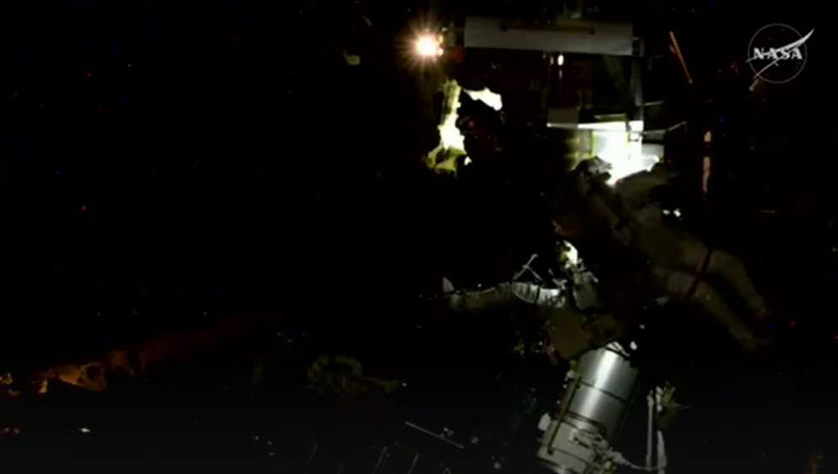
US Spacewalk 101: Astronauts Install 8th & Final ISS Roll-out Solar Array

NASA's Anil Menon and Canadian Space Agency's Joshua Kutryk completed U.S. Spacewalk 101 (Extravehicular activity, EVA-101), the 286th spacewalk in International Space Station (ISS) history. The 7-hour, 59-minute extravehicular activity (EVA) began at 1336 UTC and concluded at 2035 UTC, with the the duo successfully installing and deploying the eighth and final ISS Roll-Out Solar Array (iROSA) on the station's starboard 3B power channel.

This spacewalk concluded a five-year power augmentation campaign that began in 2021, designed to compensate for the age-related degradation of the ISS's original solar arrays.

The final iROSA installation was the most complex of the series because the 3B channel on the S6 truss segment sits beyond the operational reach of the Canadarm2 robotic arm. To overcome this, Menon and Kutryk utilized a novel "leapfrog" handoff technique.

Menon rode the robotic arm to the worksite, transferred the 340-kilogramg array to Kutryk, and then secured himself to the station structure to assist in mounting. The deployment itself required no motors; the array unfurled to its full 19-meter length using stored potential energy in its carbon-composite booms.

The process was briefly paused during orbital night to inspect a power connector after controllers detected lower-than-expected current, but the array was successfully deployed shortly after.

"We are seeing half of the expected shunt current that we want," radioed Nichole Stilwell, a NASA astronaut serving as the spacewalk officer in Mission Control. "In this current config, we are not necessarily going to deploy."

Out of safety concerns — given that the arrays generate electricity whenever lit by the sun — the astronauts needed to wait for the space station to enter the shadow of Earth to see what could be done. In the interim, they spent the time cleaning up their worksite and returning the Canadarm2 to its park site as they would have done after the deployment.

They were able to clear the issue. "We are seeing good shunt currents on the ground, so we are go for deploy," said Stilwell.

"We got it done!" said Menon at the end of the 6-hour-and-59-minute spacewalk.

The eight new iROSA panels boost the station's total power output from approximately 152–160 kilowatts** to roughly 215 kilowatts, a 30% increase. This additional power is critical for sustaining station operations, including life support and research, through its planned controlled deorbit in 2030.

"Today marks the completion of not just one solar array but, over 15 years after its development, eight arrays," Menon said at the close of the spacewalk. "These solar arrays are incredible. Half the size of the old ones and bringing 40% more power."

The need for the iROSA augmentations was discovered by flight controllers when the space station's eight original arrays began to show degraded power output as they exceeded their 15-year design life. The iROSAs provide the additional electricity needed to support ISS operations through its retirement and controlled deorbit, which are currently scheduled to occur in late 2030.

The iROSA technology, developed by Redwire, is also selected to power the Power and Propulsion Element of NASA's Gateway lunar outpost.

Menon logged his fourth spacewalk (33.5 hours total in EVA suits), while Kutryk completed his first, becoming the fifth Canadian to walk in space. The duo had installed the seventh iROSA just one week prior (October 29, 2026), marking the 100th U.S. spacewalk conducted from the ISS without a docked Space Shuttle.

"Congratulations to you all on your stellar work to finish the last of the roll-out solar arrays and the upgrades to the ISS power system that will take it to the end of its journey," said Stilwell, addressing Menon and Kutryk. "It is fitting that we just surpassed 26 years of constant human presence on the International Space Station, and you all showed us what the best of humanity looks like executing one of the most difficult and dangerous [things] humans do and making it look easy. Congratulations!"

Each of the eight iROSAs and their mounting assemblies were delivered to the space station by SpaceX Dragon cargo spacecraft. Beginning in June 2021, four teams of two astronauts did as was done on Thursday to deploy each array. In addition to Kutryk and Menon's work on the 2A and 3B power channels, the spacewalkers included Shane Kimbrough of NASA and Thomas Pesquet of the European Space Agency for the 2B and 4B channels; Josh Cassada and Frank Rubio, both with NASA, on 3A and 4A in December 2022; and NASA's Steve Bowen and Woody Hoburg on 1A and 1B in June 2023.

Read full Article
post photo preview
SpaceX Taps Qualcomm Dragonwing To Accelerate Starlink Mobile's US 5G Network

SpaceX selected Qualcomm to supply Dragonwing Cellular Infrastructure platforms for Starlink Mobile’s nationwide terrestrial 5G network in the U.S. Announced Wednesday, the multi-year agreement covers tens of thousands of cell sites, with deployment beginning in 2027.

The terrestrial network will complement Starlink’s satellite capabilities, creating what SpaceX calls “the first fully-integrated US nationwide satellite and terrestrial network.”

“At last there will be one network with good signal everywhere!,” SpaceX CEO Elon Musk wrote on X. And added in another post, “Qualcomm’s technology is excellent.”

SpaceX is designing its own end-to-end base station architecture; Qualcomm supplies the radio, processing, and Layer 1 building blocks.

Thge network will be built on Qualcomm Dragonwing QRU100 (radio unit signal processing) and QDU100 (baseband/Layer 1 processing) platforms, plus commercial-grade Layer 1 software; with massive MIMO -- 64 transmit/64 receive paths (64T64R) to improve coverage, capacity, and spectral efficiency.

“Together with SpaceX, we are building world-leading cellular infrastructure in the United States, advancing 5G today, with an opportunity to lay the foundation for AI-native 6G in the years ahead,” Durga Malladi, Qualcomm EVP and GM for technology planning, edge solutions, and data center, said in an X post. “Our agreement with SpaceX is structured in such a way that as the deployment begins, starting from next year, it's going to ramp up pretty rapidly from there onwards. Building a nationwide network demands high performance and power efficiency at every site.”

The network will use a 2 GHz block acquired from EchoStar in a September 2025 deal, which closed Boost Mobile’s 5G ambitions.

“We’re excited to collaborate with Qualcomm Technologies and leverage their industry expertise and platform to accelerate our timeline to develop our base station end-to-end architecture,” Starlink SVP Michael Nicolls said. “We shouldn’t live in a time where phone calls are still dropping whether you’re at home or on-the-go.”

SpaceX has been expanding spectrum holdings throughout 2025 and is aiming to become a fourth major U.S. wireless carrier competing with Verizon, AT&T, and T-Mobile.

Qualcomm CEO Cristiano Amon called the deal “the beginning of a relationship with tremendous potential,” with revenue expected to ramp in FY28. Financial terms of the deal were not disclosed.

"Together with @elonmusk and the @SpaceX team, we’re excited to build world-leading cellular infrastructure and a path to AI-native 6G," Amon wrote on X.

Read full Article
post photo preview
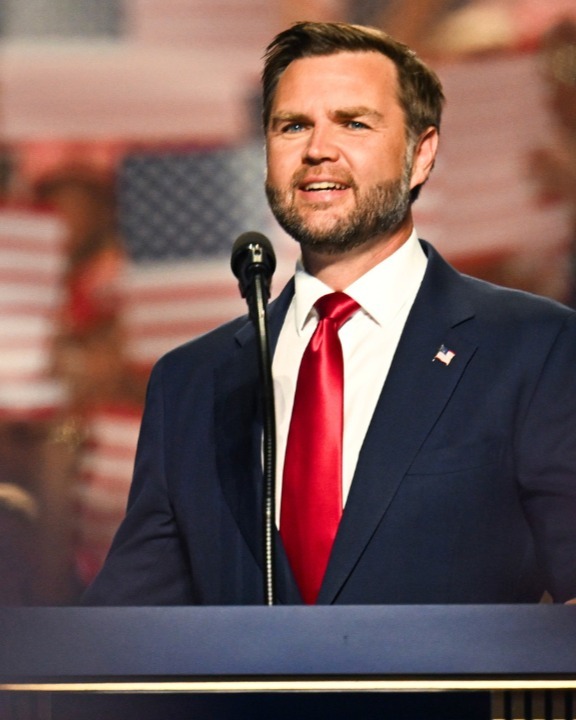
Vance Blames Republican Party's Midterm Election Loss On Iran War, US Support For Israel, Inflation

Vice President JD Vance blamed the Republican Party's sweeping midterm defeat on the ongoing war in Iran, the U.S. relationship with Israel, and cost-of-living issues. In a lengthy post on X, Wednesday, Vance said, "The reason we lost is the war," noting that many 2024 candidate Donald Trump voters switched to Democrats out of anger over these issues.

Democrats reclaimed control of both the U.S. House of Representatives and the U.S. Senate, flipping at least seven Senate seats and more than 25 House seats.

Exit polls showed that while 49% of voters cited cost of living and 55% cited government corruption as crucial to their vote, 34% said the Iran war was crucial. Nearly all Democratic House voters viewed the war as the "wrong decision," while 8 in 10 Republican House voters viewed it as the "right decision."

The vice president outlined a four-point strategy to win back voters: end the war, focus on inflation, put America first, and change U.S. relationship with Israel.

President Trump’s son, Donald Trump Jr., publicly endorsed Vance’s analysis, writing that "Every word of this is 100%."

Trump agreed with the assessment, acknowledging in interviews that the war was a factor because it "drove the gasoline up a little bit, short term." However, the president maintained he had no regrets about the decision, saying, "If I had to do it again, I'd have to do it again because long term, it's the only answer. You can't let Iran have a nuclear weapon."

The Pentagon estimated the war had cost taxpayers $47.1 billion as of early November 2026. The conflict, launched in February 2026, had stretched into its eighth month despite initial pledges of a four-to-five-week duration.

Vance’s comments are widely interpreted as an effort to distance himself from Trump ahead of a potential 2028 presidential run. Vance had reportedly been the White House figure "most opposed to a full-scale war;" and has been leading diplomatic talks to end the conflict

Read full Article
See More
Available on mobile and TV devices
google store google store app store app store
google store google store app tv store app tv store amazon store amazon store roku store roku store
Powered by Locals