keneci Network
News • Science & Tech • Comedy
Jury Rules Against Elon Musk In Case Against OpenAI, Sam Altman
post photo preview

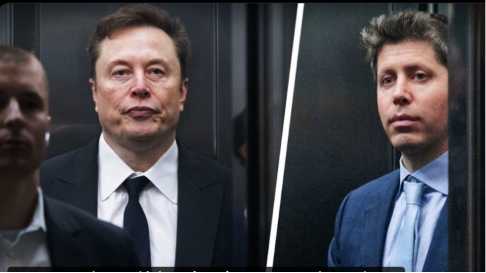
The jury ruled against SpaceXAI and Tesla CEO Elon Musk in his lawsuit against OpenAI, Sam Altman, and Greg Brockman, finding that his claims were barred by the statute of limitations after less than two hours of deliberation.

The unanimous verdict, delivered Monday, in a federal court in Oakland, California, cleared Altman, Brockman, OpenAI, and Microsoft of all allegations, with Judge Yvonne Gonzalez Rogers accepting the advisory jury’s decision and dismissing the case.

Musk’s lawsuit, filed in 2024, alleged that Altman and Brockman betrayed a founding agreement to keep OpenAI a nonprofit dedicated to advancing AI for humanity’s benefit. He claimed they improperly shifted the company to a for-profit model with Microsoft, effectively "stealing a charity" after he contributed $38 million in early funding. The SpaceXAI CEO sought up to $134 billion in damages, the removal of Altman and Brockman, and the dissolution of OpenAI’s for-profit arm.

However, the defense successfully argued that Musk knew about OpenAI’s transition as early as 2021, making his 2024 lawsuit untimely under the three-year statute of limitations. Testimony from Musk, Altman, Microsoft CEO Satya Nadella, and former board member Shivon Zilis revealed deep rifts over control and mission, but the jury focused on procedural grounds rather than the case’s merits.

OpenAI’s legal team called the suit a "hypocritical attempt to sabotage a competitor," referencing Musk’s own AI venture, xAI (now SpaceXAI). Musk’s attorney, Marc Toberoff, confirmed plans to appeal the decision.

“I have a one-word reaction: Appeal. This war is not over," Toberoff told reporters. "We firmly believe what happened with OpenAI was wrong on a very basic level that you can't raise millions of dollars in a publicly subsidized charity, and when it suits you, just turn into a for-profit operation where the officers and directors of the charity enrich themselves to the tune of billions, and that's what actually happened here, and that's just wrong."

Commenting on the jury decision, Musk wrote on X: "Regarding the OpenAI case, the judge & jury never actually ruled on the merits of the case, just on a calendar technicality. There is no question to anyone following the case in detail that Altman & Brockman did in fact enrich themselves by stealing a charity. The only question is WHEN they did it! I will be filing an appeal with the Ninth Circuit, because creating a precedent to loot charities is incredibly destructive to charitable giving in America. OpenAI was founded to benefit all of humanity."

Musk also wrote in another post: "This illustrates why the ruling by the terrible activist Oakland judge, who simply used the jury as a fig leaf, creates such a terrible precedent. She just handed out a free license to loot charities if you can keep the looting quiet for a few years!"


community logo
Join the keneci Network Community
To read more articles like this, sign up and join my community today
0
What else you may like…
Videos
Posts
Articles
SpaceX Starlink Internet Satellites

With Starlink internet, data is continuously being sent between a ground dish and a Starlink satellite orbiting 550km above. Furthermore, the Starlink satellite zooms across the sky at 27,000 km/hr! MORE VIDEOS ON KENECI NETWORK RUMBLE CHANNEL: https://rumble.com/c/Keneci

00:28:08
Elon Musk, DOGE Speak On Waste And Fraud

US Department of Government Efficiency Services (USDS) led by Elon Musk speak on the "mind-boggling" fraud and waste in UInited States federal government

00:00:45
January 17, 2025
SpaceX Launches Starship 7th Test Flight

SpaceX successfully executed its second-ever “chopsticks” catch of a Super Heavy booster (or Booster 14) using the “Mechazilla” launch tower on Thursday(Jan. 16), during the seventh uncrewed test flight of the company's 123-meter Starship rocket. However, the megarocket's upper stage(or Ship 33) was lost approximately 8.5 minutes into the flight in a “rapid unscheduled disassembly(RUD)” or explosion

00:10:30
Welcome to Keneci Network!

Join the conversations!

December 09, 2025
Bitcoin White Paper By Satoshi Nakamoto

Bitcoin white paper

Bitcoin_White_Paper.pdf
September 17, 2024
Charges Against Sean 'Diddy' Combs In Grand Jury Indictment

The rapper was charged with racketeering conspiracy, sex trafficking by force, fraud or coercion, and transportation to engage in prostitution in the indictment unsealed Tuesday(Sept. 17)

Combs-Indictment-24-Cr.-542.pdf
post photo preview
Hormuz Safe: Iran To Launch Bitcoin-backed Digital Maritime Insurance For Ships Transiting The Strait

Iran has launched "Hormuz Safe," a state-backed digital maritime insurance platform that settles premiums in Bitcoin and other cryptocurrencies, aiming to bypass Western banking sanctions and generate over $10 billion in annual revenue from Strait of Hormuz shipping traffic.

The platform, reportedly developed by Iran’s Ministry of Economy and Financial Affairs, issues cryptographically verifiable insurance policies for cargo and vessels transiting the Persian Gulf and Strait of Hormuz.

Coverage activates immediately upon blockchain confirmation and includes protection against vessel inspection, detention, and confiscation, though it explicitly excludes war damage from direct military strikes. The initiative follows the freezing of more than $344 million in USDT linked to Iran’s central bank by Tether and U.S. authorities, prompting Tehran to accelerate its reliance on Bitcoin for financial sovereignty.

While Iranian officials project significant revenue from the platform, its adoption faces substantial hurdles. Bitcoin’s price volatility and the risk of U.S. secondary sanctions make foreign shipping companies hesitant to participate, as on-chain transactions could flag Iranian-linked wallets.

Iranian officials reportedly said the platform’s website will soon be made widely accessible outside Iran

Read full Article
post photo preview
SpaceX CRS-34 Dragon Docks With The Space Station, Delivers 6,500 pounds Of Cargo

SpaceX CRS-34 delivered 6,500 pounds of cargo to the International Space Station on Sunday (May 17), after launching on May 15 from Cape Canaveral. The Cargo Dragon C209 spacecraft autonomously docked to the Harmony module’s forward port at 1037 UTC, with the arrival monitored by NASA astronaut Jack Hathaway and ESA astronaut Sophie Adenot from inside the space station Cupola.

"Dragon contact and soft capture complete," Hathaway reported to Mission Control.

Hathaway and Adenot, together with their Expedition 74 crewmates, will spend the next few weeks unpacking the craft of its nearly 6,500 pounds of cargo and then repacking it with science results, returning hardware and refuse for the trip back to Earth in mid-June.

Key CRS-34 Dragon scientific payloads include STORIE, a joint NASA-U.S. Space Force instrument to study ring currents and space weather impacts on power grids; Green Bone, which tests a rattan wood scaffold for osteoporosis treatments in microgravity; and SPARK, which investigates red blood cell and spleen changes to understand space anemia.

Among the science delivered include "a project to determine how well Earth-based simulators mimic microgravity conditions; a bone scaffold made from wood that could produce new treatments for fragile bone conditions like osteoporosis; and equipment to help researchers evaluate how red blood cells and the spleen change in space," according to a NASA media advisory.

CRS-34 Dragon will remain docked for approximately one month, after which it will splashed down in the Pacific Ocean in mid-June. It will return critical science results, including an ocular imaging device, a sorbent bed for air filtration, and the Advanced Plant Habitat for museum display, alongside other returned hardware.

This mission marks the 34th Commercial Resupply Services (CRS) flight for SpaceX and sets a new record as the sixth flight for the C209 capsule.

=================

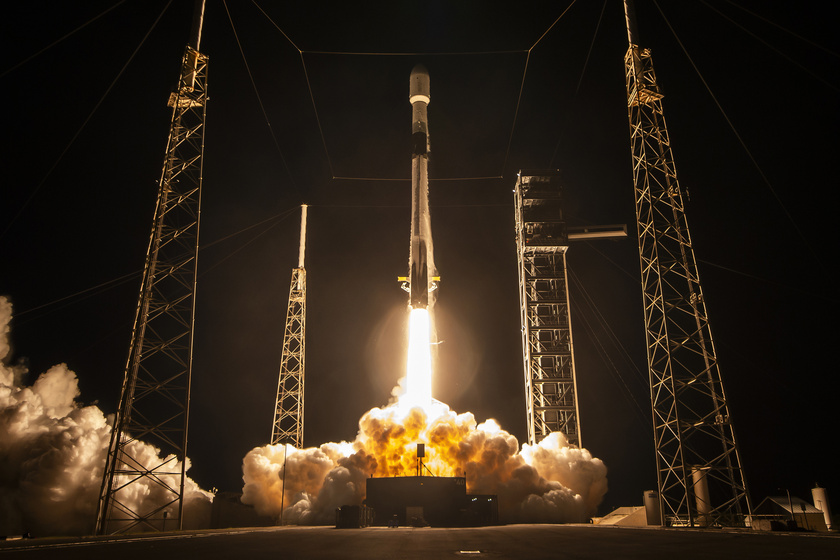
SpaceX launched a Falcon 9 topped by a Cargo Dragon spacecraft with 6,500 pounds (2,950 kilograms) of supplies and science experiments, on Friday, (May 15), at 2205 UTC from Launch Complex 40 at Cape Canaveral Space Force Station on the CRS-34 mission to the International Space Station (ISS) for the Expedition 74 crew.

The Falcon 9 first stage separated two and a half minutes after liftoff and landed at Landing Zone 40 near the launch pad. The Dragon spacecraft separated from the second stage 9 minutes and 20 seconds after launch. The spacecraft is expected reach the ISS at about 1100 UTC on Sunday, May 17, 2026, where it will perform an automated rendezvous, docking with the forward port of the Harmony module.

CRS-34 is the sixth spaceflight for this particular Dragon capsule — a new record for a SpaceX cargo craft. One of the company's astronaut-carrying Crew Dragon capsules, named Endeavour, also has six missions under its belt. CRS-34 mission is so named because it's the 34th flight that SpaceX has conducted for NASA's Commercial Resupply Services program.

Dragon is loaded up with about 2,950 kilograms of supplies, hardware and scientific experiments for CRS-34. Among the scientific gear are "a project to determine how well Earth-based simulators mimic microgravity conditions, a bone scaffold made from wood that could produce new treatments for fragile bone conditions like osteoporosis, and equipment to evaluate how red blood cells and the spleen change in space to protect future astronauts," NASA officials wrote in a CRS-34 media advisory.

The capsule will stay attached to the ISS for just a month, coming back down to Earth in mid-June "with time-sensitive research and cargo, ahead of splashing down off the coast of California," NASA officials wrote. Dragon is the only ISS resupply ship that can haul material down to Earth. The other three operational robotic freighters — Japan's HTV-X, Russia's Progress and Northrop Grumman's Cygnus — are all designed to burn up in Earth's atmosphere when their time in orbit is up.

CRS-34 launch was delayed by three days due to inclement weather, including thunderstorms and anvil cloud violations that scrubbed attempts on Tuesday, May 12, and Wednesday, May 13. The successful Friday launch allowed ground crews to reload "late load" items with short shelf lives and provided a fresh phasing opportunity for the spacecraft to rendezvous with the station.

Read full Article
post photo preview
CRS-34: SpaceX Falcon 9 Launches 6,500 Pounds Of Dragon Cargo To Space Station

SpaceX launched a Falcon 9 topped by a Cargo Dragon spacecraft with 6,500 pounds (2,950 kilograms) of supplies and science experiments, on Friday, (May 15), at 2205 UTC from Launch Complex 40 at Cape Canaveral Space Force Station on the CRS-34 mission to the International Space Station (ISS) for the Expedition 74 crew.

The Falcon 9 first stage separated two and a half minutes after liftoff and landed at Landing Zone 40 near the launch pad. The Dragon spacecraft separated from the second stage 9 minutes and 20 seconds after launch. The spacecraft is expected reach the ISS at about 1100 UTC on Sunday, May 17, 2026, where it will perform an automated rendezvous, docking with the forward port of the Harmony module.

CRS-34 is the sixth spaceflight for this particular Dragon capsule — a new record for a SpaceX cargo craft. One of the company's astronaut-carrying Crew Dragon capsules, named Endeavour, also has six missions under its belt. CRS-34 mission is so named because it's the 34th flight that SpaceX has conducted for NASA's Commercial Resupply Services program.

Dragon is loaded up with about 2,950 kilograms of supplies, hardware and scientific experiments for CRS-34. Among the scientific gear are "a project to determine how well Earth-based simulators mimic microgravity conditions, a bone scaffold made from wood that could produce new treatments for fragile bone conditions like osteoporosis, and equipment to evaluate how red blood cells and the spleen change in space to protect future astronauts," NASA officials wrote in a CRS-34 media advisory.

The capsule will stay attached to the ISS for just a month, coming back down to Earth in mid-June "with time-sensitive research and cargo, ahead of splashing down off the coast of California," NASA officials wrote. Dragon is the only ISS resupply ship that can haul material down to Earth. The other three operational robotic freighters — Japan's HTV-X, Russia's Progress and Northrop Grumman's Cygnus — are all designed to burn up in Earth's atmosphere when their time in orbit is up.

CRS-34 launch was delayed by three days due to inclement weather, including thunderstorms and anvil cloud violations that scrubbed attempts on Tuesday, May 12, and Wednesday, May 13. The successful Friday launch allowed ground crews to reload "late load" items with short shelf lives and provided a fresh phasing opportunity for the spacecraft to rendezvous with the station.

Read full Article
See More
Available on mobile and TV devices
google store google store app store app store
google store google store app tv store app tv store amazon store amazon store roku store roku store
Powered by Locals