keneci Network
News • Comedy • Science & Tech
CRS-34: SpaceX Falcon 9 Launches 6,500 Pounds Of Dragon Cargo To Space Station
May 15, 2026
post photo preview

SpaceX launched a Falcon 9 topped by a Cargo Dragon spacecraft with 6,500 pounds (2,950 kilograms) of supplies and science experiments, on Friday, (May 15), at 2205 UTC from Launch Complex 40 at Cape Canaveral Space Force Station on the CRS-34 mission to the International Space Station (ISS) for the Expedition 74 crew.

The Falcon 9 first stage separated two and a half minutes after liftoff and landed at Landing Zone 40 near the launch pad. The Dragon spacecraft separated from the second stage 9 minutes and 20 seconds after launch. The spacecraft is expected reach the ISS at about 1100 UTC on Sunday, May 17, 2026, where it will perform an automated rendezvous, docking with the forward port of the Harmony module.

CRS-34 is the sixth spaceflight for this particular Dragon capsule — a new record for a SpaceX cargo craft. One of the company's astronaut-carrying Crew Dragon capsules, named Endeavour, also has six missions under its belt. CRS-34 mission is so named because it's the 34th flight that SpaceX has conducted for NASA's Commercial Resupply Services program.

Dragon is loaded up with about 2,950 kilograms of supplies, hardware and scientific experiments for CRS-34. Among the scientific gear are "a project to determine how well Earth-based simulators mimic microgravity conditions, a bone scaffold made from wood that could produce new treatments for fragile bone conditions like osteoporosis, and equipment to evaluate how red blood cells and the spleen change in space to protect future astronauts," NASA officials wrote in a CRS-34 media advisory.

The capsule will stay attached to the ISS for just a month, coming back down to Earth in mid-June "with time-sensitive research and cargo, ahead of splashing down off the coast of California," NASA officials wrote. Dragon is the only ISS resupply ship that can haul material down to Earth. The other three operational robotic freighters — Japan's HTV-X, Russia's Progress and Northrop Grumman's Cygnus — are all designed to burn up in Earth's atmosphere when their time in orbit is up.

CRS-34 launch was delayed by three days due to inclement weather, including thunderstorms and anvil cloud violations that scrubbed attempts on Tuesday, May 12, and Wednesday, May 13. The successful Friday launch allowed ground crews to reload "late load" items with short shelf lives and provided a fresh phasing opportunity for the spacecraft to rendezvous with the station.


community logo
Join the keneci Network Community
To read more articles like this, sign up and join my community today
0
What else you may like…
Videos
Posts
Articles
SpaceX Starlink Internet Satellites

With Starlink internet, data is continuously being sent between a ground dish and a Starlink satellite orbiting 550km above. Furthermore, the Starlink satellite zooms across the sky at 27,000 km/hr! MORE VIDEOS ON KENECI NETWORK RUMBLE CHANNEL: https://rumble.com/c/Keneci

00:28:08
Elon Musk, DOGE Speak On Waste And Fraud

US Department of Government Efficiency Services (USDS) led by Elon Musk speak on the "mind-boggling" fraud and waste in UInited States federal government

00:00:45
January 17, 2025
SpaceX Launches Starship 7th Test Flight

SpaceX successfully executed its second-ever “chopsticks” catch of a Super Heavy booster (or Booster 14) using the “Mechazilla” launch tower on Thursday(Jan. 16), during the seventh uncrewed test flight of the company's 123-meter Starship rocket. However, the megarocket's upper stage(or Ship 33) was lost approximately 8.5 minutes into the flight in a “rapid unscheduled disassembly(RUD)” or explosion

00:10:30
Welcome to Keneci Network!

Join the conversations!

December 09, 2025
Bitcoin White Paper By Satoshi Nakamoto

Bitcoin white paper

Bitcoin_White_Paper.pdf
September 17, 2024
Charges Against Sean 'Diddy' Combs In Grand Jury Indictment

The rapper was charged with racketeering conspiracy, sex trafficking by force, fraud or coercion, and transportation to engage in prostitution in the indictment unsealed Tuesday(Sept. 17)

Combs-Indictment-24-Cr.-542.pdf
post photo preview
MMX: Japan Launches Historic Mission To Return Mars Moon Phobos' Sample

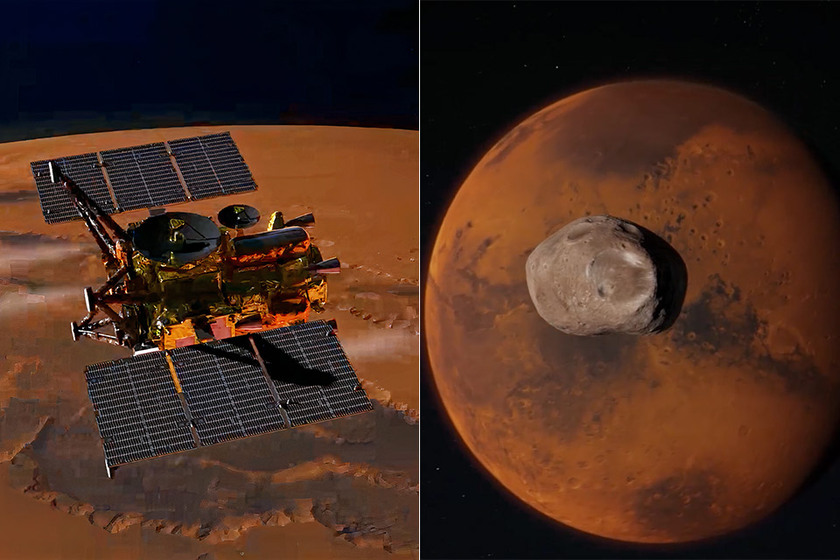
Japan Aerospace Exploration Agency, JAXA's H3-24L rocket launched the Martian Moons eXploration (MMX) mission on Monday (Oct. 19), at 1941 UTC, from Pad-2 at the Yoshinobu Launch Complex within the Tanegashima Space Center. The mission aims to become the first to return samples from Phobos, Mars’s larger moon, with a targeted Earth return in 2031.

This was the 10th liftoff of Japan's expendable, two-stage H3 rocket (flight H3 F10), which was jointly developed by JAXA and Mitsubishi Heavy Industries. After clearing its launch pad today, the 63-meter rocket flew a nominal trajectory through its ascent corridor over the Pacific Ocean, jettisoning its four solid boosters in pairs just before the flight clock reached two minutes. The launch vehicle shed its payload fairings about one minute and 20 seconds later, exposing MMX to the vacuum of space for the first time.

H3's first stage, powered by two LE-9 rocket engines, channels a mixture of liquid hydrogen and liquid oxygen to produce a combined thrust of 331,000 pounds (1,471 kN), according to Mitsubishi Heavy Industries. As the mission clock approached T+5 minutes, H3 executed its main engine cutoff procedure and separated from the second stage, which ignited its engines for a 5.5-minute burn about 10 seconds later.

All continued to go to plan after that. The H3's upper stage ignited its engine for a second time for a trans-Mars injection burn about one hour and four minutes after liftoff, a maneuver that lasted roughly six minutes and 25 seconds and took MMX to a maximum velocity of about 38,858 kilometers per hour(kph).

MMX was released from the rocket's upper stage right on schedule, about one minute after the completion of that burn and roughly 71 minutes after liftoff. The success elicited loud cheers in mission control, which viewers saw and heard on JAXA's launch webcast.

The spacecraft is now under its own power, and on course for Mars. The interplanetary transit will last about 10 months, with the spacecraft scheduled to arrive at the Red Planet in August 2027. When it does, MMX's propulsion module will execute an orbital insertion burn to place itself in a quasi-satellite orbit (QSO) around Phobos, which places MMX within the space around the moon as both circle Mars.

The primary goal of MMX is to collect at least 10 grams of Phobos regolith to determine if the Martian moons are captured asteroids or formed from debris ejected by an ancient impact on Mars. The mission will also conduct flybys of the smaller moon, Deimos, and study Mars itself to understand the early solar system's evolution. The spacecraft carries 13 scientific instruments, including MEGANE (developed with NASA) to measure elemental composition via gamma rays and neutrons, and MIRS for infrared mineral analysis.

Led by JAXA with contributions from NASA, ESA, CNES (France), and DLR (Germany), the ~4,480 kilogram spacecraft consists of propulsion, exploration, and return modules. Key components include the Idefix rover (developed by France and Germany) for surface reconnaissance and a lander equipped with both a coring sampler and a pneumatic surface sampler.

NASA has also invested about $87 million through the end of the mission, which includes funding for United States scientists and astromaterials experts on the MMX team. At least 15% of the planned 10-gram (0.35 ounces) returned Phobos sample will be reserved for NASA's study. Those materials will be transferred and maintained at the agency's Johnson Space Center in Houston for analysis and long-term preservation.

MMX is not the first Phobos sample-return project to take flight. That distinction goes to Russia's Phobos-Grunt ("Phobos-Soil") mission, which launched in November 2011 but failed to get out of Earth orbit due to a rocket glitch. The 14.5-ton spacecraft eventually crashed back to Earth over the Pacific Ocean in January 2012.

Read full Article
post photo preview
France Riots: Europe Burns As Rioters Wreck Havoc Over Economic Woes, Failed Policies

The historic Limoges Town Hall, built in 1883 and designated a landmark in 1975, was "largely lost" after masked protesters forced entry and set it ablaze on Saturday. The fire caused the roof and spire to collapse, destroying two-thirds of the exterior; the building had previously survived both World Wars and served briefly as the seat of the Belgian government-in-exile in 1940.

France’s nationwide unrest stems from weeks of student protests over deteriorating school conditions, which expanded into mass demonstrations against rising living costs and fuel prices. The country experienced some of the worst street violence it has seen in decades, drawing together a volatile mix of secondary school and university students, former "Yellow Vests," climate activists, farmers, and opportunistic groups.

On Saturday, an estimated 550,000 to 800,000 people took to the streets, with violence erupting in cities including Paris, Marseille, Lyon, and Lille.

About 1,200 to 2,000 people were arrested, over 150 police officers were injured, and widespread looting targeted shops and public buildings. In Saint-Étienne, a 17-year-old protester suffered severe injuries (losing a hand) after a police-deployed grenade detonated.

Prime Minister Sébastien Lecornu blamed the violence on "ultra-left" groups and criminals, stating the government would not be intimidated, while Interior Minister Laurent Nuñez reported that rioters had the "sole objective to burn, break and loot." President Emmanuel Macron strongly condemned the violence, vandalism, and attacks on public buildings, vowing that perpetrators would be prosecuted.

Unrest also spread to other European nations, driven by similar economic grievances. While France saw the most catastrophic structural damage, smaller or parallel protests and riots broke out in several other European countries over economic pressures and localized grievances.

In Italy, Portugal, and Belgium, Student and public groups marched against household budget constraints, housing costs, and education affordability, though reports indicate these demonstrations were less violent than those in France and Albania.

In Italy, rallies over the cost of living in cities like Milan and Bologna turned violent. Demonstrators clashed with police, forcing the temporary closure of transit hubs like the Duomo metro station in Milan and causing dozens of injuries and detentions among law enforcement and protesters.

In Liège, Belgium, demonstrations over economic strains escalated into property damage and clashes, resulting in dozens of arrests—including minors.

In Portugal, thousands marched in Lisbon over low wages, skyrocketing rents, and a severe housing shortage, setting up protest tents in Rossio square.

Student-led protests in Tirana, Albania, took on an explicitly anti-government tone, entering their fifth consecutive day of fierce clashes. Beyond standard demands for education reform and jobs, protesters called for the resignation of Prime Minister Edi Rama over corruption allegations. 35 people were wounded and 167 arrested.

The protests in Tirana, started with the controversy over a luxury coastal development project linked to an investment firm founded by Jared Kushner (son-in-law of US President Donald Trump). Police deployed water cannons and tear gas against crowds.

Across Western and Southern Europe, persistent inflation, high energy/fuel prices, and stagnant real wages have created deep financial anxiety among working-class families and the younger demographic.

Critics blame left-wing western leaders and their lax immigration and misguided energy policies. The convergence of students, union workers, and disparate political movements highlights a broader breakdown in trust regarding public institutions and the government.

Read full Article
October 16, 2026
post photo preview
USSF-481: SpaceX Launches Classified Payload To Orbit For The US Space Force

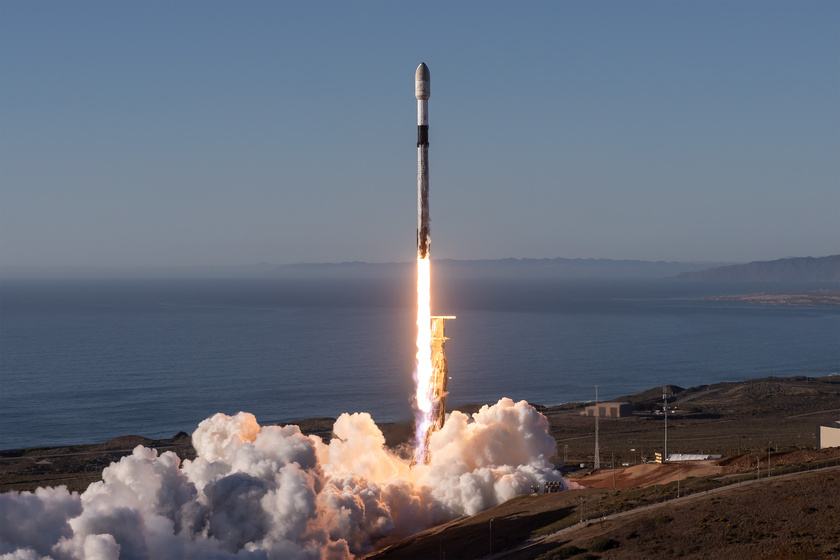
A SpaceX Falcon 9 launched the classified USSF-481 mission from Space Launch Complex 4 East (SLC-4E) at Vandenberg Space Force Base in California, at 0001 UTC on Friday (Oct. 16), carrying a classified payload to a polar low-Earth orbit, for the United States Space Force. The rocket followed a southerly trajectory, reaching a low-Earth orbit inclined approximately 80 degrees to the Equator, a path necessary for polar coverage without overflying populated land.

Vandenberg SLC-4E is the only U.S. launch pad permitting southward polar departure azimuths, making it critical for national security satellites requiring global coverage.

About 8.5 minutes after launch, the first stage booster, B1081 landed on the autonomous droneship Of Course I Still Love You in the Pacific Ocean as scheduled. This recovery marked the 228th booster landing on a droneship and the 671st total Falcon booster landing. This marks the 28th flight for B1081 which has flown previous missions including Crew-7, CRS-29, PACE, Transporter-10, EarthCARE, NROL-186, Transporter-13, TRACERS, NROL-48, COSMO-SkyMed Second Generation FM3, and 16 Starlink deployments.

The USSF-481 mission cargo remains classified, but public notices identify the mission as TH-2 (Task Order 2) under the Space-Based Sensing and Targeting (SBST) contract.

USSF-481 is part of a roughly $1.6 billion Pentagon contract for 18 Falcon 9 launches through the end of 2027, supporting the Proliferated Warfighter Space Architecture (PWSA) and missile-defense initiatives.

Friday's mission wmarks the 114th Falcon 9 launch of 2026, highlighting SpaceX's high-frequency launch rate. The launch was preceded by a formal ceremony at Vandenberg, featuring the five o'clock bugle call "Retreat" and the U.S. National Anthem.

Read full Article
See More
Available on mobile and TV devices
google store google store app store app store
google store google store app tv store app tv store amazon store amazon store roku store roku store
Powered by Locals