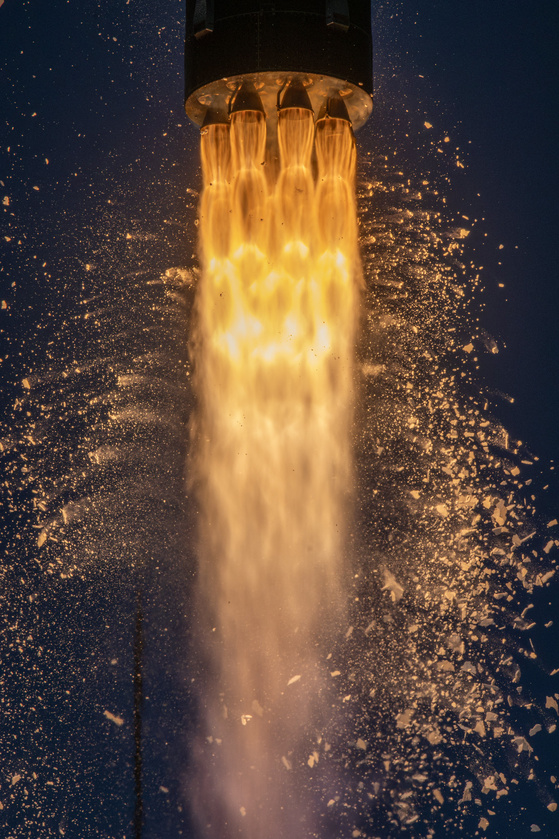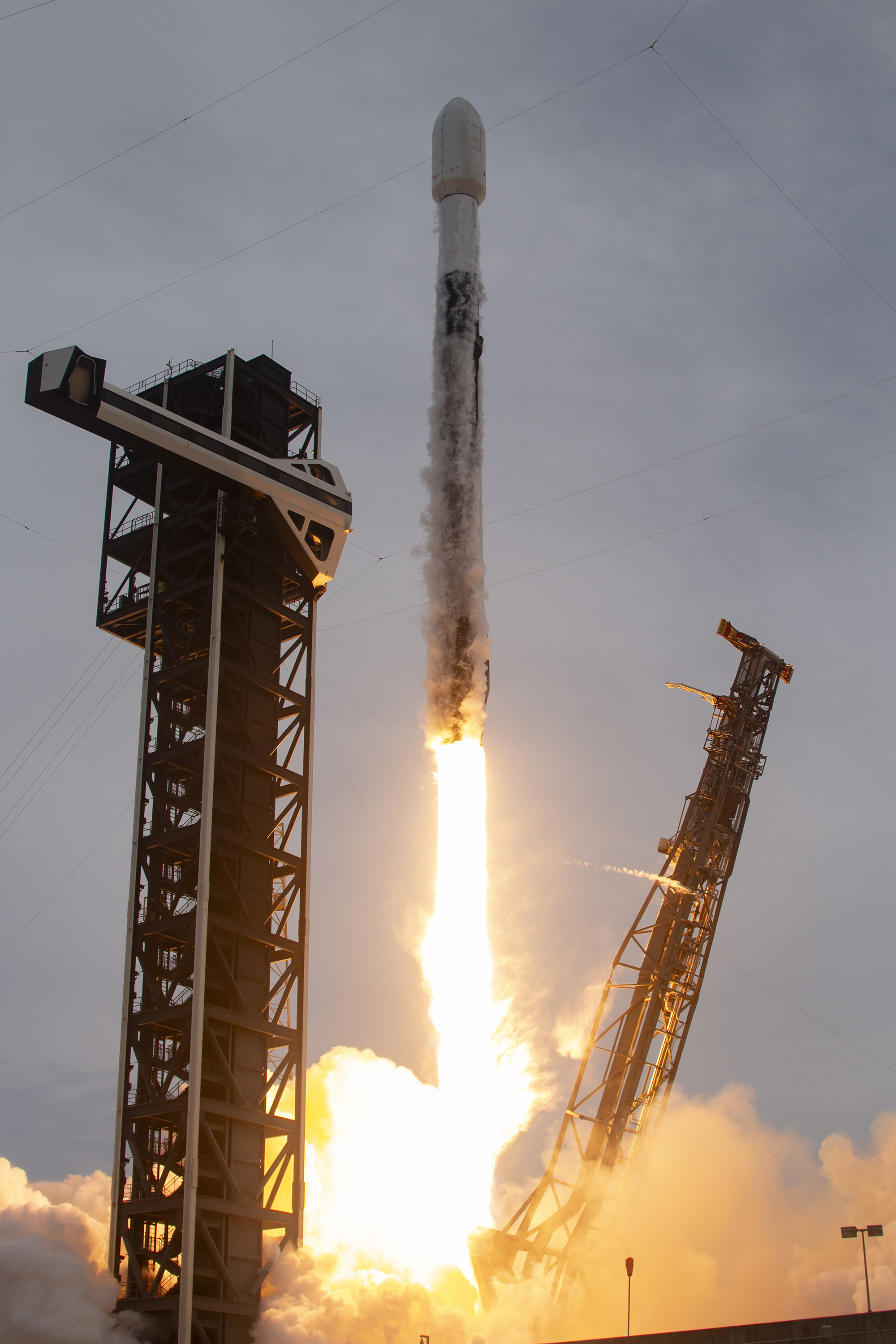
A SpaceX Falcon 9 rocket lifted off from Space Launch Complex 40 (SLC-40), Cape Canaveral Space Force Station at 1547 UTC, launching Northrop Grumman’s Cygnus XL cargo spacecraft to the International Space Station on the NG-25 (or Northrop Grumman CRS-25), marking the 25th Cygnus resupply flight under NASA’s Commercial Resupply Services contract; and it's the fourth flight of the upgraded, enlarged Cygnus XL variant, which carries about 30 percent more cargo than the original design.
The Falcon 9 first-stage booster, B1096, executed a successful return-to-launch-site (RTLS) landing at Landing Zone 40(LZ-40) about 7.5 minutes after liftoff, marking its ninth flight. The upper stage deployed the Cygnus XL spacecraft into low Earth orbit roughly 14.5 minutes after launch. The launch occurred under overcast skies, with SpaceX warning residents in nine Florida counties about potential sonic booms from the booster's return.
The Northrop Grumman’s Cygnus XL cargo spacecraft named S.S. James “Jim” A. Lovell in honor of the late Apollo 13 commander -- as the company names each Cygnus after spaceflight pioneers -- was scheduled to be captured by the station’s Canadarm2 robotic arm and berthed to the Earth-facing (nadir) port of the Unity module on December 1, 2026, where it will remain until May 2027. NASA astronauts Jessica Watkins and Luke Delaney were tasked with monitoring the vehicle’s arrival and overseeing the capture and berthing process.
The spacecraft delivered about 4,990 kg of supplies and scientific experiments to the orbiting laboratory. The payload breakdown included roughly 1,587 kg of crew supplies, 1,814 kg of research equipment supporting studies on cancer treatment, radiation sensing, and food production, and 1,133 kg of spare parts and spacewalk gear.
Among the research gear are "experiments to improve drug delivery for cancer and osteoarthritis, predict cancer spread, and advance treatments for muscle loss, as well as improve radiation sensing and advance food production for future long-duration missions," NASA officials wrote in a mission description.
The ISS has four robotic resupply vehicles that currently service the ISS, of which Cygnus XL is one, along with Russia's Progress, Japan's HTV-X and SpaceX's Dragon which is the only one reusable; it returns to Earth in one piece.