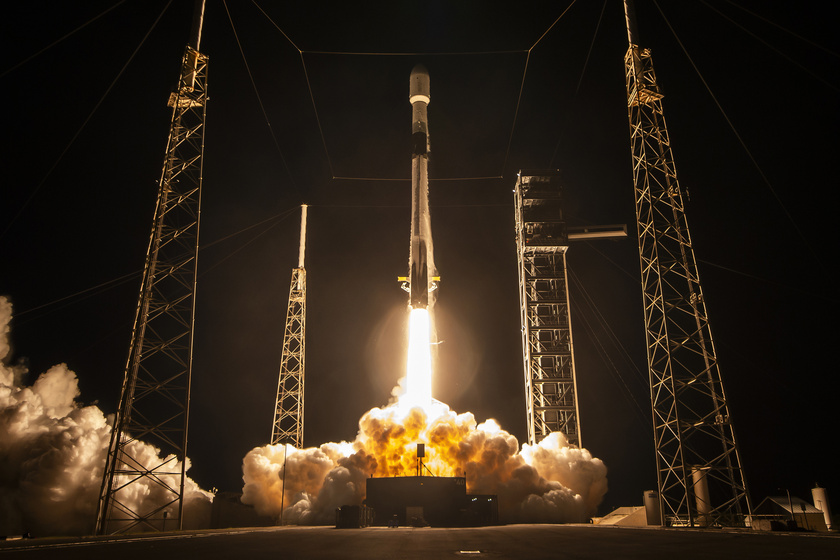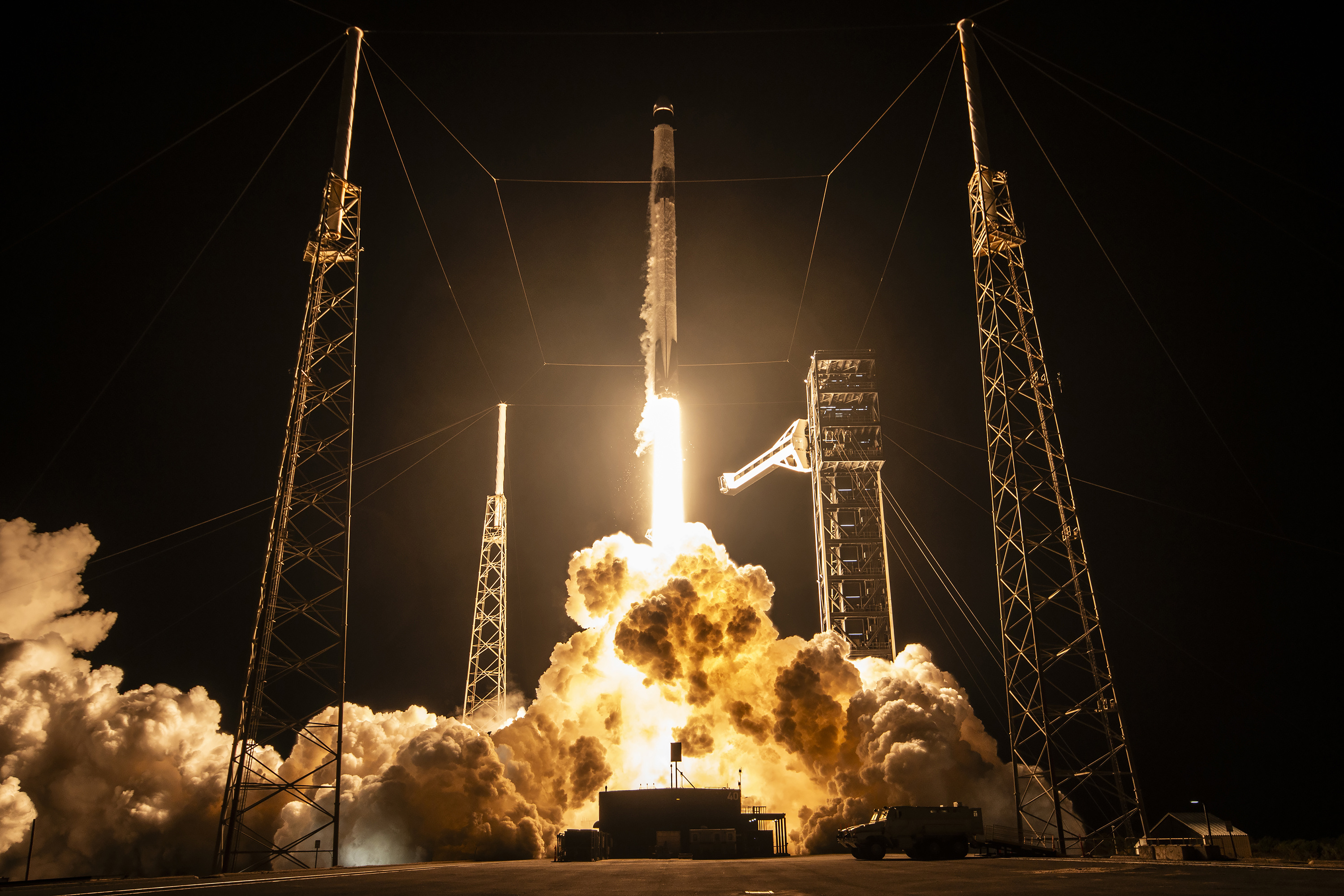
SpaceX Falcon 9 successfully launched the Crew-12 mission on Friday (Feb. 13), at 1015 UTC from Space Launch Complex 40 (SLC-40) at Cape Canaveral Space Force Station, Florida. The rocket carried the Crew Dragon 'Freedom' capsule with four astronauts to the International Space Station (ISS), replacing the Crew-11 team that departed early due to the first-ever medical evacuation from the ISS.
Falcon 9 first stage B1101, previously used in the Starlink 6-88 mission, successfully returned to Earth and landed at Landing Zone 40 (LZ-40) — the first crewed mission to land at the pad adjacent to the launch site.
The Falcon 9's upper stage, meanwhile, continued its course into orbit and separated from Freedom after an orbital insertion burn. The capsule is scheduled to dock with the Harmony module’s zenith port on the ISS at about 2015 UTC on Feb. 14, 2026.
Crew-11 mission was cut short in mid-January 2026 after an undisclosed serious health condition affected one crew member, prompting an emergency return to Earth. This left the ISS operating with a skeleton crew of three: NASA astronaut Chris Williams and Roscosmos cosmonaut Sergey Kud-Sverchkov and Sergei Mikaev.
To restore the ISS to its normal crew complement of seven, NASA and SpaceX accelerated the Crew-12 launch to ensure a timely relief mission.
Aboard Freedom are Commander and NASA astronaut Jessica Meir, a marine biologist who is on her second spaceflight, previously made history with the first all-female spacewalk; Mission pilot Jack Hathaway a rookie NASA astronaut and former U.S. Navy fighter pilot; mission specialist and European Space Agency (ESA) astronaut Sophie Adenot a French helicopter pilot on first spaceflight; and mission specialist and Roscosmos cosmonaut Andrey Fedyaev who is on second ISS mission and replaced cosmonaut Oleg Artemyev, who was pulled from the mission in December 2025.
"That was quite a ride," Meir radioed to Mission Control after reaching orbit. "We have left the Earth, but the Earth has not left us."
During their about 8-month stay in space, they will continue research into microgravity's effects on human physiology and technologies supporting future Artemis missions to the Moon and Mars. They will also perform station maintenance, including two spacewalks that were postponed after the emergence of the Crew-11 medical situation.
Crew-12 was the second-ever crewed flight to launch from SLC-40 and the first mission to use SpaceX's new landing zone at that pad, dubbed LZ-40. SpaceX's previous crewed missions have primarily launched from Launch Complex-39A (LC-39A) at NASA's Kennedy Space Center, which is a few miles up the coast from the Space Force station. But recent work at LC-39A has prompted SpaceX to move all Falcon 9 launches to SLC-40 going forward.
SpaceX recently removed the crew access arm on the tower at LC-39A and is continuing construction at the pad to support its new Starship rocket, which recently cleared an environmental review for future launches from the Space Coast. The company will continue launching Falcon Heavy missions from LC-39A and is expected to complete construction to support Starship this year.