keneci Network
News • Comedy • Science & Tech
NROL-105: SpaceX Launches Classified Payload For The US National Reconnaissance Office
January 17, 2026
post photo preview

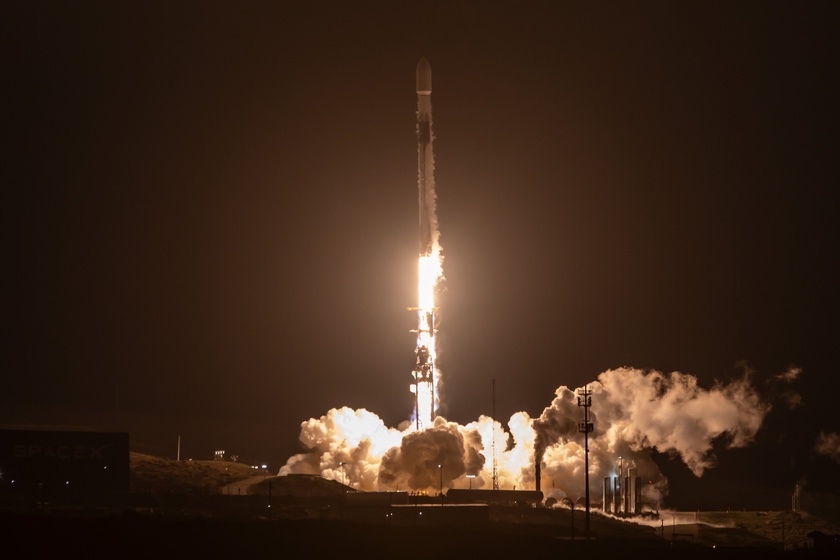
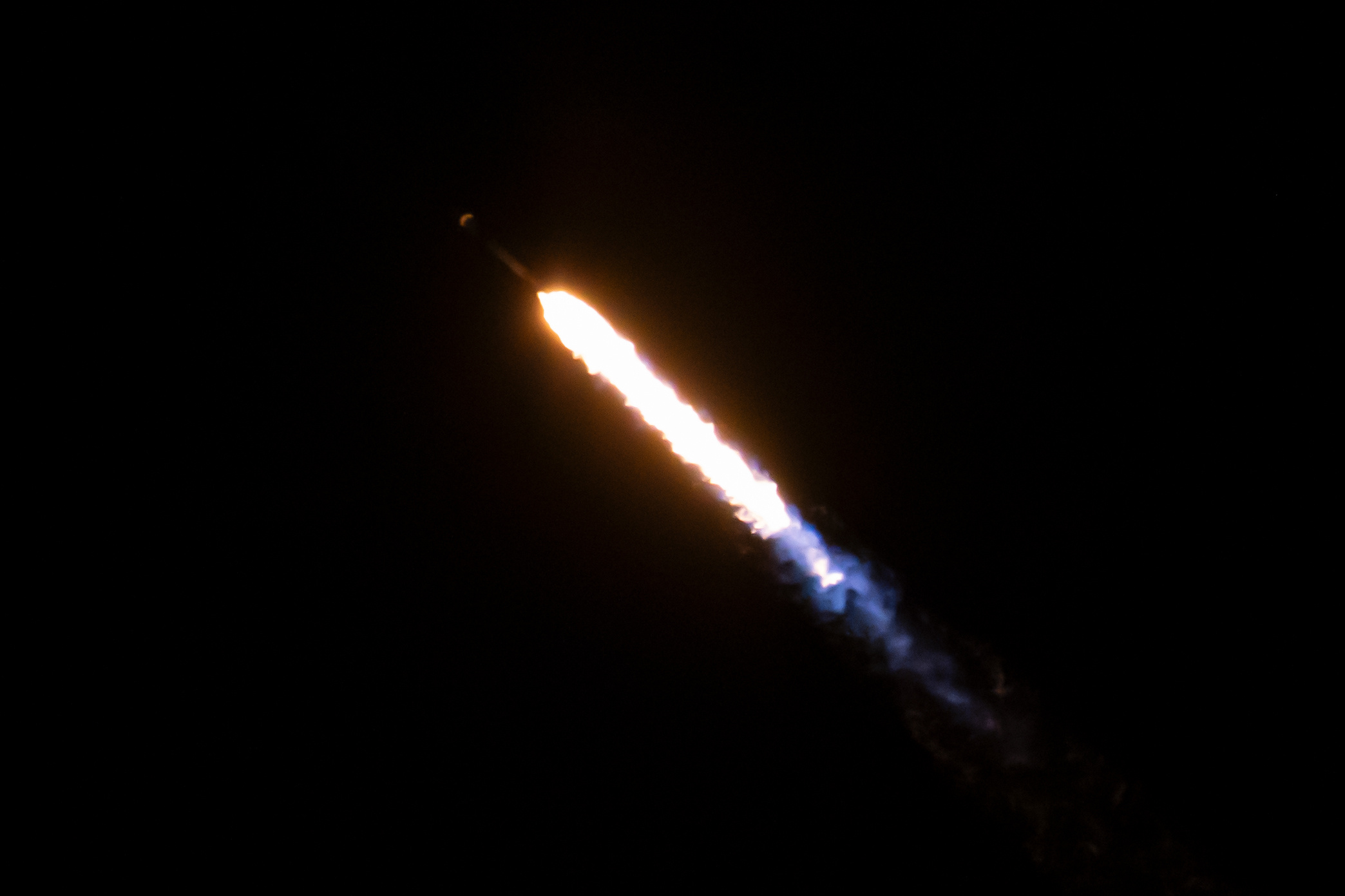
SpaceX Falcon 9 launched the NROL-105 mission at 0439 UTC on January 17), from **Space Launch Complex 4 East (SLC-4E) at Vandenberg Space Force Base, California, carrying a classified payload for the U.S. National Reconnaissance Office (NRO).

The Falcon 9 rocket lifted off on a southeast trajectory, with its first stage (B1100) returning safely to Landing Zone 4(LZ-4) at Vandenberg about 7.5 minutes after liftoff, marking the second flight for that booster according to a SpaceX mission description. The launch webcast was ended shortly after landing, a standard practice for classified NRO missions, and no details on the satellite count, orbital parameters, or deployment timeline were disclosed.

NROL-105 marks SpaceX’s first national security launch of 2026 and the 12th overall mission in the NRO’s “proliferated architecture” program—a strategic shift toward deploying hundreds of small, low-cost reconnaissance satellites instead of a few large, expensive ones. This architecture enhances revisit rates, coverage, and resilience, enabling faster intelligence delivery under dynamic global conditions.

"Having hundreds of small satellites on orbit is invaluable to the NRO's mission," NRO Director Chris Scolese said in the NROL-105 press kit, which you can find here.

"They will provide greater revisit rates, increased coverage, more timely delivery of information — and ultimately help us deliver more of what our customers need even faster," he added.

The satellites were developed by SpaceX in partnership with Northrop Grumman, continuing a long-standing collaboration that began with the first proliferated architecture mission, NROL-146, in May 2024.

Saturday's launch underscores SpaceX’s expanding role in national security space operations, complementing its commercial Starlink launches. NROL-105 was SpaceX's seventh mission of 2026. Four of those launches have been devoted to building out the Starlink broadband megaconstellation.

The NROL-105 launch is part of a broader U.S. effort to modernize space-based surveillance amid growing strategic competition, particularly with China’s plans for a 200,000-satellite mega-constellation.


community logo
Join the keneci Network Community
To read more articles like this, sign up and join my community today
0
What else you may like…
Videos
Posts
Articles
SpaceX Starlink Internet Satellites

With Starlink internet, data is continuously being sent between a ground dish and a Starlink satellite orbiting 550km above. Furthermore, the Starlink satellite zooms across the sky at 27,000 km/hr! MORE VIDEOS ON KENECI NETWORK RUMBLE CHANNEL: https://rumble.com/c/Keneci

00:28:08
Elon Musk, DOGE Speak On Waste And Fraud

US Department of Government Efficiency Services (USDS) led by Elon Musk speak on the "mind-boggling" fraud and waste in UInited States federal government

00:00:45
January 17, 2025
SpaceX Launches Starship 7th Test Flight

SpaceX successfully executed its second-ever “chopsticks” catch of a Super Heavy booster (or Booster 14) using the “Mechazilla” launch tower on Thursday(Jan. 16), during the seventh uncrewed test flight of the company's 123-meter Starship rocket. However, the megarocket's upper stage(or Ship 33) was lost approximately 8.5 minutes into the flight in a “rapid unscheduled disassembly(RUD)” or explosion

00:10:30
Welcome to Keneci Network!

Join the conversations!

December 09, 2025
Bitcoin White Paper By Satoshi Nakamoto

Bitcoin white paper

Bitcoin_White_Paper.pdf
September 17, 2024
Charges Against Sean 'Diddy' Combs In Grand Jury Indictment

The rapper was charged with racketeering conspiracy, sex trafficking by force, fraud or coercion, and transportation to engage in prostitution in the indictment unsealed Tuesday(Sept. 17)

Combs-Indictment-24-Cr.-542.pdf
September 21, 2026
post photo preview
Google, Manufacturing Partners Open Pre-orders For The New Googlebook Laptop OS Devices

Google and PC manufacturing partners on Monday, opened pre-orders for Googlebook laptops, a new premium hardware category built on an Android-based technology stack paired with ChromeOS desktop foundations. The devices, manufactured by Acer, ASUS, Dell, HP, and Lenovo, launch with prices starting at $899 and are scheduled for general release in October 2026.

The Googlebook OS (internally known as Aluminium OS) represents a strategic unification of Google’s mobile and desktop ecosystems, ending years of internal debate about merging Android and ChromeOS. It retains the desktop windowing environment, multi-monitor management, desktop-class Google Chrome (with full extension support), and a robust file manager from ChromeOS.

The operating system runs on a native Linux kernel using the Android technology stack, integrating the Chrome browser and Play Store into a single, AI-first platform optimized for both ARM and x86 architectures. This means Google Play Store apps run natively on the host system with hardware acceleration, improving performance for desktop-class mobile apps like Adobe Photoshop, Lightroom, and CapCut.

Googlebook OS is centered on Gemini Intelligence, featuring tools like Magic Pointer for contextual analysis, Magic Cues, and Create My Widget. Devices offer deep integration with Android phones, allowing users to cast phone apps (Cast My Apps), access phone files via Quick Access, and sync settings and passwords seamlessly.

Each Googlebook device includes a Google Titan hardware root of trust, on-device malware detection, and a Level 5 security-certified pKVM hypervisor that isolates the Linux environment with direct terminal access for developers, enabling native execution of developer CLI tools, such as Claude Code and Google's Antigravity AI platform.

Googlebook device minimum requirements include flagship-tier chips (Intel Core Ultra Series 3 or Qualcomm Snapdragon X Elite) with NPUs, 16GB RAM (up to 32GB), and high-resolution OLED displays.

Google commits to 10 years of OS updates and feature drops. Every device includes 12 months of Google AI Pro (5TB storage + Gemini Advanced), 3 months of YouTube Premium, 1 year of GeForce NOW, and Adobe Photoshop.

The search and streaming giant also clarified that standard ChromeOS and Chromebooks will continue alongside Googlebook as lower-cost, web-focused options.

While ChromeOS established dominance in K-12 education, Chromebooks struggled to capture premium consumer markets against MacBook Airs and AI-centric Copilot+ PCs. Googlebook OS bridges the app gap by allowing high-end laptop silicon like Intel Panther Lake and Snapdragon X, to run Android's vast ecosystem natively while keeping the full desktop web browser and Linux workstation toolsets.

Read full Article
September 19, 2026
post photo preview
Yemen War: Houthi Attacks On Saudi Arabia Intensify Amid Escalating US-Iran Tensions

The conflict between the Houthis and Saudi Arabia has escalated in recent days, into a full-scale war, with the Houthis launching repeated missile and drone strikes on Saudi cities, oil infrastructure, and air bases, while Saudi warplanes have intensified airstrikes on Yemen, causing significant civilian casualties and displacement.

The Houthis claim to have targeted multiple high-value assets in southern and western Saudi Arabia using dozens of ballistic missiles and drones. Key targets include the Saudi Aramco facility in Yanbu, the King Khalid Air Base in Khamis Mushait, and the Abha International Airport.

Saudi authorities on Wednesday, warned of a "red line" after intercepting a Houthi drone near the holy city of Mecca, which Riyadh condemned as a terrorist attack.

The Houthis also released video claiming to have shot down a Saudi F-15 fighter jet over Marib Governorate using a locally manufactured surface-to-air missile, though Saudi authorities have not confirmed the loss.

The Saudi-led coalition has vowed to respond "firmly" to the Houthi aggression.

Saudi warplanes have conducted massive retaliatory campaigns, with Houthi spokesperson Yahya Saree alleging that up to 450 airstrikes were carried out across seven Yemeni provinces in a single week. Saudi F-15 fighter jets carried out dozens of airstrikes over Houthi-controlled territory, targeting weapons depots, launch sites, and troop movements in provinces including Taiz, Hajjah, and around Sanaa.

More recently, the Houthis accused Saudi Arabia of launching 26 attacks in just 24 hours, targeting Houthi-held territories in Taiz and Hajjah.

Houthi leadership seeks to compel Riyadh to ease remaining sea and air blockades on Houthi-controlled territory, facilitate public-sector salary payments from energy revenues, and halt support for anti-Houthi forces in Yemen.

While Saudi Arabia had spent recent years attempting to negotiate a direct diplomatic exit from the Yemeni civil war, the renewed cycle of strikes—initiated following Houthi moves near economic regions like Marib and Red Sea trade corridors—has severely disrupted the de-escalation pathway.

The United Nations Security Council condemned the attacks for causing civilian casualties and threatening maritime security in the Bab el-Mandeb strait.

The humanitarian situation in Yemen is critical, with the UN estimating that 125,000 people have been displaced since the start of September, and the Saudi-backed government reporting that approximately 150 civilians have been killed by Houthi forces since early September. The U.S. has tightened travel warnings for Saudi Arabia, banning government employees from traveling within 32 kilometers of the Yemen border.

The conflict has severely disrupted global energy supplies; Houthi attacks on Saudi pipelines and the Red Sea coast have disrupted up to 4% of global oil shipments and forced Saudi Arabia to rely more heavily on alternative routes.

This recent Yemen-Saudi Arabia escalation occurs against the backdrop of heightened Middle Eastern confrontations involving Iran, the U.S., and regional proxy forces. The Houthis have increasingly linked their military actions to broader regional dynamics, using long-range strike capabilities to pressure both Riyadh and international maritime security along Red Sea routes and the Bab al-Mandeb Strait.

Read full Article
September 17, 2026
post photo preview
USSF-259: SpaceX Launches Classified Payload To Orbit For The US Space Force

SpaceX Falcon 9 launched the USSF-259 mission from Space Launch Complex 4E(SLC-4E), Vandenberg Space Force Base on Wednesday(Sept. 16), at 0107 UTC, carrying classified payload for the U.S. Space Force’s Space Systems Command (SSC) under the National Security Space Launch (NSSL) Phase 3 Lane 1 contract.

Following stage separation, the Falcon 9 first-stage booster, B1097 performed a controlled landing on the Of Course I Still Love You droneship in the Pacific Ocean, about 8 minutes after liftoff. B1097 completed its 13th flight, having previously supported missions including Sentinel-6B, Twilight, NROL-172, Transporter-17, and eight Starlink deployments.

Meanwhile the Falcon 9 upper stage flew a southerly trajectory to deploy its payload into a low Earth orbit inclined roughly 80 degrees from the Equator.

This mission, identified in public documents as TH-1, marks the third recent national security launch for SpaceX procured by SSC, following USSF-366 (launched August 15) and USSF-153 (launched September 10). Previous missions in this series, identified as R1 and R2, each carried 23 satellites.

Read full Article
See More
Available on mobile and TV devices
google store google store app store app store
google store google store app tv store app tv store amazon store amazon store roku store roku store
Powered by Locals