keneci Network
News • Science & Tech • Comedy
200 Children, Women Rescued Jewish Cult Lev Tahor In Guatemala: Pedophile Ring
December 24, 2024
post photo preview

At least 200 women and children were rescued from the Lev Tahor Jewish cult in Guatemala. The group is accused of abuse, human trafficking, rape, pedophilia and forced marriage of children.

The rescue operation was carried out by Guatemalan authorities, with the support of the U.S. Department of Homeland Security, and involved around 480 police personnel, soldiers, prosecutors, and psychologists.

The operation is part of ongoing international efforts to dismantle the cult’s network and protect vulnerable individuals from exploitation.

The cult’s members have been trying to recapture the rescued children, and some have been found to have caused disturbances at the care facility where they were being held.

Lev Tahor was founded in Israel in 1988 and has a history of alleged sexual abuses, kidnapping, child marriage, and physical violence.

3x21WfBK_hHCjNCYIwF2G3h5HBA8rMzaQSJSYKWkYAAPPJVM2brbRUDZ9EayTuKDAsKrp2-i4dlA5Po7DlOFCoWjIbRyK2maZp1wV9yiq8_NJFWo610NXHyuSSfvm1rfEQ=w1280

Authorities are investigating the cult and its members, with suspicions of possible crimes of human trafficking, mistreatment of minors, pedophilia and rape.


community logo
Join the keneci Network Community
To read more articles like this, sign up and join my community today
0
What else you may like…
Videos
Posts
Articles
SpaceX Starlink Internet Satellites

With Starlink internet, data is continuously being sent between a ground dish and a Starlink satellite orbiting 550km above. Furthermore, the Starlink satellite zooms across the sky at 27,000 km/hr! MORE VIDEOS ON KENECI NETWORK RUMBLE CHANNEL: https://rumble.com/c/Keneci

00:28:08
Elon Musk, DOGE Speak On Waste And Fraud

US Department of Government Efficiency Services (USDS) led by Elon Musk speak on the "mind-boggling" fraud and waste in UInited States federal government

00:00:45
January 17, 2025
SpaceX Launches Starship 7th Test Flight

SpaceX successfully executed its second-ever “chopsticks” catch of a Super Heavy booster (or Booster 14) using the “Mechazilla” launch tower on Thursday(Jan. 16), during the seventh uncrewed test flight of the company's 123-meter Starship rocket. However, the megarocket's upper stage(or Ship 33) was lost approximately 8.5 minutes into the flight in a “rapid unscheduled disassembly(RUD)” or explosion

00:10:30
Welcome to Keneci Network!

Join the conversations!

December 09, 2025
Bitcoin White Paper By Satoshi Nakamoto

Bitcoin white paper

Bitcoin_White_Paper.pdf
September 17, 2024
Charges Against Sean 'Diddy' Combs In Grand Jury Indictment

The rapper was charged with racketeering conspiracy, sex trafficking by force, fraud or coercion, and transportation to engage in prostitution in the indictment unsealed Tuesday(Sept. 17)

Combs-Indictment-24-Cr.-542.pdf
post photo preview
Flight 12: SpaceX Launched Upgraded Starship V3 Megarocket In Spectacular Test Mission

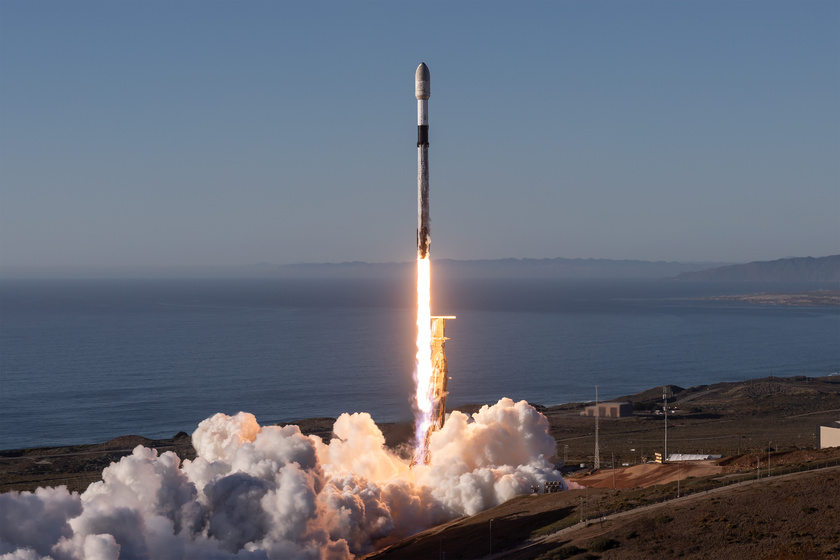
SpaceX successfully launched Starship Flight 12 on Friday, (May 22), at 2230 UTC, marking the debut of the Starship V3 megarocket from the new Pad 2 at Starbase, Texas. The 407-foot-tall (124 meters) vehicle, generating up to 18 million pounds of thrust, completed its 12th suborbital test flight, achieving most primary objectives despite minor engine anomalies.

The first notable event after the rocket cleared the tower occurred about 2 minutes and 20 seconds into flight, when Super Heavy initiated "hot staging" and separation from Ship. (It's known as hot staging because Ship begins firing its engines before separating from Super Heavy.)

The Super Heavy booster (first stage or Booster 19) experienced a single Raptor engine shutdown during ascent and failed to complete its planned "boost back" burn due to additional engine irregularities, resulting in a splashdown in the Gulf of Mexico short of the target.

Meanwhile, the Starship upper stage (Ship 39) also lost one of its six Raptor engines during ascent but compensated by keeping the remaining five active longer, successfully reaching an acceptable suborbital trajectory.

"I wouldn't call it nominal orbital insertion, but we're in on a trajectory that we had analyzed, and it's within bounds," SpaceX spokesperson Dan Huot said in live commentary. "So, teams continuing to work through it with that engine out there, working some through some steps on the engines."

After stage separation, Super Heavy reoriented and attempted to perform a one-minute boostback burn toward Starbase. However, something went wrong and the burn didn't go as planned, Huot said.

"The booster didn't complete its full boost back," Huot said just after lifotff. "Its mission ended a little bit early, but landed in the clear area that we had set in advance."

During the suborbital cruise phase, Starship deployed 22 payloads, including 20 dummy Starlink satellites and two modified Starlink spacecraft ("Dodger Dogs"). These two satellites carried cameras that captured images of the Starship heat shield tiles, providing data to assess thermal protection integrity for future missions. A planned in-space re-ignition of a Raptor engine was skipped due to the earlier engine loss.

Shortly after the final two Starlink simulators deployed (the ones with cameras that SpaceX nicknamed "Dodger Dogs" after the famed hotdogs at Dodger Stadium), SpaceX broadcast the spectactular video they captured as they flew away from Starship.

"That is a Starship in space," Huot said.

"Congratulations SpaceX team on an epic first Starship V3 launch & landing!," SpaceX CEO Elon Musk wrote on X after the launch. "You scored a goal for humanity."

Ship 39 began its reentry to Earth's atmosphere about 50 minutes into the flight, falling as its belly became engulfed in a bright plasma. During its descent, Ship 39 performed a series of exercises designed to stress parts of the vehicle to their structural limit. It also executed a novel banking maneuver for its landing burn meant to mimic the trajectory and orientation needed for a launch tower catch on a return to Starbase.

Huge cheers rang out at SpaceX's headquareters and Starbase facilities as the Ship 39 ignited two engines for a final landing burn. The manuever initially called for three engines, but that one shut down early at liftoff. After the landing, Starship toppled over into the ocean waters and exploded in a magnificent fireball (again, as planned) as SpaceX workers cheered.

Friday'he launch occurred following delays Thursday, caused by a stuck hydraulic pin and weather.

Starship V3 features significant upgrades over its predecessors, including Raptor 3 engines, larger fuel tanks, and docking ports for in-orbit refueling—a critical capability for NASA’s Artemis moon landing program.

Unlike its V2 predecessor, which featured an interstage ring that fell away at separation, Starship V3 is built with similar hardware secured to the top of the booster, like a fence around the fuel tank's dome to give some breathing room to the upper stage engines' ignition and initial thrust away from the booster.

The vehicle is designed to be fully reusable, with NASA targeting Starship as the lunar lander for Artemis 3 (scheduled for 2027/2028). "We're looking forward to seeing this thing fly, because hopefully at some point in the not too distant future we're gonna, we're gonna join up in an earth orbit," NASA Administrator Jared Isaacman, who was present at the launch, said during the live comentary.

NASA is relying on Starship as one of the crewed lunar landers for its Artemis program, which aims to eventually establish a permanent human presence on the moon. The space agency has also contracted Blue Moon, a Blue Origin spacecraft, to land Artemis astronauts on the moon, and has indicated a willingness to fly with whichever private lander is ready when it's time for the missions to get off the ground.

The next of those missions is Artemis 3 — the follow-up to April's Artemis 2, which flew four astronauts aboard NASA's Orion spacecraft on a successful 10-day mission around the moon. NASA is targeting mid to late 2027 for Artemis 3, which will launch Orion to low Earth orbit (LEO) to rendezvous and dock with one or both of the private lunar landers, and late 2028 for the first lunar landing on Artemis 4.

After the launch, Isaacman hailed the work of SpaceX's Starship team.

"Congrats SpaceX team and Elon Musk on a hell of a V3 Starship launch," Isaacman wrote on X. "One step closer to the Moon ... one step closer to Mars."

Starship has a number of boxes to check before NASA certifies the vehicle to fly astronauts, but V3 has been built with those goalposts in mind. For example, NASA is requiring both Starship and Blue Moon to demonstrate uncrewed lunar landings before they fly astronauts down to the lunar surface, putting SpaceX and Blue Origin on a short timeline to ready vehicles for the planned Artemis 4 landing in 2028.

Flight 12 represents a major milestone ahead of SpaceX’s anticipated initial public offering (IPO) in June.

Read full Article
post photo preview
Google I/O 2026 AI Deluge Of Products, Features, Upgrades And Hardware Product: Gemini Omni, Gemini Spark, Android XR

At Google I/O 2026, on Tuesday, Google announced a major shift toward agentic AI, positioning Gemini as the central operating layer across its ecosystem. The keynote, led by CEO Sundar Pichai and DeepMind’s Demis Hassabis, highlighted advancements in AI models, hardware, and search capabilities, with Hassabis predicting that Artificial General Intelligence (AGI) is just a few years away.

Gemini 3.5 Flash was released globally as the default model for the Gemini app and AI Search, it is 4x faster than previous frontier models and outperforms Gemini 3.1 Pro in coding and multimodal tasks.

Gemini Omni, a new multimodal family designed for AI video generation and creative workflows, starting with Omni Flash, accepts text, audio, images, and video inputs.

Gemini Spark, a 24/7 background personal AI agent powered by Gemini Flash 3.5 and the Antigravity 2.0 framework, is capable of automating complex tasks and integrating with third-party tools via the Model Context Protocol (MCP).

Google also unveiled its eighth-generation custom AI chips, including TPU 8t for training and TPU 8i for inference, offering 2x better performance-per-watt.

Intelligent Search Box, the first major redesign of Google Search in 25 years, featuring a dynamic AI-driven interface, accepts multi-modal inputs and includes Search Agents that run in the background to track variables like real estate listings or retail drops.

Universal Cart, a shopping tool leverages the Universal Commerce Protocol to aggregate products from across the web, track deals, and facilitate agentic checkout experiences.

In workspace updates, Google introduced Docs Live and Gmail Live for conversational document structuring and inbox management, alongside a new Google AI Ultra plan at $100/month.

In hardware and Android ecosystem, Google introduced Android XR smart glasses, a partnership with Samsung and eyewear brands Gentle Monster and Warby Parker, a display-less audio glasses with deep Gemini integration, supporting both Android and iOS.

Android Halo, a new UI element for Android 17 that displays the status of background AI agents,was also introduced.

The Gemini app, now with 900 million monthly active users, received a visual overhaul called Neural Expressive with new animations and a repositioned interface.

Google also introduced an AI Ultra plan at $100/month and reduced the price of the previous top-tier Ultra plan from $250 to $200/month to provide higher usage limits for advanced tools like Spark and Antigravity.

Google had previewed Googlebooks, an Android-powered laptop successor to Chromebooks, featuring premium materials from partners like Acer, Dell, and Lenovo and powered by Aluminium OS.

Read full Article
post photo preview
Trump Postpones 'Scheduled' Military Stikes On Iran At The Request Of Gulf Leaders

President Donald Trump announced in a Truth Social post Monday, that he was postponing a scheduled military strike on Iran set for Tuesday (May 19), at the request of the leaders of Qatar, Saudi Arabia, and the United Arab Emirates.

The leaders—Emir of Qatar Sheikh Tamim bin Hamad Al Thani, Saudi Crown Prince Mohammed bin Salman, and UAE President Mohamed bin Zayed Al Nahyan—urged Trump to delay the attack, citing ongoing "serious negotiations" that could lead to an acceptable deal ensuring "NO NUCLEAR WEAPONS FOR IRAN."

Trump stated he respected these Gulf allies and, based on their assurances, instructed U.S. defense officials—including War Secretary Pete Hegseth and Joint Chiefs Chairman General Daniel Caine—not to proceed with the strike. However, he emphasized that the U.S. military remains on high alert and "prepared to go forward with a full, large-scale assault on Iran, on a moment’s notice" if the negotiations fail.

During a healthcare affordability event at the White House Monday, Trump told reporters that the proposed deal would ensure "NO NUCLEAR WEAPONS FOR IRAN" and that the Gulf leaders feared retaliatory attacks on their energy infrastructure. He emphasized that while the attack was called off, the U.S. military remained on high alert, ready to launch a "full, large-scale assault on a moment’s notice" if negotiations failed.

The decision follows heightened U.S.-Iran tensions over Iran’s nuclear program amid ongoing peace talks, with Iran having recently submitted a revised peace proposal through Pakistani mediators—reportedly deemed insufficient by U.S. officials.

This marked the latest in a series of unenforced deadlines, with previous pauses tied to talks mediated by Pakistan. The U.S. had been pressing Iran to reopen the Strait of Hormuz and surrender its enriched uranium stockpile, while rising fuel prices at home added pressure on the Trump administration.

"Dialogue does not mean surrender," Iran's President Masoud Pezeshkian wrote on X Monday. "The Islamic Republic of Iran enters into dialogue with dignity, authority, and the preservation of the nation's rights, and under no circumstances will it retreat from the legal rights of the people and the country. We will serve the people with logic and with all our might, to the end, and safeguard the interests and honor of Iran."

Trump had previously warned Iran that "the clock is ticking" and that talks could resume "through bombs" if no deal is reached.

Iran has retained and adapted its air defense capabilities despite extensive U.S. and Israeli strikes during Operation Epic Fury, with reports indicating that Tehran has dug up and reconstituted damaged missile sites and shot down several U.S. aircraft, challenging claims of total U.S. air dominance. Critics say this development may have informed Trump's unwillingness to restart U.S. bombinbg campaign.

Iranian forces used mobile and concealed air defense systems, including MANPADS (man-portable air-defense systems) and truck-mounted launchers, to target low-flying U.S. aircraft.

Although U.S. officials initially claimed Iran’s air defenses were "decimated," the shootdown of an F-15E Strike Eagle and an A-10 Warthog in early April 2026 revealed that Iran retained operational capabilities. Experts suggest Iran likely used shoulder-fired Verba missiles—possibly supplied early by Russia—or older systems hidden in bunkers and tunnels. Iran’s doctrine of dispersal, concealment, and independent operation allowed these systems to survive and engage U.S. aircraft effectively.

Despite U.S. efforts to destroy Iran’s underground missile facilities using bunker-busting munitions, up to 90% of these sites remained active or were rapidly restored. U.S. intelligence assessments from May 2026 revealed that Iran had regained access to most of its missile launchers and storage facilities, which had been buried or sealed under debris.

Satellite imagery and intelligence sources confirmed Iran was clearing debris at missile base entrances and exploiting ceasefire periods to rebuild its missile and drone capabilities, aided by foreign components reportedly from China and North Korea. The Pentagon had opted to seal rather than fully destroy many sites to conserve limited bunker-buster stocks for potential conflicts with China or North Korea, contributing to Iran’s ability to recover.

Read full Article
See More
Available on mobile and TV devices
google store google store app store app store
google store google store app tv store app tv store amazon store amazon store roku store roku store
Powered by Locals