🚨 US Dept. of Justice antitrust officials have decided to ask a judge to force Google to sell off its Chrome browser business


With Starlink internet, data is continuously being sent between a ground dish and a Starlink satellite orbiting 550km above. Furthermore, the Starlink satellite zooms across the sky at 27,000 km/hr! MORE VIDEOS ON KENECI NETWORK RUMBLE CHANNEL: https://rumble.com/c/Keneci
US Department of Government Efficiency Services (USDS) led by Elon Musk speak on the "mind-boggling" fraud and waste in UInited States federal government
SpaceX successfully executed its second-ever “chopsticks” catch of a Super Heavy booster (or Booster 14) using the “Mechazilla” launch tower on Thursday(Jan. 16), during the seventh uncrewed test flight of the company's 123-meter Starship rocket. However, the megarocket's upper stage(or Ship 33) was lost approximately 8.5 minutes into the flight in a “rapid unscheduled disassembly(RUD)” or explosion
The rapper was charged with racketeering conspiracy, sex trafficking by force, fraud or coercion, and transportation to engage in prostitution in the indictment unsealed Tuesday(Sept. 17)
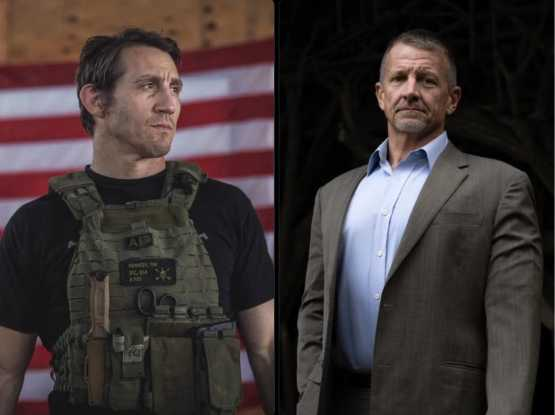
Tim Kennedy 47-year-old former UFC middleweight and U.S. Army Green Beret, was reportedly shot three times in the leg during an ambush on September 17, 2026, in the South Kivu province of the eastern Democratic Republic of the Congo(DRC). He was part of a three-man private military contracting team working for Vectus Global, the security firm led by Erik Prince, founder of Blackwater.
Sources reportedly suggest the attack may have been carried out by Rwandan forces backing the M23 rebels, potentially after tracking a surveillance drone. The team was conducting a "ground-clearing operation" to protect mining revenues, combat smuggling, and collect taxes for the Congolese government, part of a US$700 million agreement between Prince and Kinshasa.
The ambush resulted in approximately 20 dead or wounded, including: Justin Conaglen, a former New Zealand Special Air Service (NZSAS) lance corporal and at least seven Congolese nationals and local villagers who were killed; and one unnamed foreign contractor, who was wounded.
Kennedy underwent an eight-hour evacuation before being medevaced to the U.S. Following the hasty extraction of casualties from the danger zone, Kennedy was medically evacuated out of Africa. He was flown back to the United States and admitted to the Walter Reed National Military Medical Center near Washington, D.C., for treatment.
Neither Kennedy, Prince, nor the Pentagon has issued an official public confirmation or statement.
Kennedy was working as a contractor for Vectus Global, a private security and logistics firm founded by Prince (the founder of the controversial private military company Blackwater).
Prince's forces and contractors have been operating in parts of Africa, including supporting Congolese military operations and deploying tactical assets, such as drones, to push back rebel advances.
The region has been a volatile hotspot experiencing intense fighting between Congolese government forces and the M23 rebel group which has faced accusations of receiving support from neighboring Rwanda.
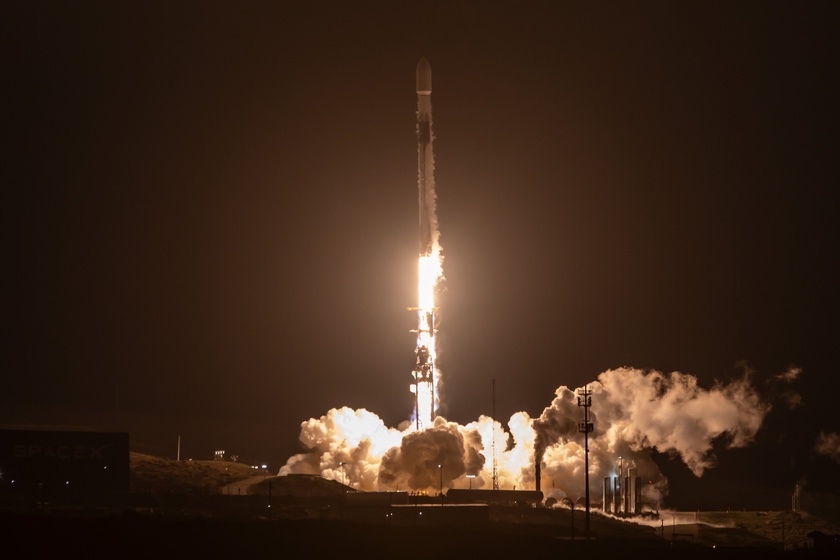
SpaceX Falcon 9 launched 21 data transport satellites for the U.S. military on Saturday (Oct. 10), at 0739 UTC from Space Launch Complex 4E, Vandenberg Space Force Base, on the SDA T1TL-A mission, the fourth dedicated to assembling the Space Development Agency’s Tranche 1 architecture, part of the broader Proliferated Warfighter Space Architecture network.
This mission marked the sixth flight of the first-stage booster, B1103, which successfully landed as planned at Landing Zone 4 approximately seven minutes after liftoff. This was the 111th Falcon 9 flight of the year. The vast majority of these — more than 70% — have helped build out SpaceX's Starlink broadband megaconstellation, which currently consists of more than 11,000 satellites.
The 21 satellites on Saturday's mission, manufactured by Northrop Grumman, were deployed into low Earth orbit to expand the mesh network of optically connected satellites that provide global military tactical communications and missile warning capabilities.
Today's launch helps build out the SDA's Proliferated Warfighter Space Architecture (PWSA), which SpaceX describes as "a mesh network of optically connected satellites in low Earth orbit [LEO] that enable global military tactical communications and missile warning, indication and tracking capabilities."
The liftoff was the fourth of nine that SpaceX will conduct to help assemble the architecture's Tranche 1 — the "initial warfighting capability tranche," according to the SDA.
Tranche 1 will eventually consist of 154 operational satellites in LEO — 126 data-transport spacecraft and 28 missile-tracking vehicles. There will also be four missile-defense test satellites, which will sport a "higher fidelity" infrared sensor than their tracking counterparts, SDA officials wrote. (Missile-tracking satellites generally hunt for the heat signatures these weapons produce during flight).
Eighty-four of the 126 data-transport satellites for Tranche 1 have now launched to date, all of them on Falcon 9s, which lifted off from Vandenberg in September 2025, October 2025, July of this year and today.
Saturday's deployment advances the U.S. Space Force’s goal of establishing a resilient, proliferated satellite infrastructure for missile tracking and data relay.
"SDA leverages spiral development to deploy and proliferate new capability into a new generation of the PWSA every two years, called a 'tranche,' to continually increase capability used by the warfighter," SDA officials wrote in a Tranche 1 fact sheet.
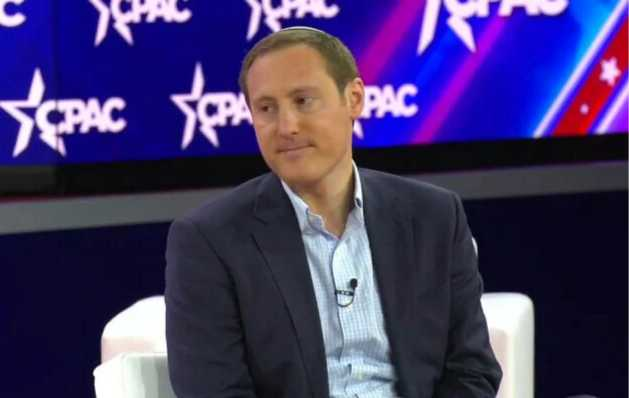
David Milstein, a senior adviser to U.S. Ambassador Mike Huckabee and stepson of Zionist Fox News host Mark Levin, systematically suppressed and altered embassy reports critical of the Israeli government. Several U.S. officials in Jerusalem and Washington, as well as internal diplomatic records reportedly details how Milstein manipulated information channels out of the U.S. Embassy.
Thge 36-year-old reportedly blocked or rewrote diplomatic cables regarding West Bank settlement expansion, settler violence, and the Gaza Humanitarian Foundation (GHF). For instance, he replaced a report warning of rising violence with one praising Israel’s crackdown, and altered a cable about deadly aid distribution sites to portray the GHF as successful.
Milstein, a zealous Zionist allegedly quashed a detailed report on the killings of nine Palestinian Americans by Israeli settlers and security forces, effectively stonewalling Congressional efforts to hold Israel accountable. He insisted on approving all communications from the embassy’s Palestinian affairs section, causing the volume of reports to Washington to drop from several per week to just a few per month, with staff fearing reprisal.
The zealous Zionist removed criticisms of Israel from the annual State Department human rights report, slashing it from nearly 100 pages to nine, and advocated for referring to the West Bank as "Judea and Samaria," a term associated with annexation.
Milstein, who returned to the embassy in April 2025, has significant ties to President Donald Trump administration, having previously served as a special assistant to former Ambassador David Friedman and as a legislative aide to Senator Ted Cruz. Milstein's stepfather, Levin is a vocal ally of Trump and a long-standing defender of Netanyahu.
In September 2026, Milstein drew scrutiny when reports surfaced that he had included a request for monetary wedding gifts on invitations sent to Israeli contacts and officials, prompting counterintelligence concerns among national security staff.
Ambassador Huckabee, a stauch Christian Zionist and zealous supporter of Israel, has denied the allegations and threatened litigation for defamation. He called the claims "fake news," "farcical," saying he "personally and categorically" refutes the allegations. Officials noted, however, that while Huckabee had occasionally restrained Milstein, he also collaborated with him to shape outgoing messages.
Friedman also defended Milstein, dismissing the claims as a "hit piece" based solely on anonymous sources.
State Department issued a standard response stating that the department remains focused on "advancing President Trump's America First agenda" without addressing the specific allegations of cable manipulation.
Critics, including journalists and former State Department officials, have described Milstein’s actions as a betrayal of U.S. diplomatic integrity, with some labeling him a "traitor" for shielding the Prime Minister Benjamin Netanyahu government from accountability.